 LeVar Thomas
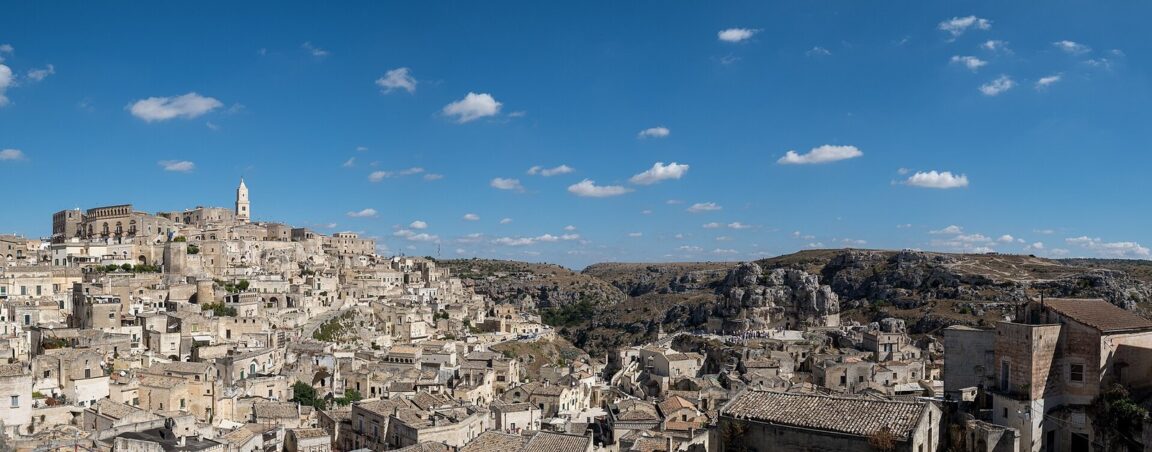
Matera is the Italian city that looks like it was carved out of the hillside rather than built on it, and that is exactly what happened. Its Sassi districts are neighbourhoods of cave dwellings cut into limestone, inhabited since the Palaeolithic era and listed by UNESCO since 1993. For travelers who have already seen Rome, Florence and Venice, Matera offers something those cities cannot. It is a place where the streets are staircases, the churches are caves, and the view from a terrace at dusk is one of the most striking in Italy. This guide explains what the Sassi are, where to explore, how to get there, when to go and how to pair Matera with nearby Puglia.
The short version is simple. Matera sits in Basilicata, in the south of Italy, close to the border with Puglia. Its old town is made up of two Sassi districts, Sasso Caveoso and Sasso Barisano, joined by the Civita, the central spur that holds the cathedral. Many of the cave dwellings have been restored as hotels, restaurants and museums, while others remain as they were, open to the air and to the history of the people who lived in them. A visit takes at least a full day, and two days allow a slower pace, with time for the rupestrian churches, the viewpoints and the walk across the ravine to the park on the other side.
Quick Facts
What it is: A city in Basilicata, southern Italy, whose old town is made up of the Sassi, cave dwellings carved into limestone and inhabited since the Palaeolithic era.
UNESCO status: The Sassi and the Park of the Rupestrian Churches of Matera were listed as a UNESCO World Heritage site in 1993, under criteria (iii), (iv) and (v).
The districts: Sasso Caveoso and Sasso Barisano are the two Sassi districts, joined by the Civita, the central spur with the Romanesque cathedral.
Where it is: In Basilicata, near the border with Puglia. The nearest major airport is Bari, and regional trains and buses link Bari with Matera.
How long to stay: At least one full day for the Sassi and the viewpoints, and two days for a slower visit that includes the rupestrian churches and the park across the ravine.
Best seasons: Spring and autumn bring milder weather for walking the stone lanes, while summer is hot and winter is quieter.
What the Sassi Are
The Sassi are the two ancient districts of Matera, and their name comes from the Italian word for stones. UNESCO describes the Sassi and the Park of the Rupestrian Churches of Matera as the most outstanding, intact example of a troglodyte settlement in the Mediterranean region, perfectly adapted to its terrain and ecosystem. Troglodyte means cave dwelling, and that is the point. The houses, churches, monasteries and hermitages of the Sassi were built into the natural caves of the limestone ravine, known as the Gravina, and the settlement was first inhabited in the Palaeolithic era.
The history of the Sassi is long and layered. The area was settled in the Palaeolithic, and the site later became the home of people fleeing the Byzantine Empire, and then of Benedictine and Greek Orthodox monks who built the rupestrian churches. The Romanesque cathedral was built in the 13th century, and it stands on the Civita, the highest point between the two Sassi. UNESCO notes that the settlement reflects the history of the region in its layout and its buildings, and that the Sassi districts and the park together form a single World Heritage property. The listing is under criteria (iii), (iv) and (v), which recognise the site as a testimony to a cultural tradition, an outstanding example of a type of building and settlement, and an outstanding example of a traditional human settlement and land use.
For a first-time visitor, the Sassi are best understood as a city shaped by its rock. The lanes are narrow and stepped, the roofs of one house are the terraces of the house above, and the churches are cut into the stone rather than built on top of it. The effect is a city that looks almost the same from every angle and yet is different at every turn. It is easy to spend hours walking without a plan, and that is part of the appeal. A map helps, but the Sassi reward wandering as much as they reward a fixed route.
The Two Sassi Districts
Sasso Caveoso and Sasso Barisano are the two districts, and they have different characters. Sasso Caveoso, on the southern side, is the older and more rugged of the two. Its dwellings are closer to the original cave houses, and it holds many of the rupestrian churches that are open to visitors. The lanes of Sasso Caveoso are steeper and more irregular, and the views across the ravine from its terraces are among the best in the city. It is the district that feels most like a cave settlement, and it is where the history of the Sassi is easiest to see.
Sasso Barisano, on the northern side, is the larger and more lived-in of the two. It holds more of the restored cave hotels and restaurants, and its lanes are lined with shops and places to stay. The Civita sits between the two districts, on the central spur, and the cathedral stands at its highest point. From the Civita, the two Sassi spread out on either side, and the view takes in the whole of the old town at once. The best first walk in Matera is a loop that starts on the Civita, drops into one Sasso, crosses to the other, and returns by a different lane. The city is compact enough for that loop to take an afternoon, and large enough for the loop to feel different every time.
The viewpoints matter as much as the lanes. The Belvedere di Piazza Giovanni Pascoli, on the edge of the modern city, looks out across the Sassi and the ravine, and it is the classic first view of Matera. Other viewpoints sit along the edge of the Gravina, and the park on the far side of the ravine, the Murgia Materana, offers the reverse view, with the Sassi spread out across the cliff. A visit that includes both sides of the ravine gives a fuller sense of the city than a visit that stays in the old town alone.
Cave Hotels and Rupestrian Churches
Many of the cave dwellings of the Sassi have been restored as hotels, and staying in one is the most direct way to experience the city. A cave hotel is a room cut into the limestone, often with stone walls, a vaulted ceiling and a small window onto a lane or a terrace. The rooms are cool in summer and warm in winter, because the rock holds its temperature, and the experience is unlike a stay in a conventional hotel. Travelers who book a cave hotel should expect stone floors, low ceilings in some rooms, and a layout that follows the shape of the cave rather than the shape of a modern floor plan. The category is general, and the range of cave hotels in Matera runs from simple guesthouses to luxury stays, so the choice depends on budget and on how much of the cave experience the traveler wants.
The rupestrian churches are the other reason to go inside the Sassi. These are churches carved into the rock, and UNESCO notes that the Sassi districts and the park hold houses, churches, monasteries and hermitages built into the natural caves. The churches are small and plain compared with the cathedrals of Rome or Florence, and their interest lies in their frescoes and in the fact that they were cut from the same rock as the houses around them. Some are open to visitors, some require a ticket, and some are part of the park across the ravine. A visit to one or two of them gives a sense of how the monks who built them lived and worshipped, and of how the Sassi functioned as a community rather than as a collection of houses.
The cathedral on the Civita is the counterpoint to the cave churches. It is a Romanesque cathedral built in the 13th century, and it stands above the Sassi rather than inside them. Its bell tower is a landmark from every viewpoint in the city, and its position on the Civita makes it the natural meeting point for a walk through the old town. The contrast between the cathedral and the cave churches is the contrast at the heart of Matera, between the built city and the carved city, and seeing both in one day is what makes the visit complete.
How to Reach Matera
Matera has no airport of its own, and most visitors arrive through Bari. Bari Karol Wojtyla Airport is the nearest major airport, and from Bari the journey continues by regional train or bus. Ferrovie Appulo Lucane, the regional operator, runs the trains and buses that serve Matera, and its site carries the timetables for the Bari to Matera services. Travelers should check the current timetable before the trip, since services vary by day and season, and should allow time for the connection from the airport to the city.
The journey from Bari to Matera is part of the trip rather than a chore. The route runs through the countryside of Puglia and Basilicata, past olive groves and small towns, and the arrival in Matera is by a station close to the old town. Travelers coming from elsewhere in Italy can also reach Matera by bus from other cities in the south, and by car on the roads that link Matera with Bari and with the rest of Basilicata. Driving in the old town itself is limited, and the Sassi are a walking area, so a car is useful for the region around Matera rather than for the city itself. The practical rule is to arrive by train or bus, and to explore the Sassi on foot.
Best Season and Pairing Matera With Puglia
The best time to visit Matera depends on how the traveler likes to walk. Spring and autumn bring milder weather for the stone lanes and the viewpoints, and the city is at its most comfortable when the days are warm but not hot. Summer is hot, and the Sassi, with their stone surfaces and their position in a ravine, hold the heat of the day. Winter is quieter, with fewer visitors and a different light on the stone, and the cave hotels are warm inside. There is no wrong season for Matera, but the walking is easier in the milder months, and the viewpoints are at their best in the clear light of spring and autumn.
Matera pairs naturally with Puglia, the region next door. Bari, the gateway city, is worth a day in its own right, with its old town and its seafront. From Bari, the towns of Puglia are within reach, including Alberobello with its trulli, the whitewashed town of Ostuni, and Lecce in the south. The Amalfi Coast in fall is a different kind of Italian trip, but it shows the same logic that applies to Matera. Southern Italy rewards travelers who go in the milder months, and who give each place more than a day. A trip that pairs two or three days in Matera with a few days in Puglia gives a fuller picture of the south than either place alone, and the journey between them is short enough to make the pairing easy.
For travelers planning a wider Italian trip, Matera also fits well with Rome. The Grand Capitals of Europe journey through Paris, Rome, Amsterdam and Prague shows how a multi-city trip can be built around a single theme, and Matera works the same way as an extension of a Rome stay. A few days in Rome, a train to Bari, and two days in Matera make a trip that covers both the grandest city in Italy and one of its most unusual. The contrast is the point. Rome is built, Matera is carved, and seeing both is a way of seeing the range of what Italy holds.
Frequently Asked Questions
What are the Sassi di Matera?
The Sassi are the two ancient districts of Matera, made up of cave dwellings carved into limestone. UNESCO describes them as the most outstanding, intact example of a troglodyte settlement in the Mediterranean region, and they have been inhabited since the Palaeolithic era.
When was Matera listed by UNESCO?
The Sassi and the Park of the Rupestrian Churches of Matera were listed as a UNESCO World Heritage site in 1993, under criteria (iii), (iv) and (v). The listing covers the two Sassi districts and the park across the ravine.
How many days do I need in Matera?
At least one full day is enough to walk the Sassi, see the cathedral and enjoy the viewpoints. Two days allow a slower pace, with time for the rupestrian churches and the park across the ravine.
How do I get to Matera?
Most visitors fly into Bari and continue by regional train or bus. Ferrovie Appulo Lucane, the regional operator, runs the trains and buses that serve Matera, and its site carries the timetables. The Sassi themselves are explored on foot.
What is a cave hotel in Matera?
A cave hotel is a hotel room set inside a former cave dwelling in the Sassi, with stone walls and a layout that follows the shape of the cave. The range runs from simple guesthouses to luxury stays, and the rooms stay cool in summer and warm in winter because of the rock.
Sources checked on 9 November 2026: the UNESCO World Heritage listing for the Sassi and the Park of the Rupestrian Churches of Matera, and the Ferrovie Appulo Lucane site for regional transport. Travelers should recheck the transport timetables before departure, since services vary by day and season.