 Wei Chen
Yes. From 1 January 2026, United States citizens can enter Uzbekistan without a visa for stays of up to 30 days, for tourism and short business visits. A presidential decree signed on 3 November 2025 removed the visa requirement for Americans entirely, replacing the electronic visa that most US travelers previously had to buy before departure. For anyone who has been putting off a Silk Road trip because of paperwork, the last real friction point has just disappeared.
Quick Facts
- What changed: US citizens enter Uzbekistan visa free for up to 30 days from 1 January 2026
- The legal basis: A presidential decree signed on 3 November 2025
- Who it covers: US passport holders traveling for tourism or short business visits
- What it replaces: The Uzbekistan e-visa, which Americans previously needed unless they were aged 55 or over
- Other nationalities: The official e-visa portal at e-visa.gov.uz remains the route for travelers who still need a visa
- Safety rating: The US Department of State lists Uzbekistan at Level 1, exercise normal precautions
- Passport rule: Carry a passport valid for your trip and keep it with you, as hotels and officials can ask to see it
What exactly did the November 2025 decree change?
Before this change, the rules for Americans were oddly split. Since 2021, US citizens aged 55 and over could already enter Uzbekistan without a visa for up to 30 days, a concession aimed at older cultural travelers. Everyone younger had to apply in advance through the electronic visa system, pay the fee, wait for approval and carry the printout. The decree signed on 3 November 2025 swept that split away. From 1 January 2026, the visa free regime applies to US citizens as a whole, with the same 30 day ceiling, and it covers both tourism and short business travel.
The timing matters for trip planning. Travelers arriving before the start of 2026 still travel under the old rules, so a December 2025 arrival by a traveler under 55 still needs the e-visa. Arrivals on or after 1 January 2026 use the new regime. Anyone planning a trip that straddles the New Year should check which rule applies on their actual date of entry, because it is the entry date that counts, not the date the trip was booked.
How does entry work in practice now?
The practical change is simple: book the flight, fly, and present a US passport at the border. There is no application to file, no fee to pay and no approval email to wait for. That removes the most common failure point in Uzbekistan trip planning, which was never refusal but timing, travelers discovering the e-visa requirement a few days before departure and scrambling through the application window.
Two pieces of old discipline still apply. First, the 30 days is a hard ceiling for this regime, so anyone planning a longer Central Asia journey that lingers in Uzbekistan needs a different legal basis for the extra time and should confirm the options with an Uzbek consulate before traveling. Second, Uzbekistan has long operated an address registration system under which visitors staying more than a few days are registered, usually automatically by hotels as part of check in. Travelers using hotels will normally have this handled for them and should keep the registration slips with their passport. Travelers staying in private accommodation should ask their host how registration is handled, because the responsibility does not disappear just because the visa did.
What should other nationalities do?
This decree is specifically about US citizens. Uzbekistan has been widening visa free access country by country for several years, and many nationalities already have their own visa free arrangements, but nobody should assume the American rule applies to them. Travelers who still need a visa use the official electronic visa portal, e-visa.gov.uz, and should be careful to use that government address rather than the many lookalike commercial sites that charge a markup for the same application. The pattern is the same one travelers now meet across Asia, where official digital entry systems sit alongside visa rules that differ by passport. The explainer on Thailand’s digital arrival card shows how easily a free official process attracts paid imitators, and Uzbekistan’s e-visa is no different.
Why does this matter beyond the paperwork?
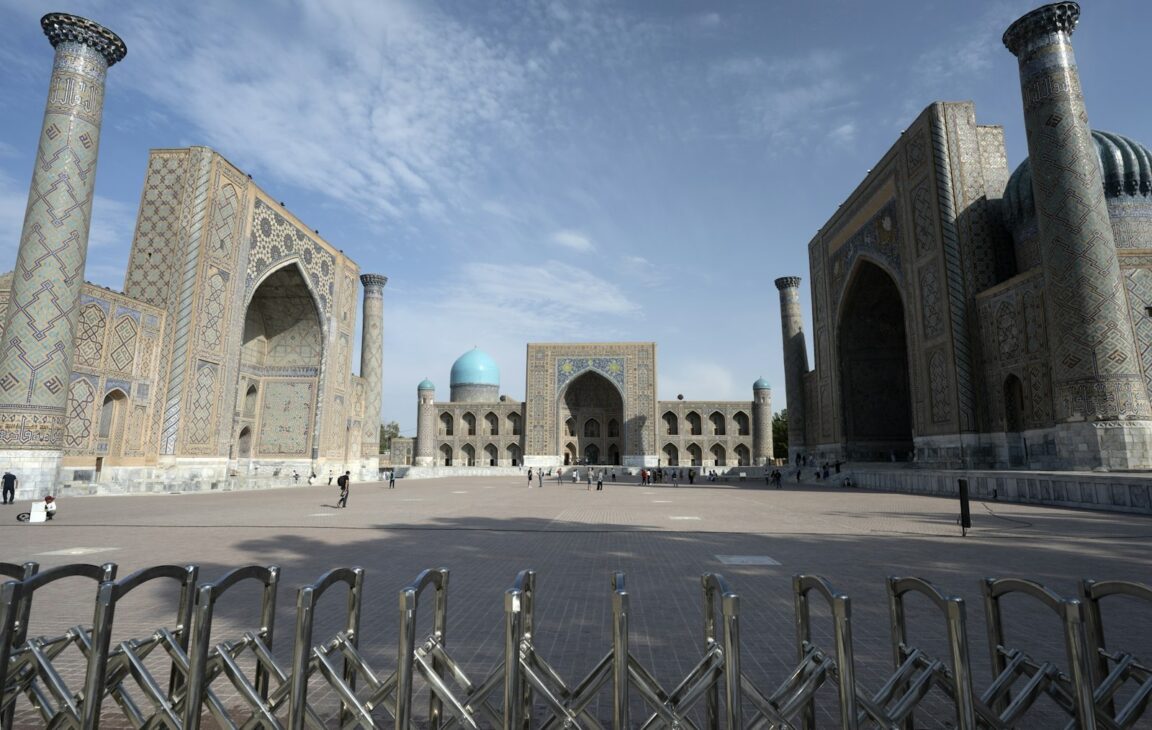
Because Uzbekistan was already the Central Asia trip whose demand was being held back by friction rather than interest. The country holds the strongest concentration of Silk Road architecture anywhere: the Registan square in Samarkand, the intact old city of Bukhara, the walled inner town of Khiva and a capital, Tashkent, rebuilt after the 1966 earthquake with wide avenues, a handsome metro and a growing food scene. High speed Afrosiyob trains link Tashkent, Samarkand and Bukhara in a few hours, which makes a one week trip genuinely workable for Americans with limited vacation time.
Visa free entry also changes the economics of the trip. Removing the application step makes Uzbekistan easier to combine with neighbors on a single itinerary and easier to book on shorter notice, which is when flight deals tend to appear. The US Department of State’s Level 1 rating, its lowest advisory level, puts Uzbekistan in the same broad caution category as many mainstream destinations, and the standard advice is the standard advice anywhere: register your trip if you wish, keep copies of documents, and take normal care in crowded places.
What should a first trip look like under the new rules?
Thirty days is generous, but most first trips will use seven to ten of them. A sensible shape is two nights in Tashkent for the museums, the Chorsu bazaar and the metro, the train to Samarkand for two or three nights around the Registan, Shah-i-Zinda and the Bibi-Khanym mosque, then on to Bukhara for three nights in the old city, with Khiva added by an internal flight or a longer train journey if the schedule allows. Travelers building a wider regional trip can pair the planning logic in the guide to Indonesia’s arrival card system with this one: in both cases the winning move is to settle the entry rules first, from the official source, and then build the fun part of the itinerary on top of a settled foundation.
Book accommodation that clearly handles guest registration, keep the passport validity question simple by traveling on a passport with comfortable time left on it, and keep a photograph of the passport information page stored separately from the document itself. None of that is Uzbekistan specific. It is simply what a visa free regime rewards: travelers who arrive organized get to spend all 30 of their days on the country rather than on its paperwork.
Frequently Asked Questions
Do US citizens need any visa at all for Uzbekistan in 2026?
No, not for visits of up to 30 days for tourism or short business travel. The visa free regime established by the decree signed on 3 November 2025 takes effect on 1 January 2026 and replaces the e-visa requirement that previously applied to most Americans.
What happens on a trip longer than 30 days?
The visa free regime covers 30 days. Travelers who need longer should arrange the appropriate visa or extension basis before traveling, through an Uzbek consulate or the official e-visa portal, rather than assuming the extra days can be sorted out after arrival.
Does the change apply to a December 2025 arrival?
No. The new regime starts on 1 January 2026. US travelers under 55 arriving before that date still need the e-visa, while travelers aged 55 and over already had visa free access under the earlier rule.
Is Uzbekistan considered safe for American travelers?
The US Department of State rates Uzbekistan at Level 1, exercise normal precautions, its lowest advisory level. Normal big city care applies, and the main practical issues for visitors tend to be logistics and heat in summer rather than security.
Do hotels really handle the address registration?
In practice, yes. Uzbek hotels routinely register foreign guests as part of check in, and keeping the registration confirmation with your passport is the standard advice. Guests staying in private homes should confirm with their host how their registration will be recorded.