 James Wolfe
Four days is the right length for a first trip to Paris. It is enough for the Eiffel Tower, the Louvre, Montmartre and a day at Versailles, with time left for long lunches, river walks and the kind of unplanned wandering that makes the city memorable. The plan below groups each day by neighborhood, so you spend your time looking at Paris instead of crossing it.
Paris rewards a slow first visit. The center is compact, the Metro fills the gaps, and the best moments often come between the big sights, on a market street or a bench by the Seine. Book the three timed tickets that matter, the Eiffel Tower, the Louvre and Versailles, and leave the rest loose.
Quick Facts
- How long: Four full days, not counting your arrival and departure days.
- Best base for first-timers: Le Marais or Saint-Germain-des-Pres, where you can walk to most sights.
- Book ahead: Eiffel Tower, Louvre and Versailles tickets, all through the official sites only.
- Getting around: On foot in the center, Metro and RER for longer hops. Check the official RATP site for current ticket and pass options before you go.
- Skip Versailles on: Mondays, when the palace is closed.
- Entry for US citizens: No visa is needed for a short tourist visit, but France is in the Schengen Area and the EU Entry/Exit System applies on arrival. See our guide to the EU Entry/Exit System for US travelers.
How This Itinerary Works
The Seine splits Paris into the Right Bank to the north and the Left Bank to the south, and the arrondissements spiral outward from the center, with the lowest numbers closest to the river. Each day below stays in one part of the city. Day one covers the Eiffel Tower and the seventh arrondissement on the Left Bank. Day two covers the Louvre and the historic center on the Right Bank. Day three heads north to Montmartre. Day four leaves the city for Versailles, or stays in town for a second museum day if palaces are not your thing.
Start each day by 9 or 9:30 in the morning. The first hour at any major sight is the quietest. Plan one big sight per morning, one per afternoon, and nothing after dinner except a walk.
Day 1: The Eiffel Tower, Trocadero and the Seventh Arrondissement
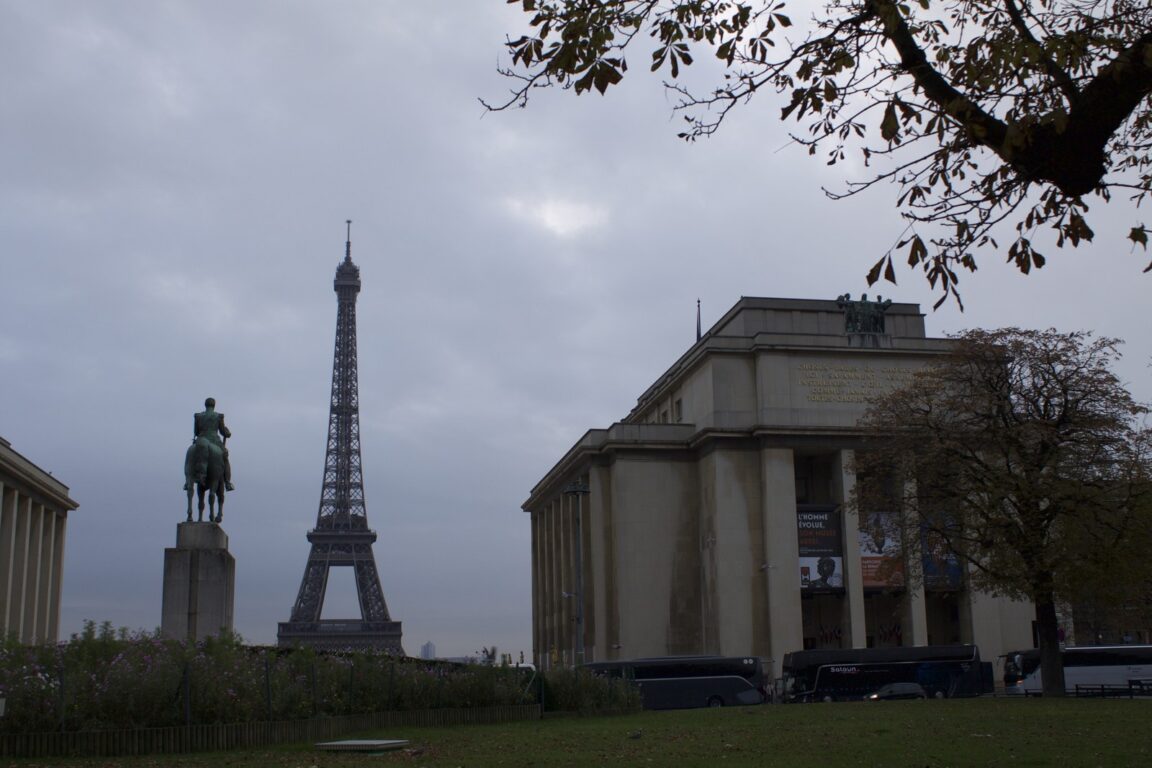
Begin across the river at Trocadero, where the terrace gives you the classic straight-on view of the Eiffel Tower over the gardens. It is the best first photo of the trip, and it is free. From there, cross the Pont d’Iena to the tower itself.
Book your Eiffel Tower ticket in advance on the official site, toureiffel.paris. Prices start at EUR 3.80 for the stairs to the second floor, EUR 6.00 by elevator to the second floor, and EUR 9.20 for the top by elevator, with a top ticket and a glass of champagne from EUR 33.20. Prices vary by age and ticket type, so check the fare that applies to you. The tower has three levels for visitors: the esplanade at ground level, the second floor at 154 meters, and the summit at 276 meters. The official site warns about fraudulent websites posing as official sellers, so buy only at toureiffel.paris.
Allow two to three hours for the tower, including security and the lines. The stairs to the second floor are a good option if you are reasonably fit and the elevator line is long. The summit is worth it on a clear day, when the whole city opens up below you.
After the tower, walk the Champ de Mars and the quiet streets of the seventh arrondissement. Rue Cler is the neighborhood market street, good for a simple lunch from its shops. In the afternoon, walk east to Les Invalides and the Pont Alexandre III, the most ornate bridge in the city. Come back to Trocadero after dark to see the tower lit up.
Day 2: The Louvre and the Historic Center
Day two is the museum day, and the Louvre is the main event. Book a timed ticket on the official site, louvre.fr, which lists the current opening hours. On the day we checked, the museum was open from 9:00 AM to 6:00 PM. Hours and closures change, so confirm the day you plan to visit before you set your schedule.
Do not try to see the whole Louvre. Pick one wing and two or three highlights, then leave while you still enjoy it. The Denon wing holds the Mona Lisa and the Italian paintings and draws the biggest crowds, so go there first if it is on your list, or skip it for the quieter Richelieu or Sully wings. Two to three hours is enough for a first visit.
From the Louvre, walk through the Tuileries Garden toward Place de la Concorde, then cross to Ile de la Cite, the island in the Seine where Paris began. Notre-Dame Cathedral stands at its eastern end. Finish the afternoon in Le Marais, the historic district of mansions, cafes and shops, and stay there for dinner. The Marais is at its best in the early evening, when the shops are open late and the squares fill with people.
Day 3: Montmartre and the Village on the Hill
Montmartre feels like a village that happens to sit inside a capital city, and that is exactly why first-timers love it. Start at the base of the hill and walk up through the winding streets. At the top, the Basilica of Sacre-Coeur stands in white stone above the city, and the steps in front of it are one of the great free viewpoints in Paris.
Behind the basilica, Place du Tertre is the square of portrait artists, and the streets around it hold the village atmosphere that drew artists here a century ago. Keep walking downhill and the crowds thin out quickly. The lower streets around Rue des Abbesses and Rue Lepic are where locals eat and shop, and they make a better lunch stop than the square at the top.
Spend the afternoon back in the center. The Marais deserves a second look in daylight if you only saw it at night, or walk the banks of the Seine from Ile Saint-Louis toward the Latin Quarter. The Latin Quarter, around the Sorbonne, is the student heart of the Left Bank, full of bookshops, cafes and narrow streets. If you want a second museum, this is the day for it: pick one small museum rather than another giant, and keep the evening free for a long dinner.
Day 4: Versailles, or a Second Museum Day
Versailles is the classic Paris day trip, and it needs a full day. The Palace of Versailles is open from 9:00 am to 5:30 pm and closed on Mondays, December 25, January 1 and May 1. The Estate of Trianon opens at noon and closes at 5:30 pm, also closed on Mondays, and the Gardens and Park are open from 8:00 am to 6:00 pm. Check the official site, en.chateauversailles.fr, for current hours before you go, and buy tickets only through the official ticket office: the palace warns about counterfeit tickets sold elsewhere.
The palace holds about 90,000 artworks, and the State Apartments, the Hall of Mirrors and the gardens are the highlights for a first visit. Plan at least three hours inside the palace and two more for the gardens, and more if you walk out to the Trianon palaces and Marie-Antoinette’s estate. A special exhibition on Marie-Antoinette runs from September 22, 2026 to January 24, 2027.
If a palace day does not appeal, spend day four on a second museum day in Paris. The Musee d’Orsay, in a former railway station on the Left Bank, holds the great Impressionist collection and is a manageable size for a morning. Pair it with a slow afternoon in Saint-Germain-des-Pres.
Paris also works as the start or the end of a longer European trip. If you are continuing on, our Grand Capitals of Europe tour shows how Paris fits with other great capitals. And if London is next, the Eurostar runs from Paris to London, and US citizens should check our UK ETA guide before that leg.
Where to Stay in Paris for a First Trip
Where you stay matters more in Paris than in most cities, because the right neighborhood puts the sights on foot and the wrong one puts them on the Metro. For a first trip, stay central, on or near the river, in the first through seventh arrondissements.
Le Marais, in the third and fourth arrondissements, is the best all-around choice for first-timers: central, walkable, full of restaurants and shops, and lively in the evening. Saint-Germain-des-Pres, on the Left Bank, is the classic cafe district, elegant and a little quieter. The Latin Quarter is livelier and a little younger, with student energy and good value. The seventh arrondissement, near the Eiffel Tower, is residential and calm, which suits families, though it has fewer restaurants. Montmartre is charming, but it sits on a hill at the edge of the center, so expect longer walks or Metro rides to most sights.
Whatever neighborhood you pick, check the walk to the nearest Metro station and to the sights you plan to visit most. In Paris, the difference between a five-minute walk and a twenty-minute walk shapes the whole trip.
Getting Around Paris
Central Paris is a walking city. The Louvre, the Marais, Ile de la Cite, Saint-Germain and the Latin Quarter all sit within about thirty minutes of each other on foot, and walking is how you find the city. For longer distances, the Metro and the RER suburban trains cover the city and the airports, and buses fill in the gaps.
For tickets and passes, check the current options on the official RATP site, ratp.fr, before you travel. Products and prices change, and the official site is the authoritative source for what is on sale now. Buy from the official site or app, or from station machines, and keep your ticket until you leave the system.
Two practical habits help. First, group your sightseeing by neighborhood, as this itinerary does, so you take the Metro once or twice a day rather than all day. Second, plan your Versailles day around the trains and the palace opening time, and leave the city early, since the palace and gardens take a full day.
Mistakes to Avoid in Paris
- Buying Eiffel Tower or Versailles tickets from resellers. Both official sites warn about fraudulent and counterfeit sellers. Book only at toureiffel.paris and en.chateauversailles.fr.
- Planning Versailles on a Monday. The palace and the Trianon estate are both closed on Mondays.
- Trying to see the whole Louvre. Pick a wing and a few highlights, then leave while you still enjoy it.
- Skipping timed tickets. The Eiffel Tower, the Louvre and Versailles all use timed entry, and same-day availability is not guaranteed.
- Staying far from the center to save money. A cheaper hotel outside the center often costs the savings back in transit time and fares, and it shortens every evening.
- Packing day one too full. Jet lag is real, and Paris is best met slowly. Keep arrival day light and save the big sights for day two onward.
Frequently Asked Questions
Do US citizens need a visa to visit Paris?
No visa is needed for a short tourist visit to France. France is in the Schengen Area, and US citizens traveling for short stays go through the EU Entry/Exit System on arrival, which records fingerprints and a photo instead of stamping the passport. Our EES guide for US travelers explains the process in full.
Is four days enough for a first trip to Paris?
Yes. Four days covers the Eiffel Tower, the Louvre, Montmartre and Versailles with time for meals and wandering. It is not enough to see everything, and it does not try to be. If you have a fifth day, spend it on a second museum or a day trip, or simply revisit the neighborhood you liked best.
Should I go up the Eiffel Tower or just see it from Trocadero?
Do both. Trocadero gives you the classic view for free, and the tower itself gives you the city from 154 meters at the second floor or 276 meters at the summit. Book a timed ticket on the official site, and consider the stairs to the second floor if the elevator line is long.
Can I visit Versailles in half a day?
Not well. The palace, the gardens and the Trianon estate each deserve hours, and the trip out and back adds to the day. Plan a full day, arrive near opening time, and remember the palace is closed on Mondays.
Where should first-timers stay in Paris?
Le Marais or Saint-Germain-des-Pres are the best bets for a first trip, because both are central, walkable and full of restaurants. The Latin Quarter suits travelers who want livelier streets and good value, and the seventh arrondissement suits families who want quiet nights near the Eiffel Tower.
How do I get around Paris?
Walk in the center and use the Metro and RER for longer distances. Check the current ticket and pass options on the official RATP site, ratp.fr, before you travel, since products and prices change. Group your sightseeing by neighborhood so you ride the Metro once or twice a day rather than all day.
Sources checked November 9, 2026: the official Eiffel Tower site (toureiffel.paris), the Louvre (louvre.fr), the Palace of Versailles (en.chateauversailles.fr) and RATP (ratp.fr). Ticket prices and opening hours change, so confirm them on the official sites before you travel.