 LeVar Thomas
Three days in Lisbon is enough to see the city properly, if the days are planned by neighborhood. Day one belongs to Alfama and the castle hill, day two to Baixa, Chiado and Belem, and day three to a day trip to Sintra. That order works because it groups the sights by where they are, keeps the walking manageable, and saves the longest journey for the day when the traveler is already comfortable with the city. This itinerary is built for a first visit, and it assumes a traveler who wants the main sights, the best views and a sense of how Lisbon fits together, without rushing from one end of the city to the other.
The short version is simple. Stay in Baixa or Chiado for the most central base, or in Alfama for atmosphere and views. Use the metro from the airport, walk as much as possible, and take tram 28 through Alfama rather than as a full tour. Book Pena Palace for a timed entry before the Sintra day, and start the castle hill early to avoid the crowds. The details below follow that plan day by day, with where to base, how to arrive, and the mistakes that first-timers make most often.
Quick Facts
The plan: Day 1 Alfama and the castle hill, Day 2 Baixa, Chiado and Belem, Day 3 Sintra by train.
Where to base: Baixa or Chiado for first-timers who want to be central, Alfama for atmosphere and views, Belem for quieter nights.
Getting in: Lisbon Airport has a metro station, Aeroporto, on the Red Line, with direct trains into the center. The Metropolitano de Lisboa site has the current network map and timetables.
Getting around: Walk in the old districts, use the metro for longer hops, and take tram 28 through Alfama. Carris operates the trams, and its site has timetables.
Key booking: Pena Palace tickets are sold for a specific date and time, and entry to the palace is only at the scheduled time, so book before the Sintra day.
UNESCO sites: The Monastery of the Hieronymites and the Tower of Belem were listed by UNESCO in 1983, under criteria (iii) and (vi).
Getting From the Airport and Where to Base
Lisbon Airport is close to the city, and the metro is the simplest way in. The airport has a metro station, Aeroporto, served by the Red Line, with direct trains into the center of Lisbon. The Metropolitano de Lisboa site has the current network diagram and timetables, and the journey into the center is a short ride. Taxis and rideshares are also available at the airport, and they make sense for travelers with heavy luggage or for arrivals late at night, when the metro is less convenient.
Where to stay depends on the kind of trip. First-timers who want to be central should base in Baixa or Chiado. Baixa is the flat, grid-planned downtown between the castle hill and the river, and it puts the traveler within walking distance of the main squares, the Chiado shops and the riverfront. Chiado is the elegant shopping and theater district just uphill from Baixa, and it suits travelers who want cafes, bookshops and a central base with character. Alfama suits travelers who want atmosphere. It is the old Moorish quarter, a maze of narrow lanes and staircases under the castle, and it is quieter at night and full of views. It is also hilly, so it suits travelers who are comfortable with steps and slopes. Belem suits travelers who want quieter nights and a riverside setting, but it is further from the center, so it works best for a second visit or for travelers who do not mind the tram or bus into town. Families with small children and travelers with mobility concerns should favor Baixa, which is flat, over Alfama, which is steep.
Day 1: Alfama and the Castle Hill
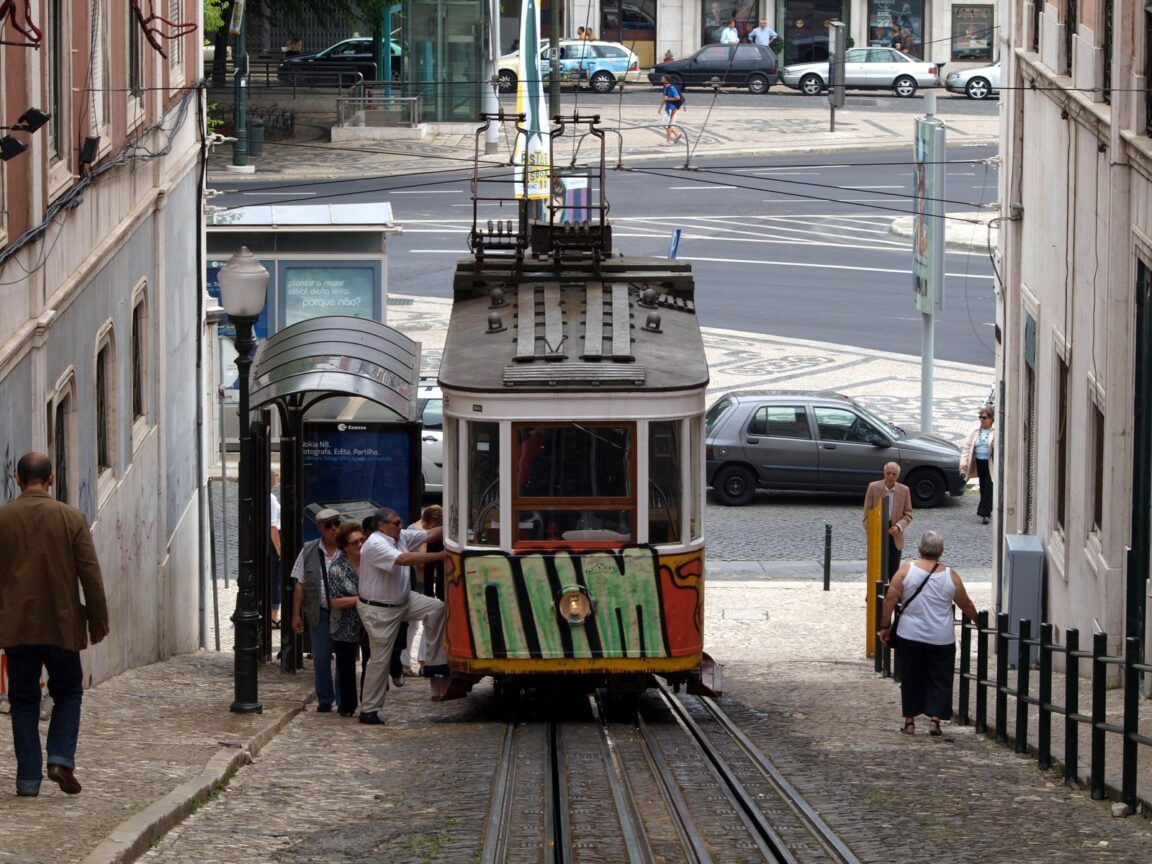
Start day one early, because the castle hill is at its best in the morning light and before the crowds arrive. Alfama is the oldest district in Lisbon, and it is best explored on foot. The lanes are narrow and steep, and they wind between small squares, churches and viewpoints. The cathedral, the Se, sits at the foot of the hill, and it is worth a look before the climb. From there, the lanes climb toward the castle, and the views open up over the rooftops and the river with every turn. The classic way to arrive is on tram 28, the yellow tram that runs through Alfama and the castle hill. Carris operates the trams, and its site has the current timetables. The tram is a normal city service, not a tour, so it gets crowded, and the ride is best taken early or late in the day.
Castelo de Sao Jorge sits at the top of the hill, and it is the main sight of the day. The castle is a hilltop fortress with walls, towers and a large courtyard, and the views from its ramparts take in the whole of the city and the river. The official Castelo de Sao Jorge site has the current opening times and ticket prices, and travelers should check them before the visit, since they change by season. The castle is also a good place to understand the layout of Lisbon, because the city spreads out below it in every direction. Allow at least an hour for the castle itself, and more if the traveler wants to walk the walls and spend time at the viewpoints.
After the castle, the afternoon belongs to Alfama itself. The lanes below the castle hold the viewpoints that Lisbon is known for, including the Portas do Sol and the Graca viewpoints, which look out over the rooftops and the river. The district is also the home of fado, the traditional music of Lisbon, and the small restaurants and bars of Alfama are where fado is heard in the evening. A first-timer should spend the evening in Alfama, eating in a small restaurant and listening to fado if the opportunity arises, rather than rushing back to the center. The day ends where it began, on the castle hill, and the traveler will have seen the oldest part of Lisbon at its best.
Day 2: Baixa, Chiado and Belem
Day two starts in Baixa, the downtown of Lisbon, and moves west to Belem in the afternoon. Baixa is the flat, grid-planned district rebuilt after the 1755 earthquake, and its main squares are the Praca do Comercio, on the riverfront, and the Rossio, in the center of the district. The streets between them are lined with shops and cafes, and the district is easy to walk. From Baixa, the Elevador de Santa Justa lifts travelers to the Chiado district, and the walk through Chiado is one of the pleasantest in the city. Chiado holds the bookshops, the theaters and the cafes of old Lisbon, and it is a good place for a slow morning and a long lunch.
The afternoon belongs to Belem, the riverside district west of the center. Belem is where the great Portuguese voyages of discovery began, and its monuments are the most important in Lisbon. The Monastery of the Hieronymites and the Tower of Belem are a single UNESCO World Heritage property, listed in 1983 under criteria (iii) and (vi). UNESCO notes that construction of the monastery began in 1502 and that it exemplifies Portuguese art at its best, while the nearby Tower of Belem was built to commemorate Vasco da Gama’s expedition and is a reminder of the great maritime discoveries. The monastery is a large, ornate building with a cloister and a church, and the tower is a small fortress on the river that once guarded the entrance to the harbor. Both are worth a visit, and the monastery in particular rewards time spent in its cloister and its church.
Belem is also the place for the custard tarts that Lisbon is known for. The original bakery in Belem, next to the monastery, has been making pasteis de Belem for generations, and the tarts are best eaten warm, with cinnamon and powdered sugar. The riverside in Belem is also worth a walk, with views across the Tagus to the south bank and to the bridge that spans the river. The day ends with the tram or bus back to the center, and the traveler will have seen the two ends of Lisbon’s history, the downtown rebuilt after the earthquake and the riverside where the voyages began.
Day 3: Sintra Day Trip
Day three is a day trip to Sintra, and it needs to be planned in advance. Sintra is a town in the hills west of Lisbon, and it is best reached by train. The Parques de Sintra site explains that the Lisbon to Sintra train is the CP Sintra Line, with departures from Oriente, Rossio and Entrecampos stations in Lisbon, and that the bus 434 (Scotturb) runs from Sintra station to Pena. The train is the simplest option, and Rossio station, in the center of Lisbon, is the most convenient departure point for most travelers.
Pena Palace is the main sight in Sintra, and it is the reason the day trip needs planning. The palace is a romantic, castle-like building crowning the Sintra hills, and it is the jewel in the crown of the artist king, as the Parques de Sintra site describes it. Tickets for the Palace of Pena are only available for a specific date and time, and entrance to the palace is only at the scheduled time. The park is open from 09:00 to 19:00, with last ticket and last admission at 18:00, and the palace is open from 09:30 to 18:30, with last ticket at 17:30 and last admission at 18:00. The Pena shuttle runs every 15 minutes between the park stop and the palace stop. The Essential Visit ticket for an adult aged 18 to 64 costs 20 euros, for a youth aged 6 to 17 or a senior over 65 it costs 18 euros, and a family ticket for two adults and two youths costs 65 euros. The Complete Visit ticket for an adult costs 45 euros, and a ticket for the park alone costs 12 euros for an adult. Travelers should book the Essential or Complete Visit in advance and choose a morning entry time, so that the afternoon is free for the rest of Sintra.
After Pena, the rest of Sintra is worth the afternoon. The Moorish Castle, the National Palace of Sintra in the town center, and the gardens of Monserrate are all within reach, and the town itself is a pleasant place to walk and to eat. The bus 434 links the main sights, and the walk between them is hilly but rewarding. Travelers should allow a full day for Sintra, and should return to Lisbon in the evening, when the town is quieter and the train is less crowded. The day trip works best when Pena is booked first and the rest of the day is left flexible.
Mistakes to Avoid
The most common mistakes in Lisbon are easy to avoid once they are named. The first is trying to see everything on foot without using the metro or the trams. Lisbon is hilly, and the distances between districts are longer than they look on a map. The second is leaving Pena Palace until the last minute. The timed entry means that a traveler who arrives in Sintra without a booking may find the palace sold out for the day, and the trip is wasted. The third is spending the whole trip in one district. Lisbon is a city of neighborhoods, and a traveler who stays only in Baixa misses Alfama, just as a traveler who stays only in Alfama misses Belem. The fourth is underestimating the hills. Comfortable shoes are essential, and the day should be planned around the hills rather than against them. The fifth is eating only in the most touristy squares. The best food in Lisbon is in the small restaurants of Alfama and the side streets of Baixa and Chiado, not in the restaurants that face the main squares. The sixth is forgetting that the EES border system now applies to US travelers entering Europe, as explained in the EU Entry/Exit System guide, and that the passport should be kept close at hand on arrival.
Frequently Asked Questions
Is 3 days enough for a first trip to Lisbon?
Yes. Three days is enough for Alfama and the castle hill, Baixa and Chiado and Belem, and a day trip to Sintra. The itinerary above covers the main sights and leaves time for wandering, and it works because the days are grouped by neighborhood.
Where should first-timers stay in Lisbon?
Baixa or Chiado are the best bases for first-timers, because they are central and flat. Alfama suits travelers who want atmosphere and views and do not mind hills, and Belem suits travelers who want quieter nights.
How do I get from Lisbon Airport to the center?
The airport has a metro station, Aeroporto, on the Red Line, with direct trains into the center. The Metropolitano de Lisboa site has the current network map and timetables. Taxis and rideshares are also available at the airport.
Do I need to book Pena Palace in advance?
Yes. Pena Palace tickets are sold for a specific date and time, and entry to the palace is only at the scheduled time. Book the Essential or Complete Visit before the Sintra day, and choose a morning entry time.
What is tram 28, and is it worth riding?
Tram 28 is the classic yellow tram that runs through Alfama and the castle hill. It is a normal city service operated by Carris, so it gets crowded, and the ride is best taken early or late in the day rather than as a full tour.
When is the best time to visit the castle?
Early in the morning, when the light is best and the crowds are smallest. The official Castelo de Sao Jorge site has the current opening times and ticket prices, and travelers should check them before the visit.
Sources checked on 9 November 2026: the UNESCO listing for the Monastery of the Hieronymites and Tower of Belem, the Parques de Sintra page for the Park and National Palace of Pena, the official Castelo de Sao Jorge site, the Metropolitano de Lisboa site, and the Carris site. The Grand Capitals of Europe journey through Paris, Rome, Amsterdam and Prague is a useful companion for travelers planning a wider European trip. Travelers should recheck opening times, ticket prices and transport timetables before departure, since they change by season.