 James Wolfe
Start with the markets, eat on the street, and let each neighborhood set the pace. That is the simplest way to eat well in Mexico City, because the best food in the city is rarely hidden behind a reservation book. It is on a griddle in Coyoacan, in a crowded aisle in Roma Norte, on a corner in the Centro Historico, and in a flower market where lunch stalls sit beside buckets of marigolds. Plan around those places and the rest of the trip falls into place.
Quick Facts:
Best for: first time visitors who want markets, street food, and neighborhood eating in one trip.
Key markets: Mercado de Coyoacan, Mercado Roma, and Mercado Jamaica, the flower and food market.
Key neighborhoods: Centro Historico, Roma Norte, Condesa, and Coyoacan.
Dishes to try: tacos al pastor, tlacoyos, quesadillas, esquites, and churros.
How to plan: pick one market and one neighborhood per outing, and leave room for an unplanned stop.
Where should you start eating in Mexico City?
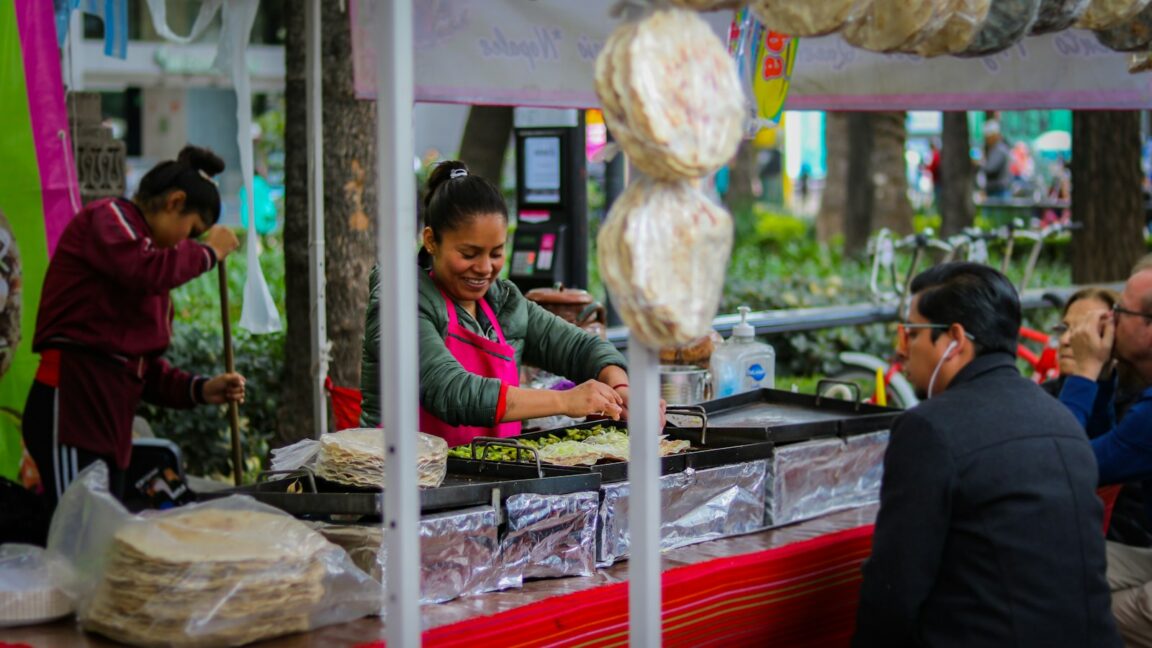
Start at a market, because a market shows the whole city in one place. Vendors sell the same ingredients that end up in restaurant kitchens, and the food stalls cook them simply, in front of you, at the pace of the lunch crowd. A market visit also solves the first problem every visitor faces, which is choice. Instead of studying a long list of restaurants, walk an aisle, watch what is cooking, and follow the line of local customers. A long line at a market stall is usually the best review available, and it costs nothing to read.
Markets also teach the geography of the city. Coyoacan feels village-like and calm, Roma Norte feels young and walkable, Condesa feels leafy and residential, and the Centro Historico feels dense and historic. Eating in each of them in turn gives a clearer picture of the city than eating in one place for three days. Budget two or three hours for a market morning, and treat lunch as part of the visit rather than a separate event. Bring cash in small bills, because many small stalls do not take cards, and carry a bag if you plan to buy fruit, bread, or flowers to take home.
Which markets are worth a food trip?
Mercado de Coyoacan
Mercado de Coyoacan is the neighborhood market for one of the most walkable parts of the city. The stalls sell produce, flowers, crafts, and cooked food, and the food section is the reason to go hungry. Tostadas topped with tuna, chicken, or pata, the pickled pig’s feet that regulars swear by, are a Coyoacan market classic, and tlacoyos, thick oval cakes of blue corn masa filled with beans or cheese, are cooked on griddles all morning. Walk the market first, then sit down at a stall that is busy with local shoppers. The market sits near the main squares of Coyoacan, so a market visit pairs naturally with a slow walk through the neighborhood afterward, which is exactly what a heavy market lunch calls for.
Mercado Roma
Mercado Roma is a different kind of market. Its own site describes it as the first gourmet market in Mexico City, and the building on Queretaro 225 in Colonia Roma gathers small food stalls under one roof, with a ground floor and patio, a mezzanine, and restaurants, a terrace, and bars upstairs. The market lists its ground floor and patio hours as 9:00 to 21:30, its mezzanine as 10:00 to 19:00, and its first floor restaurants, terrace, and bars as 13:00 to 2:00, with later closing on weekends. That structure makes it a useful stop for a group with different tastes, because one person can order tacos while another orders a salad, a beer, or a coffee, and everyone eats together. It is polished and popular, so arrive before the lunch rush if you want a table, and treat it as a tasting stop rather than the only market on the trip. The traditional markets elsewhere in this guide show the other side of the city, and both sides are worth seeing. For current details, check Mercado Roma before you go.
Mercado Jamaica
Mercado Jamaica is the flower and food market, and it earns its reputation the moment you walk in. Flowers fill whole aisles, from marigolds to roses to bundles of herbs, and the smell of flowers mixes with the smell of food from the stalls along the edges. It is a working market, not a showpiece, so go in the morning when the flower trade is at its busiest and the food stalls are cooking for the people who work there. Order something simple, like quesadillas or a plate of tacos, eat standing up or at a small counter, and then buy a bunch of flowers for the price of a snack. It is one of the best places in the city to see how food and daily life fit together, and it rewards visitors who arrive curious rather than with a fixed plan.
What should you eat on the street?
Tacos al pastor are the dish to start with, and they are easy to find once you know what to look for. Thin slices of marinated pork are cut from a vertical spit, called a trompo, onto a small corn tortilla, then topped with onion, cilantro, and pineapple, with salsa on the side. The best stands cook the meat to order, keep the tortillas warm, and let you build each taco yourself. Watch the trompo, and if the pork is turning and the cook is slicing to order, you are in the right place. Eat tacos al pastor standing up, in two or three bites, and order a second round before you decide whether you need a third.
Tlacoyos are the quiet classic of the street. They are oval cakes of masa, often made with blue corn, stuffed with beans, cheese, or fava beans, cooked on a griddle, and topped with nopales, onion, and salsa. They are filling, cheap, and easy to eat while walking, and they show up at markets and on street corners all over the city. Quesadillas in Mexico City are a separate question worth knowing about, because here they do not always contain cheese. A quesadilla is a folded tortilla, usually corn, filled with something like squash blossom, mushroom, huitlacoche, or cheese, and cooked on a griddle or fried. Ask what the fillings are, point at what looks good, and try one with squash blossom if it is on offer.
Esquites are corn in a cup, and they are the ideal afternoon snack. Kernels are served warm in a cup with mayonnaise, cheese, chili, and lime, eaten with a spoon while you walk. Churros are the sweet finish. They are ridged sticks of fried dough, rolled in sugar, and often served with chocolate for dipping. Buy them from a bakery or a street vendor and eat them warm, because a cold churro is a different and lesser thing. Together these five dishes give a fair picture of street food in the city, and none of them needs a reservation, a dress code, or a long wait.
Where should you eat in each neighborhood?
Centro Historico street food
The Centro Historico is the historic center, and its street food is fast, dense, and everywhere. Streets around the Zocalo and the main avenues fill with carts and small stands selling tacos, tortas, tamales, and fruit cups, and the best approach is to walk, look, and stop where the food is being cooked in front of you. Morning belongs to tamales and atole, the warm corn drink sold from carts, while lunch belongs to tacos and tortas, the big sandwiches filled with milanesa, ham, or pastor meat. The area is busy and the sidewalks are narrow, so keep your bag in front of you, eat at the counter, and move on. It is also a good place to try fruit with chili and lime from a cart, which is refreshing after a morning of walking in the sun.
Roma Norte and Condesa
Roma Norte and Condesa sit side by side, and together they are the easiest place in the city to eat well without a plan. Roma Norte holds Mercado Roma and a dense grid of cafes, bakeries, and small restaurants, while Condesa has tree lined streets, parks, and a slower pace. In Roma Norte, start at the market, then walk the streets around it for coffee and pastries. In Condesa, look for the small restaurants on the side streets rather than the main avenues, and eat outside when the weather allows. Both neighborhoods are walkable and safe to explore on foot during the day, and both reward the habit of stopping at a place because it looks busy and smells good rather than because it appears in a guide.
Coyoacan
Coyoacan rewards a slower day. The market is the anchor, but the neighborhood around it is full of cafes, ice cream shops, and small restaurants that suit a long lunch. After the market, walk to the main squares, try a churro or an ice cream, and sit for a while. Coyoacan is also a good place to try a sit down meal built around the same dishes found at the market, because the restaurants here tend to cook traditional food in a calmer setting. If you only have one market day and one neighborhood day, make them the same day in Coyoacan, and let the market set the menu.
How do you order and pay like a local?
Ordering is simpler than it looks. Greet the vendor, ask what is available, and point if you are unsure of a word. Most stalls display their food or have a short menu, and many vendors are happy to explain a dish in a few words. Order one thing at a time, because portions are small and it is easy to try a second dish at the next stall. Cash is the default at street stalls and in traditional markets, so carry small bills and coins, and keep them in a pocket that is easy to reach. Some market halls and larger restaurants take cards, but a card is not a plan. Ask before you order if you are unsure, and never assume a stall takes a card because the one next to it does.
Salsa is a choice, not a test. Vendors usually offer a mild salsa and a hot one, and the right answer is the one you enjoy. Ask which is which, try a little first, and add more if you want it. The same goes for lime, salt, and onion, which are usually on the table or the counter for you to add yourself. Eat where locals eat, at the hours locals eat, and you will eat well. Lunch is the main meal in Mexico City, so the best time for street food is late morning through mid afternoon, when the griddles are hot and the stalls are at their busiest.
What mistakes should first timers avoid?
The most common mistake is planning every meal in advance. A fixed restaurant list leaves no room for the stall you pass by chance, and in Mexico City the chance stall is often the best meal of the day. Keep one or two meals planned and leave the rest open. A second mistake is eating only in one neighborhood, because the city changes quickly from one area to the next, and the food changes with it. A third mistake is skipping the markets in favor of restaurants alone, because markets are where the ingredients, the cooks, and the regular customers all meet.
Another mistake is underestimating the altitude and the walking. Mexico City sits high above sea level, so walk slowly on the first day, drink water, and eat a real lunch rather than skipping meals. A market lunch is a good cure for a tired morning, because it is quick, filling, and easy to find. Finally, do not treat street food as a dare. It is daily food for millions of people. Choose busy stalls, eat food that is cooked to order, and wash your hands or carry hand sanitizer, and you will be eating the way the city eats.
Where can you keep planning?
Use this guide as a starting route, then build the rest of the trip around it. If you are planning a wider Mexico trip, see the best beach resorts in Tulum by travel style for a beach stop after the city, and for another city built for walking and eating neighborhood by neighborhood, see where to stay in Chicago for first timers. Eat at one market, walk one neighborhood, and try one dish you have never had before, and Mexico City will do the rest.