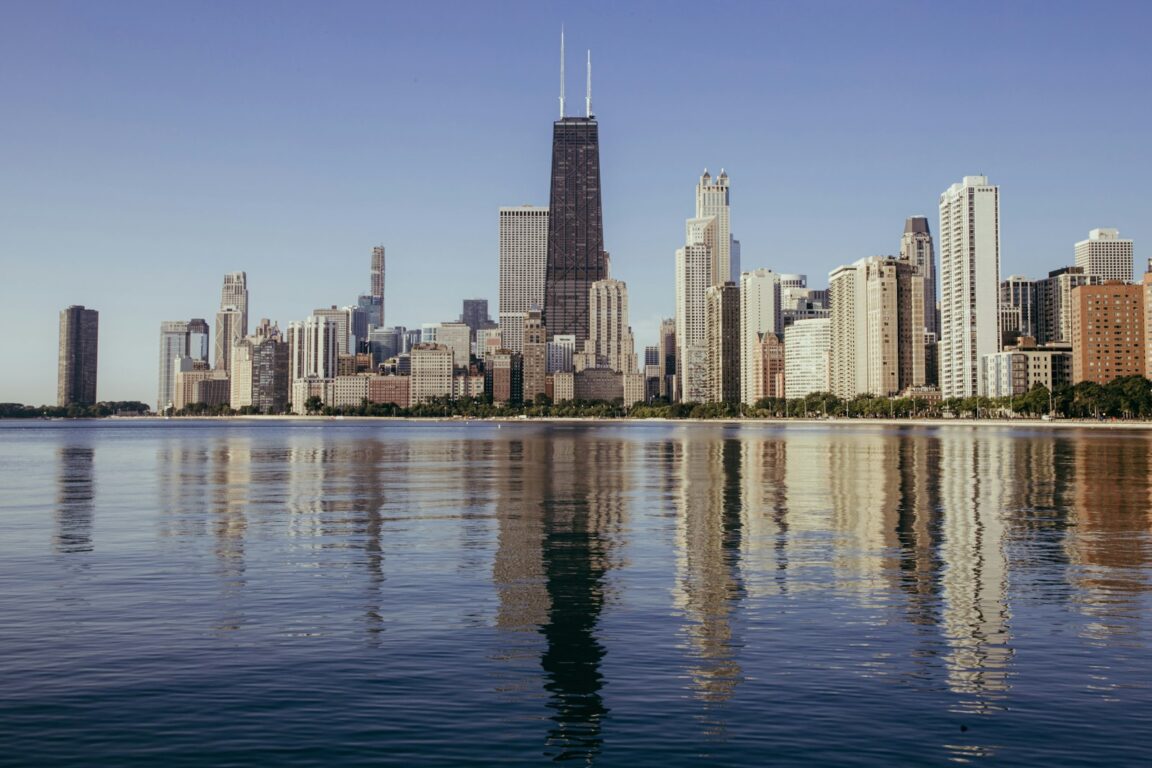
 LeVar Thomas
For a first trip to Chicago, stay in the Loop or River North if you want the main sights on foot, choose the Gold Coast or Lincoln Park if you want a quieter, more residential base, and pick Logan Square or Hyde Park only if you are comfortable using the CTA every day and you want a more local feel. There is no single best neighborhood for everyone, because Chicago is a city of distinct areas, and the right choice depends on how much you want to walk, how late you want to stay out, and how much time you want to spend on trains and buses.
Chicago is big, flat, and easy to navigate once you understand its shape. The Loop is the downtown core, bounded by the Chicago River and the elevated train tracks that give it its name. North of the river is River North and the Gold Coast, with the Magnificent Mile running between them. Farther north are Lincoln Park and Lakeview, then the neighborhoods that feel more like villages inside a city. To the south is Hyde Park, home to the University of Chicago, and to the west are Logan Square, Wicker Park and Pilsen. Choose Chicago, the city official tourism organization, describes Chicago as a city of 77 community areas, and its neighborhood guides are the best starting point for checking what is where.
Quick Facts
Best first-timer base: The Loop or River North, for walkable access to the river, Millennium Park, theaters and restaurants.
Best quieter base: The Gold Coast or Lincoln Park, for tree-lined streets, lakefront paths and a slower evening pace.
Transit: The CTA runs the elevated and subway trains known as the L, plus city buses. The Red and Blue Lines run through the Loop and serve the airports, and the Brown, Orange, Pink and Green Lines serve the Loop and the surrounding neighborhoods.
Getting from the airports: The Blue Line serves O’Hare and the Orange Line serves Midway, and both run into the Loop. Check the CTA site for current service before you travel.
What to budget for: Check hotel rates for your exact dates, because prices change sharply with conventions, sports events and the season. No rate quoted in a guide can replace a live search.
Neighborhoods covered: The Loop, River North, Gold Coast, Lincoln Park, Logan Square, Hyde Park, plus the West Loop, Wicker Park, Pilsen and the South Loop.
How do you choose a neighborhood in Chicago?
Start with three questions. First, how much walking do you want to do? If you want to step out of your hotel and be at Millennium Park, the Chicago Riverwalk, or a theater in ten minutes, stay in the Loop or River North. Second, how do you feel about trains? If you are happy to ride the L for 15 to 25 minutes each way, Lincoln Park, Logan Square and Hyde Park open up, and you will get more space and a more local feel for the same effort. Third, what do you want your evenings to feel like? River North and the West Loop are lively at night, the Gold Coast and Lincoln Park are calmer, and Logan Square and Pilsen feel more like a night out in a neighborhood than a night out downtown.
International visitors should also sort out travel documents before choosing a hotel. Our guide to online US passport renewal is useful if your passport needs attention, and if Chicago is the first stop on a longer trip that continues to Europe, our guide to the EU Entry/Exit System for US travelers explains the new border system you will meet there.
Should you stay in the Loop?
Yes, if this is your first visit and you want the simplest plan. The Loop puts Millennium Park, the Art Institute of Chicago, the Chicago Riverwalk, the Theater District and the main L stations within a short walk, and it is the easiest place to start and end each day. In the morning you can walk to the Bean, in the afternoon you can take a river architecture tour from a nearby dock, and in the evening you can walk to a show or a restaurant without planning a train ride. The trade off is that the Loop is quieter at night and on weekends than the neighborhoods around it, and the streets can feel businesslike after offices close. That suits travelers who want a central, practical base and who plan to spend evenings in restaurants and theaters rather than in late night bars.
Stay in the Loop if you are here for two or three days and you want to see the big sights without learning the transit system first. Stay near a Red, Blue, Brown or Orange Line station if you can, because that gives you a direct ride to the airports and to the north side. Check whether your hotel is close to a station you can use at night, and walk the route once in daylight so you know it after dark. The Loop is also the best choice if you are traveling with older relatives or young children, because the short walks and the flat streets make the days easier.
What is River North like for first timers?
River North, just north of the river from the Loop, is the most energetic first timer base after the Loop itself. It is full of hotels, restaurants, galleries and nightlife, and it sits within walking distance of the Magnificent Mile, Navy Pier and the Riverwalk. Choose Chicago describes River North as a place for art galleries, restaurants and nightlife, and that matches the feel on the ground: busy sidewalks, a lot of choice at dinner, and an easy walk back to your hotel after an evening out. It is a good choice if you want the city to feel lively when you step outside, and if you like having many restaurants within a few blocks.
>
Is the Gold Coast a good quieter choice?
Yes, the Gold Coast is one of the best quieter choices for first timers. It sits just north of River North, between the lake and the Magnificent Mile, and it feels residential in a way River North does not. The streets are lined with historic mansions and apartment buildings, the lakefront is close, and Oak Street Beach gives you a place to walk in the morning before the city wakes up. You can still walk to the Magnificent Mile, to the river, and to the Red Line, but you return at night to a calmer street. That balance makes it a good choice for couples, for travelers who want a good night sleep, and for anyone who likes to start the day with a lakefront walk.
What is Lincoln Park like for first timers?
Lincoln Park is a good choice if you want a neighborhood that feels lived in, with parks, cafes, bookshops and a lakefront trail, and you do not mind a bus or train ride into the Loop. The area around the Lincoln Park Zoo, which is free to enter, the lakefront, and the streets near Armitage Avenue gives you a pleasant morning walk and a calmer evening than downtown. Choose Chicago describes Lincoln Park as a neighborhood with the zoo, the lakefront and a lively dining scene, and that mix is why it works well for a longer first trip, for families, and for travelers who want a base that feels like a home neighborhood rather than a hotel district.
Should you stay in Logan Square?
Logan Square is a good choice if you have been to Chicago before, or if you are a confident first timer who wants a local, creative neighborhood with good food and a strong coffee and bar scene. The area around the Logan Square Blue Line station, Milwaukee Avenue and the boulevards has restaurants, bakeries, music venues and parks, and it feels very different from downtown. You will hear more Spanish and more neighborhood life, and you will pay less for a room than in River North, in most cases. It is a good base for travelers who plan to spend evenings out in the neighborhood and who like to explore on foot.
What about Hyde Park?Hyde Park, on the South Side, is home to the University of Chicago, the Museum of Science and Industry, and the lakefront, and it is the best choice if your trip is built around the university, a conference there, or the museums on the South Side. It has bookshops, cafes, and a quiet, academic feel, and the lakefront path gives you a different view of the city. Choose Chicago lists Hyde Park as a neighborhood with cultural institutions and a strong sense of place, and that is accurate.
What about the West Loop?
The West Loop, just west of the Loop across the river, is one of the best food neighborhoods in the city, with restaurants, cafes and shops along Fulton Market and Randolph Street. It is a good choice if food is the main reason for your trip, and you want to walk to dinner every night. It is close enough to the Loop to walk or take a short bus ride, and the Pink and Green Lines serve the area. The trade off is that it is less scenic than the lakefront neighborhoods, and it can be busy on weekend evenings.
How do you get around Chicago on the CTA?
The CTA is the key to choosing well. The L is a network of elevated and subway lines that meet in the Loop, and the bus network fills in the gaps. The Red Line runs north and south through the Loop and serves Wrigleyville and the north side. The Blue Line runs northwest to O’Hare and through Logan Square and Wicker Park. The Brown Line serves Lincoln Park and the north side. The Orange Line serves Midway Airport and the southwest side. The Green and Pink Lines serve the West Side and the South Side. A Ventra card or a contactless bank card works on the L and buses, and you should check the CTA site for current fares and service changes before you travel.
Plan your hotel around a station, not just a neighborhood name. A hotel that is a two minute walk from a station is worth more than a hotel that is a fifteen minute walk from the same station, especially in rain, snow or late at night. In winter, allow extra time for trains and buses, and keep a charged phone for maps and service alerts. If you are staying for a week, a multi day pass can be good value, but check the current price and your planned number of rides before you buy one.
Frequently Asked Questions About Staying in Chicago
What is the best neighborhood for first timers in Chicago?
The Loop is the best choice for most first timers, because it puts Millennium Park, the river, the theaters and the main L stations on foot. River North is the best choice if you want a livelier base with more restaurants and nightlife at your door. If you want a quieter stay, choose the Gold Coast or Lincoln Park, and use the CTA for your downtown days.
Is Chicago safe for first time visitors?
Use the same care you would in any large city. Stay in well lit, busy areas at night, keep valuables out of sight on trains, and check the route to your hotel before you arrive. The downtown and north side neighborhoods in this guide are busy with visitors and residents, and they are the areas most first timers choose. If you are unsure about an area, ask your hotel for current local advice.
How do you get from O’Hare to downtown Chicago?
The CTA Blue Line runs from O’Hare to the Loop, and it is the simplest low cost choice for most travelers. The Orange Line serves Midway Airport and also runs into the Loop. Allow extra time in bad weather, check the CTA site for current service, and confirm the station entrance for your hotel before you arrive.
Do you need a car in Chicago?
No, most first timers do not need a car. The L and buses cover the downtown and the neighborhoods in this guide, and parking downtown is expensive and hard to find. A car is useful only if you plan day trips outside the city, and even then a rental for one day is often simpler than parking a car for a whole trip.
How many days should you spend in Chicago?
Three full days is a good first trip, with one day downtown, one day for the north side and the lakefront, and one day for a neighborhood such as Logan Square, Pilsen or Hyde Park. If you have only two days, stay in the Loop or River North and focus on the river, Millennium Park, the Art Institute and a food neighborhood in the evening.
Is the Gold Coast or Lincoln Park better for families?
Lincoln Park is often better for families, because it has the free zoo, parks, the lakefront trail and a calmer street feel, with bus and train links downtown. The Gold Coast is better if you want a shorter walk to the Magnificent Mile and a quieter, more central base. Both are good choices, and the decision comes down to how much time you want to spend on transit each day.
The best neighborhood in Chicago is the one that matches how you actually travel, not the one with the most famous name. If you want the sights on foot, stay in the Loop or River North. If you want a quieter street and a lakefront morning, choose the Gold Coast or Lincoln Park. If you want a local evening and you are happy on the L, try Logan Square, Wicker Park or Pilsen. Pick one, plan around a station, and let the city do the rest.