 James Wolfe
Yes, three days is enough for a first winter visit to Quebec City if you base yourself in Old Quebec, plan one full day for the Upper and Lower Towns, one day for Petit Champlain and the riverfront, and one day for Montmorency Falls and a slower return to the streets you liked best. Winter is when the city looks most like itself: snow on steep roofs, steam rising from cafes, ice on the St. Lawrence, and a compact old town that rewards walking in short, warm bursts rather than long marches in the cold.
This itinerary is built for a first timer who wants the famous views without rushing past them. It keeps distances short, builds in warming stops, and leaves room for weather to change the plan. Old Quebec is small, and that is the point. You can see the Chateau Frontenac from many angles, walk the same pretty street twice in different light, and still have time for a long lunch. The pace below assumes you arrive the day before Day 1 or early on Day 1, and that you are comfortable walking on snow and ice with good boots.
Quick Facts
Best base: Old Quebec, in the Upper Town or Lower Town, so the main sights are on foot.
Historic core: The Historic District of Old Quebec was inscribed on the UNESCO World Heritage List in 1985, and it remains the only North American city north of Mexico with its historic ramparts largely intact, according to UNESCO.
Getting around: Walk in Old Quebec, use the Old Quebec funicular between the Upper Town and Lower Town, and use local buses or a taxi for Montmorency Falls.
Winter Carnival: The Quebec Winter Carnival is scheduled for February 5 to 14, 2027, according to the official Carnival site at carnaval.qc.ca. Check that site before you book, because dates and the Effigy pass change from year to year.
Language: French is the main language in Quebec City, and English is widely used in hotels, restaurants and major attractions in Old Quebec.
What to pack: Insulated waterproof boots with grip, a warm coat, hat, gloves, a scarf, and layers you can add or remove indoors.
How should you plan your three days?
Think of the trip in three layers rather than a checklist. Day 1 is orientation: the Upper Town, the terrace, the Citadelle area from outside, and the main streets. Day 2 is the Lower Town and Petit Champlain, where the scale gets smaller and the shops and cafes feel more local. Day 3 is the wider view: Montmorency Falls in the morning, then a relaxed afternoon back in Old Quebec for anything you missed, a museum, or a second walk along the river. If the Carnival is running, let it shape one afternoon or evening rather than trying to see everything at once.
Before you travel from the United States, confirm your passport is valid for your trip and check current entry guidance. Our guide to online US passport renewal explains who can renew online and how the process works, which is useful if your passport is close to its expiry date. Canada is a separate destination from Europe, so do not confuse its entry rules with the new European system described in our guide to the EU Entry/Exit System for US travelers.
What should you do on Day 1 in the Upper Town?
Start at the Dufferin Terrace, the wide boardwalk beside the Chateau Frontenac, for the first view of the St. Lawrence River and the Lower Town below. In winter the terrace is bright, windy and open, so do not linger if the wind is biting. Take the photo, look down toward the river, then step inside the Chateau Frontenac lobby area or a nearby cafe to warm up. The hotel is the most photographed building in the city for a reason, and seeing it in snow, with its steep roofs and towers, explains why so many first timers start here. From the terrace, walk toward the Plains of Abraham for open sky and a sense of how high the Upper Town sits above the river. You do not need a long walk here in deep cold. A short loop, a pause at a viewpoint, and a turn back toward the old streets is enough.
Continue along Rue Saint-Jean and Rue Saint-Louis, where shops, bakeries and restaurants sit in stone buildings that look made for winter. Stop for a hot drink and a pastry, then walk to the city walls and one of the gates, such as Porte Saint-Louis, to see how the fortifications shape the old town. The Citadelle is an active military site, so check its official visitor information before you go and do not assume you can walk in freely. Even from outside, the area gives you the clearest sense of Quebec City as a fortified place, not just a pretty old town. End Day 1 with an early dinner in the Upper Town, close to where you are staying, so the walk home in the dark is short and familiar.
Why is Petit Champlain the best part of Day 2?
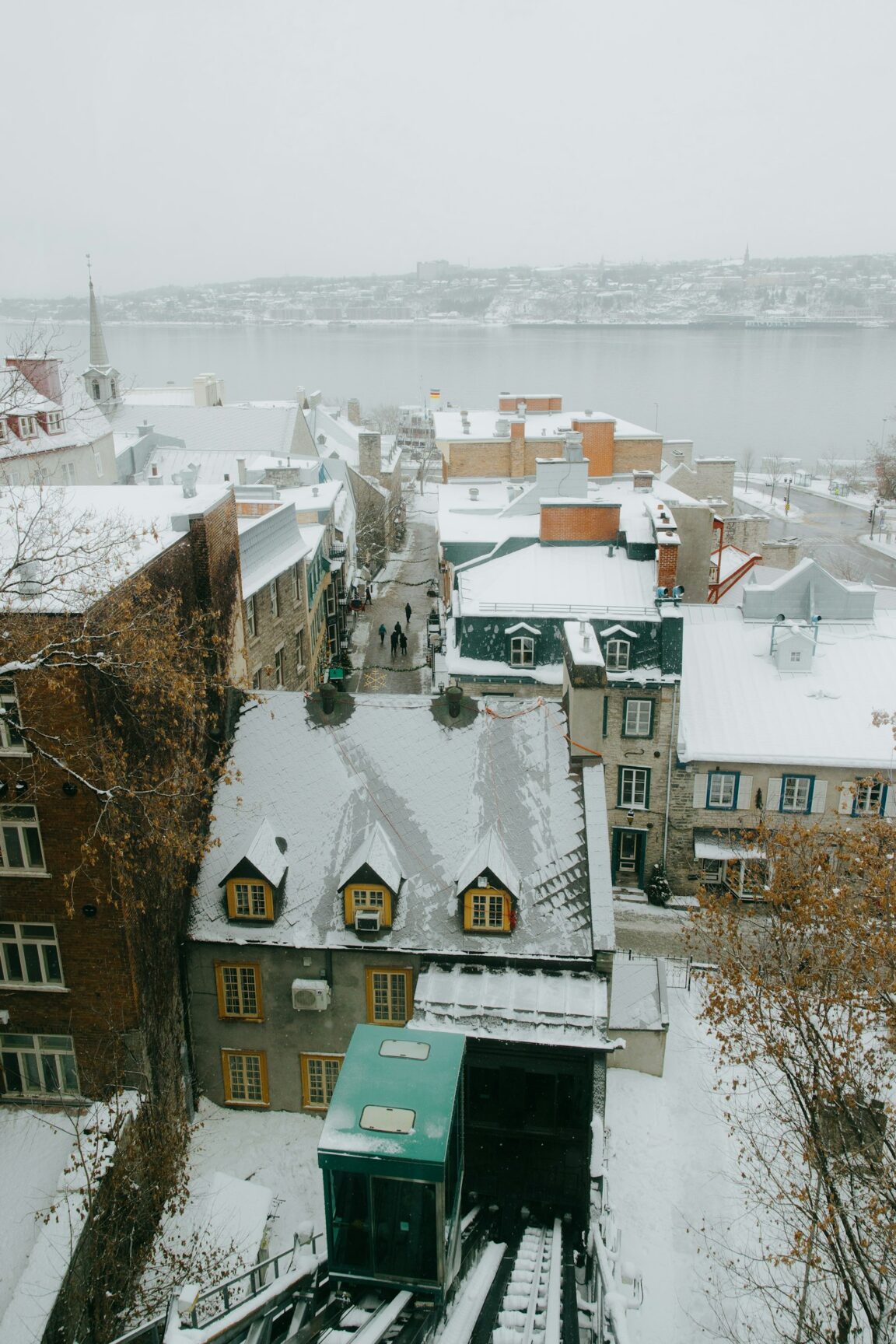
Petit Champlain, in the Lower Town, is the most walkable and photogenic part of the city, and it is at its best when you arrive early, before the day crowds build. The narrow streets, steep staircases and small storefronts feel like a village tucked under the cliff, and snow makes the colors of the doors and signs stand out. Walk Rue du Petit-Champlain slowly, look up at the shop signs, and use the funicular or the Breakneck Steps to move between the Lower Town and Upper Town rather than rushing up an icy slope. The steps are charming in photos and slippery in real life, so hold the rail and take your time.
From Petit Champlain, walk toward Place Royale and the Notre-Dame-des-Victoires Church, one of the oldest stone churches in North America, and then along the riverfront toward the Old Port Market area. This is a good place to stop for lunch, try a local soup or a tourtiere, and warm up properly before an afternoon in the Lower Town. In the afternoon, choose one indoor stop, such as the Musee de la civilisation, and then return to Petit Champlain for a second look in late afternoon light. The same street can look completely different when the lamps come on and the snow starts to fall, and that second visit is often the one people remember.
If you like historic towns with a similar layered feel, our Kotor travel guide and our Matera Sassi cave city guide are useful comparisons, because both show how a compact old town rewards slow walking and a good base.
What should you do on Day 3 at Montmorency Falls?
Montmorency Falls, just east of the city, is higher than Niagara Falls, and in winter it changes completely. The falling water, the ice formations at the base, and the Sugar Loaf, the cone of ice that builds up where spray freezes, make it one of the best winter day trips from Quebec City. Go in the morning, when the light is clear and the site is quieter, and allow time to walk the paths and viewpoints rather than rushing to one photo and leaving. Dress as warmly as you would for a long walk, because the open areas near the falls are cold and windy, and the paths can be icy.
Check current access and opening information with the park operator before you go, because winter access, viewpoints and the cable car can change with weather and maintenance. Do not climb on ice formations or go beyond marked paths. After the falls, return to Old Quebec for a slow afternoon. This is the time to revisit a street you liked, buy a souvenir you actually want, sit in a cafe with a book, or visit a museum you skipped on Day 1. A first trip works best when the last afternoon is not packed, because winter travel is tiring in a good way, and a calm ending makes the whole trip feel complete.
How do you enjoy the Winter Carnival without freezing?
The Quebec Winter Carnival is a winter festival built around outdoor fun, with ice sculptures, parades, night events, and Bonhomme Carnaval, the festival mascot in his red tuque and arrow sash. For the upcoming edition, the official Carnival site lists February 5 to 14, 2027, and it describes the Effigy as the official pass for Carnival activities. If you visit during those dates, plan for one Carnival afternoon or evening, buy the Effigy if you plan to enter paid sites, and dress for standing outside longer than you would on a normal sightseeing walk. Warm boots, hand warmers, and a plan to duck inside for a hot drink between events make a real difference.
If you visit outside Carnival dates, you do not miss the city itself. Old Quebec, Petit Champlain and the river views are there all winter, and the streets are often quieter. The Carnival is a bonus, not a requirement, and a winter trip in January or March can be just as rewarding, with fewer crowds and the same snow-covered streets. Check the official Carnival site for the current program before you decide which week to book, because the program, the venues and the ticket details change each year.
What should you know about winter weather and getting around?
Quebec City in winter is cold, and the wind off the St. Lawrence can make it feel colder. Plan your day in short outdoor stretches of 30 to 60 minutes, with a warm stop in between. Keep your phone and camera close to your body when you are not using them, because cold drains batteries faster. Wear boots with real grip, because the old streets, steps and cobblestones are slippery when snow turns to ice. If you are driving, check road and parking conditions in advance, and if you are flying in, allow extra time for winter delays.
Staying in Old Quebec makes the trip easier, because you can return to your hotel to warm up, change layers, or rest without losing much time. If you stay outside the old town, check the bus route or taxi time to the Upper Town before you book, because a cheap room far from the center can cost you the easy rhythm that makes this itinerary work. Eat a proper lunch, drink water, and do not skip meals to save time. Winter walking burns energy, and a warm meal in the middle of the day is part of the plan, not a break from it.
Frequently Asked Questions About Quebec City in Winter
Is Quebec City worth visiting in winter?
Yes, if you like snow, historic streets and a slower pace. Winter gives Old Quebec its most distinctive look, and the compact center means you can see a lot without long outdoor walks. The trade off is cold weather and shorter days, so plan warming stops and an early start. Travelers who dislike cold or icy sidewalks will enjoy late spring or fall more.
How cold does Quebec City get in winter?
Winter days are often well below freezing, and wind off the river can make it feel colder. Check the forecast the day before you travel and again each morning, dress in layers, and protect your hands, ears and feet. Indoor stops are part of a realistic winter plan, not a sign that you planned badly.
Do you need a car in Quebec City in winter?
No, not if you stay in Old Quebec. The main sights, restaurants and shops in the Upper Town and Lower Town are on foot, with the funicular helping between the two levels. A car is useful only if you plan several trips outside the city, and winter driving and parking add work. For Montmorency Falls, a bus or taxi is a simpler choice for most first timers.
When is the Quebec Winter Carnival?
For the upcoming edition, the official Carnival site lists February 5 to 14, 2027. Dates change from year to year, so confirm them on carnaval.qc.ca before you book travel or hotels, and check the Effigy pass and program details on the same site. If you travel outside Carnival week, the old town is still open and often quieter.
Is three days enough for a first visit?
Yes, three days covers the Upper Town, Petit Champlain, Place Royale, the riverfront and Montmorency Falls at a comfortable pace, with time for a museum and a long lunch. If you have a fourth day, add a second neighborhood walk, a food tour, or a slower morning in a cafe. Do not try to add a second city in the same three days.
What should first timers pack for winter in Quebec City?
Pack insulated waterproof boots with grip, a warm winter coat, a hat that covers your ears, gloves or mittens, a scarf, and layers for indoors. Bring lip balm and moisturizer, a small day bag for extra layers, and a portable charger, because cold can drain a phone battery faster. Leave room in your bag for a warm souvenir, such as a tuque or a scarf, if you want one.
Quebec City in winter rewards travelers who slow down. Walk the same street twice, stop for a hot drink when you are cold, and let the snow do the work. Three days is enough to learn the shape of Old Quebec, to see Petit Champlain in morning and evening light, and to stand at Montmorency Falls and understand why winter is not a season to avoid here. It is the season when the city is most itself.