 James Wolfe
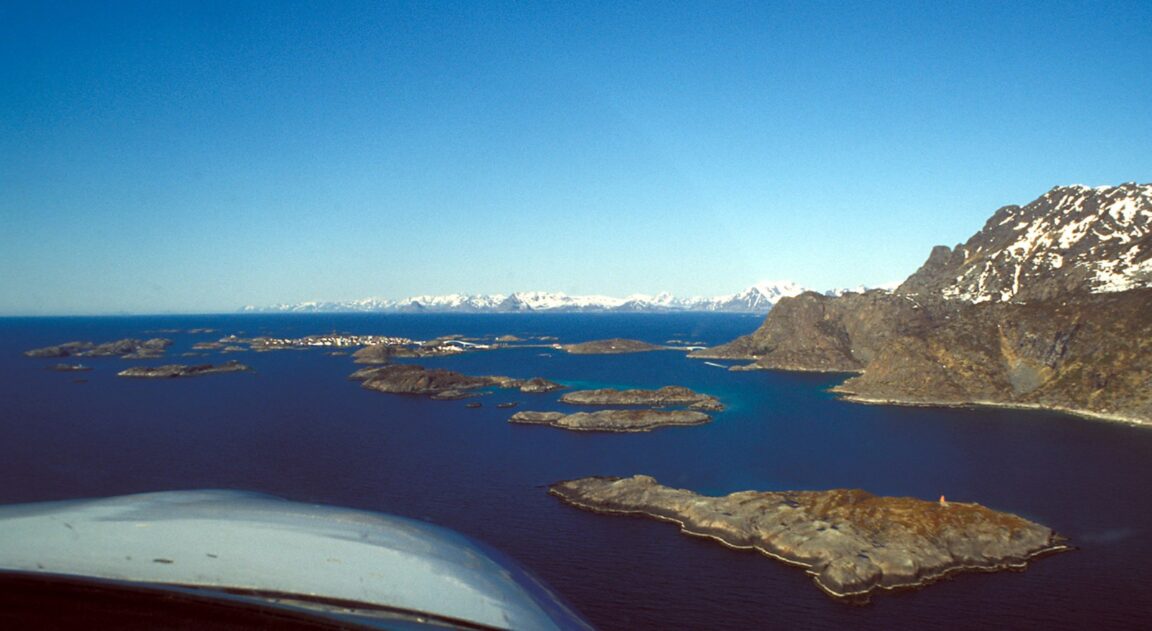
Go to the Lofoten Islands for fishing villages, steep peaks rising straight from the sea and a choice you have to make before you book anything: midnight sun or northern lights. This archipelago in Nordland county sits far above the Arctic Circle in the Norwegian Sea, and the two headline seasons never overlap. The midnight sun runs from late May to mid July, while the northern lights can be viewed from September to mid April, according to Visit Norway. Getting there takes a connection, usually a flight to Bodø and a short onward hop to Leknes or Svolvær, a larger flight to Evenes and a drive in on the E10, or a ferry or coastal voyage ship. Pick the season first, then build the route around it.
Quick Facts
- Where: An archipelago in the Norwegian Sea off the northwest coast of Norway, in Nordland county, far above the Arctic Circle.
- Main towns: Svolvær in the east is the largest town and the usual transport hub. Leknes serves the central islands, and Reine and Å anchor the western end of the road.
- Midnight sun: Late May to mid July, when the sun does not set. Visit Norway gives the Lofoten window in those terms, and its dates table puts it at about 28 May to 14 July.
- Northern lights: Viewable from September to mid April on clear, dark nights, per Visit Norway. There is no aurora in the midnight sun months because the sky never gets dark.
- Polar night: From the start of December to the start of January in Lofoten and Vesterålen, when the sun stays below the horizon, per Visit Norway.
- Climate: Milder than the latitude suggests because of the Gulf Stream. Visit Norway gives January and February as the coldest months at an average of minus 1 degree Celsius, and July and August as the warmest at an average of 12 degrees Celsius.
- Gateways: Leknes Airport (LKN) and Svolvær Airport (SVJ) on the islands, Bodø Airport (BOO) on the mainland, and Harstad/Narvik Airport Evenes (EVE) to the northeast.
- Main road: The E10, which crosses the archipelago from east to west and reaches the mainland without a ferry via the Lofast connection.
- Currency: Norwegian krone (NOK). Cards are accepted almost everywhere, including for small purchases.
Why Go to Lofoten?
Lofoten compresses a lot of northern Norway into a short road. Granite peaks rise directly out of the Norwegian Sea, red fishermen’s cabins line the harbors, and the E10 strings the villages together so that a single day’s drive can take in a Viking museum, a white sand beach and a working fishing port. Fishing built these settlements, and it still shapes them: stockfish, dried cod, hangs on wooden racks outside the villages, and in winter the migrating Arctic cod known as skrei draws boats from across the region.
The cultural anchor is the Lofotr Viking Museum at Borg, where a reconstruction of the largest Viking longhouse ever found stands on the site of a confirmed chieftain’s farm. Visit Norway notes the building is 83 metres long, and it gives the islands a human story to set against the scenery. For readers weighing up Norway’s far north more broadly, our guide to the Faroe Islands, the North Atlantic archipelago between Iceland, Norway and Scotland, covers a different island culture shaped by the same ocean weather.
The One Decision That Matters: Midnight Sun or Northern Lights?
Everything about a Lofoten trip flows from the light. The islands sit far enough north that summer and winter are not variations on a theme, they are different destinations. Trying to see both phenomena in one trip is impossible, because each one depends on the absence of the other.
Midnight Sun Season, Late May to Mid July
Between late May and mid July the sun never sets in Lofoten. It dips towards the horizon around midnight, turns the sea and the peaks gold, and climbs again without darkness in between. This is the season for hiking at hours that would be night anywhere else, for kayaking and boat trips in evening light, and for the fullest transport timetables of the year. May and June are also the driest months, with an average of 40 millimetres of rainfall, according to Visit Norway. The costs of the season are crowds, booked out cabins and the small problem of sleeping in daylight, which is why blackout curtains and an eye mask earn their place in the bag.
Northern Lights Season, September to Mid April
Visit Norway puts the viewing window for the northern lights in Lofoten from September to mid April. The aurora needs genuine darkness and a clear sky, and Lofoten’s coastal weather means cloud can close the show on any given night, so a stay of several nights is a better bet than a single evening. September and early autumn pair dark nights with roads and tours still running after summer. February and March are the classic winter compromise: deep snow and long nights, but daylight returning fast enough to ski, fish and drive in the middle of the day. No operator can promise a sighting, and any itinerary built around one guaranteed night of aurora is built on sand.
Polar Night and Deep Winter, December to Early January
From the start of December to the start of January, the sun does not rise in Lofoten at all. What light there is comes as a few hours of blue and pink twilight around midday, which photographers prize and drivers need to plan around. January and February are the coldest months, averaging minus 1 degree Celsius, a figure that surprises visitors expecting Siberian cold this far north. The Gulf Stream keeps Lofoten far milder than places at the same latitude in Greenland or Alaska, but wind and sea spray make waterproof, windproof layers essential even so.
How to Get to Lofoten
By Air to Leknes or Svolvær via Bodø
The fastest route onto the islands is a flight to one of Lofoten’s two small airports. Visit Norway confirms frequent flights to the local airports in Svolvær and Leknes, and to the regional hubs at Bodø and Evenes. The standard pattern is a flight from Oslo to Bodø, which Visit Norway gives as 1.5 hours, then a 20 to 30 minute onward flight to Leknes or Svolvær. Those island flights are operated with small regional aircraft and connect several times a day, but seats and rental cars at the small island airports are limited in summer, so book both early. Leknes suits the central and western islands, including Reine. Svolvær suits the east and is the better base for travelers arriving without a car.
By Air to Evenes, Then the Road In
Harstad/Narvik Airport at Evenes is the larger mainland gateway northeast of the islands, served by bigger aircraft from Oslo. From Evenes, Visit Norway gives a 2.5 to 4 hour drive or bus ride to Lofoten. The route joins the E10 and enters the archipelago from the east, passing Svolvær first. Daily buses on route 300 run from Narvik and Evenes airport to Svolvær, Leknes and Å, per Visit Norway, which makes Evenes workable without a rental car if the timings fit. For travelers combining Lofoten with Tromsø or the Narvik railway, Evenes is usually the most flexible arrival point.
By Ferry and Coastal Ship
The sea routes are slower and, for many visitors, part of the trip. Car ferries sail year round from Bodø to Moskenes, near Reine, as well as to Værøy and Røst, and Visit Norway puts the Bodø crossing at approximately a 3 to 4 hour boat ride. Daily express boats link Bodø, Svolvær and Skrova year round. The Norwegian Coastal Voyage ships are the scenic option: Hurtigruten calls daily at Stamsund and Svolvær in Lofoten, while Havila Voyages calls at the same ports two days a week, and both lines sell shorter port to port journeys between Bodø, Tromsø and Lofoten. Book vehicle space on the Bodø to Moskenes ferry early in summer, and treat sailing times as weather dependent in winter.
By Road on the E10 and the Lofast Link
Drivers no longer need a ferry to reach Lofoten from the mainland. The Lofoten Mainland Connection, known as Lofast, opened in 2007 and links the islands to the mainland road network near Narvik through a chain of bridges and tunnels along the E10. The E10 then runs the length of the archipelago to Å, at its western end. That fixed link is what makes the Evenes drive in possible, and it also means a road trip can combine Lofoten with Sweden via Narvik. Winter driving is a different discipline: daylight is short, coastal roads ice over, and rental cars come with winter tyres as standard in season. Drive in daylight where you can and leave margins in the schedule.
What to Do in Lofoten
Base in the Fishing Villages: Reine and Henningsvær
Reine, at the western end of the E10, is the postcard village: a harbor ringed by sharp peaks, with the viewpoint on Reinebringen above it reached by a stone staircase built to protect the eroded path. Henningsvær spreads across small islands linked by bridges east of Svolvær, with galleries and cafes alongside the working harbor. Both reward an overnight stay rather than a photo stop, because the light at either end of the day is the point of being there. Smaller villages such as Nusfjord, one of the best preserved historic fishing villages in Norway, and Å, where the road simply ends, fill out a western islands itinerary.
Sleep in a Rorbu Fishermen’s Cabin
The signature Lofoten bed is a rorbu, a traditional fishermen’s cabin built on the shore or on stilts over the water, originally housing seasonal cod fishermen. Visit Norway highlights staying in a rorbu and eating skrei, the Arctic cod, and stockfish as core Lofoten experiences. Modern rorbu rentals range from simple cabins to serviced suites, and in the villages they put you within walking distance of the harbor, the drying racks and the morning boats. Book summer and northern lights season cabins well ahead, as the best located stock is small and much of it goes to repeat visitors.
Get on the Water: Sea Eagle Safaris and Fishing Trips
Boat trips run from Svolvær and other harbors into the fjords, including RIB safaris to the narrow Trollfjorden, where white tailed sea eagles are the headline wildlife. Sea eagle safaris are sold as part of Lofoten touring programmes in summer, and fishing trips put visitors on the water with working gear in both the summer light and the winter skrei season. Conditions decide everything: trips cancel in heavy weather, and a flexible day in the plan is worth more than a prepaid ticket on a fixed one. In summer, kayaking under the midnight sun is the quiet alternative to the RIB boats.
Hike, but Respect the Weather
Hiking is the main summer activity, from short viewpoint climbs such as Reinebringen to full day ridge walks. The same coastal weather that keeps winters mild makes conditions change fast at any height: rain arrives horizontally, paths run wet, and wind can make exposed ridges unsafe even in July. Pack waterproofs and warm layers for every walk, tell someone the route, and treat local advice on the day as binding. In winter the walking season gives way to skiing and snowshoeing, with the returning light of February and March the most forgiving window.
Travelers drawn to this combination of Arctic light and small island communities will find a useful contrast in our account of sustainable travel in Svalbard at the edge of the Arctic, where the polar night lasts far longer and the settlement is smaller still.
Costs, Weather Realities and Practical Notes
Costs. Norway is an expensive country to travel in by European standards, and Lofoten’s remoteness adds to accommodation, car rental and tour costs. The reliable ways to control spending are structural: travel in the shoulder weeks of May or September, cook some meals in a cabin kitchen, and book flights, ferries and beds early for summer.
Weather. Plan for change rather than for a forecast. Visit Norway’s figures, an average of minus 1 degree Celsius in the coldest months and 12 degrees in the warmest, describe a cool maritime climate, not an extreme one, but wind, rain and sea conditions will cancel more plans than temperature ever will. Ferries, boat trips and exposed hikes are the first casualties, so sequence the trip so the most weather dependent activity is not saved for the last day.
Getting around. A rental car makes Lofoten straightforward, because villages, trailheads and beaches spread along one main road with limited bus coverage off it. Without a car, base in Svolvær, use route 300 buses along the E10 spine and book tours for the western villages. Either way, distances look short on the map and take longer than expected once photo stops, ferries and weather are counted.
How long to stay. Three nights is the minimum that survives one cancelled day. Five to seven nights allows both the eastern and western islands, a boat trip and a realistic run at the northern lights in season or the long hiking days of summer. Last updated November 2026, with season dates and transport patterns checked against Visit Norway.
Frequently Asked Questions
When is the midnight sun in Lofoten?
From late May to mid July. Visit Norway describes the Lofoten midnight sun in those terms, and its dates table gives about 28 May to 14 July. Around the solstice the sun stays above the horizon all night, dipping low and golden around midnight.
When can you see the northern lights in Lofoten?
From September to mid April, according to Visit Norway, on nights that are both dark and clear. Sightings are never guaranteed, because coastal cloud is common, so allow several nights and keep expectations weather aware.
What is the best airport for Lofoten?
For speed, fly to Leknes or Svolvær via Bodø: Oslo to Bodø takes 1.5 hours and the onward flight 20 to 30 minutes. For more flight choice and a drive in, Harstad/Narvik Evenes is the larger gateway, 2.5 to 4 hours by road or bus from the islands.
Can you drive to Lofoten without a ferry?
Yes. The Lofast mainland connection, opened in 2007, links the E10 across bridges and tunnels to the mainland near Narvik, so drivers arriving from Evenes, Narvik or Sweden need no ferry at all.
Do Hurtigruten ships stop in Lofoten?
Yes. Visit Norway states that Hurtigruten calls daily at Stamsund and Svolvær, and Havila Voyages calls at the same ports two days a week. Both sell shorter coastal journeys between Bodø, Tromsø and Lofoten.
Is Lofoten very cold in winter?
Less cold than its latitude suggests. Visit Norway gives January and February an average temperature of minus 1 degree Celsius, thanks to the Gulf Stream. Wind and wet weather matter more than deep cold, so pack windproof and waterproof layers.