 James Wolfe
The respectful way to experience Māori culture in Rotorua is to go where Māori hosts are telling their own stories, on their own land, and to book with the Māori owned and operated experiences first: Whakarewarewa, the living village of Tūhourangi Ngāti Wāhiao, Te Puia, home of the New Zealand Māori Arts and Crafts Institute, and Mitai Māori Village, a family owned evening of waka, performance and hāngī. Rotorua also has major geothermal parks that are not Māori operated, including Wai-O-Tapu south of the city, and this guide labels those honestly so readers can choose with clear eyes. Prices and times below were checked on the operators’ official sites on 10 November 2026.
What are the quick facts for Rotorua Māori culture?
- Best living village: Whakarewarewa, The Living Māori Village, 17 Tryon Street, Rotorua
- Whakarewarewa guided tour: NZ$58 adult, NZ$29 child aged 5 to 15, under 5 free, one hour, daily at 9am, 10am, 11am, 12pm, 1.15pm, 2pm and 3pm
- Whakarewarewa performance: Daily cultural performance at 12.30pm, about 30 minutes
- Te Puia: Te Rā guided experience, 90 minutes, hourly departures from 9am to 3pm excluding 10am, plus the Pōhutu Geyser and the Kiwi Conservation Centre
- Mitai evening: NZ$188.34 adult aged 14 and over, NZ$115.74 child aged 4 to 13, including a hāngī buffet dinner and cultural performance
- Key word: Manaakitanga, the hospitality and care for guests that guides at Whakarewarewa name as central to the visit
- Golden rule: Follow your guide, ask before photographing people or sacred places, and stay on marked paths in geothermal areas
Why does Whakarewarewa come first for most visitors?
Whakarewarewa is not a reconstruction. On its official guided tour page, the village describes itself as the home of the Tūhourangi Ngāti Wāhiao people, who have shared their way of life with visitors for hundreds of years, and it stresses that residents still live there day to day, using natural geothermal resources to cook, bathe and heat their homes as they have for centuries. That continuity is the point of the visit. A tour moves through a working village, past an active marae, historic churches, a World War II memorial archway and tapu, or sacred, burial grounds, rather than through a set built for tourists.
The guides matter as much as the landscape. The village says its guides are direct descendants of the early Māori guides whose legacy shaped tourism in New Zealand, and the one hour tour is capped at 20 to 30 guests. Tours run daily at 9am, 10am, 11am, 12pm, 1.15pm, 2pm and 3pm, with admissions open from 8.30am to 3.30pm and the village closed to the public from 4pm. There is no access to the village without a guide. The current pricing listed by the village for 1 October 2026 to 30 September 2027 is NZ$58 for an adult, NZ$29 for a child aged 5 to 15, NZ$52.20 for a senior Gold Card holder and NZ$156.60 for a family of two adults and up to four children, with infants under 5 free.
Geothermal cooking is part of daily life here, not a demonstration invented for visitors. The tour explains cooking in bubbling pools and steam vents, and corn cooked in the largest hot pool is a long standing highlight the village itself promotes. Visitors who want more time can add the self guided geothermal trails or the All Day Pass, which the village lists at NZ$123.30 for an adult and NZ$63 for a child for the same pricing period, combining a guided tour, the trails and the 12.30pm cultural performance. Note the village’s own caution that its self guided geothermal trails do not include access to Pōhutu Geyser, even though the guided village tour includes views of Pōhutu from viewing areas in the valley.
What does Te Puia add that the village does not?
Te Puia, on Hemo Road, pairs the same Te Whakarewarewa geothermal valley with a national teaching institution. Te Puia describes Pōhutu as the largest active geyser in the Southern Hemisphere and calls Te Rā a 90 minute guided experience through the geothermal valley, the Kiwi Conservation Centre and the New Zealand Māori Arts and Crafts Institute, where students train in weaving and in wood, stone and bone carving. Its booking page lists hourly departures from 9am to 3pm, excluding 10am, and options to add a haka performance in the carved meeting house or a hāngī buffet lunch.
That institute is the reason Te Puia feels different from a performance venue. Whakairo, or carving, and raranga, or weaving, are taught here as living disciplines with lineages, not displayed as finished souvenirs. Te Puia also runs evening formats: Te Pō combines a guided tour, a hāngī buffet dinner, a 45 minute cultural performance of song and dance and hot chocolate on the geyser terrace, while Mārama is a hosted night time light trail through the valley. Te Puia is a cashless site, and its homepage listed opening hours of 9am to 5pm at the time of checking. Current ticket prices are shown in Te Puia’s own booking system at checkout, so confirm the total there before paying rather than relying on third party listings, which vary widely.
Te Puia and Whakarewarewa are neighbours in the same valley with separate entrances, separate tickets and separate hosts. Booking one does not include the other. A focused itinerary does the village in the morning for daily life and geothermal cooking, then Te Puia later for the geyser terrace, the carving and weaving schools and the kiwi centre. Doing both is not duplication if the distinction is understood in advance.
How does an evening at Mitai Māori Village work?
Mitai Māori Village, at 196 Fairy Springs Road, is a family owned and operated evening experience built around story, performance and food. Its official site says the night includes a welcoming ceremony, the unveiling of the hāngī, warriors paddling a war canoe down the Wai-o-Whiro stream, a cultural show with haka, a full buffet hāngī dinner, a question and answer session and a walk through native forest to the old fortified village site and the sacred spring Te Puna Tapu o Tuhoe, ending with glow worms on the forest banks. The listed adult price is NZ$188.34 for ages 14 and over and NZ$115.74 for children aged 4 to 13, with infants aged 3 and under listed as a separate category.
Mitai also offers a daytime hāngī lunch and cultural show, listed at NZ$156.77 for two hours. Complimentary transfers are available to and from registered Rotorua accommodation, in limited numbers, and must be requested when booking. Because the evening is staged in forest and partly outdoors, Mitai advises comfortable walking shoes and dressing for Rotorua weather, and notes that most areas are accessible while parts of the forest walk have uneven paths and stairs.
What is hāngī, and why does geothermal cooking taste different?
A hāngī is an earth oven. Te Puia explains it plainly: food is cooked using heated stones buried beneath the earth, with meat and vegetables slowly steamed until tender, and a traditional hāngī typically takes around three to four hours. Mitai gives a similar account, describing baskets of kai, or food, placed on hot stones at the bottom of a hāngī pit one to two metres into the ground, covered to trap heat, and cooked for three to four hours, producing earthy, smoky flavours. Expect meats, chicken, kūmara and vegetables rather than a restaurant tasting menu.
Rotorua adds a second tradition alongside the earth oven: geothermal cooking, where the valley itself does the work. At Whakarewarewa, residents cook in bubbling pools and steam vents, a practice tied to living on a geothermal plateau. Tasting corn from a hot pool in the village and eating hāngī at an evening performance are therefore two different experiences, and a good Rotorua plan samples both instead of treating them as interchangeable.
Where does Wai-O-Tapu fit, and what is it not?
Wai-O-Tapu Thermal Wonderland, about 30 minutes south of Rotorua on State Highway 5, is a geothermal park known for intensely coloured pools and the Lady Knox Geyser presentation at 10.15am daily. It is a scenic geothermal attraction, not a Māori owned village experience, and it should not be sold or described as one. Visit it for geology and colour, on a self guided walk, and visit Whakarewarewa, Te Puia or Mitai for Māori culture hosted by Māori. Keeping that distinction clear respects both kinds of visit and stops travellers booking a geothermal park while expecting a living village.
The same honesty helps with Pōhutu. Pōhutu sits in Te Whakarewarewa valley and is viewed from Te Puia’s grounds and, on the village’s guided tour, from its viewing areas. Eruptions are natural and unscheduled, so no operator can promise one at a set minute. Allow time in the valley rather than arriving for a single timed slot and leaving disappointed.
How should visitors behave at a marae, a performance and a sacred site?
What are the photography rules worth following?
Ask first, and accept no as a complete answer. Photographing geothermal landscapes on marked trails is routine, but people, ceremonies, carvings with personal significance and burial grounds are different. Whakarewarewa’s guided tour passes tapu burial grounds and an active marae, so stay with the guide, do not wander in for a closer photo, and do not enter a meeting house or sacred area unless you are clearly invited in as part of the experience. If a host says a moment is not for cameras, put the phone away without negotiating.
How do you handle names and pronunciation respectfully?
Use the spellings the operators use, with macrons: Māori, hāngī, Pōhutu, kūmara, Whakarewarewa, Tūhourangi Ngāti Wāhiao. A macron lengthens a vowel and can change meaning, so it is not decoration. Attempting a name slowly and correctly, and accepting a correction gracefully, is more respectful than avoiding the word altogether. Basic greetings carry weight too: kia ora is a widely used greeting and thanks, and using it as your hosts do is a simple courtesy.
What geothermal safety rules are non negotiable?
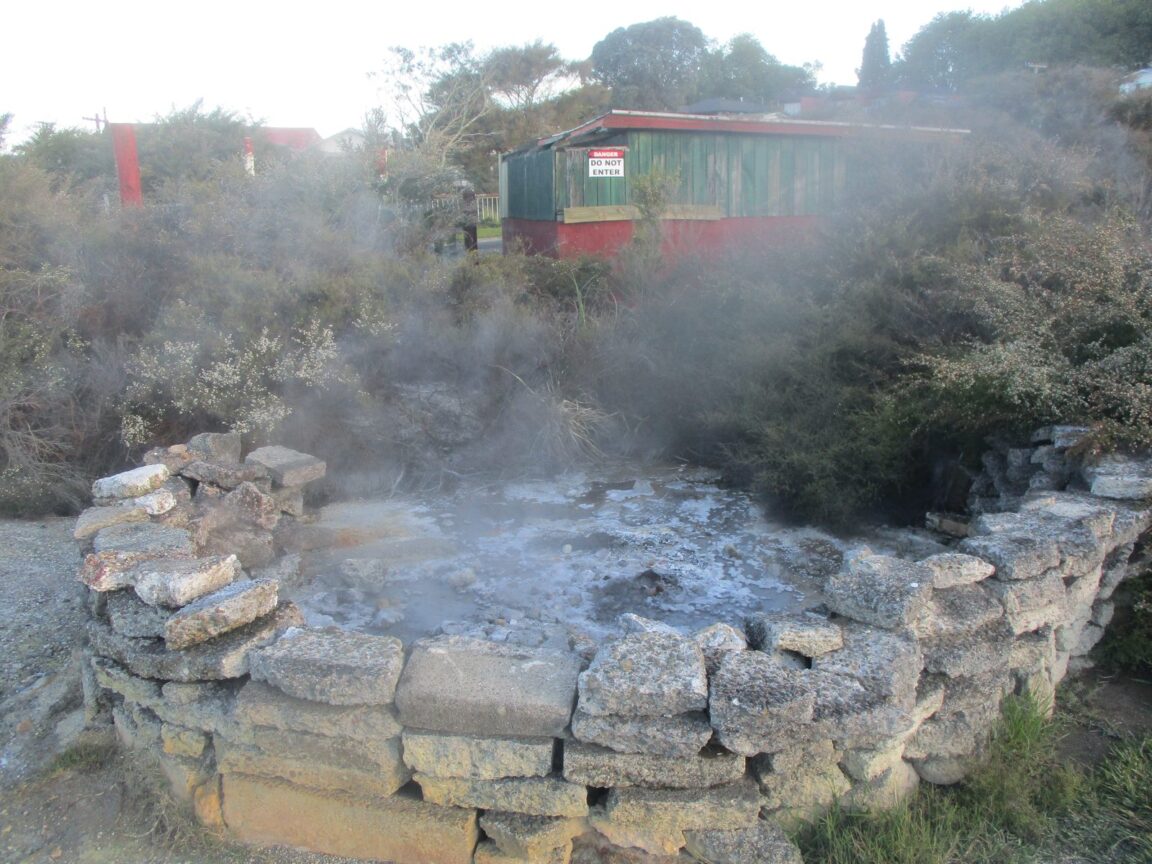
Stay on identified walkways at all times. Whakarewarewa states this as a safety rule for its tours, and it applies across every Rotorua geothermal site. Ground beside a steaming pool can be a thin crust, water is scalding, and fumes concentrate in hollows. Wear comfortable walking shoes and weather appropriate clothing, keep children close, and never step over a barrier for a photograph.
How does Rotorua fit a wider North Island trip?
Rotorua pairs naturally with a walking focused New Zealand itinerary. Readers planning the country’s classic tracks should read our New Zealand Great Walks booking guide before fixing dates, and anyone arriving from overseas should check entry paperwork in our explainer on the New Zealand NZeTA and visitor levy. Booking Rotorua’s cultural experiences directly with each operator, after checking the current price and time on the official site, remains the simplest way to make sure the money and the welcome go to the hosts named here.
Frequently asked questions
Is Whakarewarewa a real village or a visitor attraction?
Both, in that order. It is the living home of Tūhourangi Ngāti Wāhiao, where residents cook, bathe and heat homes with geothermal resources, and guided tours are the only way visitors enter. There is no self guided access to the village itself.
What is the difference between Whakarewarewa and Te Puia?
Whakarewarewa is the living village at 17 Tryon Street, centred on daily life and geothermal cooking. Te Puia, on Hemo Road, centres on Pōhutu Geyser, the Kiwi Conservation Centre and the national carving and weaving schools of the New Zealand Māori Arts and Crafts Institute. They have separate entrances and tickets.
How much does the Whakarewarewa guided tour cost?
The village lists NZ$58 for an adult and NZ$29 for a child aged 5 to 15 for 1 October 2026 to 30 September 2027, with infants under 5 free. Check the official site before booking, as the village reserves the right to change rates.
What should you wear for a Rotorua cultural experience?
Comfortable walking shoes and weather appropriate layers. Village and Te Puia tours walk geothermal paths outdoors, and Mitai’s evening includes a forest walk, so dress for Rotorua weather rather than for an indoor theatre.
Can you see Pōhutu Geyser without a tour?
Plan on a guided product. Te Puia’s daytime access is through its guided Te Rā experience, Whakarewarewa village entry is guided only, and the village notes that its self guided geothermal trails do not include access to Pōhutu.
Is Wai-O-Tapu a Māori cultural experience?
No. Wai-O-Tapu is a geothermal park south of Rotorua, valued for its coloured pools and the Lady Knox Geyser presentation. For Māori hosted culture, book Whakarewarewa, Te Puia or Mitai.
Prices and times checked on the operators’ official sites on 10 November 2026. Confirm current details when booking, as schedules and rates change by season.