 LeVar Thomas
What to eat in Mumbai comes down to three overlapping food cultures: the street stalls serving vada pav, pav bhaji and chaat to a city always in motion; the century-old Irani cafes of south Mumbai, where bun maska and Irani chai still anchor the morning; and the neighbourhood institutions, from Mohammed Ali Road’s kebab grills to the Koli seafood kitchens of Fort, that feed Mumbaikars rather than tourists. Eat in that order of logic: street food where the queue is longest and the griddle hottest, Irani cafes early in the day, kebabs and seafood at night. One clarification before the dishes: the Michelin Guide does not cover Mumbai, so any list claiming Michelin-starred Mumbai restaurants is inventing its credentials. The city’s great eating places earn their reputations the older way, by surviving for decades in a city that discards anything mediocre.
What are the quick facts for eating in Mumbai?
- Start here: Vada pav at a busy station-side stall, eaten standing, as the city intends.
- Best street food districts: Dadar, Girgaum Chowpatty, Juhu, Bandra, Mohammed Ali Road, Fort and Colaba.
- Irani cafe anchors: Kyani and Co. (established 1904) at Dhobi Talao and Britannia and Co. (established 1923) in Ballard Estate.
- Best time for chaat: Late afternoon and sunset, especially at the beaches.
- Best time for kebabs: After dark on Mohammed Ali Road and in Colaba; the grills peak during Ramadan evenings.
- Hygiene rule: Choose stalls cooking hot food to order in front of you, with high turnover and a local queue.
What is vada pav, and where should you eat your first one?
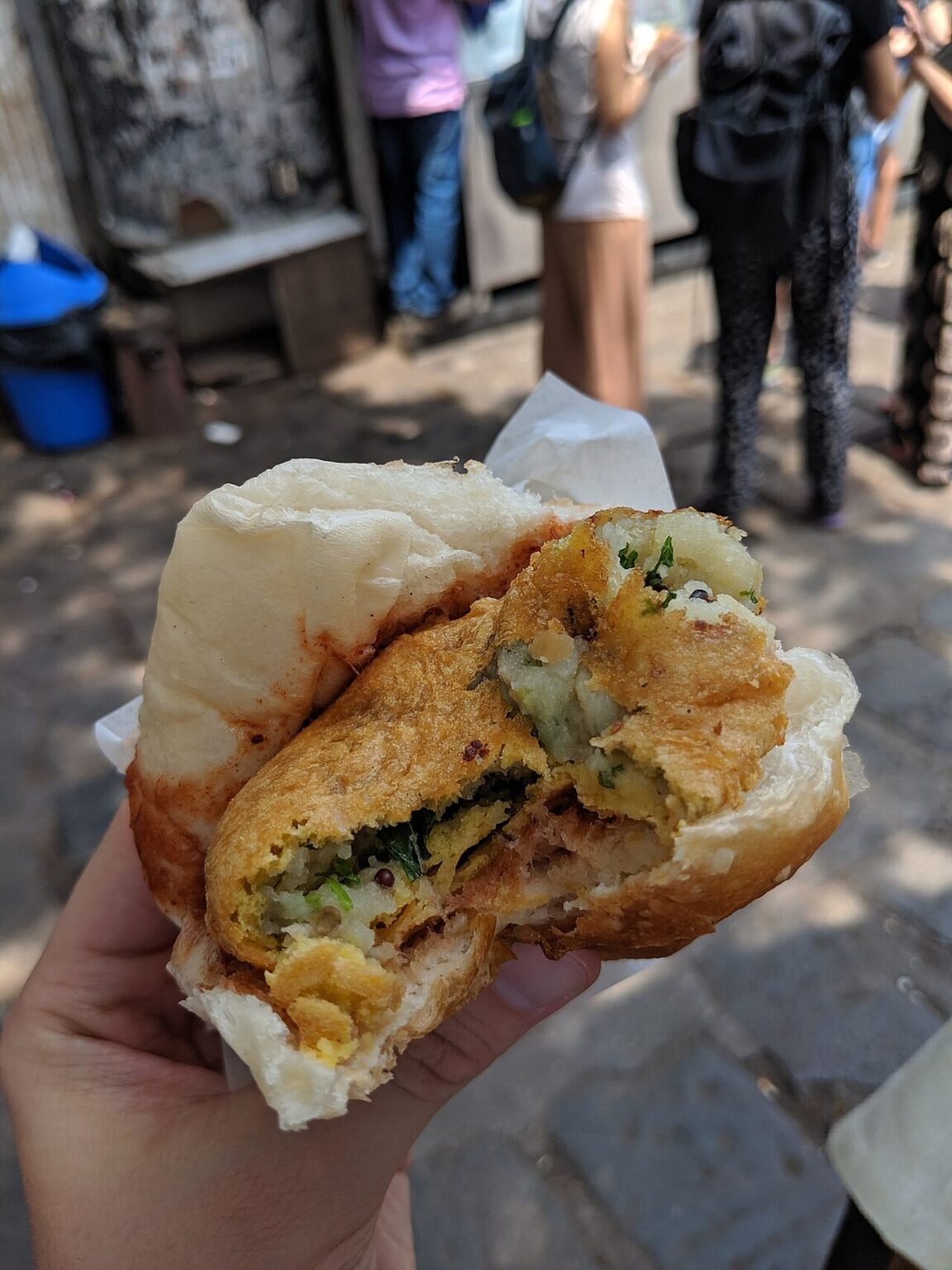
Vada pav is Mumbai’s defining snack: a spiced potato fritter, the vada, fried in chickpea batter and tucked into a soft white bread roll, the pav, with green chutney, a dry garlic chutney and often a fried green chilli on the side. It is cheap, portable, vegetarian and eaten everywhere, which is exactly why it defines the city better than any restaurant dish. Eat your first at a stall with a frying batch constantly turning over. Aram Vada Pav, opposite Chhatrapati Shivaji Maharaj Terminus in Fort, describes itself as serving since 1939 and remains a benchmark for the crisp vada, soft pav and chutney combination. In Dadar, the stalls around the station, including the long-established Ashok Vada Pav, serve the commuter crowds the snack was built for. Order one, eat it hot on the spot, and only then start comparing versions across the city, because vada pav loyalty in Mumbai is a serious local argument. Travellers who enjoyed this dish-first approach should also see our Hanoi food guide, built the same way around the dishes that define that city.
What is pav bhaji, and why does butter matter?
Pav bhaji is a mashed, spiced vegetable curry, potatoes, tomatoes, peas and cauliflower cooked down on a huge flat tawa with generous quantities of butter, served with pav rolls toasted in yet more butter, chopped onion and a wedge of lemon. It began as a late-night meal for mill workers and became the city’s favourite griddle dish. The butter is not a garnish; it is the flavour base, the cooking medium and the finishing gloss, so a pav bhaji made timidly with butter is simply a lesser dish. Eat it where the tawa is biggest and busiest: the stalls at Girgaum Chowpatty and Juhu Beach are the classic settings, and sit-down versions across the city compete on richness. Order it spicy unless you are warned otherwise, tear the pav, scoop, squeeze the lemon, and repeat.
What should you order from the chaat stalls?
Chaat is the family of sharp, crunchy, sweet-sour snacks built to be eaten outdoors in the early evening. Bhel puri, puffed rice tossed with sev, chopped onion, potato, tamarind and green chutneys, is the Chowpatty classic, mixed to order and eaten within minutes before it softens. Pani puri, crisp hollow puris filled with spiced water, potato and chickpeas, is eaten one at a time, whole, standing at the stall while the vendor counts your round; Elco in Bandra is a long-established name Mumbaikars cite for it. Add sev puri, dahi puri and a glass of something cold, and graze at sunset at Girgaum Chowpatty, where the stalls line up along Marine Drive’s northern end, or at Juhu in the western suburbs. Chaat is about timing and turnover: the best stall is the one with the crowd, because every component is assembled to order and dies quickly once made.
Where do the kebabs of Mohammed Ali Road fit in?
For meat, go south to Mohammed Ali Road, the Muslim quarter around Minara Masjid, where the evening grills serve seekh kebabs, baida roti, nalli nihari and malpua with rabri to crowds that peak dramatically during Ramadan, when the street becomes one of the great night food markets of India. Outside Ramadan the grills still fire nightly, and the format is consistent: meat cooked over charcoal to order, eaten with parathas and onions at simple tables or standing by the stall. In Colaba, Bademiya, the long-established late-night kebab stall behind the Taj Mahal Palace area, is the other classic name, famous for seekh kebab rolls eaten at the kerb in the small hours. The rule in both places is the same as everywhere in this guide: order what is coming off the grill for the people ahead of you, and eat it the moment it lands.
What happens inside an Irani cafe?
Mumbai’s Irani cafes were founded by Zoroastrian Iranian immigrants and became the city’s democratic living rooms: marble-topped tables, bentwood chairs, high ceilings, and a menu running from tea and bakery goods to full Parsi-Irani dishes, at prices that kept them open to everyone. Kyani and Co. in Dhobi Talao, Marine Lines, established in 1904 and described as the city’s longest running Irani cafe, is the essential stop: order bun maska, a soft sweet bun sliced and loaded with cold butter, with a glass of sweet Irani chai, and add kheema pav if you are hungry. Britannia and Co. in Ballard Estate, Fort, established in 1923, is the famous lunch institution, known for its berry pulao, rice fragrant with barberries, served with chicken or mutton, plus sali boti and caramel custard; it serves lunch hours rather than all day and has long been known as cash only, so arrive early and carry cash. Yazdani Restaurant and Bakery in Fort, established in 1953 and now take-out focused, completes the triangle for bakery goods such as bun maska and mawa cake. Go in the morning for the full ritual, read the house rules on the wall, and do not rush: the cafes run on their own century-old tempo.
What about thalis, misal and seafood?
Three further threads complete a serious Mumbai food education. A thali, the compartmented tray of breads, rice, dal, vegetables, pickles and sweets refilled as you eat, is the city’s great sit-down lunch format, with Gujarati and Maharashtrian versions across the station districts and Fort. Misal, a fiery sprouted-bean curry topped with farsan, onion and lemon and mopped up with pav, is Maharashtra’s breakfast of champions, best eaten in Dadar and the Maharashtrian neighbourhoods in the morning when the day’s batch is fresh. And seafood is the city’s oldest layer: the Koli fishing community, Mumbai’s original inhabitants, anchors a seafood tradition carried by Fort institutions such as Trishna, famous for butter garlic crab, and the Mangalorean-style seafood kitchens around Fort and Mahim serving bombil fry (Bombay duck), prawns koliwada and fish thalis. A traveller who eats a Koli seafood meal, a misal breakfast and a thali lunch has covered the city’s foundations, not just its snacks. For another port city where seafood and street stalls carry the same weight, see our Lima food guide.
How do you eat street food in Mumbai safely and well?
Follow turnover, not appearances. Eat where Mumbaikars queue, where food is cooked hot in front of you and served immediately, and where the stall’s ingredients turn over fast enough that nothing sits around. Start with cooked dishes, vada pav, pav bhaji, kebabs and misal, before raw-adjacent chaat components, and be careful with unbottled water, ice of unknown origin and pre-cut fruit in your first days. Carry small notes, expect to eat standing, and time the day around the food: Irani cafes and misal in the morning, thalis at lunch, chaat at sunset, kebabs after dark. Cutting chai, the small strong glass of milky tea sold at stalls everywhere, is the punctuation between stops. None of this requires a tour, but a first evening grazing Chowpatty at sunset teaches the city’s rhythms faster than any itinerary.
Frequently asked questions about Mumbai food
What is the one dish you must eat in Mumbai?
Vada pav, eaten hot and standing at a busy stall such as Aram opposite CSMT or the long-established stalls around Dadar station. It is the city’s everyday snack, a spiced potato fritter in a soft roll with chutneys, and it explains Mumbai’s pace and priorities in a single bite.
Are there Michelin-starred restaurants in Mumbai?
No. The Michelin Guide does not cover Mumbai or India, so no Mumbai restaurant holds a Michelin star, whatever third-party lists claim. Judge Mumbai eating places by longevity and local reputation instead: the Irani cafes, kebab stalls and seafood institutions in this guide have held their crowds for decades.
What is bun maska, and where should you try it?
Bun maska is a soft, slightly sweet Irani cafe bun sliced open and spread generously with cold butter, traditionally paired with sweet Irani chai. Try it at Kyani and Co. in Dhobi Talao, established in 1904, or from Yazdani Bakery in Fort, established in 1953.
When is the best time to visit Mohammed Ali Road for food?
After dark, when the kebab grills are fully firing. The street reaches its peak during Ramadan evenings, when the area around Minara Masjid becomes a vast night market, but the seekh kebabs, baida roti and sweets operate year round in the evenings.
Is Mumbai street food safe for visitors?
Generally yes if you follow local logic: choose busy stalls cooking hot food to order, eat what the queue is eating, favour freshly fried and grilled dishes in your first days, drink bottled water, and be cautious with ice and pre-cut fruit. High turnover is the best hygiene signal in the city.
What should vegetarians eat in Mumbai?
Almost everything in this guide’s street canon: vada pav, pav bhaji, bhel puri and the chaat family, misal pav, vegetarian thalis and dosas and uttapams at the city’s South Indian eateries. Mumbai is one of the easiest cities in the world to eat vegetarian food brilliantly at every price level.