 Rafael Santos
To eat well in Lima, build your days around lunch. Start with ceviche at a dedicated cevicheria while the morning catch is at its best, graze a market such as Surquillo for fruit, potatoes and street snacks, save anticuchos for dusk, and book one or two serious dinners in advance, ideally one Nikkei table and one modern Peruvian tasting menu. Lima is not a city where one famous restaurant explains the food. It is a city where the everyday circuit, ceviche, causa, pisco sours and market stalls, is as essential as the world ranked dining rooms.
One accuracy note before the appetite takes over. Peru has no Michelin Guide restaurant edition, so no restaurant in Lima holds Michelin stars, whatever social media claims. Lima’s global standing rests on The World’s 50 Best Restaurants and Latin America’s 50 Best Restaurants. That standing is formidable. Central was named the World’s Best Restaurant in 2023, and Maido took the same title in 2025, giving Lima two different world number ones in three years.
Quick Facts
- Essential dish: Ceviche, eaten at lunch, with leche de tigre, red onion, sweet potato and corn
- Signature fusion: Nikkei, the Japanese Peruvian cooking built over more than a century of Japanese immigration
- Top ranked tables: Maido, No. 1 in The World’s 50 Best Restaurants 2025; Central, No. 1 in 2023 and now in the Best of the Best category
- Other 2025 world ranked Lima tables: Kjolle at No. 9, Merito at No. 26 and Mayta at No. 39
- Food neighborhoods: Barranco, Miraflores and San Isidro, plus Surquillo for its market
- Michelin stars in Lima: None, because Peru has no Michelin Guide edition
- Book ahead: Top tasting menus release reservations weeks to months ahead and fill fast
Why is ceviche a lunch dish in Lima?
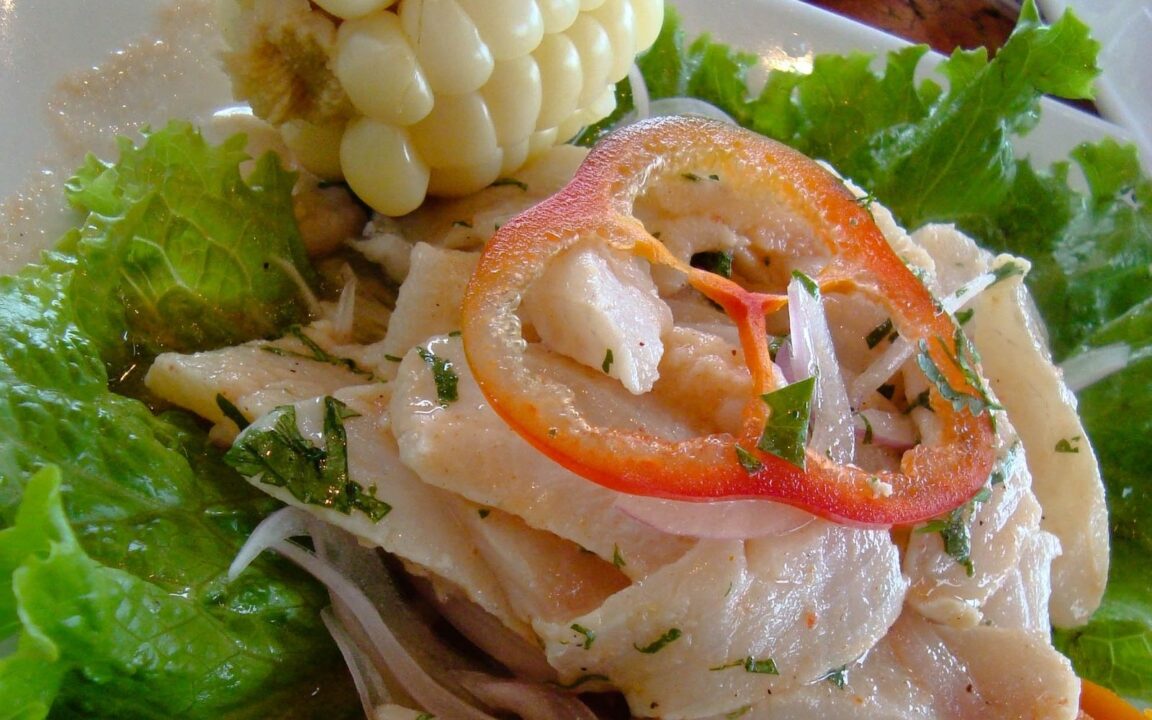
Ceviche is raw fish cured briefly in lime juice with salt, red onion and aji chili, served with sweet potato, corn and its marinating liquid, the leche de tigre. In Lima the tradition is to eat it at lunch, when fish landed that morning is at its freshest. Traditional cevicherias lean into that rhythm, opening for lunch, selling through the best fish and closing by mid afternoon. Evening ceviche exists in modern restaurants, but the classic cevicheria circuit is a daytime ritual, and visitors who schedule it for dinner often find the doors shut.
Order simply the first time. A classic ceviche of a firm white fish, a tiradito if you want the Japanese influenced sliced version dressed at the table, and a chicha morada, the purple corn drink, or a pisco sour alongside. The pisco sour, pisco with lime, sugar, egg white and bitters, is Peru’s signature cocktail, and lunch is a perfectly respectable time for one in a cevicheria. Save room. Portions are generous, and the leche de tigre alone, sometimes served as a small glass on its own, is rich enough to count as a course.
What is Nikkei cooking, and why does Maido matter?
Nikkei is the cooking of Peru’s Japanese community, developed since Japanese immigration began in the late nineteenth century. Japanese technique, knife work, raw fish preparation and respect for the ingredient, met Peruvian produce, aji chilies, potatoes, corn and the Pacific catch off Lima. Tiradito is its most famous bridge dish, and modern Nikkei tasting menus push the dialogue into sushi, charcoal grilling and Amazonian ingredients.
Maido, in Miraflores, is Nikkei’s global flagship. Chef Mitsuharu Tsumura, known as Micha, opened it in 2009, and it climbed steadily through the rankings before being named No. 1 in The World’s 50 Best Restaurants 2025, announced in Turin on 19 June 2025. A Maido dinner is the single hardest Nikkei reservation in the city, so book through the restaurant’s own channels as soon as your dates are fixed, and treat third party promises of tables with skepticism. Top Lima restaurants generally take reservations only directly.
You do not need a tasting menu to understand Nikkei, however. Even a simple tiradito at a good cevicheria, or a maki topped with Peruvian flavors in a neighborhood Nikkei spot, shows the fusion at work. Book Maido if you can. If you cannot, eat Nikkei at a smaller scale and spend the savings at the market.
Which world ranked restaurants should you try to book?
Central, in Barranco, organizes its tasting menu by Peruvian ecosystems and altitude, from below sea level on the coast to high Andean elevations, drawing ingredients from the Amazon, the Andes and the Pacific. After its 2023 world number one ranking it moved into the Best of the Best category, which retires former winners from the annual vote. Demand did not retire with it. Reservations open well ahead and should be your first booking task for Lima, even before hotels if the meal is the point of the trip.
In the same Barranco building, Kjolle is chef Pia Leon’s restaurant, ranked No. 9 in the world in 2025. Where Central is a research driven journey across ecosystems, Kjolle presents native ingredients, tubers, Amazonian produce and coastal seafood, in a brighter, more direct style. Booking both gives you two distinct readings of the same extraordinary pantry.
Merito, also in Barranco, ranked No. 26 in 2025, blends Peruvian produce with Venezuelan roots under chef Juan Luis Martinez, in a small, relaxed dining room that feels less formal than its ranking suggests. Mayta, in Miraflores, ranked No. 39 in 2025, is chef Jaime Pesaque’s contemporary Peruvian restaurant, a useful option for travelers who want a serious kitchen with a la carte flexibility and one of the city’s noted pisco programs. Astrid y Gaston, the restaurant that helped launch modern Peruvian gastronomy under Gaston Acurio, remains a reference point in San Isidro for a more classic fine dining frame.
Be realistic about how many of these one trip can hold. Two tasting menus, eaten well and remembered, beat four eaten in a blur. Build the rest of the trip around the food that Lima residents actually queue for.
What should you eat beyond the famous dining rooms?
Causa is the dish to order when you think you understand potatoes. Peru is the potato’s home, with thousands of native varieties, and causa layers seasoned mashed yellow potato with fillings such as tuna, chicken or seafood, avocado and aji. It is served cold, travels well between courses, and shows the Andean pantry at its most elegant.
Anticuchos are skewers of marinated beef heart grilled over charcoal, sold by street vendors and grill restaurants, best at dusk with grilled potatoes, corn and chili sauces. The flavor is deep and clean rather than gamey, and squeamish first timers routinely finish the skewer they agreed to taste. Lomo saltado, beef stir fried with onion, tomato and soy sauce and served with fries and rice, carries the Chinese Peruvian, or chifa, influence that is the other great pillar of Lima eating. A chifa dinner, with arroz chaufa, Peru’s fried rice, is not a detour from Peruvian food. It is Peruvian food.
Finish sweet at least once with picarones, squash and sweet potato doughnuts fried to order and drenched in spiced syrup, sold from street carts in the evening, especially around Barranco and Miraflores parks.
How do Barranco, Miraflores, San Isidro and Surquillo divide up?
Barranco is Lima’s bohemian district, all painted republican houses, murals, small galleries and the Puente de los Suspiros bridge. It holds Central, Kjolle and Merito, plus beloved neighborhood institutions such as Isolina, which cooks traditional Limean comfort food in generous sharing portions. Barranco is where you pair a serious lunch or dinner with an evening walk, a pisco sour in a historic bar and street snacks as the light fades.
Miraflores is the practical visitor base, walkable, ocean facing and dense with restaurants, including Maido, Mayta and the famous cevicheria La Mar, Gaston Acurio’s open air lunch institution. La Mar works on a no reservations, arrive early logic for many visitors, so go before the lunch rush rather than at its peak. San Isidro, the financial district, is quieter and more formal, suited to business lunches, polished cevicherias and Astrid y Gaston’s mansion setting.
Surquillo, just inland from Miraflores, is where you go to understand ingredients. Mercado No. 1 de Surquillo is a working market piled with native potatoes, aji varieties, Amazonian fruits such as lucuma, chirimoya and camu camu, herbs, seafood and small food stalls. Go in the morning, ideally with a food tour or a clear list if your Spanish is limited, taste what vendors offer for sampling, and do not treat working vendors as a photo set. Ask before photographing people, buy something from stalls where you linger, and keep valuables low key as you would in any busy urban market.
Food travel pairs naturally with the rest of a Peru itinerary. For a colonial city with its own strong kitchen, see our same day guide to Arequipa, Peru, and for the slower hacienda side of Latin American food culture, read our earlier piece on Hacienda de San Antonio in Colima, Mexico.
How should you plan three days of eating in Lima?
Day one belongs to lunch. Arrive at a top cevicheria before noon, order ceviche and tiradito, walk it off along the Miraflores malecon above the Pacific, and keep dinner light, perhaps chifa, so the day has contrast. Day two is market morning in Surquillo, causa and a traditional lunch in Barranco, picarones at dusk and your first booked tasting menu that night if the reservation gods cooperated. Day three is the second booked table, Maido for Nikkei or Kjolle for a different reading of the pantry, with anticuchos from a street grill as your farewell snack.
Two practical rules protect the plan. First, anchor each day around one big meal rather than three, because Lima portions and tasting menus are both generous. Second, confirm every important reservation, address and opening day directly with the restaurant close to the date. Top kitchens adjust days and reservation windows, and a screenshot from an old article is not a booking.
Frequently Asked Questions
Does Lima have Michelin starred restaurants?
No. Peru has no Michelin Guide restaurant edition, so Lima restaurants do not hold Michelin stars. Their global rankings come from The World’s 50 Best Restaurants and Latin America’s 50 Best Restaurants.
What is the best restaurant in Lima?
Maido was named No. 1 in The World’s 50 Best Restaurants 2025, and Central held the same title in 2023 before moving into the Best of the Best category. Which suits you depends on taste, Nikkei precision at Maido or an ecosystem journey at Central.
When should you eat ceviche in Lima?
At lunch. Traditional cevicherias focus on daytime service when the fish is freshest, and many close by mid afternoon. Plan ceviche as the centerpiece of a day, not as a late dinner.
How far ahead should you book Central and Maido?
As early as their reservation systems allow, often weeks to a few months ahead. Book direct through the restaurants as soon as travel dates are fixed, and join waitlists if your first attempt fails.
Which neighborhood is best for food lovers to stay in?
Barranco for atmosphere and several top tables on foot, Miraflores for choice, walkability and ocean views. Surquillo is best as a market visit rather than a visitor base.
What should a first time visitor order?
Ceviche, tiradito, causa, anticuchos, lomo saltado and picarones, plus a pisco sour. Together they cover the coastal, Andean, Nikkei, chifa and street food threads that define Lima eating.
Rankings referenced are The World’s 50 Best Restaurants 2025, checked 10 November 2026. Confirm reservations, opening days and menus directly with each restaurant before traveling.