 Maya Chen
What to eat in Hanoi comes down to a handful of dishes the city does better than anywhere on earth, eaten in the right order across the day: pho at dawn, bun cha at lunch, banh cuon and cha ca as you graze, and egg coffee whenever you need to sit down. Hanoi cooking is northern cooking, clear, balanced and restrained, suspicious of sweetness and generous with herbs, and the Old Quarter, with its 36 guild streets and its plastic stools, is where to eat it. This guide goes dish by dish: what each one is, how it should taste, how to order it, and the names that the Michelin Guide’s Hanoi coverage has recognised in recent editions.
Quick Facts
- Eating base: The Old Quarter in Hoan Kiem district, north of Hoan Kiem Lake, where the classic stalls cluster
- Breakfast dish: Pho, eaten early; the best known stalls sell through their broth by mid-morning
- Lunch dish: Bun cha, traditionally a midday meal in Hanoi
- Coffee ritual: Egg coffee, invented in Hanoi in 1946, best taken slowly in a cafe
- Michelin signal: The Michelin Guide has covered Hanoi since 2023, awarding Bib Gourmand and Selected status to street stalls alongside restaurants; listings are a discovery signal, with details verified at the stall
- Prices: Street dishes remain inexpensive by international standards; carry small cash notes and confirm the price before you sit
Pho: what makes the Hanoi version different?
Pho is Vietnam’s defining noodle soup, flat rice noodles in a clear broth with beef or chicken, and Hanoi is its historic home, where the modern form emerged in the early 20th century in northern Vietnam. The Hanoi style is the restrained one: a broth that is clear and deeply savoury from long simmered beef bones with charred ginger and onion, star anise and black cardamom kept in the background, a wider noodle, and a modest garnish of sliced spring onion and herbs rather than the southern mountain of basil and bean sprouts. Nothing sweet, nothing cluttered. Beef cuts are ordered by name: tai for rare slices cooked by the broth, chin for well done brisket, nam for flank, and bo vien for meatballs.
The names to know cluster in and near the Old Quarter. Pho Gia Truyen Bat Dan at 49 Bat Dan is the city’s most storied beef pho address, recognised with a Michelin Bib Gourmand, famous for its queue, its no-menu simplicity and broth that sells out by mid-morning. Pho Bo Lam on Hang Vai and Pho Ga Nguyet, a chicken pho specialist, also hold Bib Gourmand recognition in the Guide’s Hanoi listings. Go before 9 a.m., order at the counter, pay attention to how regulars add a squeeze of lime, pickled garlic and chilli, and order quay, fried dough sticks, for dipping if the stall offers them.
Bun cha: why is lunch the main event?
If pho owns the morning, bun cha owns midday. It is a purely Hanoi dish: charcoal grilled pork, both seasoned patties and slices of pork belly with charred edges, served in a bowl of warm, lightly sweet-sour fish sauce broth with pickled carrot and green papaya, alongside a mound of white rice vermicelli and a basket of herbs. You dip the noodles into the broth, assemble bites with pork and herbs, and eat it as a composed mouthful rather than a soup. The grilling smoke drifting across Old Quarter streets around noon is the city’s most appetising landmark.
The dish reached global fame in 2016, but Hanoians had their own rankings long before. Tuyet Bun Cha 34 on Hang Than holds a Michelin Bib Gourmand and is a local favourite for a clean, balanced broth. Other stalls across the Old Quarter turn out excellent versions; the markers of a good one are live charcoal, pork grilled to order rather than held, and herbs that arrive fresh and plentiful. Order bun cha at lunch, not dinner: many of the best stalls close when the pork runs out in the early afternoon.
Which other dishes should you fit in?
Banh cuon are silk-soft steamed rice rolls, filled with minced pork and wood ear mushroom, topped with fried shallots and served with cha lua sausage and a warm fish sauce dip. Banh Cuon Ba Hoanh on To Hien Thanh, Michelin Selected, is the reference address for their consistency. Cha ca, turmeric and dill fish, is Hanoi’s great tabletop dish: chunks of fish marinated in turmeric and galangal, sizzled at your table in a pan with a tangle of dill and spring onion, then tipped over vermicelli with peanuts and herbs. It is rich, aromatic and unlike anything else in the Vietnamese canon. Bun thang, an elegant noodle soup layered with shredded chicken, egg, pork and herbs, shows the refined end of Hanoi cooking, while mien luon, glass noodles with eel, crisp fried and in soup, holds Bib Gourmand recognition at Mien Luon Chan Cam. Vegetarian travellers will work harder in the Old Quarter, where pork and fish sauce anchor most dishes, but banh cuon stalls can often prepare mushroom-only rolls, and dedicated chay restaurants sit just outside the Quarter.
Egg coffee: what is it and where was it invented?
Ca phe trung, egg coffee, is Hanoi’s signature drink: strong Vietnamese robusta coffee crowned with a thick cap of whipped egg yolk and sweetened condensed milk, served in a cup set into a bowl of hot water to keep it warm. It tastes closer to a liquid tiramisu or creme brulee than to any conventional coffee, and you eat the first spoonfuls before drinking through the foam. It was invented in Hanoi in 1946 by Nguyen Van Giang, who whisked egg yolk as a substitute when milk was scarce, and Cafe Giang, the cafe he founded, still serves it down a narrow alley off Nguyen Huu Huan street. Order the hot version first, hot is the original and the texture is better, and treat it as dessert rather than a caffeine stop.
How should you pace an eating day in the Old Quarter?
Start by 7 a.m. with pho, then walk the guild streets as the shops open, each historically named for the trade once plied there. Take egg coffee mid-morning. Sit down to bun cha between 11 a.m. and noon, before the grills wind down. Graze the afternoon: banh cuon as a snack, a che dessert cup if you pass a good stall, and save cha ca for a sit-down dinner. If food-first planning is how you travel, our first time in Bangkok itinerary and our Mexico City food guide apply the same eat-by-dish logic to two other great food capitals. One practical rule for Hanoi: if a stall is busy with locals at the hour locals eat that dish, you are in the right place, whatever any guide says.
Frequently Asked Questions
What is the one dish you must eat in Hanoi?
Pho, in its northern style, at an Old Quarter stall in the morning. It is the dish Hanoi gave the world, and the clear, restrained broth you get here is the reference version that southern and overseas variations depart from.
When should you eat bun cha?
At lunch. Bun cha is traditionally a midday dish in Hanoi, and the best known stalls grill through the late morning and early afternoon, then close. Ordering it in the evening usually means a restaurant version rather than a specialist stall.
Is egg coffee actually made with egg?
Yes. Whipped egg yolk with sweetened condensed milk forms the foam over strong black coffee. It was created in Hanoi in 1946 at the cafe that became Cafe Giang, which still serves it. The flavour is rich and custard-like, with no eggy taste.
Are Michelin listed stalls in Hanoi expensive?
No. The Michelin Guide’s Hanoi coverage since 2023 is notable for recognising street stalls with Bib Gourmand and Selected status, and a bowl at a listed pho or bun cha stall still costs a small amount by international standards. Carry cash in small notes and confirm prices before ordering.
What should vegetarians order in Hanoi?
Look for chay, vegetarian, restaurants for full meals, and ask banh cuon stalls for mushroom-only rolls. Be aware that fish sauce seasons most Old Quarter dishes, including broths and dips, so strict vegetarians should confirm ingredients explicitly rather than assume a meat-free looking dish is vegetarian.
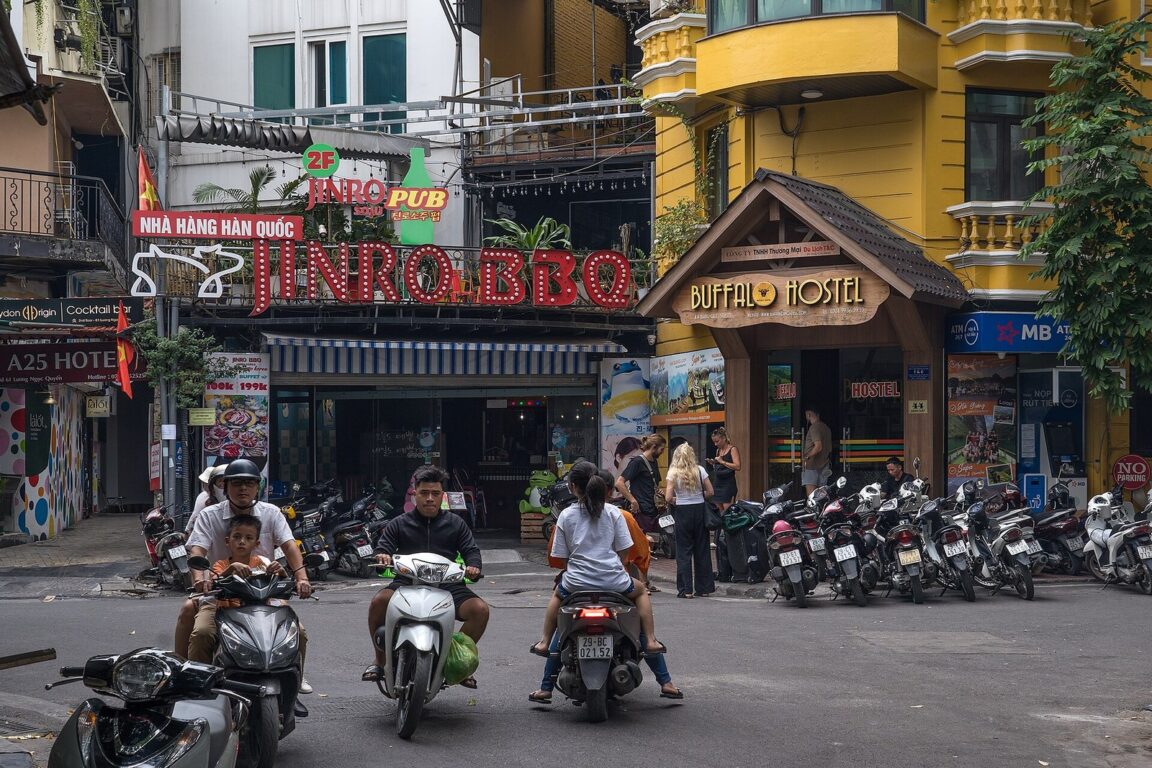
Featured image: Hanoi’s Old Quarter. Photo by Alexkom000 (Alexey Komarov), CC BY 4.0, via Wikimedia Commons.