 River Callahan
Dunedin, known in te reo Maori as Otepoti, earns a South Island stop on two strengths no other New Zealand city combines: a compact centre of Scottish-planned streets and Victorian and Edwardian stone architecture, and the Otago Peninsula, a wildlife headland where the world’s only mainland breeding colony of royal albatross sits a scenic harbour drive from the city. Add New Zealand’s oldest university, its most photographed railway station and the world’s steepest residential street, and Dunedin rewards at least two full days. This guide explains how the city and the peninsula fit together, what to prioritise and how to time the wildlife.
Quick Facts
- Where: Otago region, South Island, New Zealand, at the head of Otago Harbour
- Known for: Scottish heritage, Victorian and Edwardian architecture, wildlife on the Otago Peninsula
- Signature wildlife: Northern royal albatross at Taiaroa Head, the world’s only mainland royal albatross breeding colony, per the Royal Albatross Centre
- Key historic sights: Dunedin Railway Station, Larnach Castle (145 Camp Road), the Octagon, University of Otago
- Quirky record: Baldwin Street, recognised by Guinness World Records as the world’s steepest residential street, at about 19 degrees (35 percent) at its steepest
- Best base: Central Dunedin near the Octagon, with a car or tour for the Otago Peninsula
- Time needed: Two days minimum; three if the peninsula gets a full day
- Getting around: Walkable centre; the peninsula is a winding harbour drive, so plan it as one dedicated route
Why does Dunedin feel Scottish?
Dunedin was founded as a Scottish settlement, and the plan shows. The city takes its name from Dun Eideann, the Gaelic name for Edinburgh, its streets carry the names of their Edinburgh counterparts, and its centre is organised around the Octagon, an eight-sided plaza rather than a conventional square. Gold rush wealth in the nineteenth century paid for the stone architecture that still defines the city: churches, banks, university buildings and a railway station built to impress. The result is the most architecturally coherent historic centre in New Zealand, and the reason a simple walking day in Dunedin satisfies travellers who usually treat cities as gateways to scenery.
The University of Otago anchors the city’s other identity. Founded in 1869, it is New Zealand’s oldest university, and its clocktower building and student quarter give Dunedin an energy out of proportion to its size, with cafes, bookshops and galleries filling the streets between the Octagon and the campus. Travellers weighing Dunedin against a faster South Island pace should understand the trade: this is not a thrill capital. It is a heritage city with a wild headland attached, and it suits travellers who like their nature served with history.
What should you see in the city centre first?
Start at the Octagon and walk outward. The Dunedin Railway Station, opened in 1906, is the city’s set piece, a Flemish Renaissance style building of dark basalt and pale Oamaru stone with a mosaic floor and stained glass inside, and it still functions as a station as well as a landmark. From there, George Street and Princes Street carry the Victorian streetscape, the Dunedin Public Art Gallery faces the Octagon, and Toitu Otago Settlers Museum, beside the station, tells the story of the region’s Maori and settler history better than any single other stop. Knox Church and First Church supply the Gothic Revival spires the skyline is known for.
Then climb something. Baldwin Street, in North East Valley, is recognised by Guinness World Records as the world’s steepest residential street, rising at about 19 degrees, a 35 percent gradient, at its steepest point. It is a short street and a shorter visit, but walking it settles the scale of Dunedin’s hills, which wrap the city in a natural amphitheatre above the harbour. The Botanic Garden, New Zealand’s oldest, sits at the top of the valley nearby, and Signal Hill Lookout, above the city, gives the orienting view: Octagon below, harbour ahead, peninsula curving away to the left. Do the lookout early if you can, because the geography of the whole stay makes sense from up there.
Why is the Otago Peninsula the real headline?
Because of what breeds at its tip. At Taiaroa Head, also known as Pukekura, the Royal Albatross Centre protects the world’s only mainland breeding colony of northern royal albatross. The centre explains that the birds breed inside a designated nature reserve and, because of their vulnerability, are visible only from a glassed observatory on a guided tour. These are ocean wanderers with wingspans approaching three metres, returning to the same headland to court, nest and raise a single chick through a breeding cycle that spans most of a year. Watching one come in off the Pacific and land on a grassy slope beside a city suburb is the single most distinctive wildlife experience in urban New Zealand.
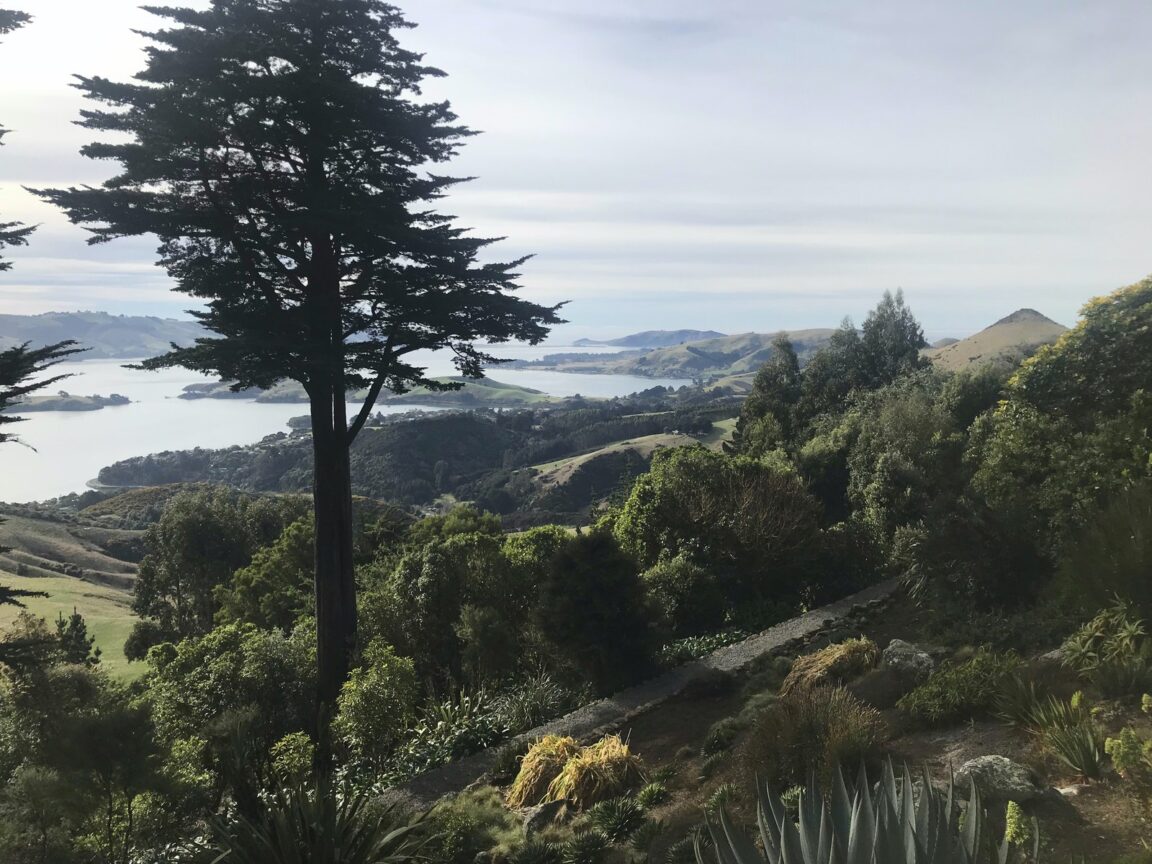
The peninsula offers more than albatross. Dunedin’s official visitor site, DunedinNZ, describes the Otago Peninsula as an area of outstanding biodiversity stretching along the southern edge of Otago Harbour, and lists the OPERA, the Otago Peninsula Eco Restoration Alliance, a private eco-reserve dedicated to conservation and rehabilitation, among its wildlife experiences, alongside the albatross colony and Historic Fort Taiaroa, built on the headland in the late 1880s. Sea lions haul out on the peninsula’s ocean beaches, and the harbour road passes Portobello village, where cafes serve the day-trippers the headland draws. The drive itself is part of the experience: Portobello Road follows the water the whole way, with the harbour on one side and the peninsula’s green ridges on the other.
What is Larnach Castle, and is it worth the detour?
Yes, and it pairs naturally with the albatross run because it sits on the same peninsula. Larnach Castle, at 145 Camp Road on the peninsula ridge, is a Gothic Revival mansion built from 1871 for entrepreneur and politician William Larnach, designed by Dunedin architect R. A. Lawson, and routinely described as New Zealand’s only castle. The Barker family bought the then-derelict property in 1967 and restored it, and the castle remains privately owned by the family and open daily as a visitor attraction. Its seven-acre gardens are rated a Garden of International Significance by the New Zealand Gardens Trust, and the tower view takes in the harbour, the peninsula and the Pacific in one turn. Check the castle’s own site for the day’s opening hours and current admission prices before you drive out, because both vary by season, and give the visit at least ninety minutes so the gardens get their share of the stop.
How should you sequence two or three days in Dunedin?
Give the city and the peninsula separate days, because the peninsula drive does not compress well. Day one belongs to the centre: Octagon, railway station, Toitu Otago Settlers Museum, the university quarter, then Baldwin Street and the Botanic Garden in the afternoon, when the light favours the stone facades. Day two is the peninsula as one flowing route: harbour road out, Larnach Castle in the morning, Portobello for lunch, then the Royal Albatross Centre at Taiaroa Head, booking the guided observatory tour ahead because access to the colony is by guided tour only. A third day adds the coastline south and north: Tunnel Beach, with its hand-hewn tunnel to a secluded cove, the surf beach at St Clair with its esplanade cafes, and the street art trail back in the centre, where large murals fill the warehouse quarter’s walls.
Weather deserves a plan rather than a hope. Dunedin sits in the path of southerly changes off the Southern Ocean, and the peninsula is exposed, so pack windproof layers for Taiaroa Head in any season and keep the city day and the peninsula day interchangeable, swapping them if a clear, calm day arrives for the albatross. Before any New Zealand trip, travellers from visa-waiver countries also need the entry paperwork settled; our explainer on the New Zealand NZeTA and visitor levy covers that, and our guide to the Australia ETA app handles the equivalent step for travellers combining both countries in one itinerary.
When is the best time to visit Dunedin?
Late spring through autumn gives the most reliable combination of mild city weather and active wildlife, and the albatross breeding cycle means the colony is occupied for most of the year, with adults and chicks present across a long season. Winter days are short and cold but the city is quiet, the architecture photographs beautifully in low light and the peninsula feels genuinely wild. Whatever the month, mornings tend to be calmer on the harbour than afternoons, which is another reason to drive the peninsula early and save the museums for later in the day.
Frequently Asked Questions
Is Dunedin worth visiting on a South Island itinerary?
Yes, for travellers who value heritage and wildlife over adventure sports. The combination of a Scottish-planned Victorian centre and the world’s only mainland royal albatross colony, half an hour apart, exists nowhere else in New Zealand.
Can you see albatross in Dunedin without a tour?
The breeding colony at Taiaroa Head sits inside a nature reserve, and the Royal Albatross Centre states the birds are only visible from a glassed observatory via a guided tour. Birds can sometimes be seen flying around the headland, but the observatory tour is the reliable way to see the colony.
How far is the Otago Peninsula from central Dunedin?
The Royal Albatross Centre sits at the tip of the peninsula at 1259 Harington Point Road, reached by following Portobello Road along the harbour through Portobello and then Harington Point Road to the end. Plan the trip as a half-day or full-day route rather than a quick hop, and do not route via Port Chalmers on the harbour’s other side.
Is Baldwin Street really the world’s steepest street?
Guinness World Records recognises Baldwin Street as the world’s steepest residential street, at about 19 degrees, or 35 percent, at its steepest point. It is a short residential street in North East Valley that visitors are welcome to walk.
How many days do you need in Dunedin?
Two days minimum: one for the historic centre and one for the Otago Peninsula. A third day allows Tunnel Beach, St Clair and the street art quarter without rushing either of the main days.
What should you check before visiting Larnach Castle?
Opening hours and admission prices on the castle’s official site, because both vary by season. The castle is open daily and privately owned by the Barker family, at 145 Camp Road on the Otago Peninsula.
Facts checked against the Royal Albatross Centre, DunedinNZ and Larnach Castle on 12 November 2026. Check opening hours and tour availability before travelling, as wildlife viewing depends on season and conditions.