 Rafael Santos
Asuncion is worth two to three days on a South America route, and it rewards travelers precisely because most itineraries skip it. Paraguay’s capital, founded in 1537 and set on the eastern bank of the Paraguay River, holds a compact independence-era centre, a long riverfront promenade where the city spends its evenings, one of South America’s most distinctive art museums, and easy day trips toward craft towns and Jesuit mission ruins. It is not a smaller Buenos Aires or a warmer Lima. It is a Guarani and Spanish bilingual capital with its own food, its own pace and some of the lowest big-city costs on the continent, and this guide covers how to plan it honestly.
What are the quick facts for a first trip to Asuncion?
- Best time to visit: May to September, the drier southern winter, when daytime highs sit roughly in the low to mid 20s Celsius instead of the mid 30s of December to February.
- Time needed: Two full days for the city, three if you add a mission or craft-town day trip.
- Airport: Silvio Pettirossi International Airport (ASU), in Luque, roughly 15 kilometres north-east of the centre.
- Languages: Spanish and Guarani are both official and both widely heard in the capital.
- Signature sight: The Palacio de Lopez, the pink presidential palace above the bay, best seen from the Costanera at sunset.
- Signature drink: Terere, cold yerba mate shared from a single cup and metal straw, the social ritual of every plaza and promenade.
- Do not miss: The Museo del Barro, the Costanera at dusk, and the Casa de la Independencia in the historic centre.
Why do so many South America trips skip Asuncion?
Paraguay is landlocked, has no Machu Picchu or Iguazu Falls inside its own borders, and sits between three countries that absorb most regional itineraries. Flights route through Sao Paulo, Buenos Aires or other hubs, guidebook coverage is thin, and many travelers cross the country only on a bus between Argentina and Brazil. The result is a capital that receives a fraction of the visitors of its neighbours, which is exactly its appeal. The historic centre is not roped off behind queues, the riverfront fills with local families rather than tour groups, and restaurants, taxis and museum entries cost noticeably less than in Buenos Aires or Santiago.
Skipping Asuncion also means missing the starting point of much of South America’s colonial story. Founded in 1537, the city styles itself the Mother of Cities because expeditions from here went on to found other settlements across the region, a history traced in the guide to the region in our 3 days in Buenos Aires itinerary, where the two capitals pair naturally on one route. Travelers continuing north or west in the region may also find our Arequipa, Peru travel guide useful for contrast.
How should you spend a first day in the historic centre?
Start in the Casco Historico, the grid between the river and Plaza Uruguaya, where the main independence sights sit within a short walk of each other. The Palacio de Lopez is the seat of government and the president’s workplace, so it is viewed from outside, from its gardens and from the riverfront, where its illuminated facade is the city’s emblem after dark. A few blocks inland, the Panteon Nacional de los Heroes, modelled on Les Invalides in Paris, holds the remains of Paraguay’s independence and war heroes beneath a domed interior that anchors the city’s ceremonial life.
Continue to the Casa de la Independencia, the house museum on the corner of 14 de Mayo and Presidente Franco where Paraguay’s independence from Spain was plotted in 1811. Inaugurated as a museum on 14 May 1965, it displays period furniture and documents in a low colonial house, and its small scale makes the story legible in under an hour. Nearby, the Metropolitan Cathedral and the Manzana de la Rivera cultural complex, a restored row of historic houses across from the palace that hosts exhibitions and a viewpoint over the bay, round out a morning that needs no tickets booked ahead and no transport between sights.
Break the day the local way. The historic centre empties in the early afternoon heat, so follow the pattern of a long lunch, a rest, and a return to the streets as the temperature falls. Lido Bar, a counter-service institution facing the Panteon that has served office workers and travelers since the middle of the last century, is the classic central stop for Paraguayan staples and quick plates, and it shows the city as it feeds itself rather than as it performs for visitors.
What makes the Costanera the city’s evening room?
The Costanera de Asuncion, the riverside avenue and promenade along the bay of the Paraguay River, is where Asuncion actually lives at the end of the day. As the heat breaks, joggers, cyclists, families and mate circles spread along the waterfront, with views back to the palace and across to the low Chaco shore on the far bank. It is the best single place to understand the city’s geography: a capital that faces a working river, with cargo and passenger boats still moving on it, rather than a decorative waterfront.
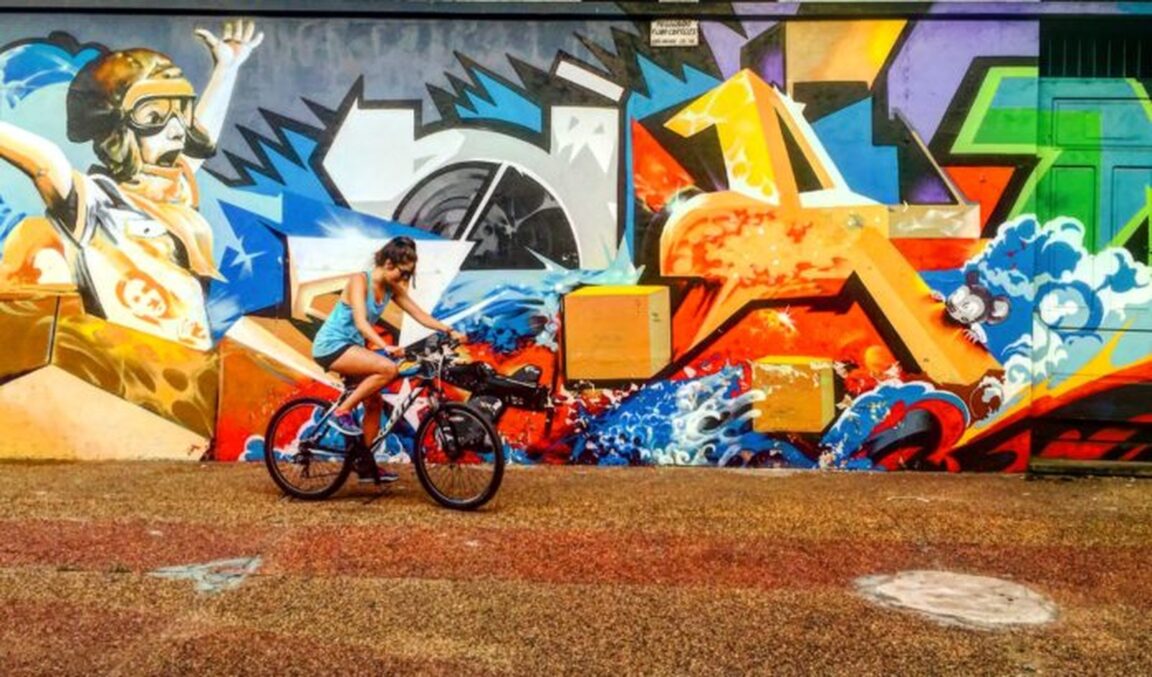
Just inland from the northern end of the promenade, Loma San Jeronimo climbs a small hill in one of the city’s oldest neighbourhoods. Its brightly painted houses, stairways, murals and small bars have been revived as a walking route, and an early evening drink there, followed by the walk back down to the Costanera for sunset over the bay, is the strongest half day pairing in the city. Go with the flow of local families, keep valuables discreet, and plan to be back in busier, well lit streets after dark, as the historic downtown is quiet at night.
Which museum should you prioritise above the rest?
The Museo del Barro, formally the Centro de Artes Visuales, is the one museum to build a day around. It brings together three collections in one complex on Grabadores del Cabichui, in the Isla de Francia area east of the centre: a museum of Paraguayan pottery and clay work, a museum of Indigenous art, and a museum of contemporary Paraguayan art. Together they make an argument few national museums manage, that the country’s visual culture runs in one line from pre-colonial Guarani craft to the present day.
Plan the timing carefully. The museum opens in the afternoons, Tuesday to Saturday from 2:00 pm to 8:00 pm, and is closed on Sundays and Mondays, so it pairs with a morning in the historic centre rather than replacing it. Allow one to two hours, take a taxi or rideshare rather than attempting the walk in the heat, and check the museum’s own site before you go, as hours and exhibition programming change. Travelers who care about Indigenous art will find it the single most rewarding interior in Paraguay, and its shop is a reliable place to buy serious craft rather than airport souvenirs.
Where should you eat, and what should you order first?
Order sopa paraguaya first, and know before it arrives that it is not a soup. It is a dense, golden cornbread enriched with cheese and onion, served in slices with grilled meat, and it is considered a national dish. Its usual partner is chipa, the ring or roll of corn and cassava flour with cheese, sold warm in bakeries, bus stations and street baskets across the city, and eaten at any hour. An asado, the Paraguayan barbecue of beef cuts, sausages and provoleta style cheese, is the weekend centrepiece, while empanadas and milanesa sandwiches fill the gaps between meals.
For a sit down introduction, the restaurants of Villa Morra and Carmelitas, the dining districts east of the centre, hold the city’s widest choice, from traditional Paraguayan kitchens to the steakhouses and international rooms that serve the business crowd. In the centre, long running family restaurants around the plazas serve the dishes above at local prices. Wherever you eat, terere will appear: an iced herbal infusion poured over yerba in a guampa cup, refilled from a thermos and shared in a circle. Accepting a round is a social gesture, not a purchase, and it is the fastest way a visitor stops being a spectator in Asuncion.
Which neighbourhoods work best as a base?
Choose between two Asuncions. The historic centre puts the palace, the Panteon and the Casa de la Independencia on your doorstep and has a handful of hotels in restored buildings, but it is quiet after office hours and offers limited dining at night. Villa Morra, Recoleta and Carmelitas, the connected districts to the east, hold most of the city’s modern hotels, shopping centres, restaurants and nightlife, and are the practical base for most visitors, with taxis and rideshares covering the run to the historic centre in normal traffic.
Between the two, Las Mercedes and the streets around Avenida Mariscal Lopez offer a middle course of smaller hotels and guesthouses in a largely residential setting. Whichever base you choose, judge it by the return journey at night rather than the walk out in the morning, and confirm that the property can call a trusted taxi for late returns from the centre.
What are the best day trips from Asuncion?
The closest rewarding circuit is the craft and lake country east of the capital. Aregua, on the shore of Lake Ypacarai, is known for its ceramics and its strawberry season, while Ita is a centre for black clay pottery and San Bernardino, on the lake’s eastern shore, is the country’s traditional summer resort town. Combined in one day with a stop in Luque, known for filigree silver jewellery and Paraguayan harps, they show the living craft culture that the Museo del Barro documents, and they can be visited by organised tour, hired driver or intercity bus.
The bigger commitment is the Jesuit mission country in the south. The missions of La Santisima Trinidad de Parana and Jesus de Tavarangue, near Encarnacion on the Parana River, are the monumental stone remains of the Jesuit reductions among the Guarani, and they are the country’s headline heritage sites. They are too far for a casual afternoon, so treat them as an overnight in Encarnacion or a very long organised day, and pair them with the city’s own riverfront, which faces Posadas in Argentina across the bridge. Travelers building a longer regional route should sequence Asuncion before or after Iguazu Falls, which is reached via Ciudad del Este in the east.
How do you get around, and what does the heat change?
The historic centre is walkable, and almost everything else is a taxi, rideshare or bus journey. Rideshare apps operate in the capital and are the simplest option for visitors, with fares that are low by regional standards, while the bus network is extensive but hard to decode without Spanish or Guarani and exact change habits. Silvio Pettirossi airport sits in Luque, and the transfer into the centre or Villa Morra should be arranged through your hotel, a prebooked car or the official taxi desk on arrival.
The heat is a planning fact, not a footnote. From December to February, daytime temperatures regularly climb into the mid 30s Celsius with high humidity and heavy storms, and midday sightseeing in the unshaded centre is genuinely uncomfortable. Structure every day the same way in those months: sights early, a long indoor lunch, museums in the afternoon, and the Costanera after sunset. Carry water, and treat terere breaks as hydration as well as culture. In the May to September window, by contrast, Asuncion is one of the most pleasant capitals in South America to walk.
Is Asuncion safe and easy for a first time visitor?
Asuncion follows the normal rules of a South American capital, applied without drama. The areas most visitors use, Villa Morra, Carmelitas, Recoleta, the Costanera and the historic centre by day, are busy and well trafficked. The practical risks are pickpocketing on crowded buses and in Mercado 4, the vast central market, and empty streets in the downtown grid late at night, so visit the market with a purpose, a guide or a small group, keep phones out of sight there, and take taxis after dark. Spanish opens doors, a few words of Guarani, starting with a greeting, are received warmly, and the overall pace of interaction is slower and more formal than in Buenos Aires.
Money and connectivity are straightforward. The currency is the guarani, cards are accepted in hotels, malls and larger restaurants in the eastern districts, and cash remains useful for taxis, markets and smaller family restaurants. Confirm the current entry requirements for your nationality before you fly, as visa policy for Paraguay has changed in recent years and is applied by nationality, and keep the yellow fever guidance for the region in mind if your route includes rural areas or onward travel to countries that require a certificate.
Frequently asked questions about Asuncion
How many days do you need in Asuncion?
Two full days cover the historic centre, the Costanera, Loma San Jeronimo and the Museo del Barro without rushing. Add a third day for the Aregua and Lake Ypacarai craft circuit, or an overnight in Encarnacion for the Jesuit missions in the south.
When is the best time to visit Asuncion?
May to September is the most comfortable window, with drier weather and daytime highs in the low to mid 20s Celsius. December to February is hot and humid, with temperatures in the mid 30s and heavy storms, and demands early starts and slow afternoons.
Is Asuncion expensive?
No. By South American capital standards it is inexpensive for hotels outside the top international properties, restaurant meals, taxis and rideshares, and museum entry. Imported goods and top end dining in Villa Morra narrow the gap, but everyday costs stay low.
Can you visit the Palacio de Lopez inside?
No, not as a regular sightseeing visit. The palace is the working seat of government and the president’s office, so visitors view it from the gardens, the surrounding streets and the Costanera, where it is illuminated at night.
What is terere, and should you try it?
Terere is cold yerba mate, poured from a thermos of iced water, often with medicinal herbs, into a shared cup and drunk through a metal straw. It is Paraguay’s daily social ritual, and accepting a round when offered is both polite and refreshing.
How do you get from the airport to the city?
Silvio Pettirossi International Airport is in Luque, roughly 15 kilometres from the centre. Use a hotel transfer, a prebooked car, an official airport taxi or a rideshare, and agree the destination district, centre or Villa Morra, before you set off.