 Jonas Lindqvist
Three days in Stockholm work best split by island: Day 1 in Gamla Stan, the medieval old town, Day 2 on Djurgarden for the Vasa Museum and Skansen, and Day 3 on the water, with an archipelago boat to Fjaderholmarna or Vaxholm and a deliberate fika circuit threaded through all three days. Stockholm is spread across 14 islands where Lake Malaren meets the Baltic, so plan by area, travel on one SL travelcard, book no museum except where a timed ticket helps, and give the archipelago half a day rather than a rushed hour. This itinerary sequences the days, with prices checked against the operators in November 2026.
What are the quick facts for 3 days in Stockholm?
- Best base: Norrmalm for first timers who want every sight walkable, Gamla Stan for atmosphere, Sodermalm for a local, lived in stay.
- Transit pass: SL travelcard, SEK 180 for 24 hours or SEK 360 for 72 hours. A single ticket costs SEK 43 and lasts 75 minutes.
- Headline museum: The Vasa Museum on Djurgarden, SEK 195 for adults in the October to April season and SEK 240 from May to September, with under 18s free.
- Archipelago taster: Fjaderholmarna, about 25 minutes by boat from the centre. Vaxholm, the archipelago’s gateway town, takes about an hour.
- Scale: 14 islands, 57 bridges, and an archipelago of around 30,000 islands and skerries to the east.
- Daily ritual: Fika, coffee and a cinnamon or cardamom bun, taken sitting down, at least once a day.
- Airport: Arlanda, reached by express train in about 20 minutes, or by commuter train and airport bus for less.
How do you get around Stockholm without wasting money?
Stockholm’s public transport is run by SL and covers the metro, buses, trams, commuter trains and some ferries on one ticket. Buy in the SL app or tap a contactless card at the gates. A single ticket costs SEK 43 and is valid for 75 minutes, which makes individual tickets poor value on a sightseeing day, while the 24 hour travelcard at SEK 180 and the 72 hour card at SEK 360 cover this whole itinerary, including tram 7 to Djurgarden and the Djurgarden ferry from Slussen. For current fares before you travel, check SL directly, as prices are reviewed regularly.
Walk more than the map suggests. Gamla Stan, Norrmalm, Djurgarden and northern Sodermalm form a walkable core linked by bridges, and the water between them is the city’s scenery rather than an obstacle. Save the metro for returning to your base at night, for the trip out to a neighbourhood hotel, and for its stations themselves, many of which carry large scale public art. Readers planning a design led stay should pair this itinerary with our guide to Ett Hem, Stockholm’s design hotel original.
Day 1: How do you do Gamla Stan properly?
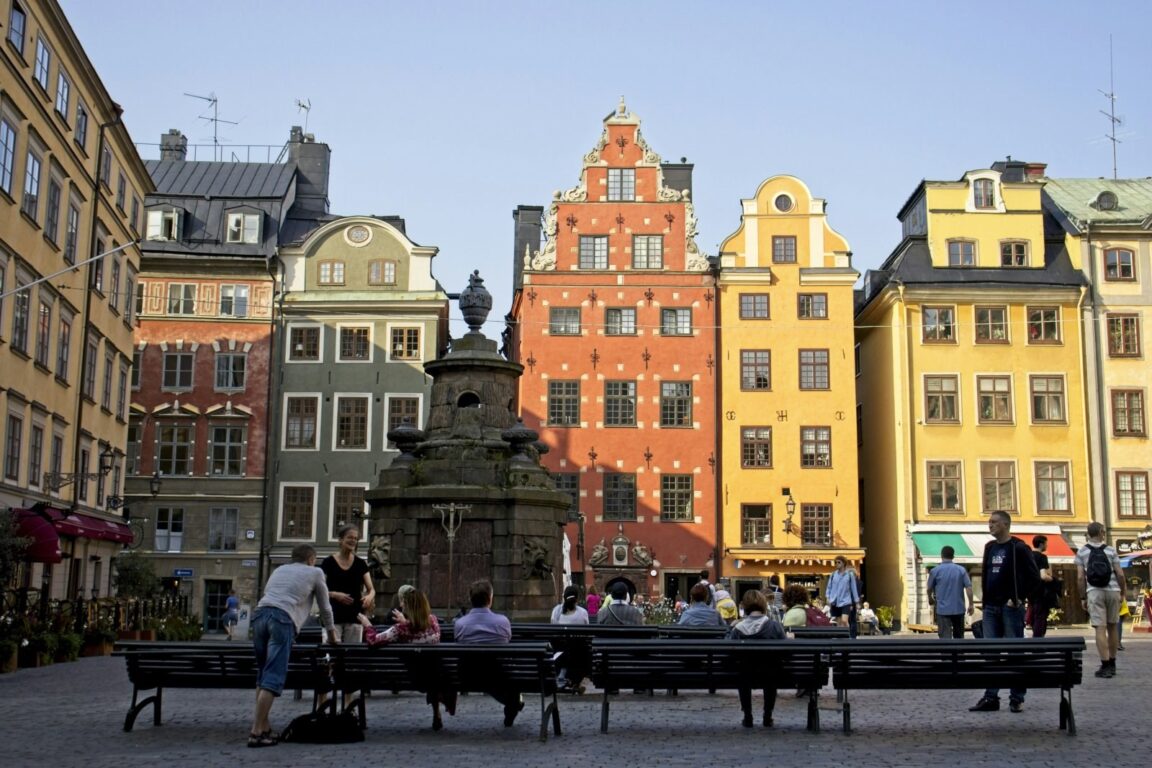
Start early in Gamla Stan, before the day groups arrive, at Stortorget, the oldest square in Stockholm, ringed by the gabled merchant houses in red, ochre and mustard that appear on every postcard of the city. The former stock exchange building on the square houses the Nobel Prize Museum, the right first interior of the trip, because it explains the prize, its laureates and the December ceremony that still fills the city each year, in a visit of about an hour.
From the square, climb to Storkyrkan, Stockholm Cathedral, and then to the Royal Palace, one of Europe’s largest palaces still in official use, with state rooms, the treasury and the royal armoury in its museums. Time the palace for the changing of the guard in the outer courtyard, then lose the plan for an hour in the lanes: Vasterlanggatan for shops, Prastgatan for the quietest stretch of old facades, and Marten Trotzigs Grand, an alley about 90 centimetres wide at its narrowest, which is found rather than signposted. Cross to Riddarholmen, the small island of noble palaces and a medieval church, for the classic view back across the water to City Hall.
Finish the day with your first fika, taken seriously. Fika is not coffee on the go. It is a seated pause, usually in the afternoon, with filter coffee or a cappuccino and a kanelbulle, a knotted cinnamon bun, or a kardemummabulle, its cardamom sibling. Gamla Stan has bakeries on and around Vasterlanggatan that serve both, and the correct order in Stockholm is the bun the bakery is known for, eaten warm if the tray has just come out. Dinner in the old town is convenient but priced for its setting, so consider crossing into Norrmalm or Sodermalm to eat where residents do.
Day 2: Why does Djurgarden deserve a whole day?
Djurgarden, the green island east of the centre, concentrates Stockholm’s best museums in parkland, and it rewards an early start. Go first to the Vasa Museum, built around the warship Vasa, which sank about 1,300 metres into her maiden voyage in Stockholm harbour in 1628 and was raised, almost entirely intact, in 1961. The ship fills the hall, surrounded by exhibitions on her building, her sinking, her salvage and the lives of those aboard, and she is the single most compelling museum object in Scandinavia.
Adult admission is SEK 195 from October to April and SEK 240 from May to September, visitors aged 18 and under enter free, and payment is by card. Standard hours are 10:00 am to 5:00 pm, with Wednesdays running to 8:00 pm outside summer and longer days, 8:30 am to 6:00 pm, in June to August. Arrive at opening, allow about two hours, and dress in a layer you can add, as the hall is kept cool to preserve the ship. Prebooked tickets do not skip the entrance queue, so an early arrival beats a reservation.
Spend the rest of the day on the island. Skansen, founded in 1891 and the world’s oldest open air museum, moves historic buildings from across Sweden into one park, with craftspeople, a zoo of Nordic animals and the city’s best setting for a midsummer or Christmas market visit, and it needs half a day rather than an hour. The Nordic Museum, in the vast building beside the Vasa, covers Swedish cultural history, while the ABBA Museum and the Vrak museum of wrecks sit within the same walk. Choose two interiors after the Vasa, not four, and spend the balance walking the Djurgarden waterside paths, which is how Stockholmers use the island. For a Scandinavian food detour before or after the trip, see our Copenhagen food guide.
Day 3: How do you fit the archipelago into a short trip?
The archipelago is not optional scenery. Around 30,000 islands and skerries run east from the city into the Baltic, and even a short boat ride changes a visitor’s understanding of Stockholm from a city on water to a city in an archipelago. Visit Sweden describes the closest island, Fjaderholmarna, as about 30 minutes away by boat, and other operators put the crossing at about 25 minutes from the central quays, which makes it the right choice for a half day: craft studios, a smokehouse, waterside restaurants and swimming rocks, with boats running in the warmer half of the year.
With a full day, go further, to Vaxholm, the small town known as the capital of the archipelago, about an hour by boat from Stromkajen, with a 16th century fortress on the islet opposite, cafes and ice cream shops on the harbour, and onward boats into the central archipelago. Public archipelago ferries are run by Waxholmsbolaget and depart from Stromkajen in the centre, while Stromma runs sightseeing boats and the prebookable Cinderella boats from Nybroplan and Stromkajen, so check timetables the day before, as frequencies drop sharply outside the mid June to mid August peak. Tickets for Waxholmsbolaget boats are bought on board by card. If weather closes in, swap Day 3 for Sodermalm: the Monteliusvagen cliff path, the photography museum Fotografiska on the waterfront, and the vintage shops and cafes around SoFo, the area south of Folkungagatan.
How do you build a fika circuit instead of a single stop?
Spread fika across the three days and treat it as the itinerary’s connective tissue. Day 1 belongs to a Gamla Stan bakery after the palace. Day 2 pairs naturally with a Djurgarden cafe between museums, where the gardens and the waterside terraces slow the pace of a museum day. Day 3 is for a Sodermalm or Norrmalm coffee bar, the kind of neighbourhood room where fika is a daily habit rather than a visitor experience, with a cardamom bun if you took cinnamon on Day 1. At each stop, order at the counter, sit down, and stay for the length of the coffee. Fika taken standing at a platform defeats its purpose, which is a deliberate pause in the day, shared where possible.
Where should you stay for this itinerary?
Norrmalm, the modern centre north of Gamla Stan, is the practical first choice: the main station, the airport express, tram 7 to Djurgarden and the walk into the old town all start here, and it holds the widest range of hotels at every level. Gamla Stan itself has a small number of hotels in historic buildings and the most atmospheric mornings and evenings, at the cost of cobbles, church bells and higher rates for the space. Sodermalm, the large island to the south, suits return visitors and anyone who prefers neighbourhood restaurants and bars to sights at the door, with the old town a bridge away. All three bases work with this itinerary, because the SL travelcard makes the whole core one zone for practical purposes.
What should you book ahead, and what can wait?
Book your hotel, any sought after restaurant, and archipelago boats on peak summer weekends. The Vasa and Skansen can be visited on the day, with arrival time mattering more than advance purchase. In winter, plan around daylight rather than opening hours: Stockholm’s December days are short, the museums and cafes become the warm centre of the trip, and the archipelago day should be cut to the shortest boat or replaced with Sodermalm. In late June, the equation reverses, with very long evenings that make a late waterfront walk along Norr Malarstrand or the Sodermalm cliffs the best free hour of the trip. Prices checked November 2026.
Frequently asked questions about 3 days in Stockholm
Is 3 days enough for Stockholm?
Yes, for the city itself. Three days cover Gamla Stan, Djurgarden’s museums and a half or full archipelago day without rushing. Add a fourth day if you want an overnight in the archipelago or a day trip to Uppsala or the palace at Drottningholm.
How much does the Vasa Museum cost?
Adult admission is SEK 195 in the October to April season and SEK 240 from May to September. Visitors aged 18 and under enter free. The museum is card only, and prebooked tickets do not give priority in the entrance queue.
Which SL ticket should a visitor buy?
For this itinerary, the 72 hour travelcard at SEK 360 is the simplest choice, covering metro, buses, trams and some ferries. A 24 hour card costs SEK 180, and a single ticket costs SEK 43 for 75 minutes of travel.
What is the easiest archipelago trip?
Fjaderholmarna, about 25 to 30 minutes by boat from the central quays, with craft studios, food and swimming in season. For a town rather than an island stop, Vaxholm takes about an hour and has a fortress, cafes and onward boats.
When is the best time to visit Stockholm?
Late May to early September brings the warmest weather, the fullest ferry timetables and the longest days. December is atmospheric and built around Christmas markets and candlelit cafes, but daylight is short and the archipelago is at its quietest.
Do you need cash in Stockholm?
Rarely. Cards and mobile payment are accepted almost everywhere, including museums, cafes and archipelago ferries, and some venues, including the Vasa Museum, are card only. Carry a payment card rather than a stock of kronor.