 James Wolfe
The Smithsonian museums are free, and that is both the best thing about them and the reason first-timers get overwhelmed. There are 17 free museums and the zoo in the Washington, DC area, plus two more museums in New York City, and no one can see them all in one trip. The right question is not how many you can fit in, but which ones fit your interests, your energy and your day. This guide answers that question, using only the Smithsonian’s own site for the rules, and it starts with the one fact that catches most visitors by surprise: the Castle is closed.
Use this guide to pick two museums a day, at most, and to build your day around where they sit on the National Mall. The museums are free, the walking is the cost, and a good plan is worth more than a long list.
Quick Facts
- How many: 17 free museums and the National Zoo in the DC area, plus two museums in New York City. The Smithsonian is the world’s largest museum complex, with 20 museums and the National Zoo.
- Cost: Free admission at all Smithsonian museums except Cooper Hewitt in New York City.
- Timed passes needed: National Museum of African American History and Culture, National Air and Space Museum in DC, and the National Zoo. All other DC locations do not use passes for general admission.
- Hours: The National Museum of American History, like most Smithsonian museums, is open 10 a.m. to 5:30 p.m. daily and closed December 25. Most museums are open every day except December 25.
- The Castle: Closed for renovation. Photograph it from outside; do not plan to go in.
- Where to check: si.edu, the official Smithsonian site, for each museum’s hours and pass rules.
The Rules First: Free Admission, Timed Passes and Hours
Admission is free at all Smithsonian museums except Cooper Hewitt in New York City. That is the rule the whole visit is built on, and it is why the museums are so crowded: there is no ticket price to slow anyone down. Most museums are open every day of the year except December 25, and the standard day runs 10 a.m. to 5:30 p.m., as the National Museum of American History’s own page states. Check si.edu for the museum you plan to visit, since hours can change for special exhibitions and events.
Four places require free entry passes or tickets, and this is the detail that ruins unplanned visits. The National Museum of African American History and Culture requires free timed-entry passes. The National Air and Space Museum in DC requires free timed-entry passes. The National Zoo requires free entry passes. Cooper Hewitt in New York City requires a ticket, and it is the only Smithsonian museum that charges. All other locations do not use passes or tickets for general admission, which means you can walk into the American History Museum, the Natural History Museum, the Hirshhorn and the rest without booking anything. Book the passes you need before you travel, because the popular time slots go first.
The Castle Is Closed: What to Know Before You Go
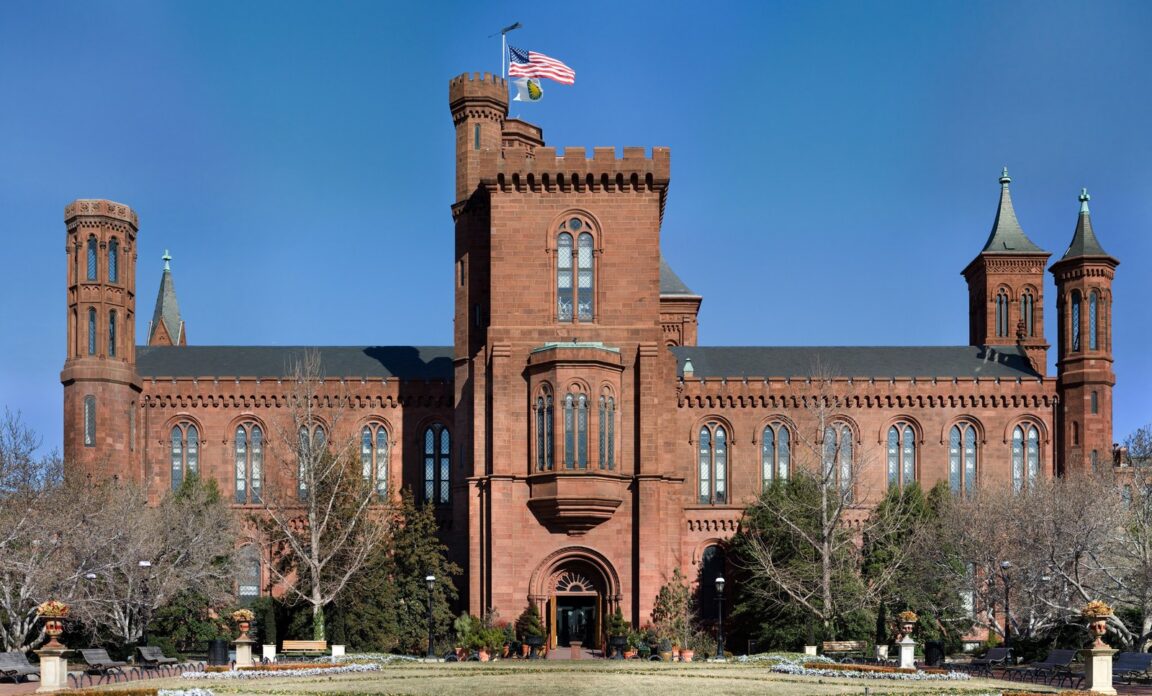
The Smithsonian Institution Building, known to everyone as the Castle, is the red sandstone building at the center of the National Mall, and it is the image on most postcards of the Smithsonian. Completed in 1855, it is the Smithsonian’s signature building and its first and oldest. It is also closed. The official site states it plainly: the Castle is currently closed for its first major renovation in more than 50 years, and its hours are listed as closed for renovation.
Do not plan your day around going inside the Castle, because you cannot. Photograph it from the Mall, walk the Enid A. Haupt Garden beside it, and use the time you would have spent inside on a museum that is open. The Castle’s address is 1000 Jefferson Drive SW, on the south side of the Mall, so it is easy to pass on the way between the Air and Space Museum and the Hirshhorn. The closure is the single most useful fact in this guide, and it is the one most visitors learn too late.
The Museums on the National Mall
Ten museums sit along the National Mall itself, and they are the core of a first visit. Each one is free, and each one is a full museum in its own right, so treat the list below as a menu, not a checklist.
- National Museum of African American History and Culture: Free timed-entry passes required. The newest of the Mall museums, and the hardest to get into without a pass.
- National Museum of American History: Free, no passes needed. At 1300 Constitution Avenue NW, it holds more than three million historical objects, including the Star-Spangled Banner, Washington’s uniform, Jefferson’s lap desk and Dorothy’s ruby slippers.
- National Museum of Natural History: Free, no passes needed. The big halls of dinosaurs, gems and ocean life, and the most popular museum with families.
- National Museum of the American Indian (DC): Free, no passes needed. The museum on the Mall’s east end, with the Mitsitam Cafe inside.
- National Air and Space Museum: Free timed-entry passes required. The planes and spacecraft on the Mall’s south side.
- Hirshhorn Museum and Sculpture Garden: Free, no passes needed. Modern and contemporary art in the round building on the south side of the Mall.
- National Museum of African Art: Free, no passes needed. African art, tucked below ground level on the south side.
- National Museum of Asian Art (Freer Gallery of Art and Arthur M. Sackler Gallery): Free, no passes needed. Asian art on the south side of the Mall.
- Smithsonian Gardens: Free, no passes needed. The gardens around the Mall museums, including the Haupt Garden by the Castle.
Two more museums were established by Congress in 2020, the National Museum of the American Latino and the Smithsonian American Women’s History Museum. They are part of the Smithsonian’s future, not its present Mall, so do not look for them on your first visit.
Which Museums to Prioritize, by Traveler Type
Families with children: Start with the National Museum of Natural History, then the National Air and Space Museum. Natural History is the easiest museum in the city for children, and Air and Space is the most exciting, but both are big and both are crowded, so book the Air and Space passes first and visit Natural History early, before the school groups arrive. The American History Museum is the third pick, for the Star-Spangled Banner and the ruby slippers, and the National Zoo is a separate day entirely.
History lovers: Start with the National Museum of African American History and Culture, then the National Museum of American History. The two museums tell the American story from different angles, and together they are the strongest history day in Washington. Book the African American History passes as early as you can, since they are the hardest to get, and give each museum at least three hours.
Art lovers: Start with the Hirshhorn Museum and Sculpture Garden, then the National Museum of Asian Art, and finish with the National Museum of African Art, all on the south side of the Mall. The three sit close together, and the walk between them is short. If you have a second art day, the Smithsonian American Art Museum, the National Portrait Gallery and the Renwick Gallery sit near the Mall, within 1.5 miles, and all are free with no passes needed.
Space and science lovers: Start with the National Air and Space Museum on the Mall, with its timed-entry pass, and save the Steven F. Udvar-Hazy Center in Virginia for a second day. The Udvar-Hazy Center is free with no passes needed, and it holds the larger aircraft, including the Space Shuttle Discovery, but it is not on the Mall and it needs a separate trip. Pair the Air and Space Museum with the Natural History Museum for a science day, since the two are a short walk apart.
A Realistic First-Visit Plan
The National Mall is a two-mile stretch, and the museums are spread along it, so the plan matters more than the list. Pick two museums a day, at most, and cluster them by side of the Mall: American History and Natural History on the north side, Air and Space, the Hirshhorn, African Art and Asian Art on the south side. The African American History and Culture Museum sits near the Washington Monument at the west end, and the American Indian Museum sits at the east end, so pair each of them with a neighbor rather than with each other.
A good first day runs like this: a morning at the museum that needs a timed pass, then lunch, then an afternoon at a walk-in museum nearby. A good second day does the same on the other side of the Mall. Do not try to see three big museums in one day. Each one is large enough to fill a morning, the walk between them is longer than it looks on the map, and the crowds build through the day. Our Washington, DC in a day guide shows how the museums fit into a wider day that also covers the monuments, the White House and the Tidal Basin.
Wear comfortable shoes, carry water, and build in a break. The museums have cafes and the Mall has food trucks, but the lines at both are longest at midday. If you are visiting with children, plan one museum in the morning and the afternoon for the monuments outside, where they can run.
Beyond the Mall
Four more Smithsonian museums sit near the National Mall, within 1.5 miles, and all are free with no passes needed: the Smithsonian American Art Museum, the National Portrait Gallery, the Renwick Gallery and the National Postal Museum. The American Art Museum and the Portrait Gallery share a building in the Penn Quarter, and the Renwick sits near the White House, so they are easy to add to a day that is already downtown.
Two places need their own trip. The National Zoo, which requires free entry passes, sits in the Woodley Park neighborhood, well north of the Mall, and the Steven F. Udvar-Hazy Center sits near Dulles Airport in Virginia. Both are free, and both are worth a half day, but neither fits into a Mall day. In New York City, the Smithsonian has two more museums: the National Museum of the American Indian’s George Gustav Heye Center, which is free, and Cooper Hewitt, which requires a ticket and is the only Smithsonian museum that charges.
Washington rewards the museum lover who plans. For another city where the museums shape the trip, see our first-timer’s guide to Paris, where the Louvre and the Musee d’Orsay play the same role the Smithsonian museums play here.
Frequently Asked Questions
Are the Smithsonian museums really free?
Yes. Admission is free at all Smithsonian museums except Cooper Hewitt in New York City. The DC museums, including the National Museum of American History, the Natural History Museum and the Air and Space Museum, are all free to enter, though two of them require free timed-entry passes.
Which Smithsonian museums need timed-entry passes?
Three in DC: the National Museum of African American History and Culture, the National Air and Space Museum, and the National Zoo. All three passes are free. Cooper Hewitt in New York City requires a ticket, and it is the only Smithsonian museum that charges. All other locations do not use passes or tickets for general admission.
Is the Smithsonian Castle open?
No. The Castle, the Smithsonian’s signature building, completed in 1855, is currently closed for its first major renovation in more than 50 years. Photograph it from the Mall and walk the Enid A. Haupt Garden beside it, but do not plan to go inside.
How many Smithsonian museums can I see in one day?
Realistically two, and three only if one of them is small. Each museum is large enough to fill a morning, and the walk between them is longer than it looks on the map. Plan two a day, clustered on the same side of the Mall, and save the rest for another trip.
What are the Smithsonian museum hours?
The National Museum of American History, like most Smithsonian museums, is open 10 a.m. to 5:30 p.m. daily and closed December 25. Most Smithsonian museums are open every day except December 25. Check si.edu for the hours of the museum you plan to visit, since hours can change for special exhibitions and events.
Sources checked November 9, 2026: si.edu, the official Smithsonian Institution site, for the museum list, locations, hours, admission and timed-entry pass requirements, and the Castle’s current status. All facts come from the Smithsonian’s own pages; check si.edu before your visit, since hours and pass rules can change.