 LeVar Thomas
New Orleans is the best eating city in America, and it is not close. The food here is not a side attraction to the music and the architecture. It is the main event, and it comes from two centuries of French, Spanish, African, Italian and Caribbean cooking layered on top of Gulf seafood and Louisiana rice. This guide covers the 12 dishes that define the city, what each one is, where it comes from, and the place most closely tied to it.
Use this guide as a checklist, not a single-day challenge. No one should try to eat all 12 dishes in one sitting. Spread them across a long weekend, and let the list shape your days: beignets in the morning, a po-boy for lunch, gumbo for dinner, and a praline for the walk home.
Quick Facts
- Best first bite: Beignets at Cafe du Monde, 800 Decatur Street.
- The big three: Gumbo, jambalaya and crawfish etouffee.
- The sandwich: The muffuletta, whose original home is Central Grocery.
- The Monday plate: Red beans and rice, the city’s most beloved Monday tradition.
- The dessert: Bananas Foster, invented at Brennan’s.
- The season: King cake appears during the Mardi Gras season.
How to Eat Your Way Through New Orleans
Two words explain most of what you will eat: Creole and Cajun. Creole is the cooking of the city, shaped by French, Spanish, African and Italian influences and by the port’s trade. Cajun is the country cooking of Acadiana, the French-speaking parishes to the west. The two overlap constantly, and most restaurants in New Orleans serve both, so do not worry about sorting every dish into one camp. What matters is that the food is local, seasonal and built around rice, the trinity of celery, bell pepper and onion, and the Gulf.
Most of the famous dishes are inexpensive and casual, and the best versions are spread across the city, from the French Quarter to Mid-City, Treme and Uptown. The grand rooms, Antoine’s and Brennan’s among them, take reservations through their own sites, so book ahead for those. For everything else, show up hungry and order one dish per meal rather than three.
The Big Three: Gumbo, Jambalaya and Crawfish Etouffee
1. Gumbo
Gumbo is the dish that holds New Orleans together. It starts with a dark roux, flour and oil cooked until it is the color of chocolate, and then takes any combination of chicken, andouille sausage, seafood or okra, served over rice. The official tourism site calls it almost its own food group, and the argument over the right version is a local sport. The documented home on the tourism site’s food guide is Liuzza’s by the Track, with Li’l Dizzy’s as the second pick. Order it as a first course or as the meal itself.
2. Jambalaya
Jambalaya is a one-pot rice dish and a fundamental part of New Orleans cooking. The official tourism site calls it both a culinary staple and a storied dish. The classic version cooks rice in the same pot as chicken and andouille sausage, with celery, bell pepper and onion, the trinity that underpins so much Louisiana cooking, and a dark roux for depth. The version on the tourism site is a chicken and sausage jambalaya from Chef Isaac Toups of Toups Meatery, built in a Dutch oven. Eat it as a main course, and expect a plate that is hearty enough to be lunch and dinner in one.
3. Crawfish Etouffee
Etouffee takes its name from the French word for to smother, and the dish does exactly that: crawfish tails smothered in a rich sauce of butter, onions, celery and bell peppers, thickened with a little flour and served over rice. The tourism site’s recipe uses a pound of peeled crawfish tails, or shrimp as a substitute, with bay leaves, salt and cayenne. It is a Cajun dish that the city adopted, and it is one of the best reasons to visit in crawfish season. Order the crawfish version when you see it on the menu, since that is the classic.
The Sandwiches: Po-Boys and the Muffuletta
4. Po-Boys
A po-boy is the New Orleans sandwich: a long loaf of French bread, crisp outside and soft inside, filled with anything from roast beef to fried shrimp. The tourism site’s food guide calls it a classic and notes the question every counter will ask: do you want that dressed? The documented home in the guide is Parkway Bakery and Tavern, and the roast beef and fried shrimp versions are the ones to try first. Eat it at the counter, with napkins, because a good po-boy is a messy sandwich by design.
5. Muffuletta
The muffuletta is a Sicilian sandwich that became a New Orleans original. It is built on a round sesame loaf and filled with ham, mortadella, salami, mozzarella, provolone and olive salad. The tourism site dates it as a Sicilian specialty since the 1900s, and the documented home is Central Grocery on Decatur Street, which calls itself the home of the original muffuletta. The shop, at 923 Decatur Street in the French Quarter, is open seven days a week from 9:00 a.m. to 5:00 p.m. Napoleon House is the tourism site’s second pick. A whole muffuletta feeds two easily, so order a half if you are eating alone.
Sweets and Breakfast: Beignets, Bananas Foster, Pralines and King Cake
6. Beignets and Cafe au Lait
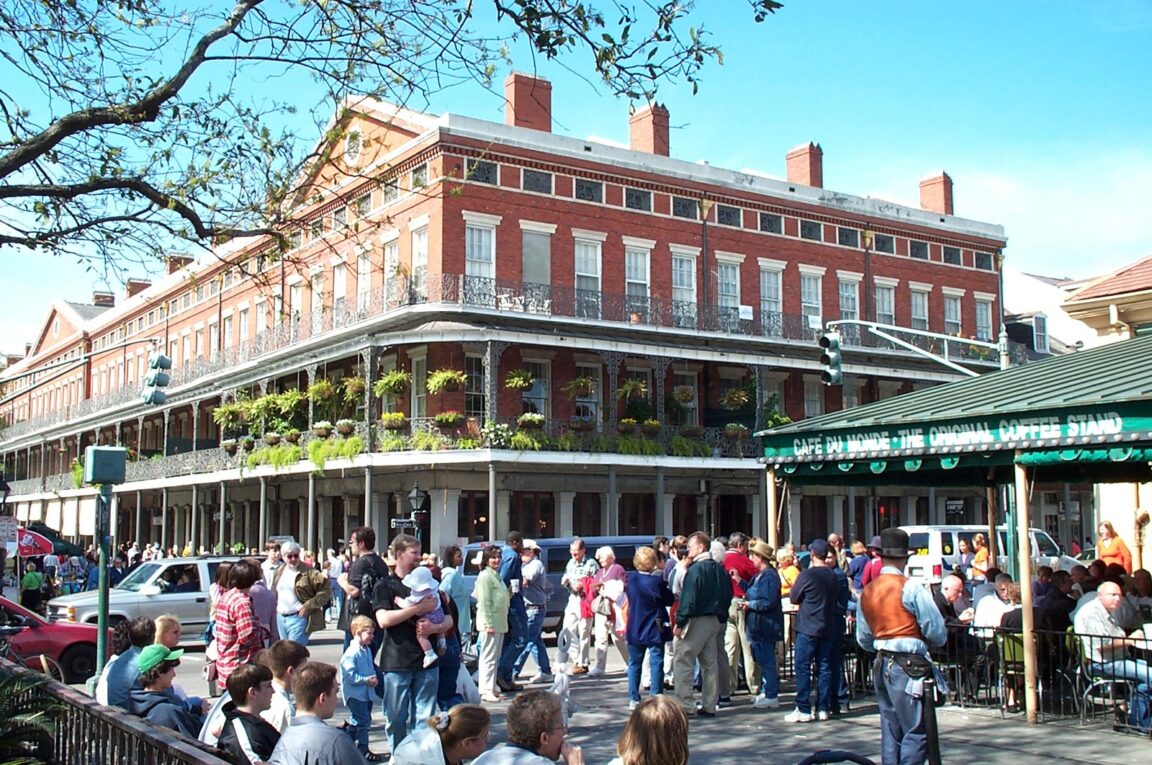
Beignets are the morning ritual of New Orleans: pillowy squares of fried dough buried under powdered sugar, eaten with cafe au lait, the milky coffee that is their traditional partner. Cafe du Monde has been the beignet capital of New Orleans since 1862, and its French Quarter shop at 800 Decatur Street is the one in the photographs. The tourism site’s beignet guide lists the shop’s other locations in City Park and at the airport, and the original is the one to visit first. Go early or late to miss the line, and do not wear black: the powdered sugar goes everywhere.
7. Bananas Foster
Bananas Foster is New Orleans’ most theatrical dessert, and it was invented at Brennan’s. The restaurant’s own site calls Bananas Foster one of its originals, imitated across the globe, and the tourism site describes the dramatic tableside preparation, bananas set ablaze by rum in a fiery finish. Brennan’s, at 417 Royal Street, has been a New Orleans tradition since 1946. Order it for the table, and watch it made: the flame is the point.
8. Pralines
Pralines are the candy of New Orleans, and the first thing to know is the pronunciation: Prah-leens, not pray-leens. They are a unique candy of the Crescent City, a Southern sweet, and the tourism site’s food guide sends visitors to Loretta’s Authentic Pralines in the French Market. Hand-made or store-bought, they are loved by visitors and locals alike, and they are the most packable souvenir in the city.
9. King Cake
King cake is the cake of Mardi Gras, and it is the only dish on this list with a season. The tourism site explains that the name comes from the Biblical story of the three kings who bring gifts to Baby Jesus, and that a small plastic baby is hidden inside the cake. Whoever finds the baby must buy the next cake, which is why the season runs on a loop: eat king cake, find the king cake baby, buy the next king cake, and repeat. The cakes are ring-shaped, iced and decorated in purple, green and gold, and they appear in supermarkets and bakeries across the city during the season. If you visit outside the season, you will have to come back for this one.
Seafood and the Monday Plate
10. Oysters Rockefeller
Oysters Rockefeller was born at Antoine’s, and the restaurant’s own site says so plainly: Antoine’s is the circa-1840 grand dame of French-Creole dining and the birthplace of Oysters Rockefeller. The dish is oysters baked on the half shell under a rich, herbed topping, and it has been copied in restaurants around the world since. Antoine’s, at 713 Saint Louis Street, calls itself New Orleans’ first restaurant. It is a formal room, and the oysters are the reason to book a table.
11. Barbecue Shrimp
Barbecue shrimp is the dish with the most misleading name in New Orleans: there is no grill involved. It is shrimp cooked in a rich, buttery sauce, and the tourism site’s food guide notes that French bread is a necessary accompaniment, for sopping up the sauce. The guide sends visitors to Pascal’s Manale, and the tourism site’s own description advises grabbing a bib. Order it as a shared starter or as a main, and expect to use your hands.
12. Red Beans and Rice
Red beans and rice is the Monday plate of New Orleans, and the tourism site calls it the city’s most beloved Monday tradition. It is a hearty plate of red beans cooked with sausage and served over rice, and although you can get it any day of the week, Monday is when the city eats it. The documented home is Dooky Chase’s, the famous Treme restaurant of the late Chef Leah Chase, which the tourism site describes as synonymous with Creole cuisine.
A One-Day Eating Plan
One day, done right, covers the highlights. Start at Cafe du Monde for beignets and cafe au lait, walk to Central Grocery for a muffuletta, spend the afternoon on a po-boy, and finish with gumbo and Bananas Foster for dinner. The next day, add jambalaya, etouffee and red beans and rice, and save the king cake for Mardi Gras season. The French Quarter holds several of these dishes within a few blocks, but the best versions are spread across the city, so use the streetcar and your feet, and plan one dish per meal rather than three.
New Orleans is one of several cities where eating is the trip. For more food-first city guides, see our 3-day Lisbon itinerary and our first-timer’s guide to Paris.
Frequently Asked Questions
What is the one dish I must try in New Orleans?
Gumbo. It is the dish that holds the city’s cooking together, and it is the best single introduction to Creole food: a dark roux, chicken and andouille sausage or seafood, served over rice. Liuzza’s by the Track is the documented home on the official tourism site’s food guide.
What is the difference between Creole and Cajun food?
Creole is the cooking of the city, shaped by French, Spanish, African and Italian influences and by the port’s trade. Cajun is the country cooking of Acadiana, the French-speaking parishes to the west. The two overlap constantly, and most restaurants in New Orleans serve both.
Where do I get beignets in New Orleans?
At Cafe du Monde, which has been the beignet capital of New Orleans since 1862. The original shop is at 800 Decatur Street in the French Quarter, and there are other locations in City Park and at the airport. Go early or late to miss the line.
What is a king cake baby?
A small plastic baby hidden inside a king cake. Whoever finds it must buy the next cake, which keeps the Mardi Gras season going: eat king cake, find the baby, buy the next cake, and repeat. The name king cake comes from the Biblical story of the three kings.
Do I need reservations at the famous New Orleans restaurants?
For the grand rooms, yes. Antoine’s and Brennan’s both take reservations through their own sites, so book ahead for those. For the casual counters and cafes on this list, including Cafe du Monde and Central Grocery, you can simply show up.
Sources checked November 9, 2026: neworleans.com, the official New Orleans tourism site, for dish histories, the Foodie’s Guide and the Traditional Foods pages; Brennan’s (brennansneworleans.com) for Bananas Foster; Antoine’s (antoines.com) for Oysters Rockefeller; and Central Grocery (centralgrocery.com) for the muffuletta. Cafe du Monde’s own site was unreachable from this browser because of a certificate error, so beignet facts come from the official tourism site’s beignet guide. Shrimp remoulade and bread pudding were dropped from the list because their origins could not be sourced today; pralines and barbecue shrimp take their places. No prices are quoted, as none were taken from an official menu today.