 LeVar Thomas
The respectful way to visit Oaxaca for Day of the Dead is to go as a guest at a family and community observance, not as a spectator at a festival: learn what the ofrendas mean, join the public comparsas and markets gladly, observe the cemetery vigils quietly, and always ask before photographing anyone. Dia de los Muertos in Oaxaca runs from 31 October to 2 November 2026, Saturday to Monday, and this guide explains what each day holds, what a visitor may join and what is best simply witnessed, and how to plan the trip for late October 2026.
Quick Facts
- When: The core observance is 31 October to 2 November 2026, with markets and preparations building through the last week of October.
- The days: 1 November is All Saints Day in the Catholic calendar and is widely kept in Oaxaca for the angelitos, children who have died; 2 November is All Souls Day, kept for adults.
- The heart of it: The ofrenda, a tiered home altar with photographs, candles, marigolds, food and drink for returning loved ones.
- Recognition: UNESCO inscribed the Indigenous festivity dedicated to the dead on the Representative List of the Intangible Cultural Heritage of Humanity in 2008.
- Where: Oaxaca City, its markets and Zocalo, and the cemeteries of Santa Cruz Xoxocotlan and the Panteon General, known as San Miguel, in the city itself.
- Book early: Rooms and flights for this week are among the most sought after of the Oaxacan year. Reserve as early as you can for 2026.
What is Dia de los Muertos, and what is it not?
Dia de los Muertos, Day of the Dead, is the Mexican observance in which families welcome the spirits of their dead back for a short annual visit, feeding them, remembering them and spending time in their company. UNESCO describes it as commemorating the transitory return to Earth of deceased relatives and loved ones, practised by the Indigenous communities of Mexico and now shared across the country. It blends Indigenous Mesoamerican beliefs about death with the Catholic feasts of All Saints and All Souls, which is why its dates sit where they do in the calendar.
It is not a Mexican Halloween, and treating it as one is the first mistake a visitor can make. The mood in Oaxaca is often joyful, with music, food and crowded streets, but the joy is in the service of remembrance. The graves are cleaned because a guest is expected. The favourite dishes are cooked because a particular person loved them. Understanding that difference changes how the whole week looks: the colour is not decoration, it is hospitality, extended to the dead by the people who miss them.
How do the three days unfold in 2026?
The buildup begins days before the core dates, as markets fill with marigolds, candles, sugar skulls and bread, and families construct their ofrendas at home. By 31 October, a Saturday in 2026, the city is fully dressed for the observance and the first cemetery vigils take place that night, most famously at Santa Cruz Xoxocotlan, just south of the city. Sunday 1 November is All Saints Day, widely kept in Oaxaca as the day of the angelitos, when children who have died are received with offerings suited to them, and the comparsas fill the streets. Monday 2 November is All Souls Day, kept for adults who have died, when families spend extended time at gravesides and the vigils reach their most significant nights. Local practice varies from village to village and family to family, so treat any timetable, including this one, as a pattern rather than a programme.
How do you read an ofrenda?
The ofrenda is a tiered altar built at home, and also in businesses, schools, churches and cemeteries, to receive a specific family’s dead. Photographs name the guests. Candles light their way. Water is set out for the journey, and salt is commonly included. Copal incense is burned to purify the space. The food is personal rather than generic: pan de muerto, the soft, sweet Day of the Dead bread, alongside the dishes and drinks the person actually loved, which in Oaxaca often means mole negro and hot chocolate, and sometimes a bottle of mezcal for an adult who enjoyed one.
The flower doing the signposting is the cempasuchil, the Mexican marigold, Tagetes erecta. Its intense orange colour and strong scent are held to guide spirits home, and families scatter its petals in a path from the street or the cemetery gate toward the altar and the grave. Sugar skulls, often inscribed with names, and cut paper banners, papel picado, complete the picture. A visitor does not need to build an ofrenda to honour the logic of one: public altars in the city are made to be looked at and learned from, while a home ofrenda glimpsed through a doorway is a family’s private welcome, to be appreciated from the street, not entered or photographed without an invitation.
What happens at the cemetery vigils?
The vigil, the velacion, is the emotional centre of the observance. Families arrive at the cemetery in the afternoon, clean and decorate the grave with flowers and candles, set out food and photographs, and then stay, often through the night, talking, eating, praying and sometimes listening to musicians. At Santa Cruz Xoxocotlan, a short distance south of Oaxaca City’s historic centre, the cemeteries fill on the night of 31 October and again across 1 and 2 November, and this is the vigil most visitors attend. Inside the city, the Panteon General, generally known as San Miguel, is Oaxaca’s principal cemetery and a central site of the observance in its own right.
A guest’s role at a vigil is deliberately small. Walk slowly and on the paths, keep your voice down, do not step across graves, and do not treat the candlelight as a backdrop. Some families welcome conversation and may offer food or drink, and accepting graciously is part of the etiquette. Others are in private grief inside a public space, and the correct response is distance. If the distinction is unclear, distance is always the right default.
What are comparsas, and where do visitors join in?
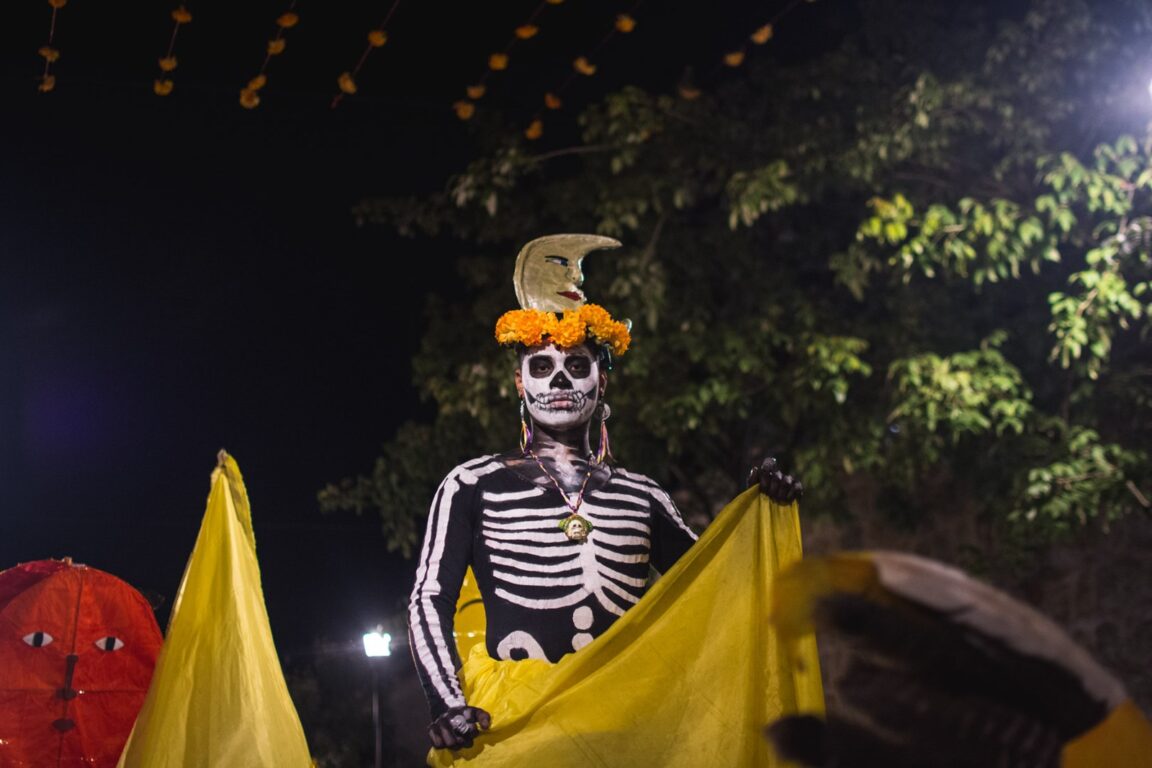
Comparsas are the public, exuberant face of the week: costumed processions that move through the streets with brass bands, giant puppets and dancers, many dressed as skeletons or as La Catrina, the elegant skeletal figure who has become the observance’s most reproduced image. In Oaxaca City they wind through the historic centre around the Zocalo, and in the villages of the Etla valley the related muerteadas run late into the night. This is the part of Dia de los Muertos that is genuinely staged for the street, and visitors are welcome inside it: follow a comparsa, dance if the moment invites it, and enjoy the noise.
The markets are the other fully participatory space, and they are where a visitor can usefully spend money. Mercado Benito Juarez, just south of the Zocalo, and Mercado 20 de Noviembre beside it, known for its food stalls and grilled meats, overflow in the last days of October with everything an ofrenda requires: cempasuchil by the armload, candles, sugar skulls, pan de muerto, chocolate and copal. Go in the morning, buy breakfast, and watch families shop for named, remembered people. It explains the week better than any exhibition.
What are the rules for photography and participation?
Ask first, every time, and accept no as a complete answer. That single rule covers most of the etiquette. Photographing public altars, market stalls and comparsas from the street is generally accepted, but a portrait of a person, a family at a grave, or the inside of a home ofrenda requires explicit permission, and children require their parents’ permission. Never use flash at a vigil, never pose with a grave or an altar as a prop, and never move candles, flowers or offerings for a better composition. Costume needs the same care: Catrina style face painting is now a common and accepted part of the public street celebration, while dressing as a generic caricature of Mexican identity is not. When in doubt, participate less and observe more. Nobody in Oaxaca will think less of a visitor for standing quietly at the edge of a cemetery. They will remember, kindly, the ones who did.
How do you plan the 2026 trip?
Book earlier than feels reasonable. The days around 31 October to 2 November are among the highest demand dates in Oaxaca’s year, small hotels in the historic centre fill months ahead, and leaving accommodation or flights to the autumn of 2026 is the most common planning failure. Aim to arrive by 29 or 30 October, so the market days and the buildup are part of the trip, and to leave no earlier than 3 November, so the final vigil night is not spent travelling.
Oaxaca City is served by Oaxaca International Airport, code OAX, south of the city. Most international visitors connect through Mexico City, where frequent short flights link the capital’s airports with OAX, and the same hub works for onward travel around Mexico. Confirm the current schedules with the airlines before booking, as frequencies change. Stay in or near the historic centre to walk to the markets, the Zocalo and the comparsas, and arrange cemetery transport for the vigil nights in advance through your hotel, since demand for taxis peaks exactly when the vigils end. For wider Mexican context before you go, see our roundup of spectacular fall destinations in Mexico beyond Tulum, and pair the trip with our Mexico City food guide for the connection days in the capital.
Frequently Asked Questions
Is Day of the Dead a sad occasion?
It is a remembrance, and its public mood in Oaxaca is often warm and even festive, with music, food and processions. Underneath that mood it is still about grief and love for specific people, which is why visitors are welcome as quiet guests rather than as an audience at a party.
Can visitors go into the cemeteries at night?
Yes, the vigils at cemeteries such as Santa Cruz Xoxocotlan and the city’s Panteon General, San Miguel, are attended by visitors as well as families. Go slowly, stay on the paths, keep voices and lights down, and ask before photographing any family or grave.
What should you bring or wear?
Warm layers for cold valley nights, comfortable shoes for cobbles and cemetery paths, and a small torch kept pointed at the ground. Modest, practical clothing suits the occasion better than costume, except for Catrina face painting at public street events, which is widely accepted.
When should you book for Day of the Dead 2026?
As early as possible. The observance falls from Saturday 31 October to Monday 2 November 2026, demand concentrates into a handful of nights, and the best placed small hotels and the most convenient flights sell first. Treat booking as a late winter or spring task, not an autumn one.
Is it appropriate to build your own ofrenda as a visitor?
Public and community altars welcome contributions in some places, and hotels often build their own. A private imitation assembled as a photo backdrop misses the point of the form, which is to receive named, loved dead. Learn from the ofrendas you see, support the markets that supply them, and let families lead.