 James Wolfe
For a first time in Tokyo, base yourself near a major station, spend day one in Asakusa at Senso-ji, day two across Shibuya, Harajuku and Shinjuku, day three at teamLab Planets in Toyosu with the Tsukiji Outer Market for breakfast, day four on a day trip to Kamakura, and day five in Ginza and Akihabara with time held back for shopping and packing. Carry a Suica or other transport IC card, book teamLab and any observation deck tickets online in advance, and start temple and market days early. Tokyo rewards a one neighbourhood at a time plan far more than a cross city checklist.
Quick Facts
- Best bases for first timers: Asakusa for temples and a calmer, older Tokyo feel, Shinjuku for transport and late night food, Ginza for polish and airport buses, and Ikebukuro for value and direct airport trains.
- Senso-ji, Asakusa: Tokyo’s oldest temple. The main hall opens at 6:00 am, or 6:30 am from October to March, and closes at 5:00 pm. The grounds and the Nakamise shopping street can be walked outside those hours, and the main buildings are lit from sunset to about 11:00 pm.
- Transport: A Suica or PASMO IC card works across JR lines, both subway systems, private railways and buses. Tap in and tap out at every gate. Welcome Suica is the visitor version sold at the airports.
- teamLab Planets, Toyosu: Timed entry tickets are sold online only, with no ticket counter at the venue. Adult tickets start from 3,800 yen and vary by date and time slot. The museum is scheduled to run until the end of 2027.
- Tsukiji Outer Market: Public shopping hours run roughly 9:00 am to 2:00 pm, with professional buyers given priority earlier in the morning. Many shops close on Sundays, public holidays and some Wednesdays, so check the market calendar for your date.
- Prices checked: Fares, fees and hours in this guide were checked in November 2026 against official operator, temple and market sources. Last updated November 2026.
Where should first timers stay in Tokyo?
Choose your neighbourhood by the journeys you will make every day, not by a single sight. Asakusa, in the north east of the centre, is the traditional choice for a first visit: Senso-ji is on your doorstep, the Sumida River and Tokyo Skytree are close, ryokan style inns sit alongside modern hotels, and the Toei Asakusa Line runs directly to both airports. Evenings are quieter here, which suits travellers who start early. Shinjuku, in the west, is the transport giant, with the busiest station in the city, direct Narita Express trains, department stores and the widest spread of mid range hotels. It is practical rather than pretty, and the station takes a day to learn.
Ginza is the polished option: wide streets, flagship shops and an easy walk to Tokyo Station, with hotels that cost more but simple airport bus arrivals. Ikebukuro, in the north west, is the value pick, with large hotels at lower prices than Shinjuku and a direct Narita Express stop, in exchange for a longer ride to Asakusa and the bay. For five days, Asakusa and Shinjuku suit most first timers best. If you enjoy hunting for older finds between sightseeing stops, our guide to hidden vintage markets in Tokyo pairs well with this itinerary.
Day 1: Asakusa and Senso-ji
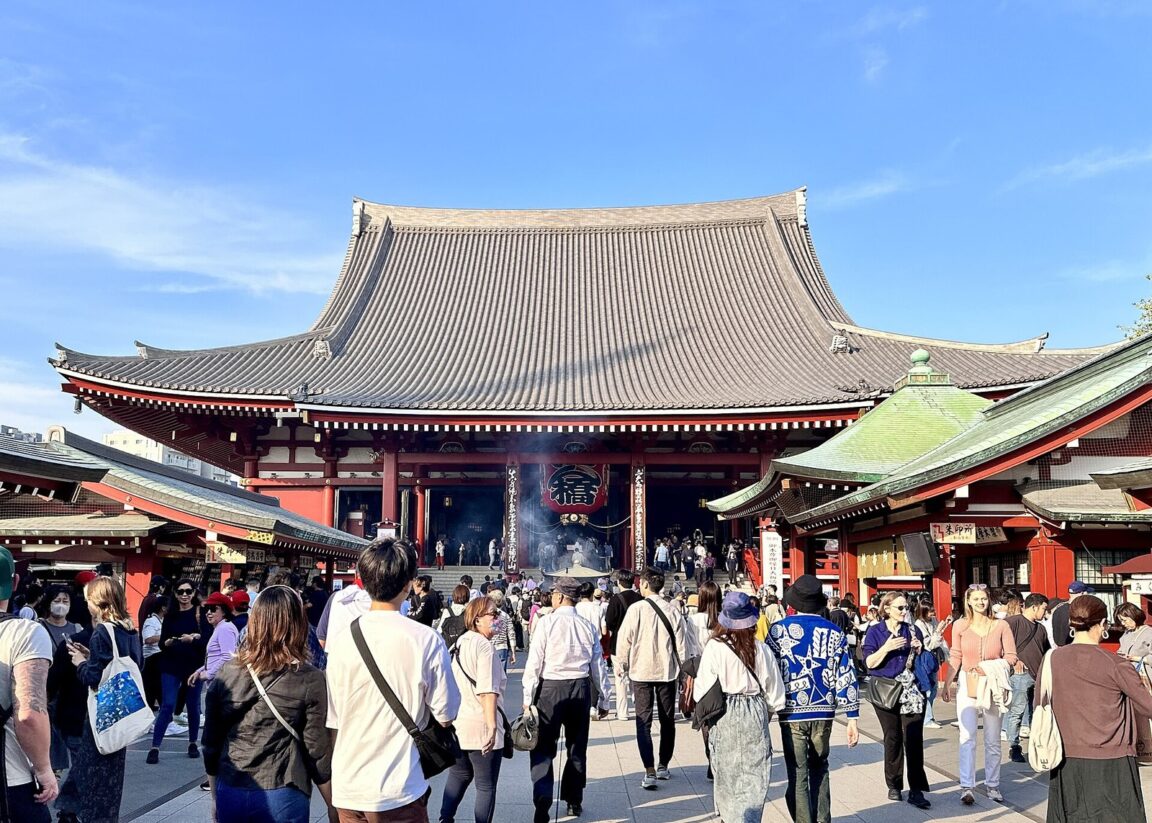
Start at Kaminarimon, the Thunder Gate, with its giant red lantern, and walk Nakamise, the shopping street that has served pilgrims for centuries, before the crowds build. Arrive before 9:00 am and the street is still a place of worship rather than a queue. Pass through the second gate, Hozomon, and enter the main hall of Senso-ji, dedicated to Kannon, the bodhisattva of mercy. The temple traces its founding to the seventh century and is the oldest in Tokyo. The main hall opens at 6:00 am, or 6:30 am in the winter months, and closes at 5:00 pm. Beside the hall stands the five storey pagoda, and to the east sits Asakusa Shrine.
Give Asakusa the rest of the morning. The Asakusa Culture Tourist Information Center, opposite Kaminarimon, has a free eighth floor terrace with the classic view down Nakamise to the hall and across to Tokyo Skytree. Walk the lanes west of the temple for knife shops and small shrines, then cross the Sumida River for the Skytree area if the weather is clear, booking the tower ahead on fine weekends. In the evening, return to Senso-ji after dark, when the gates and pagoda are floodlit until about 11:00 pm. For dinner, use the Michelin Guide Tokyo as a discovery list: its 2026 selection lists 114 Bib Gourmand restaurants across the city, including long standing tonkatsu and soba addresses around Asakusa. Treat any listing as a quality signal, then confirm hours on the restaurant’s own site.
Day 2: Shibuya, Harajuku and Shinjuku
Begin in Harajuku while it is still calm. Meiji Jingu, the Shinto shrine set in a dense forest beside Harajuku Station, opens at sunrise and is at its best in the first two hours of the day. Walk the gravel paths under the trees, pass the sake barrels offered to the shrine, and exit towards Omotesando, the broad, tree lined avenue of flagship architecture. Takeshita Street, by contrast, is youth fashion at full volume and is best seen once, briefly, before midday crowds make it a shuffle.
Move south to Shibuya for the famous scramble crossing, best understood from the station walkways before you join it at street level. Shibuya is also the place for record shops, food halls and, if you booked ahead, Shibuya Sky, the open air rooftop on Shibuya Scramble Square, whose timed slots sell out on popular dates. End the day in Shinjuku, at the Tokyo Metropolitan Government Building, whose observation rooms are free and stay open late. Then eat in the lanes of Omoide Yokocho near the station west exit, and note your Shinjuku Station exit on your phone map before dinner, not after.
Day 3: teamLab, Toyosu and the Tsukiji Outer Market
Reverse the usual order and eat first. The Tsukiji Outer Market, the grid of lanes that stayed behind when the wholesale market moved to Toyosu in 2018, is at its best in the morning. Public shopping hours are roughly 9:00 am to 2:00 pm, and the lanes reward grazing: tamagoyaki on a stick, grilled seafood, knife shops and small sushi counters. Eat at the stall you bought from rather than while walking, and carry cash in small notes alongside your IC card. Many shops close on Sundays, public holidays and some Wednesdays, so if day three falls on a closed day, swap this morning with day five.
From Tsukiji, ride to Toyosu for teamLab Planets, the barefoot digital art museum where visitors walk through water and mirrored rooms. There is no ticket counter at the venue: every ticket is a dated, timed entry bought online, with adult prices starting from 3,800 yen. Book as soon as your dates are fixed, and wear trousers you can roll above the knee. The museum is scheduled to remain open until the end of 2027. Afterwards, the Toyosu Market buildings next door show the working wholesale market from visitor walkways, open from 5:00 am to 5:00 pm on market days. Keep the evening light before the day trip.
Day 4: a day trip to Kamakura or Nikko
Why Kamakura suits most first timers
Kamakura, the former shogunal capital about an hour south of Tokyo, is the easier day trip. Direct JR Yokosuka Line trains run from Tokyo Station to Kamakura in about 60 minutes, and IC cards cover the fare. From Kamakura Station, the Enoden, the small coastal railway, runs to Hase for the Great Buddha at Kotoku-in, a bronze statue standing in the open air since the hall around it was destroyed centuries ago. Kotoku-in lists admission at 300 yen for adults, with a small extra fee to step inside the statue, and opening hours of 8:00 am to 5:30 pm from April to September and to 5:00 pm from October to March. Nearby Hasedera, a hillside temple of gardens and sea views, and Tsurugaoka Hachimangu, the great shrine at the top of the main avenue back in town, fill a full and walkable day without any further planning.
When to choose Nikko instead
Nikko, about two hours north, is the grander and longer day: the ornate shrines and temples of the Tokugawa shogunate, including Toshogu, set in cedar forest. Tobu limited express trains run from Asakusa, and JR trains run via Utsunomiya. Choose Nikko if shrine architecture matters more than the coast, start before 8:00 am, and accept that Lake Chuzenji and Kegon Falls beyond the shrine town need a second day. In autumn both destinations are extremely popular at weekends, so travel on a weekday if you can.
Day 5: Ginza, Akihabara and a final day buffer
Hold the last day loose on purpose. Start in Ginza for flagship stores, the Kabukiza theatre facade and depachika food halls in the department store basements, then ride to Akihabara for electronics, games and anime retail around the station. Ginza’s main street closes to traffic on weekend afternoons, which makes it the better weekend choice. Use the afternoon for the sights you missed or the shopping list you built during the week, and buy food gifts at Tokyo Station, where the choice is widest. The structure, one district at a time with a buffer day at the end, follows the same logic as our first time in Bangkok itinerary.
How do you get around Tokyo, and in from the airports?
Buy or add a transport IC card on arrival. Suica, issued by JR East, and PASMO both work across JR lines, Tokyo Metro and Toei subways, private railways and buses, and the same card pays in many convenience stores. Welcome Suica, sold at the airports, is the short stay visitor version. Tap the same card in and out on every journey, because fares are distance based. On the subway, let passengers off first, keep phone calls for the platform, and set your phone to silent: quiet carriages in all but name are the norm. Escalators in Tokyo generally stand on the left, with walkers on the right.
From Haneda, the closest airport, the Keikyu Line runs to Shinagawa in about 15 minutes and continues as through trains onto the Toei Asakusa Line towards Asakusa, while the Tokyo Monorail runs to Hamamatsucho for the JR Yamanote Line. Both accept IC cards. From Narita, about 60 kilometres east of the centre, you have three rail choices: the Keisei Skyliner, the fastest option, runs to Nippori and Keisei Ueno for the Yamanote Line; the JR Narita Express runs directly to Tokyo, Shinagawa, Shibuya and Shinjuku stations with reserved seats; and the Keisei Access Express runs through onto the Asakusa Line to Asakusa and Higashi Ginza with no limited express surcharge, payable by IC card. Airport buses suit Ginza and Shinjuku hotels with heavy luggage. Confirm which airport your flight uses, and the last train time, before you land.
What mistakes should first timers avoid in Tokyo?
Trying to see everything in five days
Tokyo is several cities joined by railways. A day that mixes Asakusa, the bay and Shinjuku spends its best hours underground. Keep each day in one or two neighbouring areas, as this plan does, and let one missed sight become the reason to return.
Turning up without bookings
teamLab Planets sells no tickets at the door, popular observation decks use timed entry, and small Michelin listed restaurants may seat a dozen people. Book the fixed points before you fly and build the days around them, rather than hoping for walk in luck at noon.
Ignoring market and temple timing
Tsukiji Outer Market winds down after 2:00 pm and closes on many Sundays and some Wednesdays, Senso-ji’s main hall closes at 5:00 pm, and Kamakura’s temples close by late afternoon. Put markets and temples in the morning and shopping districts later, when they are open latest.
Mishandling trains and luggage
Do not block doors or gates while you work out the fare: step aside, check the map, then tap. Large suitcases belong in hotel forwarding services or station lockers, not wedged in a rush hour carriage. If you must travel at peak hour with bags, use an airport bus or a forwarding service and travel light yourself.
Frequently asked questions
How many days do you need in Tokyo for a first visit?
Five full days is a strong first visit: enough for the historic east, the modern west, one digital art or museum day, a day trip and a buffer day. Three days can cover the highlights at a faster pace, and seven days lets you add a second day trip or a slower, neighbourhood based rhythm.
Which is better for first timers, Asakusa or Shinjuku?
Asakusa is calmer, more traditional and cheaper, with direct airport trains on the Asakusa Line and Senso-ji at the end of the street. Shinjuku has more hotels, more late night food and the best rail connections, including the Narita Express, but its station is vast. Choose Asakusa for atmosphere, Shinjuku for connections.
Do I need a Suica card, or can I buy single tickets?
Single tickets work, but an IC card is faster and simpler: tap in and out, and the correct fare is taken automatically across JR, subway and private lines. Welcome Suica is sold at both airports for visitors. Keep the card topped up, because a low balance at the exit gate is the most common first day delay.
Is teamLab Planets worth booking, and how far ahead?
For most first timers, yes: it is unlike anything else on this itinerary, and tickets are timed entry sold online only, with no sales at the venue. Popular weekend and holiday slots sell out first, so book as soon as your travel dates are confirmed and choose a weekday morning if you can.
Should I choose Kamakura or Nikko for the day trip?
Choose Kamakura for an easy, coastal day about an hour away, built around the Great Buddha, Hasedera and a shrine avenue. Choose Nikko for ornate shrine architecture in mountain forest, accepting a two hour journey each way and an early start. With five days, Kamakura leaves more energy for day five.
How much cash should I carry in Tokyo?
Cards and IC payment cover hotels, department stores and most restaurants, but small shrines, market stalls, lockers and older cafes can still be cash only, and Kotoku-in in Kamakura is a cash example. Carry yen in smaller notes, use bank and convenience store ATMs, and keep your IC card as the backup for transport.
Facts checked on 9 November 2026 against Senso-ji, teamLab Planets, Tsukiji Outer Market, Toyosu Market, Kotoku-in, Keisei, JR East, Keikyu and Michelin Guide Tokyo sources. Fees and hours can change; recheck official sources on the day. Prices checked November 2026.