 James Wolfe
Londolozi Game Reserve is a family run private reserve on the banks of the Sand River in South Africa’s Sabi Sand, famous above all for leopards that have been followed by its rangers and trackers for more than four decades. It suits safari travellers who place wildlife quality ahead of everything else: photographers, leopard specialists, repeat safari travellers and families who want one definitive Greater Kruger stay in one of five small camps strung along the river. It is one of South Africa’s original safari properties, in the care of the Varty family since 1926, and in 1993 it became the first game reserve in the world to be accorded Relais and Chateaux status. Travellers watching their budget, travellers who want a large hotel style lodge, and travellers who plan to self drive around Kruger National Park each day should look elsewhere, because Londolozi is a premium priced, fully guided private reserve experience.
Quick Facts
- Location: On the Sand River in the Sabi Sand Game Reserve, Mpumalanga, South Africa, sharing an unfenced border with Kruger National Park.
- Founded: 1926, when Charles Boyd Varty and Frank Unger established a camp on the former Sparta farm. The Varty family remains in charge a century later.
- Name: Londolozi derives from a Zulu word meaning protector of all living things.
- Camps: Five camps along the Sand River: Varty Camp, Founders Camp, Tree Camp, Pioneer Camp and the Private Granite Suites.
- Traversing area: Around 14,000 hectares of Sabi Sand wilderness, described by Londolozi as 34,000 acres shared by all five camps.
- Signature wildlife: Leopards, tracked through generations since the late 1970s, alongside the rest of the Big Five.
- Access: Direct flights from Johannesburg to the Londolozi airstrip, flights to Skukuza and Kruger Mpumalanga airports with onward transfers, or a road journey via Hazyview and Shaws Gate.
- Community partner: The Good Work Foundation, which runs digital learning campuses for rural communities near the reserve.
Where is Londolozi and why does the setting matter?
Londolozi occupies river front land in the heart of the Sabi Sand, the group of private reserves pressed against the western border of Kruger National Park. There is no fence between the Sabi Sand and Kruger, so elephants, lions, rhino, buffalo and leopards move across the whole Greater Kruger ecosystem rather than inside a small enclosed reserve. The Sand River is the property’s spine: the five camps sit along its banks within walking distance of one another, and the riverine forest of ebony, leadwood and jackalberry trees is prime leopard habitat, with shade, cover and prey concentrated along the water. That geography, rather than any single luxury feature, is the product. Game viewing here is exclusive to guests of the Sabi Sand lodges, vehicles may go off road for significant sightings under reserve rules, and the cats in particular are habituated to vehicles over generations, which is why close and unhurried leopard encounters are the reserve’s calling card. Travellers building a wider South African route around a Sabi Sand stay can compare the experience with our guide to Singita Lebombo Lodge in Kruger National Park, a different style of Kruger concession stay on the park’s eastern side.
How did Londolozi start, and what is the Varty family story?
The story begins in 1926, when Charles Boyd Varty and Frank Unger came to a worn cattle farm called Sparta on the Sand River and a first campfire was lit on the site of what is now Varty Camp. For decades the property was a family retreat and hunting era camp, and the modern Londolozi was shaped in the following generation, when Dave and John Varty shifted the model towards photographic safaris and ecological restoration from the late 1960s and 1970s onwards. The name Londolozi, protector of all living things, captured that change of purpose. In the late 1970s a young female leopard tolerated a vehicle at close range, and Londolozi’s rangers and trackers began the individual based following of leopards that continues today, with lineages of cats known by name across generations. Nelson Mandela, who visited after his release, endorsed the model as a blueprint for nature conservation in South Africa, and the reserve’s alumni went on to influence safari and conservation ventures across the continent. In 2026 Londolozi marks its centenary year, and the official blog records a commitment of ten million rand to the Good Work Foundation, one million for each decade of the family’s custodianship.
What are the five camps and which one should you choose?
Varty Camp, the original
Varty Camp is the heart of the operation, built on the original Sparta camp where the campfire has burned for nearly a century and four original rondavels survive. The current camp has ten chalets, described in Londolozi material as eight chalets and two superior chalets, each with a private plunge pool and a deck over the river, and interleading options that work for families. Choose Varty for the strongest sense of history and a family friendly layout, and for facilities on site that include the Healing House wellness space mentioned in camp material.
Founders Camp, classic and contemporary
Founders Camp honours the guides, trackers, chefs and guests who built Londolozi, and its ten superior chalets sit in the shade of ancient ebony and matumi trees along the river. The design mixes classic safari structure with clean contemporary lines, and the camp suits families and larger groups as well as couples who want a polished camp without the formality of the smallest suites. Londolozi positions Varty and Founders as the more family orientated camps, capable of hosting larger parties than the suite camps.
Tree Camp, the Relais and Chateaux flagship style
Tree Camp has six private suites tucked into the canopy of ancient leadwood trees, with wide decks from which elephants can pass in the river below. It was through Tree Camp that Londolozi set its luxury benchmark, described as the first Relais and Chateaux game reserve property in Africa, and the camp is a love letter to the leopards, with the tracking legacy woven through its design. Choose Tree for honeymoon and special occasion stays where elegance matters as much as guiding.
Pioneer Camp, the private homestead
Pioneer Camp has three luxury suites set among 500 year old ebony trees on the site linked to the earliest Varty and Taylor ancestors, and it can be configured as a private homestead for a family or group wanting exclusivity. Interiors lean on restored memorabilia, sepia photographs and polished safari antiques, giving it the feel of a private house rather than a lodge. Choose Pioneer when privacy and a sense of personal history outrank a choice of restaurants or a busy communal deck.
Private Granite Suites, the top of the range
The Private Granite Suites are three suites for a maximum of six guests, set against granite rocks above the confluence of the Sand and Manyelethi rivers, each with a private heated plunge pool and an outdoor bath. Londolozi describes the Granite Suites as the finest of its portfolio, followed by Pioneer and Tree, and they can be taken individually or as a private camp for six. Choose Granite for the most private river setting Londolozi offers, at the highest price point in the collection.
Is the leopard viewing really that good?
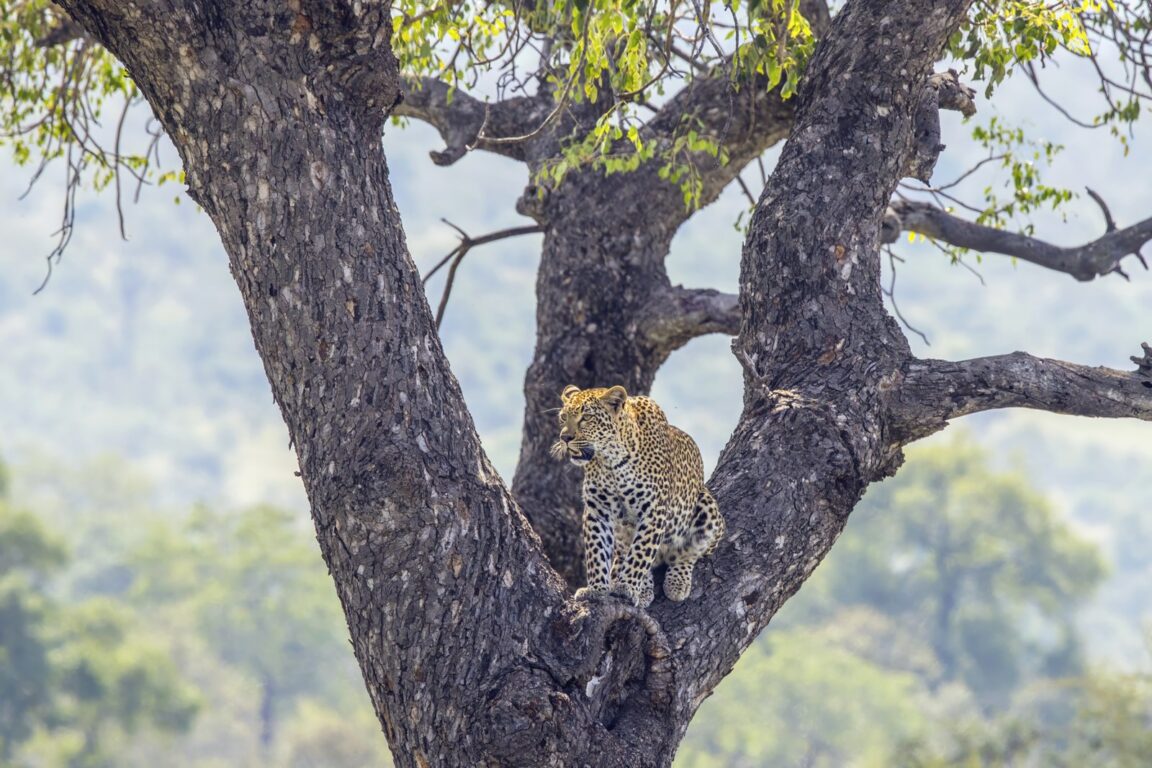
Yes, and the reason is structural rather than luck. Londolozi’s trackers and rangers have followed individual leopards continuously since the late 1970s, so the current cats descend from animals that grew up relaxed around vehicles, and guides know their territories, dens and habits in unusual detail. Research in the wider Sabi Sand has recorded leopard densities among the highest measured anywhere, and Londolozi sightings routinely involve behaviour, hunting, cubs and kills hoisted in trees, rather than a brief glimpse of a spotted shape. Nothing wild can be guaranteed, and an honest guide will say so, but a multi night stay here gives a leopard focused traveller the strongest odds in South Africa, with lion, elephant, rhino, buffalo, giraffe, zebra and a full cast of antelope and birdlife around the headline cats. Drives run in the classic twice daily pattern, early morning and late afternoon into the evening with a spotlight, and guided walks, birding and photography fill the hours between for guests who want them.
What does the conservation and community work actually involve?
Londolozi’s model, developed over five decades, treats the lodge as the economic engine for land restoration and rural education rather than as a business with a charity attached. The land itself was restored from overgrazed farmland into functioning bushveld, and the removal of fences between the Sabi Sand and Kruger reconnected the property to a wilderness of millions of acres. The Good Work Foundation, the digital education non profit Londolozi helped found and continues to support, runs digital learning campuses in villages near the reserve, bringing technology, English and conservation learning to thousands of rural learners, with adult graduation programmes each year. Alumni of the Londolozi ecosystem also founded the Tracker Academy, which trains trackers from rural communities into a formal profession. Guests encounter this work through camp conversation and optional community visits rather than through lectures, and room revenue is the mechanism that funds it, which is a fair answer to the question of why rates are set where they are.
Who does Londolozi suit best, and who should book elsewhere?
Londolozi suits travellers for whom wildlife is the trip: leopard photographers, safari purists comparing the great private reserves, families marking a milestone with a once in a decade safari, and couples choosing between the top Kruger area names where guiding depth breaks the tie. The five camp structure means there is a version of Londolozi for most luxury styles, from family chalets at Varty to the six guest Granite Suites. It suits travellers less well if the budget is the first filter, because even the entry camps sit in the top price tier of South African safaris and rates are quoted per person with guiding, meals and activities bundled; if you want to tour the Panorama Route and Kruger gates independently each day, a Hazyview hotel gives more flexibility for far less; and if you prefer a large lodge with multiple restaurants, a gym scene and nightlife, the intimate camp format will feel quiet. Those flying in for a short Cape Town and safari combination should read our 2 days in Cape Town itinerary to sequence the city leg before or after the bush.
How do you get to Londolozi?
The simplest route is air: scheduled flights operate from Johannesburg OR Tambo to the Londolozi airstrip, about an hour in the air, and the camps are a five minute drive from the strip with complimentary transfers between the airstrip and camp. Alternatives include scheduled flights to Skukuza Airport inside Kruger or to Kruger Mpumalanga International Airport near Mbombela, with lodge arranged road transfers from either, the Mbombela route taking around two and a half hours by road. Self drivers travel from Johannesburg in five to six hours, or from Hazyview in about an hour, following the R536 towards Paul Kruger Gate and turning for Shaws Gate into the Sabi Sand, where per vehicle and per person entry fees are payable in cash at the gate and lodge directions take over from the gate. Confirm current flight schedules, luggage limits on small aircraft and gate fees with the reserve when booking, as all three change.
Frequently asked questions
How many camps does Londolozi have and how are they different?
Five. Varty and Founders are chalet camps of ten units each, oriented to families and groups. Tree Camp has six suites and the strongest design led, occasion feel. Pioneer Camp has three suites that can work as a private homestead. The Private Granite Suites are three suites for six guests at the top of the price range. All five share the same traversing area and guiding standard.
When was Londolozi founded?
The Varty story on this land starts in 1926, when Charles Boyd Varty and Frank Unger established a camp on the Sparta farm on the Sand River. The photographic safari model and the Londolozi name belong to the following generation’s work from the late 1960s and 1970s, and the reserve marks its centenary in 2026.
Is Londolozi inside Kruger National Park?
No. Londolozi is a private reserve within the Sabi Sand, which borders Kruger and shares an unfenced boundary with it. Wildlife moves freely between the two, but Londolozi land is privately held, game drives are for resident guests, and off road driving and night drive rules differ from the national park’s public roads.
How long should you stay at Londolozi?
Three nights is the sensible minimum for the leopard programme to work in your favour, giving six drives across different territories and conditions. Four or five nights suit photographers and travellers combining two camps, for example Varty with family and Tree or Granite as a couple.
What should you pack for Londolozi?
Neutral coloured layers for cold early drives in the dry winter months, a warm jacket, hat and gloves for winter mornings on an open vehicle, soft sided luggage within the small aircraft limits confirmed at booking, binoculars, and camera gear with the longest lens you can manage for leopards in trees. Summer stays need rain protection and lighter clothing. The camps advise current luggage allowances on the flight route you choose.
Is Londolozi good for children?
Yes at the family oriented camps. Varty and Founders are positioned for families and larger groups, with interleading chalet options at Varty, and children have been part of the Londolozi story since its family camp origins. Check current child ages, drive policies and rates for your camp and dates with the reserve, as these are set per camp.
Facts checked on 9 November 2026 against Londolozi’s official site and blog, londolozi.com and blog.londolozi.com, including its five camp descriptions, history and Good Work Foundation information. Rates are not quoted here because they change by camp, season and party; check the official site for your dates.