 Jonas Lindqvist
Choose Sky Lagoon if you want an adults-focused oceanside soak close to Reykjavik built around a structured seven-step ritual, and choose the Blue Lagoon if you want the famous milky blue water in a black lava field, silica masks and an easy stop near Keflavik Airport. They are not two versions of the same bath. Sky Lagoon is a city-adjacent ritual experience on the North Atlantic edge, opened in 2021. The Blue Lagoon is the older icon, a man-made lagoon fed by geothermal seawater from the neighbouring Svartsengi power plant, set on the Reykjanes Peninsula. Your itinerary, your travelling companions and how much structure you want should decide it.
Quick Facts: Sky Lagoon and the Blue Lagoon Compared
- Sky Lagoon location: Vesturvor 44 to 48, Karsnes Harbour, Kopavogur, roughly 15 minutes by road from central Reykjavik.
- Blue Lagoon location: Nordurljosavegur 9, Grindavik, on the Reykjanes Peninsula, about 20 minutes from Keflavik Airport and around 50 minutes from Reykjavik.
- Sky Lagoon water: A geothermal infinity-edge lagoon at about 38 to 40 degrees Celsius, looking out over the North Atlantic.
- Blue Lagoon water: Milky blue geothermal seawater at about 37 to 39 degrees Celsius, coloured by silica and rich in algae and minerals.
- Signature experience: At Sky Lagoon it is the seven-step Skjol Ritual. At the Blue Lagoon it is the silica mud mask applied at the in-water mask bar.
- Age rules: Sky Lagoon admits no one under 12. The Blue Lagoon states its water is not suitable for children under 2.
- Booking: Both run on timed, pre-booked entry. Book the official site for your chosen lagoon and check same-day status before travelling, especially for the Blue Lagoon.
Where is each lagoon, and why does location decide so much?
Sky Lagoon sits at the tip of the Karsnes headland in Kopavogur, the municipality immediately south of Reykjavik. It is a short taxi, bus or drive from downtown hotels, which makes it an easy evening plan after a day in the city or a Golden Circle tour. Its defining view is horizontal: a roughly 70-metre infinity edge where warm water appears to meet the Atlantic, with sunset and, in dark months, a chance of northern lights from the water.
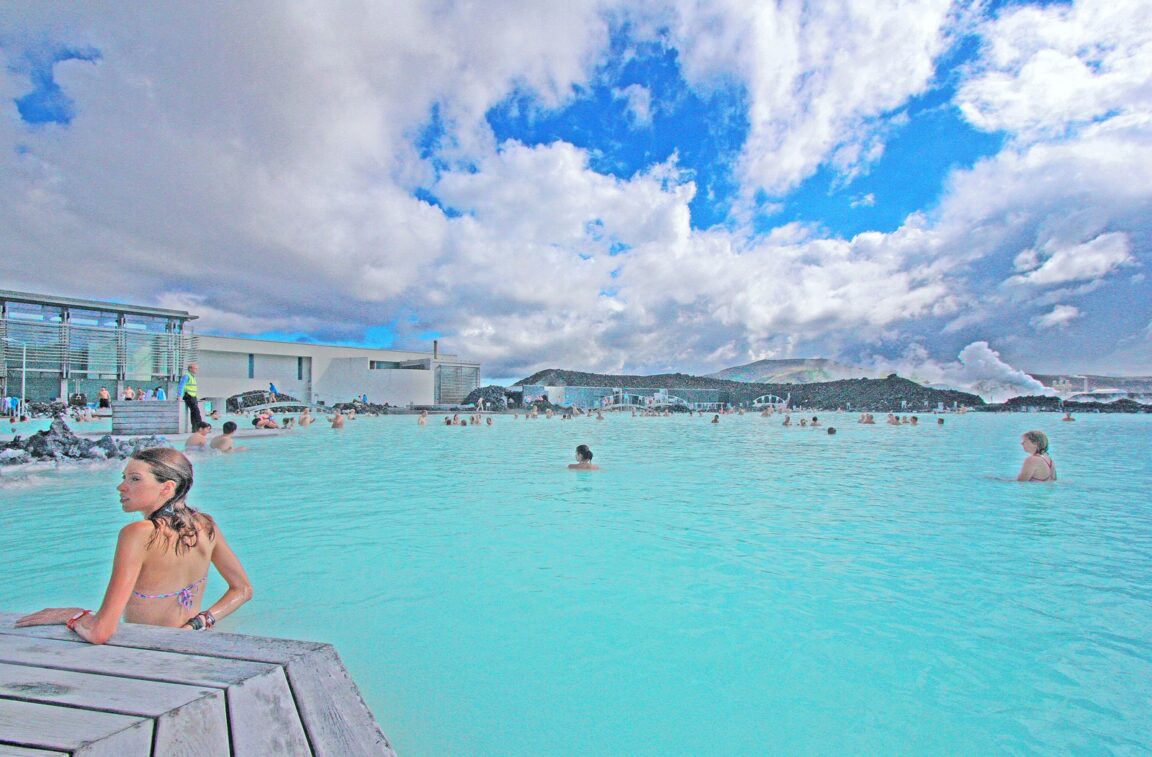
The Blue Lagoon sits in a lava field near Grindavik, in front of Mount Thorbjorn on the Reykjanes Peninsula. That position explains its classic use case. Travellers land at Keflavik, soak away the flight, then continue to Reykjavik, or they stop on the way back to the airport at the end of a trip. The landscape does the work here: black, moss-touched lava in every direction and pale blue water steaming inside it. If you love bathing culture but want a thermal experience in a city rather than a lava field, our guide to the Budapest thermal baths shows how differently another great bathing city does it.
What actually happens in the Sky Lagoon ritual?
The Skjol Ritual, named with an Icelandic word meaning shelter, is included in both of Sky Lagoon’s current passes and can be taken once during a visit. The seven steps move deliberately between heat and cold. Laug is the opening soak in the warm lagoon. Kuldi is a cold plunge modelled on Snorralaug, the historic pool at Reykholt. Ylur is the sauna, famous for a huge window facing the ocean. Suld is a fine cold mist. Mykt is the Sky Body Scrub, built around a sea salt scrub with almond and sesame oils. Gufa is the steam room, where the scrub stays on so the steam can work. Saft finishes the circuit with a sip of crowberry elixir before you drift back into the main lagoon.
The two passes differ mainly in changing facilities rather than in the water. Saman includes the ritual with shared changing rooms. Ser includes the ritual with private changing facilities. Both include a towel. The atmosphere skews calm and adult, helped by the minimum age of 12, with guests aged 12 to 14 required to be accompanied by a guardian aged 18 or over. Opening hours shift with the seasons, running later in high summer and closing earlier in midwinter, so confirm the hours for your date on the official site when you book.
What is a Blue Lagoon visit built around instead?
Freedom and the mask bar. The Blue Lagoon is a large, wandering lagoon rather than a circuit, and you explore it at your own pace, drifting between quieter corners, the waterfall, steam and sauna spaces, and the in-water bars. The water is geothermal seawater drawn from deep underground, heated by the earth, used by the Svartsengi plant and then fed to the lagoon at bathing temperature. It renews roughly every two days. Its milky colour comes from silica, which also forms the white mud that made the lagoon famous.
Every admission includes a silica mud mask at the mask bar, a towel and a drink. The current tiers on the official site are Comfort, Premium and Signature, with the separate Retreat Spa as the top-end option. Comfort covers the lagoon, the silica mask, a towel and a non-alcoholic drink. Premium adds a bathrobe, two additional masks of your choice, a drink of choice and a small silica mask to take home. Signature adds a larger skincare gift. Prices are dynamic by date and time slot on both lagoons, so compare the exact slot you want rather than headline figures. Pre-booking is essential at the Blue Lagoon, and entry is by timed slot.
Which lagoon suits families, and which suits a couples trip?
This is the clearest dividing line. Sky Lagoon is effectively an adults’ product: nobody under 12 is admitted at all. A couple on a city break, or friends who want a slow, designed wellness ritual at sunset, are its natural audience. The Blue Lagoon welcomes children from age 2 up, which makes it the only one of the two that works for most families, although parents should still expect a spa atmosphere rather than a water park, with children expected to respect the calm of the water.
Think about timing too. Sky Lagoon rewards a golden-hour booking in winter, when darkness falls early and the ritual unfolds in fading light. The Blue Lagoon rewards an early slot straight off a morning flight, when jet lag meets warm water and the drive into Reykjavik afterwards feels easy. In both cases, pack for the weather waiting outside the water. Our rundown of what to pack for Iceland in winter covers the layers you will want before and after any lagoon visit.
What about volcanic closures at the Blue Lagoon?
The Reykjanes Peninsula returned to volcanic activity in late 2023, and eruptions near Grindavik between 2023 and 2025 caused repeated temporary closures of the Blue Lagoon, including evacuations and periods when lava reached parts of the site infrastructure such as the car park while protective barriers defended the lagoon itself. The lagoon has reopened after each closure, and it operates with monitoring and defensive earth barriers in place, but the honest advice is procedural: check the Blue Lagoon status page and Icelandic safe travel alerts on the day of your visit, and build an itinerary that can flex if the peninsula acts up. Sky Lagoon, sitting by Reykjavik, is not in the eruption zone, which is one more reason some travellers now make it their default and save the Blue Lagoon for a confirmed-open airport day.
Frequently Asked Questions
Can you visit both lagoons on one trip?
Yes, and many travellers do, because the experiences differ enough to justify both. A common pattern is the Blue Lagoon on arrival or departure day near the airport, and Sky Lagoon as an evening visit during the Reykjavik stay.
Which lagoon is better in winter?
Both work in winter, and both are at their most atmospheric in the dark. Sky Lagoon has the edge for a planned sunset and ritual experience from the city. The Blue Lagoon has the edge if winter weather disrupts plans less on an airport transfer day. Check Blue Lagoon status the same day in all seasons.
Do you need to book Sky Lagoon and the Blue Lagoon in advance?
Yes. Both use timed entry and popular slots sell out, sunset slots at Sky Lagoon and midday slots at the Blue Lagoon in particular. Book on the official sites, where pricing is shown per slot.
What should you bring to either lagoon?
Bring swimwear and a phone pouch if you want photos. Towels are included in the passes described here. Remove jewellery before the Blue Lagoon, condition hair before entering silica-rich water, and hydrate, because long hot soaks are more tiring than they feel.
Is the Blue Lagoon natural?
The water is natural geothermal seawater, but the lagoon itself is man-made. It formed from the outflow of the Svartsengi geothermal power plant into the surrounding lava field, beginning in the 1970s, and was later developed into the spa that exists today.