 River Callahan
Pack for a Namibia self-drive as if one bag has to handle four seasons in a single day, because it does. The winning formula is a soft duffel of neutral, layered clothing, serious sun protection, a genuinely warm jacket for desert nights, and sealed pouches that keep fine dust out of your camera, chargers and documents. Distances are long, most touring roads are gravel, fuel and shops can be hours apart, and the temperature can swing from a hot afternoon in the high 20s or 30s Celsius to a near freezing dawn. Pack for the swing, the dust and the distance, and the trip mostly takes care of itself.
Quick Facts for a Namibia Self-Drive
- Bag type: A soft-sided duffel that squashes into a vehicle or rooftop setup beats a hard suitcase on gravel road itineraries.
- Core problem to solve: Dust. Fine desert dust works into zips, lenses and charging ports, so pack sealable dry bags and zip pouches.
- Temperature range: Warm to hot days, cool mornings and cold desert nights, with the sharpest swings in the dry season from May to October.
- Colours: Khaki, olive, stone and brown hide dust and are the practical choice for game viewing in places such as Etosha National Park.
- Road reality: Most routes between highlights are gravel. Operator guidance is to keep to about 80 km/h on gravel and never drive after dark outside towns.
- Plug type: Namibia uses large round three-pin plugs at 220 to 240 volts, a style many universal adaptors do not include, so bring the specific adaptor.
- Paperwork: Sort entry requirements before departure alongside your packing, and keep documents in a sealed pouch in the cabin, not in the luggage hold of the vehicle.
Why does Namibia punish a normal packing list?
Namibia is one of the least densely populated countries on earth, and a classic loop linking Windhoek, Sossusvlei, Swakopmund, Damaraland and Etosha involves drives of two to six hours between stops. Once you leave the tarred highways, you are on gravel, and whatever you forgot is not easily replaced. That is why this list is built around self-reliance rather than style. If you are used to safari packing, our guide to what to pack for a Kenya safari covers the game drive basics, but Namibia adds two problems Kenya packing rarely faces at the same intensity: all-day dust on gravel roads and desert nights that can drop close to freezing in the winter months of June to August.
The second trap is assuming desert means hot. In the dry season, daytime temperatures are often pleasant to hot under strong sun, early mornings before a game drive can sit in single digits, and overnight temperatures inland and in the desert can fall to around zero. Swakopmund and the coast run cooler again, with sea fog that can make a summer afternoon feel wintry. One bag has to cover all of it without becoming too heavy to haul in and out of the vehicle every day.
What clothing actually works from dawn to midnight?
Build the wardrobe in layers around neutral colours. Lightweight T-shirts and long-sleeved shirts in breathable fabric handle the heat of the day and give sun cover on drives. Long sleeves matter more than most travellers expect, because the sun through a windscreen on a five-hour gravel stretch is relentless, and sleeves also help against biting insects at dusk near water. Add lightweight trousers that can take dust and repeated wear, plus shorts for hot afternoons around camp or a lodge pool.
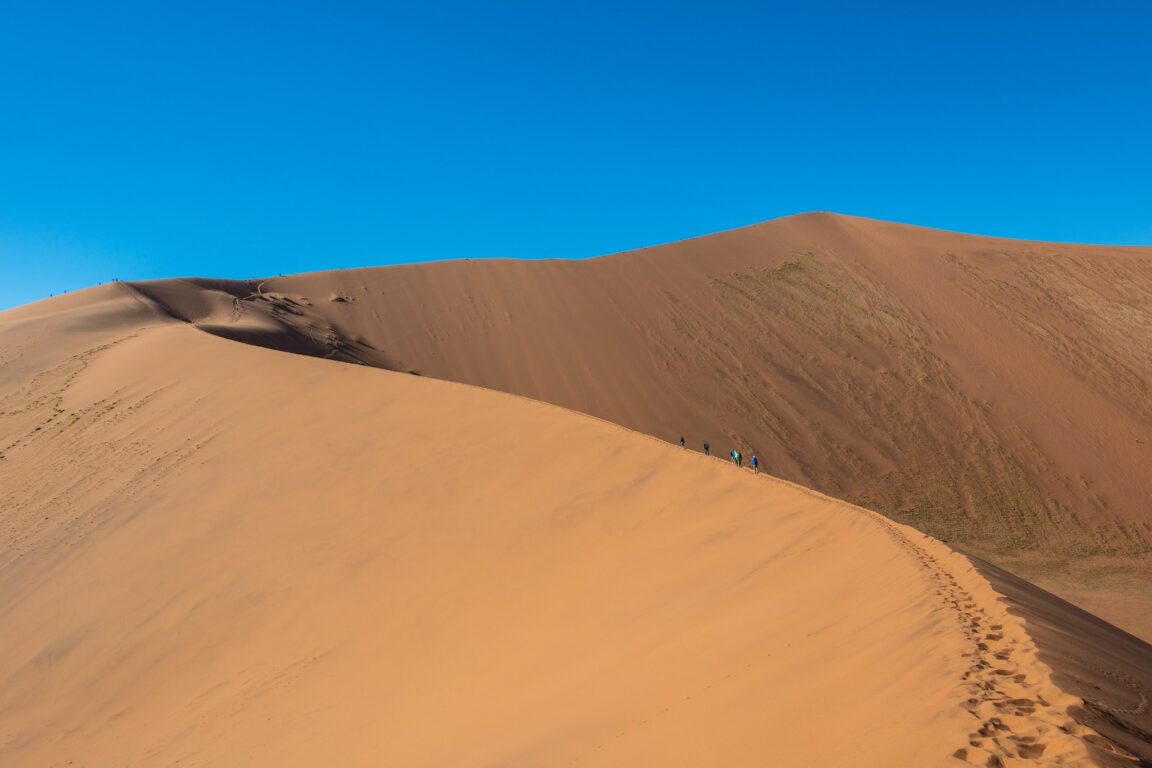
On top of that base, pack a warm fleece and a proper insulated jacket. This is the layer set you will wear at sunrise at Sossusvlei, on early game drives in Etosha and around a campfire at night. A beanie, warm socks and light gloves sound excessive for Africa until you are standing on a dune before dawn in July. A windbreaker or light waterproof shell finishes the system, cutting the wind on open vehicles and handling the rare shower in the wetter months from November to April. Choose stone, khaki and olive tones throughout. They show less dust after a week on gravel, and they are the sensible choice around wildlife, where bright colours and heavy scent are best left at home.
What footwear do you need?
One pair of comfortable closed walking shoes with decent grip covers almost everything: dune walks, rocky Damaraland terrain, campsite gravel and town stops. Add sandals or flip-flops for showers, pools and giving your feet a break at the end of the day. Heavy hiking boots are rarely necessary on a standard self-drive loop, and they eat space in a soft bag. Break shoes in before you go, because new footwear and hot, dusty walking are a poor combination.
How do you keep dust from ruining your gear?
Dust management is the Namibia-specific skill. Gravel roads throw up fine dust that settles over everything in the vehicle, and it can work into camera bodies, laptop fans, zips and cosmetics. Pack clothing in packing cubes, electronics in sealed zip bags, and keep a small microfibre cloth in the cabin for lenses and sunglasses. A buff or bandana is genuinely useful on the dustiest stretches and doubles as sun protection. Keep one complete change of clothes in a sealed bag so you always have a dust-free set for dinner or the flight home.
For the vehicle cabin, a small daypack should hold the items you cannot afford to bury in the back: water, sunscreen, lip balm, sunglasses, a hat, snacks, personal medication, documents and your camera. Fuel stops and supermarkets can be far apart, so a reusable water bottle you refill at every opportunity is essential kit rather than an eco gesture. Many travellers also carry a flask for coffee on early starts, when there may be nowhere to buy one for hours.
What about sun, health and small essentials?
The Namibian sun is strong year-round, and the country sees around 300 days of sunshine a year. Pack high-SPF sunscreen, SPF lip balm, a wide-brimmed hat and sunglasses as non-negotiables, and reapply sunscreen on driving days, not just on walking days. A basic health kit should include personal medication in quantities for the whole trip, kept in hand luggage on flights with prescriptions where relevant, plus painkillers, plasters, rehydration salts and anti-diarrhoea tablets. Insect repellent matters most in the wetter months and in the greener north, including the Caprivi and Zambezi regions.
Two small items earn their place on every list written by people who run these trips. The first is a head torch, because campsites and lodge paths are dark after sunset and you will want both hands free. The second is binoculars. Etosha waterholes reward patience, and wildlife is often further away than it looks in photographs. A camera with a zoom lens, spare memory cards and spare batteries complete the kit, because those supplies are expensive and hard to find once you are out on the loop.
How should the bag itself be packed?
Use one soft duffel as the main bag and keep it light enough to lift onto a roof rack or into a load bay without help. Rental vehicles and rooftop tent setups reward squashable luggage and punish rigid cases. Organise by cube: one for day layers, one for warm layers, one sealed cube for the clean reserve set, and one pouch for cables, the Namibia-specific adaptor, a power bank and charging leads. Power can be limited at remote camps, so a power bank keeps phones and cameras alive between stops. Before you zip up, cross-check your entry paperwork too. Our explainer on the Namibia visa on arrival change sets out the current entry picture, and sorting it early means your documents pouch is complete before the bag closes.
Frequently Asked Questions
Do you need a 4×4 wardrobe or special expedition clothing for Namibia?
No. Standard travel clothing in neutral colours, organised in layers, covers a normal self-drive loop. The specialist items are about temperature and dust, not technical performance: a warm jacket, sun protection and sealed storage.
How cold does it really get at night in the desert?
In the dry season, especially from June to August, overnight temperatures inland and in the desert can fall close to or below freezing, even when the afternoon was warm. Pack warm layers whatever month you travel, because mornings are cool year-round.
What is the one item first-time visitors most regret forgetting?
A head torch is the classic omission, followed by the correct three-pin adaptor for Namibia, which many universal adaptors do not cover. Both are small, cheap and difficult to replace once you are away from Windhoek or Swakopmund.
Should you pack a hard suitcase for a self-drive?
A soft duffel is the better choice. It fits more easily into vehicles and rooftop setups, handles being stacked and strapped down, and is easier to carry across gravel campsites than a wheeled case.
How much water should you carry in the vehicle?
Carry more than you expect to drink between stops, and refill at every town and fuel stop. Distances are long, shops are sparse on gravel routes, and a delay or puncture can stretch a driving day well beyond the plan.