 Wei Chen
Angkor Wat rewards an unhurried day, and planning one starts with three decisions: buy the right Angkor Pass, arrive before dawn for sunrise at the reflecting ponds, and visit the temples in an order that puts Angkor Wat first in the cool of the morning, the walled city of Angkor Thom and the Bayon late morning, and the tree rooted Ta Prohm in the afternoon when its light is best. The pass is sold only by Angkor Enterprise, the Cambodian state operator, in one day, three day and seven day versions, and it covers the whole Angkor Archaeological Park near Siem Reap, not just the famous temple. This guide sets out the current ticket facts, a sunrise plan that avoids the worst of the crowds, and a temple order that keeps the day calm. It is written for travellers building a heritage trip, and it sits alongside our guides to other great ticketed sites, including our Alhambra tickets guide and our visiting Petra guide, where the same book ahead, arrive early logic applies.
Quick Facts for Visiting Angkor Wat
- Ticket: The Angkor Pass, sold only by Angkor Enterprise at angkorenterprise.gov.kh or at the official ticket office on the road to the park.
- Prices: One day pass US$37, three day pass US$62, seven day pass US$72, as listed by Angkor Enterprise; check the official site before travel, as prices and validity rules can change.
- Validity: The three day pass can be used on separate days within its validity window, and the seven day pass likewise across a month; days do not need to be consecutive.
- Children: Children under 12 enter free, with a passport as proof of age.
- Opening: Angkor Wat opens at 5am for sunrise; most other temples in the park open later in the morning, around 7.30am.
- The temple: Built in the early 12th century under King Suryavarman II as a Hindu temple dedicated to Vishnu, and later transformed into a Buddhist temple; it is the largest religious monument in the world.
- Getting there: Siem Reap is the base town, a few kilometres south of the park; most visitors hire a tuk tuk or car and driver for the day.
Which Angkor Pass should you buy, and where?
There is one ticket, the Angkor Pass, and three durations. The one day pass at US$37 suits a single focused day like the one in this guide. The three day pass at US$62 is the best value for most first time visitors, because it lets you spread the small circuit, the grand circuit and a sunrise repeat across separate days inside its validity window rather than forcing everything into one exhausting day. The seven day pass at US$72 suits photographers, slow travellers and anyone based in Siem Reap for a week. Buy only from Angkor Enterprise: online in advance through its official website, at the official ticket office on the road between Siem Reap and the temples, or at official sales points in town. Tickets sold anywhere else are not official, and Angkor Enterprise has warned travellers about fraudulent sellers. The pass is personal and non transferable, your photograph is taken or uploaded for the longer passes, and you should carry it all day, because it is checked at the entrance to Angkor Wat and at most major temples. Keep it dry and flat; a damaged pass is a genuine problem at checkpoints. Cambodian riel and cards are accepted through official channels, but prices are set in US dollars, which is also the working currency for most visitor spending in Siem Reap.
How do you plan sunrise at Angkor Wat without the stress?
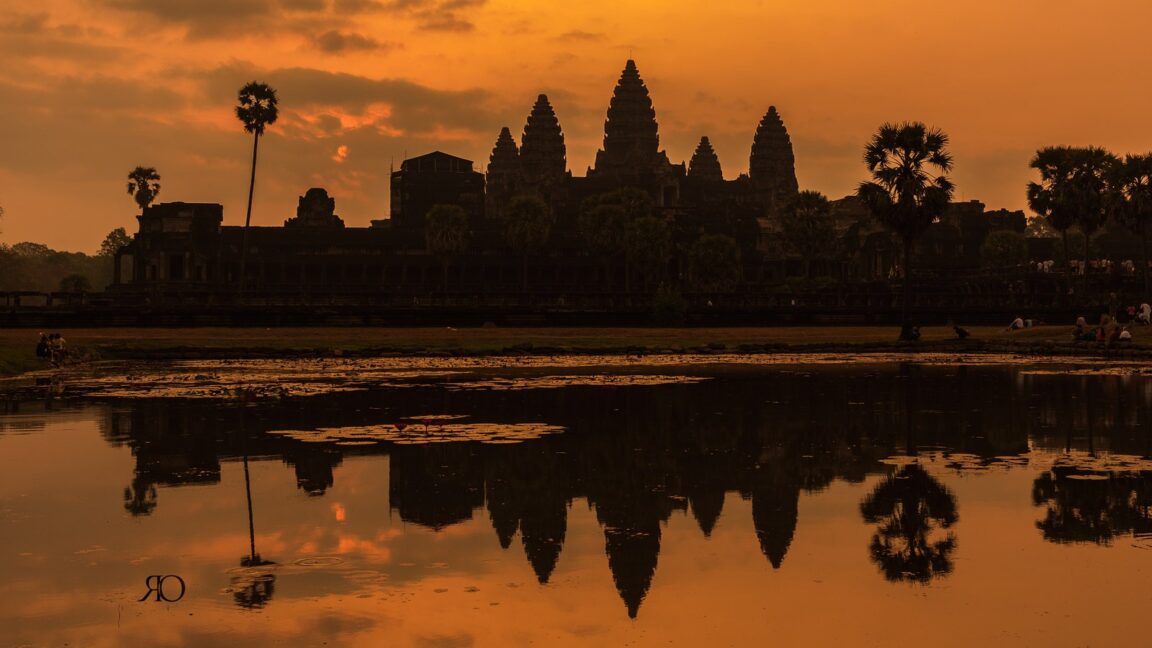
Sunrise is the signature moment because Angkor Wat faces west, unusually for a Khmer temple, so the sun rises behind its five lotus bud towers as you look east across the moat from the western causeway. The classic viewpoint is the northern reflecting pond inside the western entrance, where the towers mirror in the water. To enjoy it rather than endure it, work backwards. The temple opens at 5am and the sky starts to colour 30 to 40 minutes before the sun appears, so aim to be at the pond by about 5.20am in high season. That means leaving Siem Reap around 4.30 to 4.45am, earlier if you still need to buy a pass at the ticket office on the way, which is the strongest argument for buying online the day before. Bring a small torch or phone light for the causeway, which is dark and uneven in places, and a layer for the pre dawn cool. Then apply the single best crowd tactic of the day: when the sun is up and the pond crowd streams back to breakfast, walk the other way, straight into Angkor Wat. The galleries and upper levels are at their quietest in the hour after sunrise, the stone is cool, and the light on the western facade is at its best. Save breakfast for after the temple, at one of the stalls outside the entrance or back in Siem Reap.
Inside, give Angkor Wat a full two to three hours. Walk the outer gallery’s bas reliefs, which run for hundreds of metres and include the famous Churning of the Ocean of Milk, climb to the upper level, known as the Bakan, if it is open, noting that it has a dress code, a visitor cap and occasional closure days for religious observance, and look back down the causeway to take in the temple’s scale: a moat about 190 metres wide, an outer wall over three kilometres around, and a central tower rising about 65 metres. A licensed guide, hired for the morning at the entrance or arranged through your hotel, transforms the reliefs from decoration into narrative, and is worth the money at this one temple above all others.
What is the best temple order for the rest of the day?
After Angkor Wat, resist the urge to follow the crowd in file. A calm order for a one day visit runs as follows. Late morning, head north into Angkor Thom, the great walled city, entering by the South Gate with its avenue of gods and demons carrying a naga serpent. At its centre stands the Bayon, the state temple of Jayavarman VII, famous for its towers carved with serene faces and for bas reliefs of everyday life in the Khmer empire. Visit the Bayon before noon if you can, because its enclosed galleries heat up and its tour groups peak around midday. Walk from the Bayon to the Baphuon and the Terrace of the Elephants rather than driving, since the royal city rewards being crossed on foot. Take lunch in the shade near the temples or back at the Srah Srang reservoir, and rest properly; the Cambodian midday heat is the real opponent of an unhurried day, not the distances.
In the afternoon, go to Ta Prohm, the monastery temple left largely in the grip of the jungle, where silk cotton trees and strangler figs grow through the galleries. Afternoon suits Ta Prohm twice over: the light falls at an angle through the canopy, and the morning tour groups have gone. Enter from the less used side if your driver suggests it, and take your time in the outer enclosures, which are quieter than the famous central courtyards. If energy remains, end the day at Pre Rup or Phnom Bakheng for sunset, or simply return to the Angkor Wat moat, where late light on the western facade closes the day where it began. Travellers on a three day pass can stop there, move Ta Prohm to a fresh morning, and add Banteay Srei, the small pink sandstone temple famed for the finest carving at Angkor, on a separate day; that slower version is the real advantage of the longer pass.
What should you know about dress, conduct and comfort?
Angkor is a living religious landscape, not an open air museum, and the rules are straightforward. Cover shoulders and knees throughout the park, and expect the rule to be enforced strictly at the upper level of Angkor Wat, where staff can refuse entry. Do not climb on carved stones or closed structures, do not touch the reliefs, and be aware that monks are worshippers first and a photo subject never without permission. Practical comfort matters as much as etiquette. Carry more water than you expect to need and refill at stalls, wear shoes that handle uneven sandstone and dust, and plan shade breaks into the middle of the day. The dry season from November to March brings the clearest sunrise skies and the biggest crowds; the green season brings afternoon rain, dramatic clouds, fuller ponds for reflections and far fewer people at the viewpoints. There is no single best month, only a trade you should choose knowingly. Finally, agree your transport for the whole day before you start: a tuk tuk suits the small circuit and keeps the breeze, while an air conditioned car earns its premium in the hot season, and either way a patient driver who knows the checkpoint and gate layout will save you time at every stop.
Frequently asked questions about visiting Angkor Wat
How much does the Angkor Pass cost?
Angkor Enterprise lists the pass at US$37 for one day, US$62 for three days and US$72 for seven days. Children under 12 enter free with proof of age. Always confirm current prices and validity rules on the official Angkor Enterprise website before you travel.
Can you buy Angkor Wat tickets online?
Yes. Angkor Enterprise sells e tickets through its official website, angkorenterprise.gov.kh, which you show on your phone at checkpoints. Buying online the day before a sunrise visit removes the ticket office stop from a very early start.
Is one day enough for Angkor?
One long day covers Angkor Wat, the Bayon and Angkor Thom, and Ta Prohm, which is a satisfying first visit. The three day pass is better value for most people, because it allows a slower pace, a second sunrise and outlying temples such as Banteay Srei.
What time should you arrive for sunrise at Angkor Wat?
The temple opens at 5am. Aim to be positioned at the northern reflecting pond by about 5.20am in high season, which usually means leaving Siem Reap between 4.30 and 4.45am, earlier if you still need to buy a pass on the way.
What is the dress code for Angkor Wat?
Shoulders and knees must be covered across the park, and the rule is enforced most strictly at the upper level of Angkor Wat. A light scarf alone may not be accepted there, so wear clothing that covers you properly.