 James Wolfe
Packing for Iceland in winter is not about packing more. It is about packing a system: one waterproof and windproof outer layer that never leaves the top of the bag, a warm mid layer, merino base layers you can repeat, proper winter boots, and a small aurora kit that lives in your daypack. Everything a carry-on traveller needs for a northern lights trip fits in that system, because Reykjavik winter temperatures hover near freezing rather than deep Arctic cold. The enemy is wind and wet, not extreme temperature, and this guide builds the bag around that fact.
Quick Facts
- Daylight at the winter solstice: About 4 hours and 7 minutes in Reykjavik on 21 December, with sunrise at about 11:22 and sunset at about 15:29.
- Winter temperatures: Reykjavik’s December mean is about 0.8 degrees Celsius, based on Icelandic Met Office station data for 1991 to 2020. Wind makes it feel colder than the thermometer suggests.
- Aurora season: Late August to late April, according to Visit Iceland and Safetravel, when nights are dark enough. Sightings need dark and partly clear skies and are never guaranteed.
- The forecast that matters: The Icelandic Met Office aurora forecast, which pairs an activity rating on a 0 to 9 scale with a cloud cover map.
- Daily checks: Weather at vedur.is and road conditions at road.is before any drive, every day, without exception.
- Bag strategy: Carry-on for the cabin, with the full layer system worn or packed so one delayed bag cannot cancel an aurora night.
Why does Iceland winter packing confuse people?
Most packing mistakes come from imagining the wrong winter. Iceland sits just south of the Arctic Circle, but the North Atlantic keeps its south coast comparatively mild, so Reykjavik in midwinter is often no colder than a winter day in New York or London. What catches visitors out is the combination around that temperature: strong wind that finds every gap in a coat, rain and sleet that arrive sideways, ice underfoot, and a day that is mostly night. Around the solstice the sun rises late in the morning and sets in mid afternoon, with long twilight on either side, so sightseeing compresses into a few bright hours and aurora hunting fills the long dark.
That combination dictates the system. You do not need expedition clothing. You need sealed seams, a hood that stays up in wind, layers that work when damp, footwear that grips ice, and warm extras for standing still outdoors at midnight, which is the coldest thing a northern lights trip actually asks of you. Moving around Reykjavik at noon and standing in a dark field at 1 a.m. waiting for the sky are two different climates, and the bag has to serve both.
The layer system: base, mid, shell
What goes against the skin?
Start with merino wool or synthetic base layers, top and bottom, and avoid cotton entirely, because cotton holds moisture and chills quickly once it is wet. Two base layer tops rotated across a trip, with one set aside for aurora nights, will cover a week if you rinse and dry as you go. Add merino socks, at least three pairs, because wet feet end winter days early, and a spare pair in the daypack is one of the cheapest comfort upgrades on this entire list.
What provides the warmth?
The mid layer is insulation: a fleece or a lightweight insulated jacket, ideally one of each in a carry-on system, so you can scale warmth up and down. This layer does the work people wrongly assign to a giant coat. A packable insulated jacket also doubles as the layer you pull on for aurora viewing, when you are stationary and the cold accumulates. If your trip includes a glacier hike or an ice cave tour, operators provide specialist equipment such as crampons, but they expect you to arrive in your own warm, waterproof clothing and proper boots.
What keeps the weather out?
The shell is the non-negotiable layer: a waterproof and windproof jacket with a hood, and waterproof trousers. In Iceland the shell matters more than the insulation beneath it, because wind strips warmth and winter rain soaks through merely water-resistant fabrics. Waterproof trousers sound like overkill until a waterfall viewpoint, a black sand beach in sleet or a roadside aurora stop, at which point they become the item travellers say they should have packed. Choose a shell long enough to cover the tops of your thighs and gloves or mittens that still let you work a camera.
What footwear works on ice and volcanic ground?
Bring waterproof winter boots with a tread you trust, broken in before the trip, tall enough to keep out snow and slush. Fashion boots and smooth-soled shoes fail on icy pavements in Reykjavik and on frozen paths at waterfalls and beaches. Add removable ice grips or cleats if your itinerary includes rural stops, viewpoints and self-guided walking in midwinter; they weigh almost nothing and change icy ground from a hazard into a non-issue. Pack one lighter pair of shoes for hotels and restaurants if space allows, but if the carry-on forces a choice, the boots win, because every important moment of a winter trip happens in them.
What does the aurora kit contain?
The aurora kit is a small, dedicated set that lives in your daypack so a sudden clear night never finds it in a hotel drawer. It contains: a headtorch, ideally with a red light mode that preserves night vision; a tripod if you photograph with a camera, because long exposures are impossible handheld; spare batteries kept warm in an inside pocket, since cold drains them fast; thin liner gloves that work with touchscreens under warmer mittens; a warm hat and neck gaiter that cover ears and throat in wind; and hand warmers for the standing-still hours. Add a phone power bank, because cold shortens phone life precisely when you are using it for forecasts, maps and photos.
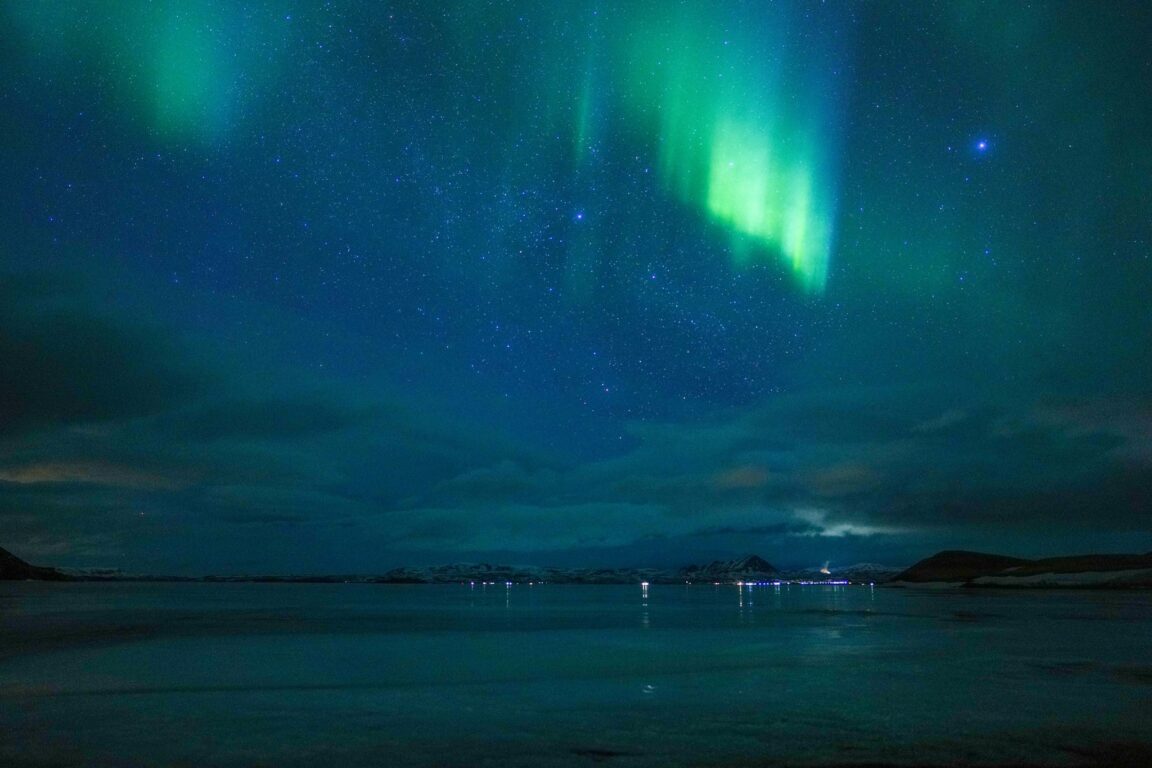
Use the kit with the right information. The Icelandic Met Office aurora forecast rates expected activity at midnight on a 0 to 9 scale and, just as importantly, maps cloud cover, because strong aurora behind thick cloud is invisible. Visit Iceland advises giving the lights several nights rather than staking a trip on one, and notes the display often appears late in the evening. Plan three or more potential aurora nights into any winter itinerary, stay flexible about which night you chase clear skies, and treat a sighting as weather-dependent luck, never as a booked product.
What else earns its place in a carry-on?
A swimsuit. Iceland’s geothermal pools and lagoons run all winter, outdoor swimming in hot water while snow falls is a signature experience, and a swimsuit is the item most often forgotten by winter packers. A quick-dry towel helps at smaller pools. Sunglasses earn their space too: the winter sun sits low and glares off snow and wet roads, especially when driving. A reusable water bottle works because Icelandic tap water is excellent and refilling avoids buying bottled water. A small dry bag protects phone, passport and camera batteries inside a daypack in sleet.
Driving travellers should add planning rather than objects. Check the Met Office forecast and the road authority’s conditions daily, tell your accommodation where you are heading, and remember that highland F-roads are closed in winter, so routes that look open on a summer map may not exist as options. If a black sand beach in the south is on your route, pair this guide with our look at the Black Sand Hotel in Iceland, and for the carry-on method in a different climate, compare our cold-weather system for what to pack for New York in December.
The carry-on layout, in order
Wear the boots and the insulated jacket on the plane. Pack the shell where you can reach it on arrival, because Reykjavik weather can meet you at the airport bus. Roll base layers and socks into the gaps around footwear. Keep the aurora kit together in the daypack, not scattered through the bag, and keep one complete change of base layer in the cabin bag zone you can open without unpacking. The test of the system is simple: if your trip starts with sleet, a four-hour day and a clear midnight forecast, you should be able to dress for all three from this bag without buying anything.
Frequently Asked Questions
How cold is Iceland in winter, really?
Milder than most visitors expect on the south coast. Reykjavik’s December mean temperature is about 0.8 degrees Celsius in the 1991 to 2020 station data, with typical days hovering just below or above freezing. The north is colder, and wind chill in exposed places can make any temperature feel severe, which is why windproofing matters more than maximum insulation.
When is the northern lights season in Iceland?
Visit Iceland and Safetravel place the season from late August to late April, when nights are dark enough. The Icelandic Met Office notes the aurora requires dark and partly clear skies, so season alone guarantees nothing. More nights on the ground means more chances when activity and clear skies coincide.
Can you really do Iceland in winter with carry-on only?
Yes, if the bag is built as a layer system rather than a pile of jumpers. Two base layer sets, one fleece, one packable insulated jacket, a proper shell, waterproof trousers, one set of evening clothes that repeats, and boots worn in transit will cover a typical week. Bulky knitwear is what breaks carry-on packing, not winter itself.
Do you need crampons or ice grips?
Guided glacier and ice cave tours supply specialist gear such as crampons and helmets. For your own walking in Reykjavik and at rural stops, lightweight removable ice grips over winter boots are a sensible addition in midwinter, when pavements and paths freeze. Check what your tour operator provides before buying technical equipment.
What should you wear for a northern lights tour?
Your full system at once: base layers, mid layer, insulated jacket, shell over the top if it is windy or wet, waterproof trousers, winter boots, hat, neck gaiter, liner gloves and mittens. Aurora viewing involves standing still outdoors late at night, so dress for the coldest, stillest hour, not for the walk out of the hotel.
Is a swimsuit really a winter essential for Iceland?
Yes. Geothermal pools and lagoons operate year-round and are at their most atmospheric in winter, when hot water meets cold air and snow. A swimsuit takes almost no bag space and is consistently the item winter visitors most regret leaving behind.