 Elena Vasquez
Visiting the Acropolis of Athens now runs on timed entry, and the visit is won or lost before you reach the rock: book a one hour entry slot in advance on the official Hellenic Heritage ticketing platform, pay 30 euros for a standard adult ticket or 15 euros for a reduced ticket, use the south east entrance on Dionysiou Areopagitou by the Theatre of Dionysus for the calmer approach, and walk the site in the order this guide sets out, south slope first, then the Propylaea, the Parthenon, the Erechtheion and down past the north slope. Do that, ideally in the first slot of the day, and the most crowded archaeological site in Greece becomes a coherent, even peaceful, two to three hour visit. Prices and hours in this guide were checked against official Greek Ministry of Culture and Hellenic Heritage sources in November 2026.
Quick Facts
- Official tickets: Book on the Hellenic Heritage e-ticket platform of the Greek Ministry of Culture and ODAP, reached at tickets.hh.gr and historically known as hhticket.gr. It is the only government run seller, and every ticket carries a timed entry slot
- Prices checked November 2026: 30 euros standard, 15 euros reduced, the same price all year. The old multi site combined ticket is no longer sold, and there is no reduced winter rate. The Acropolis Museum is a separate institution with its own ticket, sold on its own official site
- Timed entry: Entry is by booked time slot. Arrive a little before your slot, with the ticket and, for reduced and free categories, the photo ID or passport that proves eligibility
- Daily cap: Visitor numbers are capped, with a limit of 20,000 visitors a day widely applied under the current system, so peak season slots sell out days ahead. Book as soon as your dates are fixed
- Hours: Open from 08:00 daily. Summer closing is 20:00 from April to August, stepping earlier through September and October. Winter, November to March, closing is 17:00. Last admission is shortly before closing, and the site closes on 1 January, 25 March, 1 May, Orthodox Easter Sunday, 25 and 26 December
- The two gates: The main west entrance, near the Propylaea and reached from Monastiraki and Thissio, and the south east entrance on Dionysiou Areopagitou beside the Theatre of Dionysus, a short walk from Akropoli metro station. The same ticket works at both
- Time needed: Two hours minimum on the rock and slopes, three hours at an unhurried pace, plus the Acropolis Museum afterwards on its own ticket
- No such thing as skip the line: The official system sells timed entry only. Any product promising to skip the line is selling you a timed ticket, a guide, or both, at a markup
Which ticket do you need, and where do you buy it?
There is now, usefully, essentially one decision. The standard ticket covers the Acropolis rock and its north and south slopes, which includes the Theatre of Dionysus and the Odeon of Herodes Atticus on the south side, for a single timed entry. Buy it on the official Hellenic Heritage platform, the e-ticket service of the Greek Ministry of Culture run through ODAP, the Organisation for the Development and Promotion of Cultural Resources, at tickets.hh.gr, the service long known as hhticket.gr. Check reduced and free eligibility on that platform at booking: reduced tickets are half price at 15 euros, several categories enter free, including, under the rules published there, EU citizens under 25 and young children, and every reduced or free ticket still needs its timed slot reserved in advance and its eligibility proven with ID at the gate.
Two traps catch visitors every week. The first is the old combined ticket, which once covered the Acropolis and six other Athenian sites for five days. It has been withdrawn, each major site now sells its own ticket, and any itinerary built around the combined ticket needs rebuilding, with the Ancient Agora and the other sites ticketed separately. The second is the Acropolis Museum, the superb museum at the foot of the south slope. It is a separate institution, it has always sold its own ticket on its own official site, and no Acropolis ticket includes it. Budget for both purchases, and treat resellers with care: a third party ticket that costs more than 30 euros is charging for convenience, an audio guide or a tour, never for a different class of entry, because none exists.
How does timed entry work in practice?
You choose a date and an entry slot when you book, and your ticket is valid for that slot, with admission allowed in a short window around it, so arrive slightly early rather than slightly late. Official tickets are not refundable, and the platform’s terms allow limited changes to a booking up to shortly before the slot, so book when your date is firm and check the current change rules in the checkout itself. In high season the popular morning slots go first and the daily cap is real: booking several days ahead in summer is normal, and turning up without a ticket in July is a plan to queue at a ticket desk for whatever unpopular slot remains, if any.
Free admission days exist and are listed on official Ministry of Culture sources, including set dates in spring and autumn and, in the winter months, the first and third Sundays of the month. They are a genuine saving and a genuine crowd magnet in equal measure. If your trip coincides with one and budget matters more than calm, take it with open eyes. Otherwise, pay the 30 euros and take the quiet of an early paid slot.
Which entrance should you use?
The south east entrance, by the Theatre of Dionysus
For most visitors, most days, this is the gate. It sits on Dionysiou Areopagitou, the pedestrian boulevard that rings the south slope, beside the Theatre of Dionysus and a few minutes from Akropoli metro station and the Acropolis Museum. The approach is a gift in itself: you enter on the south slope, walk up past the Theatre of Dionysus, the oldest theatre in Athens, and the Odeon of Herodes Atticus, the great stone concert hall still used for performances, and arrive on the rock warmed up by its two finest supporting monuments instead of joining the main flow cold at the top.
The main west entrance
The west entrance, reached from Thissio and Monastiraki past the Areopagus hill, is the historic approach, climbing towards the Beulé Gate and the Propylaea, and it is also where coach groups and cruise excursions converge in the middle of the morning. It has one decisive use: visitors who need the site’s lift for reduced mobility approach from this side, following the official accessibility arrangements, which should be confirmed with the site in advance, because the lift and the summit terrain, uneven marble and worn stone, need planning rather than improvisation. If you are able bodied and crowd averse, use the south east gate and save the west side for your exit, walking down past the Areopagus, where St Paul is said to have preached, into Thissio for coffee.
What order should you walk the site in?
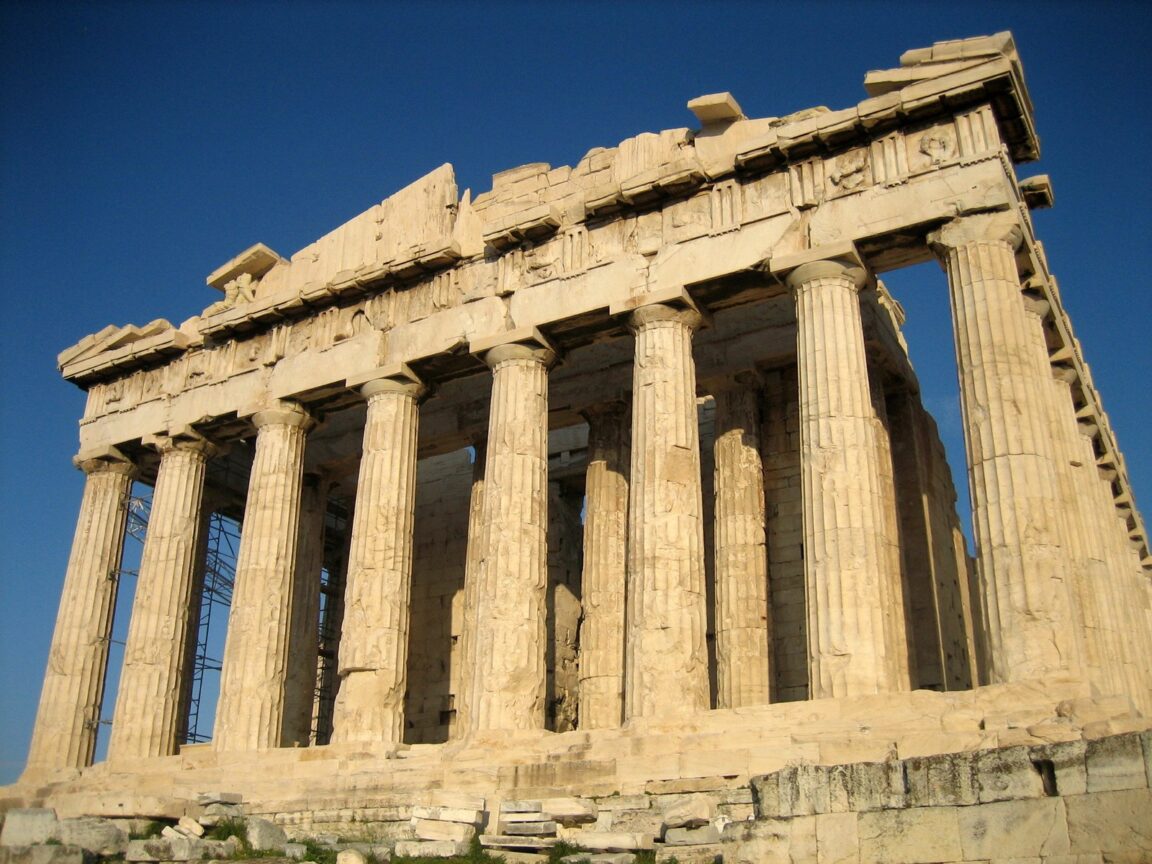
Entering from the south east, the order writes itself. First, the south slope: the Theatre of Dionysus, where the plays of Sophocles, Euripides and Aristophanes were first performed, then the Odeon of Herodes Atticus. Then climb to the Propylaea, the monumental gateway, pausing for the small, jewel like Temple of Athena Nike on its bastion to the right. Through the gateway, the plateau opens, and the Parthenon is suddenly on your right at full scale. Walk its long south side first, then around its east front, the view that carries the pediment sculptures’ story, and resist crossing straight to the exit.
Cross instead to the Erechtheion on the north side, the most complex and, to many visitors, the most beautiful building on the rock, with its Porch of the Caryatids, the six draped female figures, replicas in place, with the originals preserved in the Acropolis Museum below, which is why the museum afterwards matters so much. Finish at the eastern end of the rock, by the flag, for the full city panorama, then look down the north slope as you leave. In reverse, entering west, simply run the same order from the Propylaea. What matters is not the gate but the sequence: slopes, gateway, Parthenon, Erechtheion, panorama, museum. Travelers fitting this visit into a wider stay should pair it with the three day Athens itinerary, which gives the Acropolis its own first morning and the museum and slopes their proper place around it.
When should you go, and how do you beat the heat as well as the crowds?
The first slot of the day is the single best decision available: cooler stone, softer light on the Parthenon’s marble, and the rock at its emptiest, before the day’s groups arrive. The last slots of the day are the second choice, with the bonus of golden light and, in summer, the worst heat gone. Midday in summer is the trap: the plateau has almost no shade, the marble reflects heat, and the crowds peak. Whatever your slot, bring water, a hat and shoes with grip, because the worn marble paths on the rock are genuinely slippery, and take the heat seriously in a way visitors from northern climates routinely fail to. In winter, the shorter day and 17:00 closing simply move the logic earlier: a morning slot, the museum after lunch, and the slopes in the low afternoon light.
How does this visit fit with the Alhambra and other timed sites?
European travellers will recognise the pattern. Like visiting the Alhambra in Granada, the Acropolis has moved from open access to a capped, timed, book ahead system, and the same habits serve both: book on the official platform only, as soon as dates are firm, carry the ID your ticket category requires, and build the rest of the day around your slot rather than the other way round. The sites that manage demand this way are protecting fragile stone from unlimited feet. Work with the system and it quietly gives you a better visit than the old free for all ever did.
Frequently asked questions
How much does an Acropolis ticket cost in 2026?
30 euros for a standard adult ticket and 15 euros reduced, all year, checked against the official Hellenic Heritage platform in November 2026. There is no winter discount and no booking fee on the official platform. Eligible visitors in the published free categories pay nothing but must still reserve a timed slot and show ID.
Do I need to book Acropolis tickets in advance?
Yes. Entry is by timed slot, visitor numbers are capped each day, and popular slots sell out days ahead in high season. Book on the official platform, tickets.hh.gr, as soon as your dates are fixed, and do not rely on buying at the gate in summer.
Which entrance is best for the Acropolis?
The south east entrance on Dionysiou Areopagitou, by the Theatre of Dionysus and near Akropoli metro, for most visitors: a calmer approach that takes in the south slope theatres on the way up. The main west entrance is the historic approach and the access side for the mobility lift, and it draws the heaviest group traffic mid morning.
Is the Acropolis Museum included in the ticket?
No. The museum is a separate institution with its own ticket, sold on its own official site. It is essential viewing after the rock, above all for the original Caryatids and the Parthenon Gallery, so budget for it separately.
How long does a visit to the Acropolis take?
Two hours is a sensible minimum for the rock and slopes, three hours allows an unhurried circuit in the order this guide recommends. Add one to two hours for the Acropolis Museum afterwards.
Can I still buy a combined ticket for Athens’ archaeological sites?
No. The former combined ticket has been withdrawn. The Acropolis and the other major sites, such as the Ancient Agora, are now ticketed separately on the official platform, so check each site’s ticket and price there when planning.
Image: The Acropolis of Athens at daybreak. Prices, hours and free day rules checked against the Greek Ministry of Culture and its Hellenic Heritage ticketing platform in November 2026: recheck them there close to your visit, as the Ministry updates them by season.