 Elena Vasquez
Three days in Athens is enough for a first visit done properly: Day 1 for the Acropolis, its slopes and the Acropolis Museum, Day 2 for Plaka, the Ancient Agora and the old town neighborhoods below the rock, and Day 3 for Exarcheia, the National Archaeological Museum and the viewpoints and modern city beyond. The key rules are simple: book a timed entry slot for the Acropolis in advance through the official Hellenic Heritage ticketing platform, start on the rock early, keep each day in one geographic cluster instead of crossing the city repeatedly, and use the evenings, when Athens is at its best, for Plaka, Psyrri and the cafe streets.
Quick Facts
- Structure: Day 1, Acropolis and Acropolis Museum. Day 2, Plaka, Anafiotika, Ancient Agora and Monastiraki. Day 3, National Archaeological Museum, Exarcheia, Mount Lycabettus and Kolonaki
- Acropolis booking: Timed entry is required. Book in advance on the official Hellenic Heritage platform, tickets.hh.gr, the ticketing service of the Greek Ministry of Culture, and check current prices and free and reduced categories there
- Best Acropolis strategy: The earliest slot of the day, entering from the southeast side near the Acropolis Museum and the Akropoli metro station on Dionysiou Areopagitou
- Combined tickets: Do not assume an old style combined ticket still exists. Each major site is now sold with its own ticket on the official platform, so verify the current options when booking
- Where to stay: Plaka, Koukaki and the area around Syntagma and Akropoli for a first visit, for walking access to almost everything in this itinerary
- Walking reality: Athens rewards walking but punishes poor shoes. The Acropolis rock, marble paths and the slopes can be slippery, and summer heat is a serious planning factor
- Airport connection: Athens International Airport connects to the center by metro, suburban rail, express bus and taxi. Confirm the current timetable on official channels close to travel
How should the three days be divided?
Athens tempts first time visitors to scatter, and a zigzag day ends with tired feet and half seen sights. This itinerary instead builds three clusters: the Acropolis rock on Day 1, the old town at street level on Day 2, and the wider modern city on Day 3. Travelers who have used the same clustering principle in a three day Lisbon itinerary will find Athens works identically: one hill, one old town, one wider city, in that order.
Day 1: How do the Acropolis and its museum fit into one day?
What is the best way to visit the Acropolis?
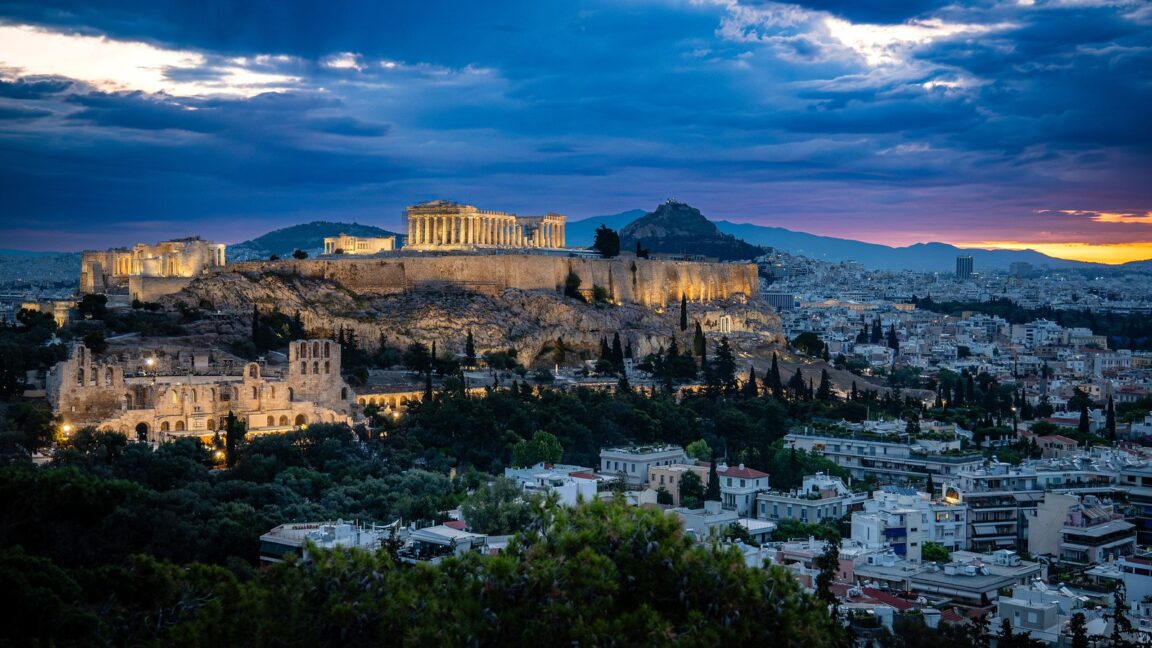
Book the earliest available timed slot and be at the entrance before it begins. The reasons stack up quickly: the marble and stone paths up the rock are cooler, the Parthenon plateau is less crowded, the light on the temples is better for photographs, and the rest of the day unlocks instead of being held hostage to a midday entry time. Timed entry through the official Hellenic Heritage platform is now how the Acropolis manages its very large visitor numbers, and slots in high season can sell out for popular hours, so this booking belongs at the top of the pre trip list, made before hotels tours or restaurant plans harden around it. The southeastern entrance, reached from Dionysiou Areopagitou beside the Acropolis Museum and Akropoli metro station, is the most practical approach for most first time visitors.
On the rock itself, take the circuit slowly. The route passes the Propylaea, the monumental gateway, with the small Temple of Athena Nike beside it, reaches the plateau of the Parthenon, the great Doric temple to Athena built in the fifth century BC, and continues to the Erechtheion, famous for its porch held up by the Caryatids, the sculpted female figures (the originals are protected in museums, with copies in place). The south slope holds the Odeon of Herodes Atticus, the stone theatre still used for performances, and the Theatre of Dionysus, among the oldest theatres in the world. Allow two hours on the site, carry water (there is little shade on the plateau), wear closed shoes with grip, and expect the polished marble and worn rock to be slippery in places, a warning the site itself posts and means. Visitors with mobility needs should check the official accessibility information, including the lift arrangements on the north slope, before booking.
Why visit the Acropolis Museum on the same day?
Because the museum, a short walk from the southeast entrance, is where the rock becomes legible. Its galleries display the actual sculpture of the Acropolis, including the original Caryatids and, on its top floor, the Parthenon Gallery, aligned with the temple itself and arranged to show the frieze as it ran around the building. Visiting after the climb, while the plateau layout is still fresh, turns names into objects. The museum is a separate ticketed site, booked through its own official channels, and it makes a perfect, air conditioned middle of the day. Lunch in neighboring Koukaki or Makrygianni rather than in Plaka’s most touristed lanes. A gentle finish is the pedestrian sweep of Dionysiou Areopagitou around the rock, past Areopagus Hill, which gives a free sunset view over the Agora, with extreme care on its famously slippery marble.
Day 2: How do Plaka, the Agora and the old town work together?
What is the right way to walk Plaka?
Plaka is not a sight, it is a neighborhood to walk without a checklist: the oldest continuously inhabited quarter of Athens, a maze of lanes, neoclassical houses, small churches, tavernas and shops climbing the northeastern slope of the Acropolis. Start early at its upper edge in Anafiotika, the tiny, whitewashed, island style enclave built by workers from Anafi in the nineteenth century. Respect that Anafiotika is residential: voices down, private courtyards left alone. Descend toward Monastiraki, stopping at the Roman Agora and the Tower of the Winds, and at small Byzantine churches such as Kapnikarea on Ermou. Choose Plaka tavernas on quieter side streets, by menu and by the presence of local families, not by the famous steps where location is the product.
Why does the Ancient Agora matter as much as the Acropolis?
If the Acropolis was Athens’ sacred rock, the Ancient Agora, below its northwest slope, was its working heart: marketplace, law courts and council buildings in one. Its anchor is the Temple of Hephaestus, among the best preserved ancient Greek temples anywhere, and the reconstructed Stoa of Attalos now houses a museum of everyday democratic life, from voting equipment to pottery. The Agora completes the mental map started on Day 1: rock above, and the ground where Athenians governed themselves below. Enter from Monastiraki and exit toward Thissio, where the cafe lined promenade leads into Psyrri’s evening tavernas. It is a rhythm planners of a first time Paris itinerary will recognize: alternate one great monument with one great neighborhood.
Day 3: What does Athens beyond the old town add?
Is the National Archaeological Museum worth a half day?
Yes, and for many visitors it becomes the favorite museum in Greece. Set north of the center near Victoria metro station, it holds the national collection: the gold Mask of Agamemnon and the treasures of Mycenae, the great bronze statues recovered from the sea, the Antikythera mechanism, the ancient world’s most famous geared device, vast galleries of sculpture, pottery, frescoes from Akrotiri on Santorini, and Egyptian collections. It is too large to exhaust, so visit with a target list (Mycenae, the bronzes, the mechanism, the frescoes), give it a morning, and let the rest be a bonus. Arriving at opening time on Day 3, after two early starts have become a habit, keeps it calm.
What will travelers find in Exarcheia and on Lycabettus?
Exarcheia, beside the museum and the Polytechnic, is Athens’ traditional district of bookshops, student cafes, record stores, political posters and street art, associated for decades with the city’s intellectual and activist life. An hour walking its streets explains modern Greece better than any viewpoint. Walk it as any big city neighborhood, aware of surroundings and respectful around demonstrations or memorials. From Exarcheia, turn uphill through Kolonaki, the elegant district on the slopes of Mount Lycabettus. Ride the funicular or walk to the chapel of Saint George at the summit for the closing view: the Acropolis centered in its city, the grid running to Piraeus and the sea. Late afternoon gives nearly the sunset view with breathing room.
Where should first time visitors stay, eat and save effort?
For three days, location beats amenities. Plaka and Makrygianni put the Acropolis at walking distance, Koukaki adds a local, cafe rich feel south of the museum, and Syntagma suits travelers who want the metro hub at the door. Eat where each day already is, order the dishes Athens does daily and well (grilled fish, fava, souvlaki from a busy counter, Greek salad only when tomatoes are in season), and treat any restaurant with an Acropolis view as a view first and a kitchen second. Book timed tickets the week the trip is confirmed, travel between clusters by metro, and protect one unscheduled hour a day: a first trip succeeds by choosing well, not by attempting completeness.
Frequently Asked Questions
How far in advance should Acropolis tickets be booked?
As soon as travel dates are firm, especially from spring through autumn. Entry is by timed slot through the official Hellenic Heritage platform, and popular early slots sell out first.
Is three days enough for Athens?
Three full days cover the Acropolis, its museum, the Agora, Plaka, the National Archaeological Museum and the main neighborhoods comfortably. A fourth day allows a day trip, for example to Cape Sounion or Delphi, but is not required for a satisfying first visit.
Which entrance to the Acropolis is best?
The southeast entrance near the Acropolis Museum and Akropoli metro station is the most practical for most visitors, particularly for an early slot followed by the museum. Check current entrance arrangements on the official platform when booking.
Is Athens walkable for this itinerary?
The Day 1 and Day 2 clusters are walkable, and Day 3 is best linked by metro. Distances are moderate, but slopes, heat and slippery ancient surfaces make good footwear and realistic pacing essential.
When is the best season for three days in Athens?
Spring and autumn offer the best balance of comfortable temperatures, open sites and manageable crowds. Summer is workable with early starts, midday museum time and serious attention to heat and hydration.
Are the Acropolis and the Acropolis Museum on one ticket?
They are separate sites with separate tickets. Book the Acropolis through the official Hellenic Heritage platform and the museum through its own official channels, and do not rely on older combined ticket arrangements without checking what is currently sold.
A final practical note before booking anything
Confirm the trip in this order: Acropolis timed slot first, then the museum visits around it, then accommodation inside the walkable center, then everything else. Start each day earlier than feels necessary, carry water and sun protection from April onward, and keep shoes with real grip for the rock and the Areopagus. Do those few things and three days in Athens stops feeling like a race between ruins. It becomes what the city does best: a high rock at dawn, a long lunch in its shadow, and an evening in streets that have been hosting travelers, arguments and dinners for a very long time.