 Jonas Lindqvist
Three days is the right amount of time for a first visit to Oslo. The Norwegian capital is compact enough that its headline sights cluster along one walkable waterfront, yet varied enough that each day can feel different: contemporary architecture and Edvard Munch on day one, maritime museums and sculpture on day two, and the forest, the ski jump and a final fjord sauna on day three. This itinerary keeps the pace unhurried, groups sights that sit close together, and leaves room for the two experiences that define modern Oslo better than any museum: walking on the roof of the Opera House and warming up in a floating sauna before a cold plunge into the Oslofjord. If you are planning a longer European trip, it pairs naturally with a first visit to Paris, covered in our first time in Paris itinerary, and with the slower museum rhythm of our 3 days in Vienna itinerary.
Quick Facts for a First Trip to Oslo
- Best base: Sentrum or Bjorvika, within walking distance of Oslo Central Station and the waterfront.
- Airport link: Trains run from Oslo Airport Gardermoen to Oslo Central Station; the airport express and regional trains both serve the route.
- Getting around: Trams, buses, metro and harbour ferries run on one ticketing system operated by Ruter; most central sights are walkable.
- Money saver to check: The Oslo Pass bundles public transport with entry to many museums; price it against your museum list on the official Visit Oslo site before buying.
- Do not miss: The Opera House roof, MUNCH, Vigeland Sculpture Park, the Fram Museum and a floating sauna.
- Closed for rebuilding: The Viking Ship Museum on Bygdoy is closed while it is rebuilt as the Museum of the Viking Age, so do not plan around it.
- Daylight warning: Winter days are short, with roughly six hours of daylight around December; summer days are very long.
How should you spend day one in Oslo?
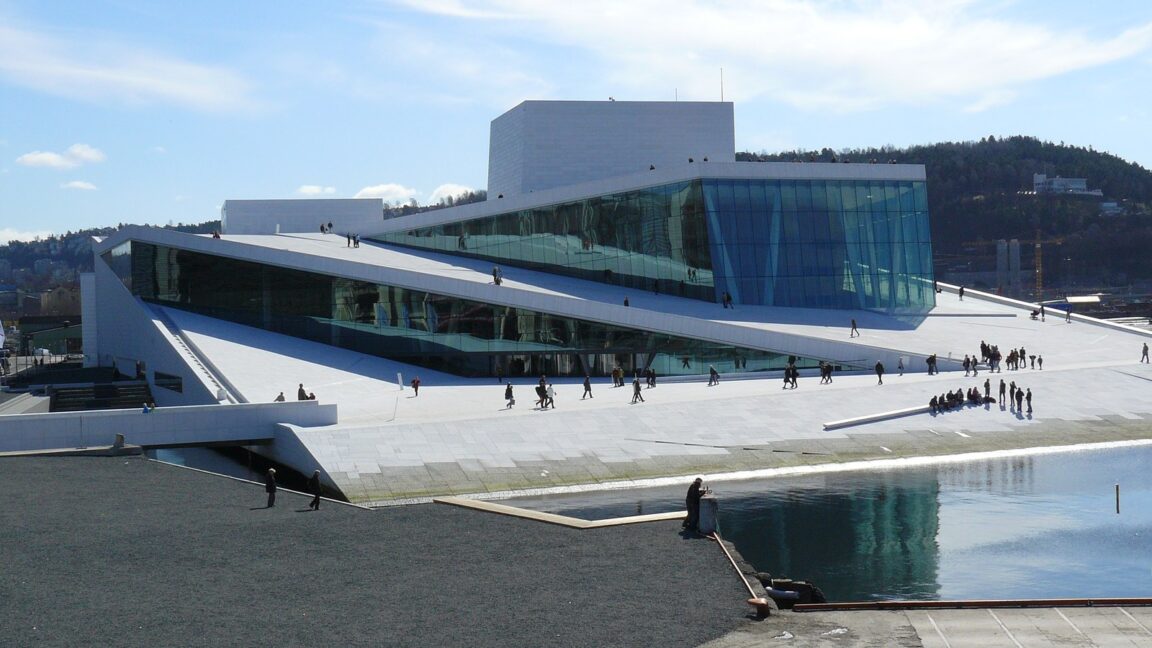
Day one belongs to Bjorvika, the redeveloped harbour district east of the city centre, where Oslo has rebuilt itself around art and water. Start at the Oslo Opera House, home of the Norwegian National Opera and Ballet. Designed by the Norwegian practice Snohetta and opened in 2008, the building rises from the fjord in white Italian Carrara marble, and its sloping roof is public space: you simply walk up it. Go early, before tour groups arrive, and take in the Barcode row of towers behind you, the harbour islands ahead and the floating glass sculpture She Lies in the water below. Walking the roof costs nothing and needs no ticket, which makes it the best free viewpoint in the city.
A few minutes along the waterfront stands MUNCH, the museum dedicated to Edvard Munch, which opened in Bjorvika in 2021 and holds the largest collection of Munch works in the world, including versions of The Scream. Book a timed entry in advance for weekends, and give the building at least two hours; the upper floors frame the fjord through huge windows, and the collection moves well beyond the one famous image into Munch’s woodcuts, photographs and later paintings. Afterwards, cross to the Deichman Bjorvika public library next door if you enjoy architecture, then walk west along the harbour promenade to Akershus Fortress, the medieval castle that guarded the city for centuries. Its grounds are free to wander and the ramparts look straight down the fjord. Finish the day around Aker Brygge and Tjuvholmen, the restaurant districts on the western harbour, where you can eat by the water and watch ferries cross to the islands.
What belongs on day two: museums, sculpture and a sauna?
Day two splits between the Bygdoy peninsula and Vigeland Sculpture Park. Bygdoy holds Oslo’s maritime museums in one cluster, reached by bus or, in season, by harbour ferry from Aker Brygge. The Fram Museum is built around the Fram, the wooden polar ship used by Fridtjof Nansen and Roald Amundsen, and you can walk its decks and cabins to understand how crews survived winters locked in ice. Across the road, the Kon-Tiki Museum tells the story of Thor Heyerdahl’s 1947 balsa raft voyage across the Pacific, and the Norwegian Museum of Cultural History, one of Europe’s largest open air museums, gathers historic buildings from across Norway, including a medieval stave church. Pick two rather than all three if the weather is fine, because Bygdoy’s beaches and woodland paths are part of the appeal.
In the afternoon, take the tram to Frogner Park for the Vigeland Sculpture Park, the world’s largest sculpture park by a single artist. Gustav Vigeland’s granite and bronze figures cover the bridge, fountain and the famous Monolith plateau, and the park is free and open around the clock. It works in almost any weather and at almost any hour, so it flexes around the rest of your day. End the day the Oslo way, with a floating sauna. Wood fired saunas moored along the harbour at Langkaia and at SALT near the Opera House let you alternate between serious heat and a ladder down into the fjord. Book a slot ahead, especially at weekends, bring a towel and swimwear, and treat the cold plunge as optional but memorable. The contrast is the point, and it is a year round ritual rather than a summer novelty.
How should you spend day three in Oslo?
Day three offers a choice between height and water, and you can do some of both. Take metro line 1 up to Holmenkollen, where the ski jump tower rises above the city and the Ski Museum inside the jump traces Norwegian skiing back centuries. The ride itself is part of the experience, climbing through residential hillsides until the fjord opens out below, and on a clear day the view from the jump tower is the finest panorama in Oslo. Allow half a day, including the metro rides, and check opening arrangements before you go, as the jump hosts events through the year.
Back at sea level, spend the afternoon on the water. Public ferries from Aker Brygge serve the inner Oslofjord islands, including Hovedoya, with its ruined Cistercian abbey and swimming spots, and Langoyene, known for its beach. In summer these ferries are simply the cheapest fjord cruise in Scandinavia, and island hopping fills an afternoon easily. If the weather turns, swap the islands for the National Museum near Aker Brygge, Norway’s largest museum of art, architecture and design, which holds another celebrated version of The Scream among its highlights. However you end the day, keep the evening loose: a final walk along the harbour promenade, from the Opera House to Tjuvholmen, ties the whole trip together.
Where should first timers stay in Oslo?
Stay central. The Sentrum district around Karl Johans gate and the streets near Oslo Central Station put the Opera House, MUNCH and the harbour within a short walk and every transport line on your doorstep. Bjorvika suits travellers who like new architecture and quiet evenings, while Gronland, just east of the station, offers a more local, food led feel at generally lower prices. Grunerlokka, north of the centre along the Akerselva river, is the neighbourhood pick for cafes, vintage shops and nightlife, and it is still only a tram ride from the waterfront. Because central Oslo is small, exact hotel location matters less than being near a tram or metro stop; check the walking route from the station if you arrive with luggage.
What should you know about food, costs and seasons?
Oslo has a reputation for high prices, and it is earned, but a first trip does not have to be expensive. Bakeries and food halls such as Mathallen in the Vulkan district keep lunches reasonable, supermarket delis are good, and tap water is excellent, so carry a bottle. The New Nordic restaurants that made the city famous book out well ahead; reserve before you travel if a specific table matters to you, and expect menus built on seafood, game and preserved flavours. Season shapes the trip more than any single sight. May to September brings long days, island ferries and outdoor dining; late November to March brings Christmas markets, possible snow at Holmenkollen and very short days, which argue for starting museum days early and saving the sauna for dark afternoons. Shoulder season travellers get the museums to themselves and should pack for changeable weather in any month.
Frequently asked questions about visiting Oslo
Is three days enough for Oslo?
Yes. Three days covers the Opera House and MUNCH, the Bygdoy museums, Vigeland Park, Holmenkollen and a fjord sauna at a comfortable pace. Add a fourth day if you want a full day on the fjord islands or a day trip out of the city.
Is the Oslo Pass worth buying?
It can be, on a museum heavy day, because it bundles public transport with entry to many museums and attractions. Compare its price on the official Visit Oslo site against the individual entries you realistically plan to use in 24 or 48 hours before deciding.
Can you really swim in the Oslofjord from the saunas?
Yes. The floating saunas along the harbour have ladders straight into the fjord, and plunging between sauna rounds is the normal routine in every season. The water is coldest in winter, which is precisely when regulars value the contrast most.
When is the best month to visit Oslo?
Late May to early September offers the longest days and the fullest ferry and outdoor programme. December offers Christmas atmosphere and a real chance of snow, balanced against roughly six hours of daylight.
Is Oslo walkable for first time visitors?
Very. The Opera House, MUNCH, the fortress, the palace end of Karl Johans gate and Aker Brygge all sit within an easy walk of Oslo Central Station. Trams and the metro cover Vigeland Park, Bygdoy connections and Holmenkollen.