 Sofia Rossi
What to eat in Naples starts and mostly ends with pizza in its birthplace, but the full answer is a short, strict canon: a margherita made to the rules of the Associazione Verace Pizza Napoletana, a marinara with no cheese at all, a pizza fritta, the fried pizza that fed the city’s poor, and then the pastries, sfogliatella above all, that Neapolitans eat standing at a counter with an espresso. Naples rewards travelers who learn the rules before they order, because here pizza is not a free form food. It is a codified craft, inscribed by UNESCO in 2017 on its Representative List of the Intangible Cultural Heritage of Humanity as the art of the Neapolitan pizzaiuolo, and the city’s historic pizzerias still work to a written specification. This guide explains those rules, the historic rooms to eat in, and what else to order while you are in the city that invented it all.
Quick Facts
- The governing rules: The Associazione Verace Pizza Napoletana, AVPN, founded in Naples in 1984, publishes the Disciplinare, the specification for true Neapolitan pizza, covering flour, dough, toppings, oven and the finished pizza
- The two canonical pizzas: Margherita, with tomato, mozzarella or fior di latte, grated cheese, basil and oil, and Marinara, with tomato, oil, oregano and garlic and no cheese, are the historic pizzas named in the AVPN specification
- The margherita numbers: Under the AVPN rules the pizza should not exceed 35 centimetres in diameter, the centre should be about 0.25 centimetres thick, the raised rim, the cornicione, should be 1 to 2 centimetres high, and the bake in a wood fired oven takes about 60 to 90 seconds
- The historic rooms: Antica Pizzeria Port’Alba, trading since 1738 for street sellers and a sit down pizzeria from 1830, Pizzeria Brandi, tied to the 1889 margherita story, and L’Antica Pizzeria Da Michele, whose Condurro family tradition dates to 1870
- Beyond pizza: Pizza fritta, fried pizza, sfogliatella in its riccia and frolla forms, baba al rum and a short, dark Neapolitan espresso
- How to eat: Order whole pizzas, one per person is normal, eat with knife and fork or folded in the wallet style, a libretto, and expect queues at the famous names at peak hours
- Pair it with: Naples sits in Campania, the region of Mozzarella di Bufala Campana DOP and San Marzano tomatoes, the ingredients the rules are built around. Verify current opening hours on each pizzeria’s own channels before a special trip
What do the AVPN margherita rules actually say?
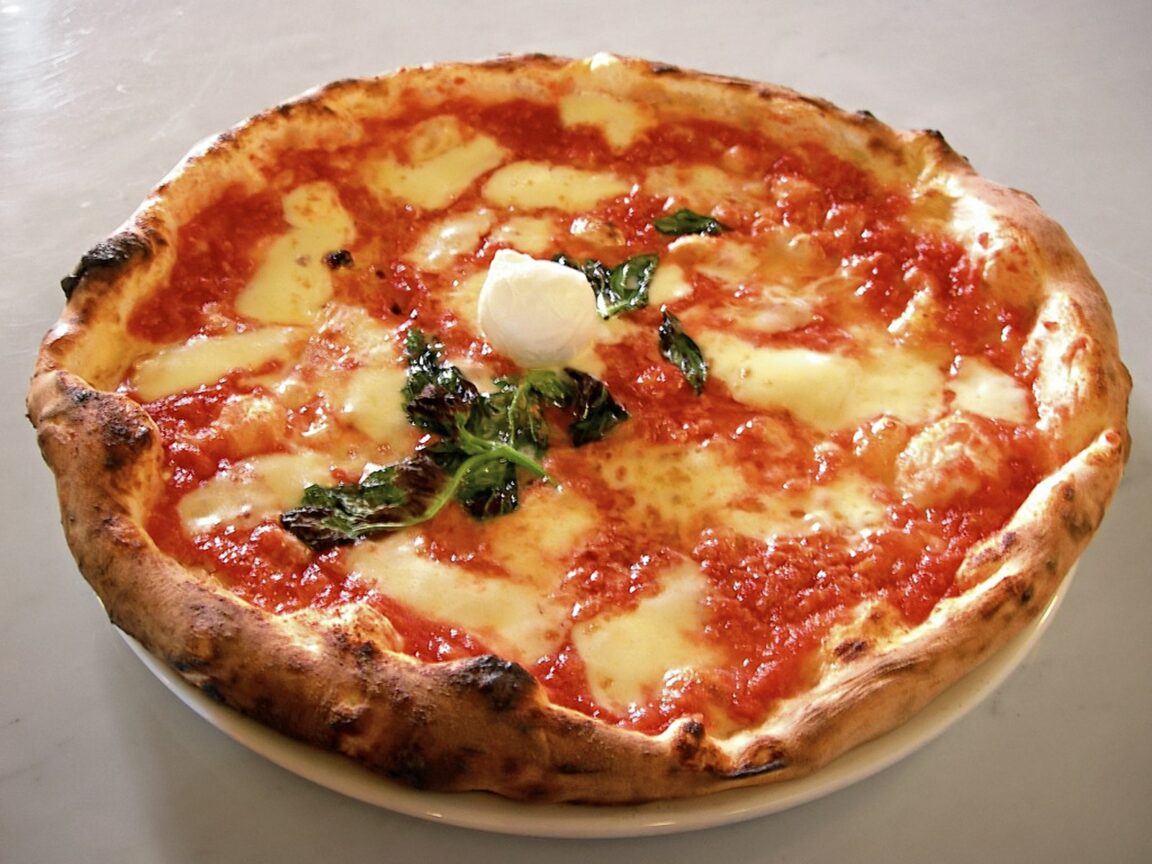
The Associazione Verace Pizza Napoletana was founded in 1984 by Naples pizza makers to defend a method that was already centuries old, and its Disciplinare Internazionale is a genuinely technical document. It specifies the flour, a finely milled wheat flour of the type known in Italy as 00, the dough made with water, sea salt and a very small amount of yeast, with no fat or sugar added, and a long, slow fermentation. The dough must be worked and stretched by hand, never with a rolling pin or a machine, because hand stretching pushes the air outward into the rim instead of crushing it out of the dough. That rim, the cornicione, is the signature of the style: raised, airy, blistered and leopard spotted from the oven, between 1 and 2 centimetres high under the rules, around a centre so thin, about a quarter of a centimetre, that the finished pizza is soft and foldable rather than crisp.
The oven rules are just as exact. A true Neapolitan pizza bakes in a wood fired oven at temperatures far beyond any home oven, with the oven floor around 430 degrees Celsius and the dome higher still, for roughly 60 to 90 seconds. In that flash of heat the base cooks, the rim puffs and chars in spots, and the mozzarella melts into pools rather than browning into a sheet. The toppings for the margherita are fixed in kind: tomato, in the tradition from San Marzano tomatoes grown in the volcanic soil of the Agro Sarnese Nocerino area, mozzarella di bufala campana DOP or fior di latte, the cow’s milk mozzarella, fresh basil, grated cheese and extra virgin olive oil. The marinara, older than the margherita and named for the fishermen’s wives who are said to have made it, is tomato, garlic, oregano and oil, and no cheese at all. Order both in Naples and you taste the whole argument of Neapolitan pizza, with and without mozzarella, in its two original forms.
Where does the margherita story come from?
The famous story runs that in 1889, during a royal visit to Naples, pizzaiolo Raffaele Esposito, of the pizzeria that later became Brandi, made three pizzas for Queen Margherita of Savoy, and that the one she preferred, topped with tomato, mozzarella and basil in the red, white and green of the Italian flag, took her name. Brandi, on Salita Sant’Anna di Palazzo near Piazza del Plebiscito, still trades on the story and displays the letter of gratitude said to have come from the royal household. Food historians note that tomato and mozzarella pizzas existed before 1889 and that the letter’s details have been questioned, and a good guide should say so. What is not in dispute is the effect: the margherita became the city’s emblematic pizza, the standard against which the AVPN later wrote its rules, and Brandi remains a legitimate historic stop, best visited for the room and the story as much as the slice.
Which historic pizzerias should you actually eat in?
Antica Pizzeria Port’Alba, the oldest of all
On Via Port’Alba, the booksellers’ street by the ancient gate of the same name, Port’Alba traces its pizza making to 1738, when it produced pizzas for the street sellers who carried them through the city, and it became a sit down pizzeria with tables in 1830, generally recognised as the first pizzeria in the world in that form. Eat here for history you can sit in: a simple room, a short menu and nearly three centuries of continuity on one street corner in the historic centre.
L’Antica Pizzeria Da Michele, the purist
Da Michele, on Via Cesare Sersale near the central station end of the old town, is the temple of minimalism. The Condurro family’s pizza tradition dates to 1870, Michele Condurro opened his own pizzeria in 1906, and the business has occupied its current site since 1930. The menu is famously reduced to the essentials, margherita and marinara in essence, served in a marble topped, no frills room where the queue outside is part of the institution. Portions are generous, the centre of the pizza is proudly soft and wet in the Neapolitan way, and first timers should fold, cut and eat without asking for alterations. This is the clearest single lesson in what Neapolitan pizza is.
Brandi, Di Matteo and the working city
Brandi covers the margherita story above. For the city’s everyday pizza culture, Di Matteo on Via dei Tribunali, the great pizza street of the historic centre, and its neighbours on the same street show Naples eating pizza as a daily food rather than a pilgrimage, including fried pizza sold to take away. Via dei Tribunali is the single best street in the world for a self guided pizza crawl: historic names, queues of locals, and prices that remind you pizza began as the food of the working poor.
What is pizza fritta, and why does it matter?
Fried pizza is Naples’ other pizza, and in some ways its most Neapolitan. Born of poverty and wartime scarcity, when ovens and ingredients were hard to come by, it is a disc of the same dough, filled, most classically with ricotta, mozzarella or fior di latte, tomato and cicoli, folded into a half moon and deep fried in hot oil until it puffs and blisters. The AVPN’s own specification recognises the fried variant alongside the oven baked pizzas. Eaten hot from a fryer on Via dei Tribunali, folded in paper, it is rich, sustaining and completely unlike the margherita experience an hour earlier. Order one small, share it, and understand that Naples invented not one pizza but a whole pizza economy, baked and fried, sit down and street.
What else should you eat in Naples?
Sfogliatella, in both its forms
The city’s defining pastry comes as sfogliatella riccia, a shell of dozens of crisp, ridged layers, and sfogliatella frolla, the same filling in a smooth shortcrust shell. The filling is semolina and ricotta scented with orange and cinnamon, and the riccia should shatter audibly. Historic cafes around the station and the old town serve them warm through the morning. Pair one with a Neapolitan espresso, short, dark and taken standing at the bar, for the most local breakfast in the city.
The supporting cast
Baba al rum, the yeasted cake soaked in rum syrup, is Naples’ other pastry monument, often served with cream or strawberries. Ragu Napoletano, the slow Sunday sauce in which meat braises for hours in tomato, explains what the city eats when it is not eating pizza, and a bowl of pasta with that ragu, or with the seafood of the bay, is the right second day lunch. Travelers heading onward in Italy can compare Naples’ strict pizza canon with the broader regional eating in the guide to Matera and its cave city, a short journey east into Basilicata, and with the very different, sauce led traditions covered in the Oaxaca food guide, proof that Naples is not the only city to codify a beloved dish down to the last ingredient.
How should you order, queue and pay like a local?
A whole pizza per person is the norm and the expectation, and prices at the historic houses remain strikingly low by capital city standards, one of pizza’s founding virtues, though you should check current menus rather than any price quoted in a guide. At the famous names, take a number or join the list at the door, expect to share the wait with half the world at lunch, and go early or late to shorten it. Eat the pizza as it comes: no requests for extra crisping, because a soft, foldable centre is the style, not a flaw. The traditional fold, a libretto, like a wallet, exists precisely because the centre is soft. Finish with the crust, which in Naples is not packaging but the baker’s signature, and judge every pizzeria first by its cornicione.
Image: A margherita pizza. Rules cited from the AVPN Disciplinare published by the Associazione Verace Pizza Napoletana at pizzanapoletana.org, and founding dates as given by the pizzerias’ own histories. Confirm current opening hours and menus on official channels before a special trip.