 Aiko Tanaka
Plan a full, unhurried day, start at the Peace Memorial Museum when it opens at 7:30, and give the park, the A-Bomb Dome and the monuments the quiet time they ask for rather than fitting Hiroshima between trains. That is the respectful way to visit the Hiroshima Peace Memorial: one site, taken slowly, with the museum first, the outdoor memorials second, and space afterwards to sit, reflect and learn more, instead of a rushed hour on a day trip from Kyoto or Osaka.
Quick Facts
- Core site: Peace Memorial Park in Naka ward, Hiroshima, with the Peace Memorial Museum, the A-Bomb Dome, the Cenotaph and the Children’s Peace Monument in one walkable area
- Museum hours: Opens at 7:30 year round; closes at 19:00 from March to July and September to November, 20:00 in August, and 18:00 from December to February, as listed on the museum site at hpmmuseum.jp and checked on 10 November 2026
- Museum admission: 200 yen for adults, 100 yen for high school students and for visitors aged 65 and over with identification, and free for junior high school students and younger, as listed on hpmmuseum.jp and checked on 10 November 2026
- Reservations: The first hour of the day and the final evening entry period are online reservation only; booking a web ticket in advance is recommended for other times too
- Closed days: The museum closes on 30 and 31 December and for a period in mid February for exhibition changes, so check the official calendar before you travel
- Time to allow: At least two to three hours for the museum alone, and a full half day or longer for the museum and park together
- Park access: The park and outdoor memorials are open public spaces and carry no admission charge; only the museum charges entry
Why does this visit deserve a full day?
Hiroshima’s Peace Memorial is not an attraction to be collected. The park stands on what was once the Nakajima district, a busy neighbourhood near the centre of the city that was destroyed by the atomic bombing of 6 August 1945. The museum, the preserved Dome and the memorials together tell one connected story: what the city was, what happened at 8:15 that morning, what survivors endured afterwards, and what Hiroshima has asked of the world since. Rushing compresses all of that into images without context. An unhurried day reverses the order. You read, you listen, you walk outside into a living city park, and you let each part answer the part before it.
The museum itself advises that its busiest period runs from about 11:00 to 15:00. Arriving for the opening hour, by online reservation, means quieter galleries and a calmer tone for material that deserves concentration.
How should you plan the order of the day?
Start with the museum. Book the earliest web ticket you can manage and arrive before your slot so entry is not hurried. The museum is arranged across two buildings. The main building holds the permanent exhibition on the bombing and its human cost, including personal belongings, photographs and testimony. The east building covers the history of Hiroshima before and after the bombing, the development and effects of nuclear weapons, and the city’s postwar work for peace. Seeing the museum first gives the outdoor sites their meaning. The Dome stops being only a famous ruin, and the Cenotaph stops being only a shape in photographs, once you understand what each one commemorates.
After the museum, walk north through the park. Pause at the Cenotaph, the arched memorial that holds the names of the victims and carries an inscription committing the city to remembrance and to ensuring the tragedy is not repeated. The alignment matters: from the Cenotaph, the view lines up with the Flame of Peace and, beyond it, the A-Bomb Dome. Take that view from the Cenotaph itself rather than treating it as a photo stop on the way past.
Continue to the Children’s Peace Monument, which commemorates Sadako Sasaki and the thousands of child victims. Sadako, who was exposed to radiation as a small child and died of leukaemia a decade later, folded paper cranes while she was ill, following the belief that folding a thousand cranes could grant a wish. Her classmates campaigned for a monument for all child victims, and it was unveiled in 1958. Paper cranes sent from around the world are displayed in cases beside the monument. Groups wishing to present cranes should follow the museum and city guidance on registration rather than simply leaving cranes at the site.
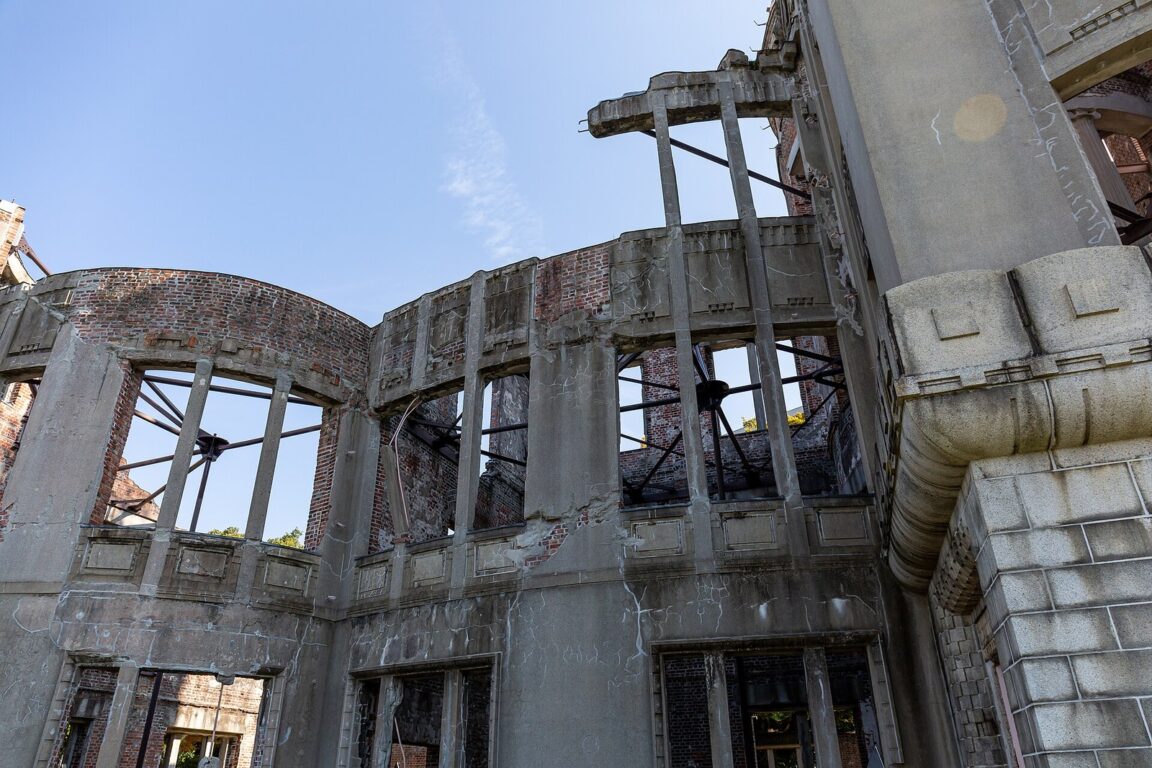
Finish at the A-Bomb Dome itself, viewed from the park and the riverbank. The building, formerly the Hiroshima Prefectural Industrial Promotion Hall, stood close to the hypocentre and was one of the very few structures left standing nearby. It is inscribed as a UNESCO World Heritage Site under the name Hiroshima Peace Memorial, a listing that recognises the Dome as a witness to the destructive force of the bomb and as a symbol of hope for peace and the elimination of nuclear weapons. The museum’s official site sets out the Dome’s history alongside its visitor information. You view it from outside only. Walk around it, read the explanatory panels, and look back across the river toward the park you have just crossed.
What do you need to know about museum tickets and timing?
Admission is deliberately low: 200 yen for adults, as checked on the Hiroshima Peace Memorial Museum official site on 10 November 2026. Last entry is 30 minutes before closing. The first hour, from 7:30 to 8:30, and the final evening period are entry by online reservation only, and web tickets can be booked in advance through the museum site. In the period around 6 August, special arrangements apply and demand is at its highest of the year, so anyone visiting in early August should read the museum’s current notices carefully and book as early as the system allows.
Allow two to three hours inside. The permanent exhibition is detailed and, in places, very difficult. Move steadily through the whole exhibition at a pace you can absorb rather than spending an hour on the first rooms and hurrying the rest. An audio guide is offered for a fee; check the current price on the official site, as details can change.
Hiroshima Station connects to the park by tram and by bus; the museum site publishes current access routes, so confirm your stop there before you travel. If Hiroshima is part of a longer Japan trip, pair this planning with our first time Tokyo 5-day itinerary for pacing the rest of the journey, and with our guide to what to pack for Japan in spring if you are travelling in blossom season, when Hiroshima’s riverside parks are at their most visited.
How should you behave in the park and museum?
The conduct expected here is the conduct of a memorial, not a theme park. Speak quietly inside the museum. Follow the museum’s current rules on photography, which vary by area, and put the camera away entirely where it is not permitted. Do not treat exhibits, especially personal belongings of victims, as backdrops for portraits. Outside, the same restraint applies at the Cenotaph and the Children’s Peace Monument, where school groups and families may be holding their own moments of remembrance nearby.
Dress as you would for a place of mourning, and keep food and drink for the cafes outside the memorial core. If children are travelling with you, prepare them beforehand in age appropriate terms, and do not schedule a tight onward connection afterwards: the park itself, with its lawns, river and benches, is where children process what they have seen.
August 6 itself is a day of ceremony, centred on the Peace Memorial Ceremony in the morning, with a moment of silence at 8:15. Visitors who are in Hiroshima then should expect access controls, large crowds and a solemn civic occasion led by survivors, families and the city, and should follow official instructions rather than treating the day as a sightseeing opportunity.
What else can you do with the rest of the day?
Leave the afternoon open rather than stacked. Walk to the Rest House in the park, spend time by the Motoyasu River, or take the tram to Hiroshima Castle or the Shukkeien garden for a gentler second half of the day. Staying overnight changes the visit for the better: the park at dusk, after day trip groups have left, is one of the most reflective times to walk it again. If you take one decision from this page, let it be the scheduling one: one morning, booked early, with nothing important planned immediately afterwards.
Frequently Asked Questions
How much does the Hiroshima Peace Memorial Museum cost?
200 yen for adults, 100 yen for high school students and for visitors aged 65 and over with identification, and free for junior high school students and younger, as listed on hpmmuseum.jp and checked on 10 November 2026. The park, the Dome and the outdoor memorials are free.
What time does the museum open and close?
It opens at 7:30 year round. Closing is 19:00 from March to July and September to November, 20:00 in August, and 18:00 from December to February, with last entry 30 minutes before closing. It closes on 30 and 31 December and in mid February for exhibition changes.
Do I need to book museum tickets in advance?
Yes for the first hour of the day and the final evening period, which are online reservation only. For other times, advance web tickets are strongly recommended, because the museum advises that 11:00 to 15:00 is its busiest period and same day queues can be long.
How long should I spend at the Peace Memorial?
Allow two to three hours for the museum and at least another hour for the park, the Cenotaph, the Children’s Peace Monument and the A-Bomb Dome. A half day is a sensible minimum; a full, slow day with an overnight stay is better.
Can you go inside the A-Bomb Dome?
No. The Dome is viewed from outside, from the park and the riverbank, where explanatory panels set out its history. It is a preserved memorial structure and a UNESCO World Heritage Site, not an enterable building.
Is the Peace Memorial suitable for children?
Yes, with preparation. The Children’s Peace Monument speaks directly to young visitors, but parts of the museum exhibition are graphic and distressing. Prepare children in advance, move at their pace, and use time in the park afterwards to talk about what they saw.
Museum hours, admission and reservation rules were checked against the Hiroshima Peace Memorial Museum official site, hpmmuseum.jp, on 10 November 2026. Check the site again before you travel, as hours and closure dates change.