 River Callahan
In Helsinki, the public sauna is not a spa treat. It is a normal part of city life, and a first visit is simpler than most travellers expect: pay at the desk, shower first, sit on the benches in the heat, throw water on the stones if the room agrees, cool off outside or in the sea, and repeat for as long as you like. Finland counts millions of saunas for a population of about five and a half million, and sauna culture in Finland was inscribed on the UNESCO Representative List of the Intangible Cultural Heritage of Humanity in 2020. This guide explains the four Helsinki public saunas most worth a visitor’s time, Loyly, Allas Sea Pool, Kotiharjun Sauna and Kulttuurisauna, all verified as operating for this guide, and the etiquette that will make a first session feel natural rather than nerve wracking.
Quick Facts
- Cultural status: Sauna culture in Finland was inscribed on the UNESCO Representative List of the Intangible Cultural Heritage of Humanity in 2020
- The key word: Loyly means both the steam that rises when water meets the hot stones and, in everyday use, the spirit of the sauna itself
- Best first visit: Loyly for design and sea access with booking, Allas Sea Pool for a central harbour setting, Kotiharjun Sauna for traditional wood fired heat, Kulttuurisauna for quiet
- Swimwear rule: Mixed public saunas such as Loyly and Allas require swimwear; single sex traditional saunas are normally nude, with a towel to sit on
- Booking: Book Loyly ahead online, especially afternoons and weekends; Kotiharju is walk in; check each venue site for current hours and prices before you go
- Bring: Swimwear where required, a towel or seat cover where not provided, water, and time; two hours is a comfortable first session
Why sauna matters in Finland
The sauna in Finland has historically been a place to wash, to warm up in a hard climate, to recover, to talk quietly, and to mark both ordinary weeks and major life events. That depth is what UNESCO recognised in 2020: not a building type, but a living practice passed between generations. At the heart of the practice is loyly, the burst of steam created when water is ladled onto the heated stones of the stove, called a kiuas. Good loyly is soft, enveloping heat rather than a dry blast, and judging it is a point of local pride. Understanding that one word unlocks the whole visit, because every etiquette rule that follows exists to protect the heat, the cleanliness of the room, and the calm of the people sharing it.
For a visitor, the cultural point to carry in is equality. In the sauna everyone sits on benches in the same heat, status and clothing left outside, conversation is low and unhurried, and silence is completely acceptable. Travel writing often frames sauna as a wellness treatment with health claims attached. Finns more often frame it as a habit, closer to a walk or a swim than to a therapy session. Approach it that way, as joining a routine rather than consuming an attraction, and the experience lands properly. Our guide to Budapest thermal baths covers a sister bathing culture with a very different history, and the contrast helps explain what is distinctly Finnish here.
Loyly: the design landmark on the Hernesaari waterfront
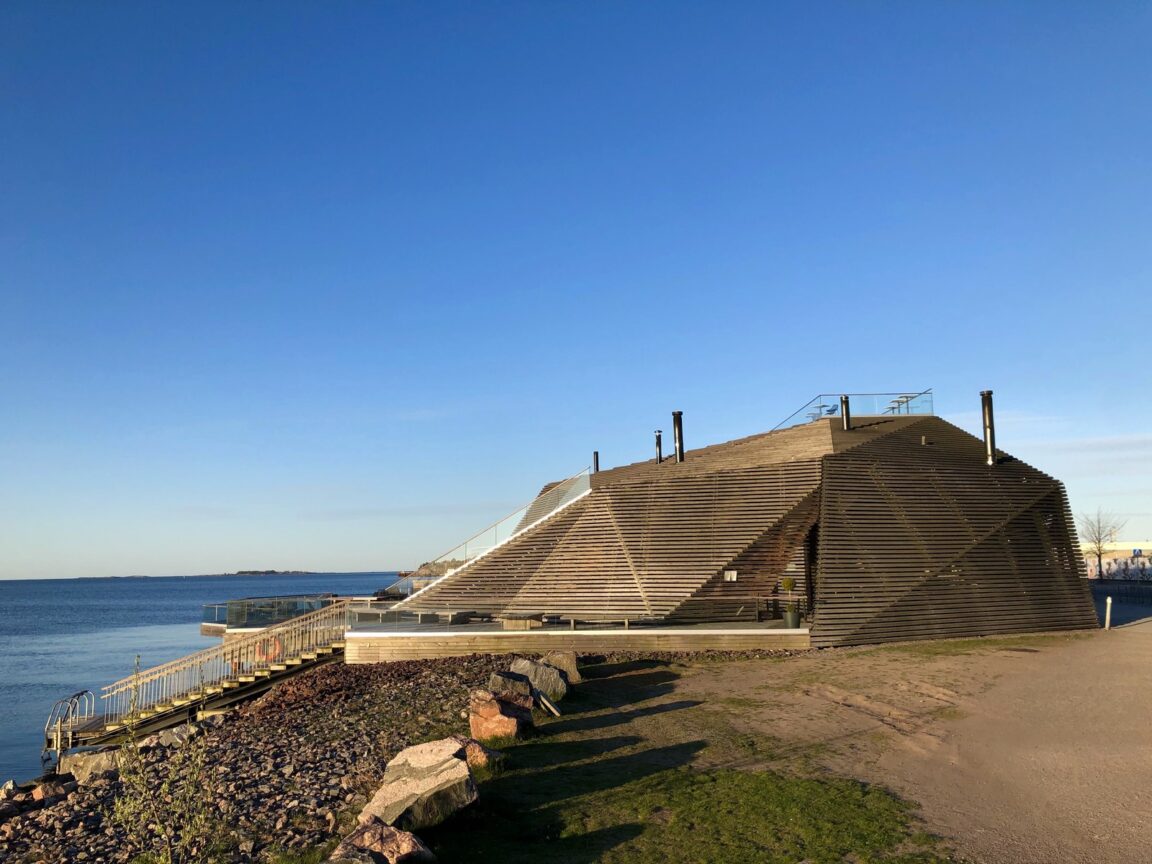
Loyly, at Hernesaarenranta 4 in the Hernesaari district, opened in 2016 and is the Helsinki sauna most visitors picture: a sculptural timber building by Avanto Architects, wrapped in wooden slats, with terraces stepping down to the Baltic and a restaurant attached. Its public offering includes wood heated saunas, including a traditional smoke sauna, which is a rarity in a city setting, and direct access to the sea for the cold plunge that completes the ritual. The public saunas are mixed and swimwear is worn, which lowers the barrier for first timers travelling as couples or mixed groups.
The practical catch is popularity. Loyly is a book ahead venue: reserve a timed slot on its official site before you arrive in Helsinki, particularly for afternoons, weekends and summer evenings, when sessions sell out. Build the visit as an outing rather than a stop: sauna rounds, sea dips, and a meal or drink on the terrace afterwards. Of the four venues in this guide, Loyly is the most polished and the most social, and the easiest recommendation for a traveller with only one sauna slot in the city.
Allas Sea Pool: sauna and swimming in the South Harbour
Allas Sea Pool sits in the South Harbour beside Market Square, about as central as Helsinki gets, and combines saunas with outdoor pools floating on the harbour, including a heated warm water pool and a seawater pool kept at sea temperature. That second pool is the point: stepping from sauna heat into genuine Baltic water, in winter through the cold season air, delivers the hot cold contrast in its purest city form, with the harbour, ferries and skyline as the backdrop.
Allas suits travellers who want sauna as part of a swimming outing, families during daytime hours, and anyone staying in the centre who wants to walk to the experience. Its saunas include mixed facilities where swimwear is required, along with event and private options that change by season, so check the official Allas site for the current sauna lineup, opening hours and ticket prices on the day you plan to go. Arrive with time to spare: the pleasure of Allas is unhurried rotation between heat, warm pool, cold pool and cafe, not a single quick sweat.
Kotiharjun Sauna: wood fired tradition in Kallio since 1928
Kotiharjun Sauna, at Harjutorinkatu 1 in the Kallio district, is the traditional counterweight to Loyly’s architecture. Built in 1928, it describes itself, accurately, as the last traditional wood burning public sauna in Helsinki, and its official site lists opening from Tuesday to Sunday in the afternoons, with bathing time running into the evening; confirm the exact hours there before visiting, since the sauna posts occasional closure days. Men and women bathe in separate sections, nude in the Finnish traditional manner, and the atmosphere is that of a neighbourhood institution: regulars, conversation, and a famously large wood fired stove producing deep, soft heat for a room that holds a couple of dozen bathers on its upper benches.
Kotiharju is walk in rather than booked, which makes it the flexible option for a traveller whose day is unstructured. It is also the most instructive visit for understanding sauna as locals practise it, without a restaurant, a view terrace, or a design statement attached. Bring cashless payment, a towel, and a willingness to follow the room: at Kotiharju the regulars on the hottest upper bench traditionally have the say on how much water goes on the stones, a small democracy of heat that the sauna’s own guidance describes. Visitors who enjoy reading a bathing culture through its oldest room will find a useful parallel in our account of Rotorua’s Maori culture experiences, where, as in Kallio, the living local practice matters more than the visitor version of it.
Kulttuurisauna: the quiet, design led alternative
Kulttuurisauna, the Culture Sauna, at Hakaniemenranta 17 on the Merihaka shoreline, was created by architect Tuomas Toivonen and designer Nene Tsuboi and opened in 2013 as a deliberate return to sauna essentials. It is heated by a large wood and pellet fired mass stove, separates men and women, and protects an unusually calm atmosphere: conversation is kept minimal on the benches, Friday evening sessions are known for silence, and sea swimming, including through an ice hole in winter, is part of the visit. Sessions run on selected days of the week, with evening sessions booked in advance through its calendar, so this is the one venue in the guide where checking the official site and reserving is essential even outside peak season.
Choose Kulttuurisauna if the other three sound too busy. It rewards travellers who want the meditative end of sauna culture, design readers who want to see a contemporary building built around an old ritual, and repeat visitors ready for the traditional, swimwear free format in a setting that feels considered rather than intimidating. Its capacity is small, its mood is protected, and that is precisely its appeal.
The etiquette that matters, step by step
Shower first, sit on a towel
Every visit starts with a proper wash and shower before entering the hot room. In traditional saunas you sit on a small towel or seat cover, both for hygiene and because bare benches get hot. Leave swimwear decisions to the venue rule: required and normal in mixed modern saunas, out of place in single sex traditional rooms, where nudity is standard and entirely unremarkable once you are inside.
Water on the stones is a shared decision
Ask, with a glance, a nod, or a quiet word, before throwing water if the room is full, and add a little at a time. Loyly builds fast: one ladle transforms the room for a minute or two. Never pour water on an electric stove element in a way the venue prohibits, follow any posted instructions, and if you are on the top bench in a traditional sauna, understand that your seat carries informal responsibility for the room’s heat.
Heat, cold, rest, repeat
The rhythm is rounds: ten to fifteen minutes of heat, a cold plunge in the sea or pool or a cool rest outdoors, a drink of water, and back in. Two to four rounds fill a satisfying session. The cold plunge is invigorating and optional in its full ice hole form; wading, a cold shower, or standing in winter air achieves the same reset. Listen to your body, leave the room whenever you need to, and avoid alcohol before and during bathing, saving the terrace drink for afterwards. Anyone who is pregnant, has a heart condition, or is unsure about heat and cold contrast should take medical advice before a first session, a caution Finnish venues themselves repeat.
Frequently asked questions
Do I have to be nude in a Helsinki sauna?
Only in single sex traditional saunas, where nudity is the norm and swimwear is not worn. Mixed public saunas such as Loyly and Allas require swimwear. Towels are used for sitting on the benches everywhere.
Which Helsinki sauna is best for a first visit?
Loyly for a booked, design led introduction with sea swimming and a restaurant; Allas for a central swim and sauna outing; Kotiharju for the most traditional experience; Kulttuurisauna for quiet. All four are operating venues, and each rewards a different kind of traveller.
How hot is a Finnish sauna?
Public saunas commonly run at temperatures that feel intense to a first timer, with steam from water on the stones raising the perceived heat sharply for short bursts. Sit low in the room, where it is cooler, for your first round, and leave whenever you wish.
Can I visit a sauna in winter?
Yes. Winter is peak sauna season in spirit, and the cold plunge becomes an ice hole swim at venues with sea access. The contrast is the classic Finnish experience, approached gradually and always by choice.