 Hana Kim
Jeju deserves more than a day trip, and it works best as a trip of its own: a volcanic island south of the Korean mainland where a sunrise climb up a tuff cone, a walk through a lava tube, waterfalls that drop toward the sea and a dormant volcano at the centre can fill four or five unhurried days. Koreans treat Jeju as their Hawaii, the default honeymoon and holiday island an hour’s flight from Seoul, and the comparison holds in spirit if not in temperature: the draw is volcanic scenery, coastal roads, tangerines and black pork rather than tropical heat. This guide explains how the island divides, what the UNESCO sites actually involve, and how to get around without spending the trip in a tour bus queue.
Quick Facts: Jeju Island at a Glance
- Where: South Korea’s largest island, in the Korea Strait south of the mainland, governed as Jeju Special Self-Governing Province.
- High point: Hallasan, a shield volcano rising to about 1,950 metres, the highest mountain in South Korea.
- UNESCO: Jeju Volcanic Island and Lava Tubes, inscribed in 2007 as Korea’s first World Natural Heritage site, covering Hallasan, the Geomunoreum lava tube system and the Seongsan Ilchulbong tuff cone.
- Signature sights: Seongsan Ilchulbong at sunrise, Manjanggul lava tube, Cheonjiyeon and Jeongbang waterfalls at Seogwipo, the Jusangjeolli basalt cliffs, and the Jeju Olle walking trails.
- Getting there: Frequent flights of about an hour from Seoul Gimpo to Jeju International Airport, plus ferries from mainland ports.
- Getting around: A rental car gives the most freedom. Buses cover the coasts and main sights, but slowly.
- Last checked: November 11, 2026.
Why Do Koreans Call Jeju Their Hawaii?
The nickname is about role, not climate. Jeju is the place mainland Koreans go to decompress: honeymoons, family trips, school excursions and long weekends, served by one of the busiest air routes in the world between Seoul and Jeju City. What they find is an island built by a volcano. Hallasan sits at the centre, some 360 smaller volcanic cones, called oreum, dot the slopes and coasts, and the shoreline alternates between black lava rock, basalt columns and pale sand beaches. Citrus groves, stone walls made of lava rock, and the stone grandfather statues called dol hareubang give the island a visual identity distinct from the mainland, and the haenyeo, the women free-divers who harvest abalone and sea urchin without breathing equipment, give it a living culture found nowhere else. Their culture was inscribed on UNESCO’s Intangible Cultural Heritage list in 2016, and a short domestic hop using the entry systems in our South Korea e-Arrival Card guide is all that separates Seoul from the island for most visitors.
The East: Seongsan Ilchulbong and the Lava Tubes
Sunrise Peak, the tuff cone in the sea
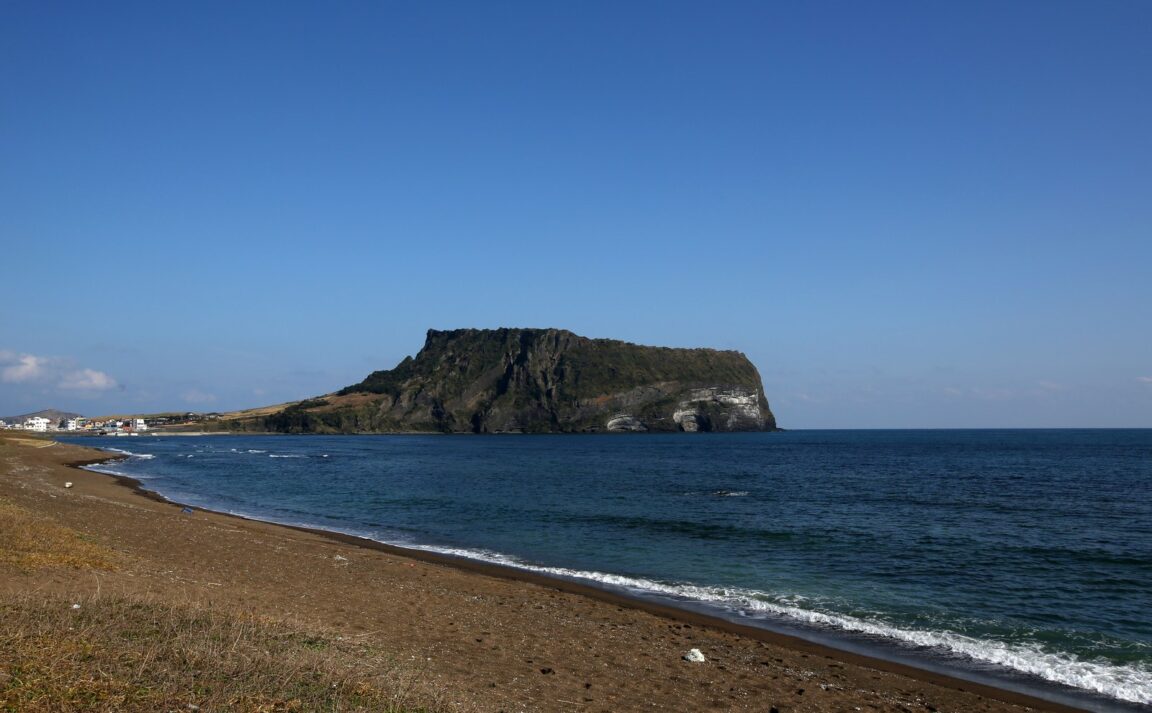
Seongsan Ilchulbong, Sunrise Peak, is Jeju’s postcard: a tuff cone formed about 5,000 years ago when magma met shallow seawater at the island’s eastern tip, rising about 180 metres with a grassy crater roughly 600 metres across. A stepped path climbs to the rim in around 20 to 30 minutes, and the site opens early enough for the sunrise that gives the peak its name. Adult admission is listed at 5,000 won. The peak closes on the first Monday of each month, and the sunrise plan deserves a weather check the night before, because the east coast catches cloud first. Below the peak, on the shore, haenyeo divers give demonstrations of their work when conditions allow, which turns a geology stop into the island’s best short introduction to its diving culture. Staying near Seongsan the night before is the single easiest upgrade to the experience: the sunrise crowd that stays in Jeju City faces a pre-dawn drive of over an hour.
Manjanggul, walking inside a lava river
Northwest of Seongsan lies Manjanggul, part of the Geomunoreum lava tube system that UNESCO calls the finest of its kind in the world. The tube runs about 7.4 kilometres in total, of which roughly one kilometre is open to visitors, ending at a lava column about 7.6 metres tall where lava once poured from an upper level into a lower one. The walk is cool, dim and level, past lava stalactites and flow formations, and the cave holds a steady cool temperature year-round, so a layer is worth carrying even in August. The tube reopened on 30 May 2026 after a long closure caused by a rockfall, with the open section reworked, so travelers working from older guides should disregard the closed notices. It keeps daytime hours with last entry in the late afternoon and closes on the first Wednesday of each month, so it pairs naturally with Seongsan on a different day rather than the same monthly-closure gamble.
The South: Seogwipo, Waterfalls and the Olle Coast
Seogwipo, the island’s second city, occupies the warmer southern coast and makes the best base for a scenery-first trip. Its waterfalls are the town’s signature: Cheonjiyeon, reached by a flat walk through a subtropical gorge and lit in the evening, and Jeongbang, which drops about 23 metres straight toward the sea and is celebrated as one of the few Asian waterfalls to fall directly into the ocean. West of town, the Jungmun resort coast adds the Cheonjeyeon falls and the Jusangjeolli cliffs, where cooling lava shrank into hexagonal basalt columns that stand in the surf like a stone organ.
Seogwipo is also the heart of the Jeju Olle Trail, the long-distance walking network that circles the island in 27 routes totalling about 437 kilometres. A first-timer does not need a trekking plan: a single route section along the Seogwipo coast, past sea stacks and village harbours, with a market lunch in town, delivers the Olle idea in a morning. Walkers should note the Olle Foundation’s guidance to finish routes by early evening, earlier in winter, and to carry water between villages.
The Centre: Hallasan, With a Reservation
Hallasan is not a casual add-on. Two trails, Seongpanak and Gwaneumsa, reach the summit crater and its small lake, and both require a free advance reservation through the official Hallasan reservation system, with checkpoint cut-off times that turn away late starters. The hike is a full day, the weather at 1,950 metres is a different season from the coast, and the reservation requirement means it must be planned before arrival, not decided over breakfast. Travelers without a summit day still get Hallasan value from the shorter trails on its flanks and from the mountain’s constant presence: it fills the windscreen on almost every cross-island drive. Entry rules for the wider trip, including how the temporary exemption interacts with island travel, are covered in our South Korea K-ETA exemption explainer.
How to Get to Jeju, and the Visa-Free Door
Most visitors fly. Flights from Seoul Gimpo to Jeju International Airport, in Jeju City on the north coast, take about an hour and run throughout the day, and the island also has direct international services from regional hubs. Ferries from mainland ports suit travelers building a slow itinerary with a vehicle. Jeju also operates its own visa-free entry scheme, separate from mainland rules: under guidance published by Korean consulates, travelers of most nationalities arriving on a direct international flight or ferry can stay on Jeju for up to 30 days without a visa, on condition that they arrive directly and remain on the island. That last condition is the trap: routing through Seoul uses mainland entry rules instead, and the Jeju scheme does not authorise onward travel to the mainland. Travelers whose nationality is visa-exempt for Korea generally, or who are combining Jeju with Seoul, should follow the mainland rules for the whole trip rather than the island scheme.
Where to Base, and How Long to Stay
Jeju City, near the airport, suits short stays, market eating at Dongmun Market and easy departures. Seogwipo suits scenery, waterfalls and Olle walking, and the east coast around Seongsan suits sunrise mornings and a quieter, rural pace. The island is bigger than it looks: cross-island drives of an hour to an hour and a half are normal, buses between coasts take longer, and a single base with day trips in different directions beats changing hotels nightly. Three nights is the minimum that does the island justice, covering the east and the south. Four to five nights add Hallasan or a full Olle route and a west coast day for the beaches around Hyeopjae and the tea fields and museums inland. Food should be planned, not incidental: Jeju black pork, from the island’s native pigs, abalone porridge, hairtail fish along the Seogwipo coast and hallabong tangerines in season are the four tastes that anchor a trip.
Frequently Asked Questions
How many days does Jeju need?
Three nights minimum for the east coast sights and Seogwipo. Four to five nights add a Hallasan hike, a full Olle Trail route and the west coast without rushing between bases.
Is a rental car necessary on Jeju?
Not strictly, but it transforms the trip. Buses link the cities and major sights, yet cross-island journeys are slow and evening services thin out. Travelers relying on buses should base in one city and plan one direction per day.
Do visitors need a visa for Jeju?
Jeju runs a visa-free scheme of up to 30 days for most nationalities arriving directly by international flight or ferry and staying only on the island. Anyone arriving via Seoul, or travelling onward to the mainland, follows mainland Korean entry rules instead. Check the current Korean consulate guidance for your passport before booking.
Is Manjanggul lava tube open?
Yes. The tube reopened on 30 May 2026 after a rockfall closure lasting from late 2023. About one kilometre of the tube is open, it closes on the first Wednesday of each month, and last entry is in the late afternoon, so confirm the day’s hours before driving across the island.
Can Hallasan be climbed without booking?
The two summit trails, Seongpanak and Gwaneumsa, require a free advance reservation through the official Hallasan system, and trail checkpoints enforce start cut-off times. Lower trails on the mountain do not carry the same summit rules, but the crater hike should always be reserved ahead.