 Elena Vasquez
Start with tagliatelle al ragu, then move to tortellini in brodo, and eat both under the porticoes that stitch this city together. That is the shortest honest answer to what to eat in Bologna, the capital of Emilia-Romagna in northern Italy and a city whose nickname, La Grassa, means the fat one, earned through centuries of rich cooking. Bologna protects its recipes the way other cities protect monuments: the classic ragu recipe was deposited with the Bologna Chamber of Commerce in 1982 by the Accademia Italiana della Cucina, the tortellini filling recipe was registered there in 1974, and a golden tagliatella kept by the chamber sets the official cooked width of the pasta at 8 millimetres. The practical way to eat here is to build a circuit: a fresh pasta shop or trattoria for the two sacred dishes, the Quadrilatero market lanes for mortadella and cheese, a bakery for crescentine, and one longer lunch for lasagne verdi. If you are travelling onward in southern Italy, pair this guide with our Naples pizza and food guide, and for another Italian old town built from stone and patience, see our Matera travel guide.
Quick Facts About Eating in Bologna
- Order first: Tagliatelle al ragu, the dish the rest of the world loosely calls spaghetti bolognese, except that in Bologna the sauce never goes on spaghetti.
- Order second: Tortellini in brodo, tiny meat filled pasta served in a clear capon or beef broth, especially in cooler months.
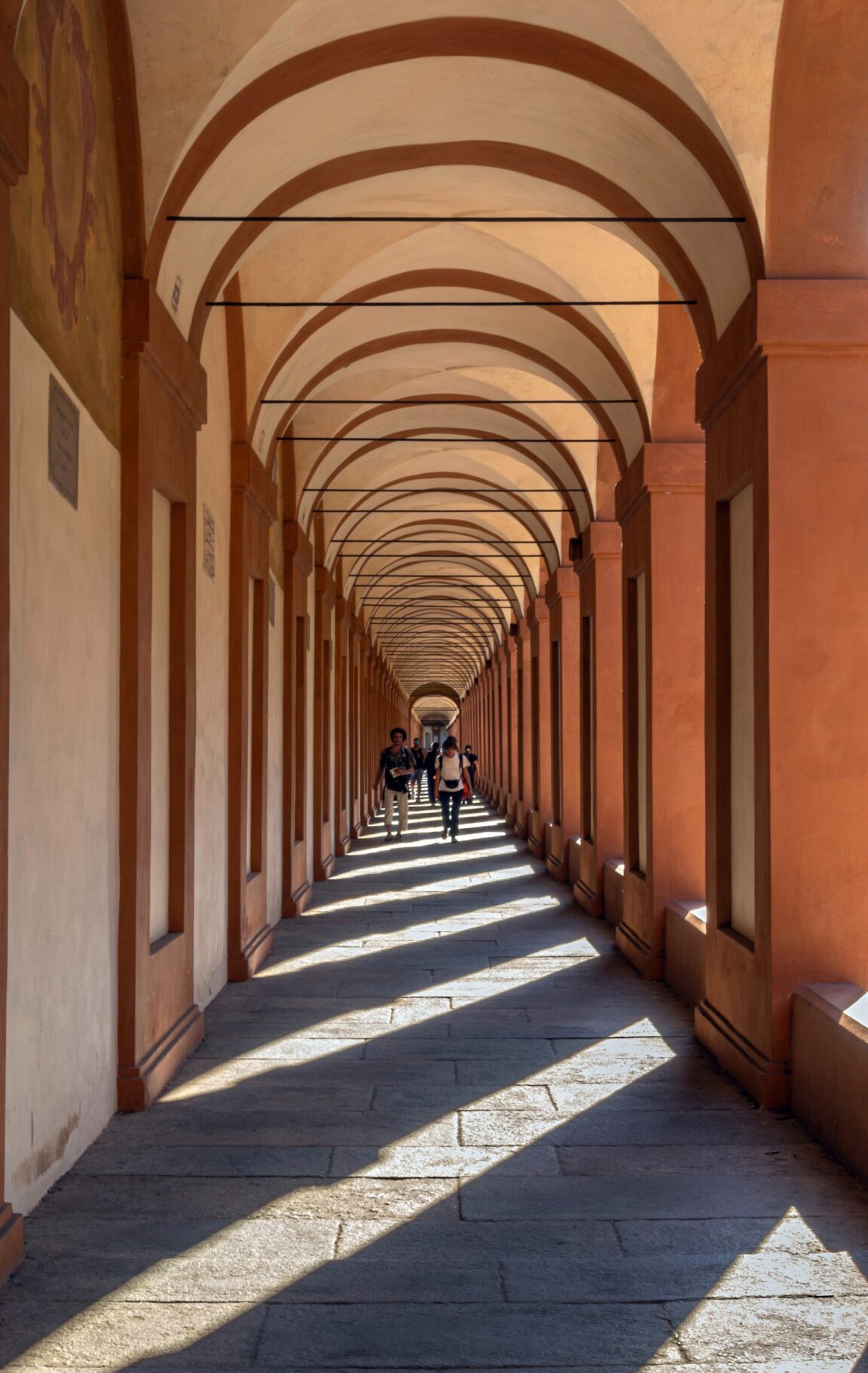
- The setting: About 62 kilometres of porticoes run across the city, and 12 sections of them were inscribed on the UNESCO World Heritage List in 2021.
- The market: The Quadrilatero, the grid of narrow lanes east of Piazza Maggiore, is the central food quarter for pasta shops, delis and bakeries.
- The cold cut: Mortadella Bologna carries European IGP protected status and is sliced paper thin and eaten in a rosetta roll or with crescentine.
- The third pasta: Lasagne verdi alla bolognese, green spinach pasta layered with ragu and bechamel, is the Sunday dish and a worthy lunch order.
- Where the guidebooks point: The Michelin Guide lists Bologna trattorias at every level, including the Bib Gourmand Trattoria di Via Serra and the listed All’Osteria Bottega, both useful quality signals for classic cooking.
Why is tagliatelle, not spaghetti, the pasta for ragu in Bologna?
Ragu alla bolognese is a slow cooked meat sauce built on a soffritto of onion, carrot and celery, beef and pork pancetta, white wine, milk and a restrained amount of tomato. It cooks for hours, not minutes, and the result is rich and coating rather than soupy. That texture explains the pasta. Fresh egg tagliatelle, cut by hand from a rolled sheet of sfoglia into ribbons, gives the sauce a wide, slightly rough surface to cling to. Spaghetti, a dried southern pasta with a smooth round profile, sheds it. So the local rule is absolute: ragu goes on tagliatelle, or on other fresh egg pasta, and a menu offering spaghetti bolognese in the historic centre is aiming at visitors rather than residents. When you order, expect the portion to look smaller than an Anglo American pasta plate and taste considerably more concentrated. The 1982 registered recipe, updated by the Accademia in a further deposit in 2023, also settles arguments visitors sometimes start: there is no garlic in the classic version, no heavy herbs, and the milk is not a mistake. It softens the acidity and is part of what makes the sauce taste rounded rather than sharp.
What makes tortellini in brodo the other essential order?
Tortellini are the opposite kind of achievement: tiny rings of egg pasta, each folded by hand around a filling of pork loin, prosciutto, mortadella, Parmigiano Reggiano, egg and a grating of nutmeg. The 1974 registered recipe fixes those proportions because the balance matters, and because Bologna and Modena have argued about tortellini for long enough that both sides wanted the record written down. The serving that counts is in brodo, in broth. A bowl of clear golden capon broth, a spoonful of tortellini bobbing in it, a snowfall of Parmigiano on request: it is a first course, a winter ritual and a Christmas dish, and it shows off the two skills Bologna prizes most, a clean broth and pasta folded small enough to sit several to a spoon. You will also see tortellini served with cream or ragu. Those plates are not wrong, exactly, but they bury the workmanship. Order the broth version first, at a trattoria that makes its pasta in house; many fresh pasta shops sell tortellini by weight for cooks, and the quality of the shop tortellini tells you how seriously a neighbourhood takes lunch. Eaten in broth, tortellini also pace a meal well before a heavier second course.
How do the porticoes shape a food circuit through the city?
Bologna is a city you eat on foot, and the porticoes are the reason the circuit works in any weather. The covered arcades run for about 62 kilometres across the urban area, roughly 40 of them in the historic centre, sheltering the walk between a morning market, a pasta lunch and an evening aperitivo from both August sun and November rain. UNESCO inscribed 12 component sections in 2021, recognising the porticoes as a living urban system rather than a single monument. The most famous stretch, the Portico di San Luca, climbs about 3.8 kilometres and 666 arches from Porta Saragozza to the Sanctuary of the Madonna di San Luca on the hill above the city; it is a pilgrimage walk, not a restaurant row, but it builds the appetite that the centre then satisfies. In the middle of town, plan the circuit in short sheltered hops. Start in the Quadrilatero, the medieval market grid between Piazza Maggiore and the Two Towers, where pasta shops display nests of tagliatelle and trays of tortellini in the windows and delis compete over mortadella, culatello and aged Parmigiano Reggiano. Eat lunch on a side street just off the main lanes, where trattorias still serve a largely local midday crowd, then walk under the porticoes of Via dell’Indipendenza or Strada Maggiore for coffee and window shopping before dinner.
What else should you eat beyond the two famous pastas?
Build the support acts carefully and Bologna keeps rewarding you. Lasagne verdi alla bolognese layers green spinach pasta with ragu and bechamel and is richer and more structured than either parent dish alone; order it at lunch, because it sits like a main course. Gramigna alla salsiccia, short curled pasta with sausage ragu, is the order regulars rotate to when they have had tagliatelle twice in a week. Cotoletta alla bolognese, also called Petroniana, tops a breaded veal cutlet with prosciutto and Parmigiano and finishes it in broth, which makes it both crisp and sauced. For street level eating, crescentine, puffy fried dough pillows, arrive hot with a board of squacquerone cheese, mortadella and prosciutto, and their baked cousins, tigelle, do the same job in the hills south of the city. Mortadella deserves its own moment: the real Bologna version, IGP protected, is a fine, silky sausage studded with cubes of fat and sometimes pistachio, and it is best eaten very fresh, very thinly sliced, in a warm rosetta roll from a Quadrilatero deli counter. Finish with torta di riso, the city’s dense rice cake, or a scoop of gelato, and if the season is right, a glass of Pignoletto, the local sparkling white, with the fried breads.
Where should you book, and how do you use the Michelin Guide here?
Use the Michelin Guide the way Bologna locals use reputation: as a filter, not a script. The guide’s Bologna listings point visitors toward trattorias that cook the canon properly, and two names are dependable starting points. Trattoria di Via Serra, a Bib Gourmand in the Bolognina district north of the station, is known for seasonal menus and serious stuffed pasta, proof that the best tortellini are not always in the postcard centre. All’Osteria Bottega, on Via Santa Caterina under the porticoes west of the centre, is a Michelin listed trattoria praised for its salumi, including culatello and mortadella, before the pasta courses begin. The city’s one starred dining room in the historic centre, Ristorante I Portici on Via dell’Indipendenza, cooks a more contemporary kitchen and suits a single splurge dinner, but it is not where you go to learn what tagliatelle al ragu is. Book lunch as your main meal at least once: trattorias are at their best at midday, prices for set dishes are often kindest then, and the room is full of the people the kitchen actually cooks for. Reserve dinner a day or two ahead for the named places, arrive hungry, and order one pasta per person rather than sharing the two classics; half portions satisfy nobody in this city.
Frequently asked questions about eating in Bologna
Is spaghetti bolognese a real dish in Bologna?
No. In Bologna the meat sauce is ragu and it is served on fresh egg tagliatelle, never on spaghetti. Menus in the centre that list spaghetti bolognese are translating for visitors; order tagliatelle al ragu for the actual local dish.
What is the difference between tortellini and tortelloni?
Size and filling. Tortellini are small and filled with meat, and belong in broth. Tortelloni are much larger, usually filled with ricotta and herbs or pumpkin, and are served with butter and sage or a light sauce instead.
When is the best time of year to eat in Bologna?
Autumn and winter suit the cooking best, when tortellini in brodo, lasagne and braised dishes come into their own and the markets fill with mushrooms and chestnuts. The porticoes make the city comfortable in summer heat and winter rain alike, so there is no bad month.
Can vegetarians eat well in Bologna?
Yes, with a little planning. Tortelloni with ricotta, gramigna with vegetable sauces, crescentine with squacquerone and grilled vegetables, and the produce markets of the Quadrilatero all work. Note that tortellini and ragu are meat dishes and classic lasagne contains meat ragu, so ask before ordering.
How much pasta is in a portion of tagliatelle al ragu?
Expect a moderate trattoria portion rather than a giant one; the dish is a first course in the Italian meal structure. Many visitors order a pasta and then a main course such as cotoletta, or simply order a second pasta on the next meal.