 LeVar Thomas
Three days in Chicago is enough for the full first-timer arc if the days are sequenced by geography: Day 1 in the Loop for the architecture cruise, Millennium Park and the Art Institute, Day 2 along the lake for the Museum Campus, the Riverwalk and a skyline viewpoint, and Day 3 in the neighbourhoods for Lincoln Park, deep dish done properly and a blues or ballpark evening. Chicago rewards that structure because its icons cluster tightly downtown while its character lives in the neighbourhoods, and the L trains make switching between the two cheap and simple. This itinerary sets out the order that works, the bookings to make in advance, and the few prices and hours that shape each day.
Quick Facts: First Time in Chicago at a Glance
- Best base: The Loop or River North for a first trip, with the Riverwalk, Millennium Park and L lines on the doorstep.
- Getting around: CTA L trains and buses on Ventra. A 3-Day pass costs $15, a 1-Day pass $5, and a single L ride is $2.50, with a $5 fare from O’Hare.
- Book first: The Chicago Architecture Center river cruise, 90 minutes, docent-led, departing by the Michigan Avenue Bridge. It sells out on weekends.
- Free anchors: Millennium Park, open daily 6 a.m. to 11 p.m., the Riverwalk, the Lakefront Trail and Lincoln Park Zoo.
- Plan around: The Art Institute of Chicago is closed on Tuesdays, open 11 a.m. to 5 p.m. to the public, until 8 p.m. on Thursdays.
- Eat: One deep dish, ordered ahead because it bakes for about 45 minutes, one Italian beef, and one Chicago hot dog with everything on it and no ketchup.
- Last checked: November 11, 2026.
Where Should a First-Timer Base in Chicago?
Stay downtown for a first trip. The Loop puts the river, the park, the museums and half the L lines within a short walk, and River North, just across the river, adds the densest choice of hotels and restaurants while keeping the same walkability. The neighbourhood-by-neighbourhood reasoning, including the trade-offs of the Magnificent Mile, the West Loop and Logan Square, is set out in our guide to where to stay in Chicago for first-timers. Arriving from O’Hare, the CTA Blue Line runs from the airport station to the Loop in around 45 minutes for the $5 O’Hare fare, and a Ventra 3-Day pass at $15 covers the rest of this itinerary’s riding, including the trip back out. From Midway, the Orange Line does the same job on the south side. Save taxis for late nights and bad weather.
Day 1: The Loop, the River and the Art Institute
Morning: the architecture cruise first
Start with the single best orientation in American urban travel: the Chicago Architecture Center River Cruise aboard First Lady. The 90-minute cruise covers all three branches of the Chicago River with a trained volunteer docent narrating more than 50 buildings, from the Wrigley Building and Tribune Tower to Marina City and 333 West Wacker, and it teaches the city’s whole story, the fire, the skyscraper’s invention and the river’s reversal, in one sitting. Boats leave from the dock at the southeast corner of the Michigan Avenue Bridge at Wacker Drive, run multiple times daily in season from March to November, and frequently sell out, so book a morning departure before the trip. Everything else in the Loop makes more sense after this cruise, which is why it goes first rather than whenever it fits.
Midday: Millennium Park and the Bean
Walk east from the dock to Millennium Park, free and open daily from 6 a.m. to 11 p.m. Cloud Gate, the 110-ton polished steel sculpture by Anish Kapoor that the whole city calls the Bean, sits on Grainger Plaza reflecting the skyline, and arriving before the midday crowds makes the difference between a photograph and a queue. Continue to the Jay Pritzker Pavilion, Frank Gehry’s billowing concert shell, the Crown Fountain’s twin glass towers, and the quiet Lurie Garden at the park’s south end. Across Michigan Avenue, the Chicago Cultural Center is the under-visited gem of the Loop, a former library with the world’s largest Tiffany glass dome, free to enter and worth half an hour.
Afternoon: the Art Institute, then the Riverwalk
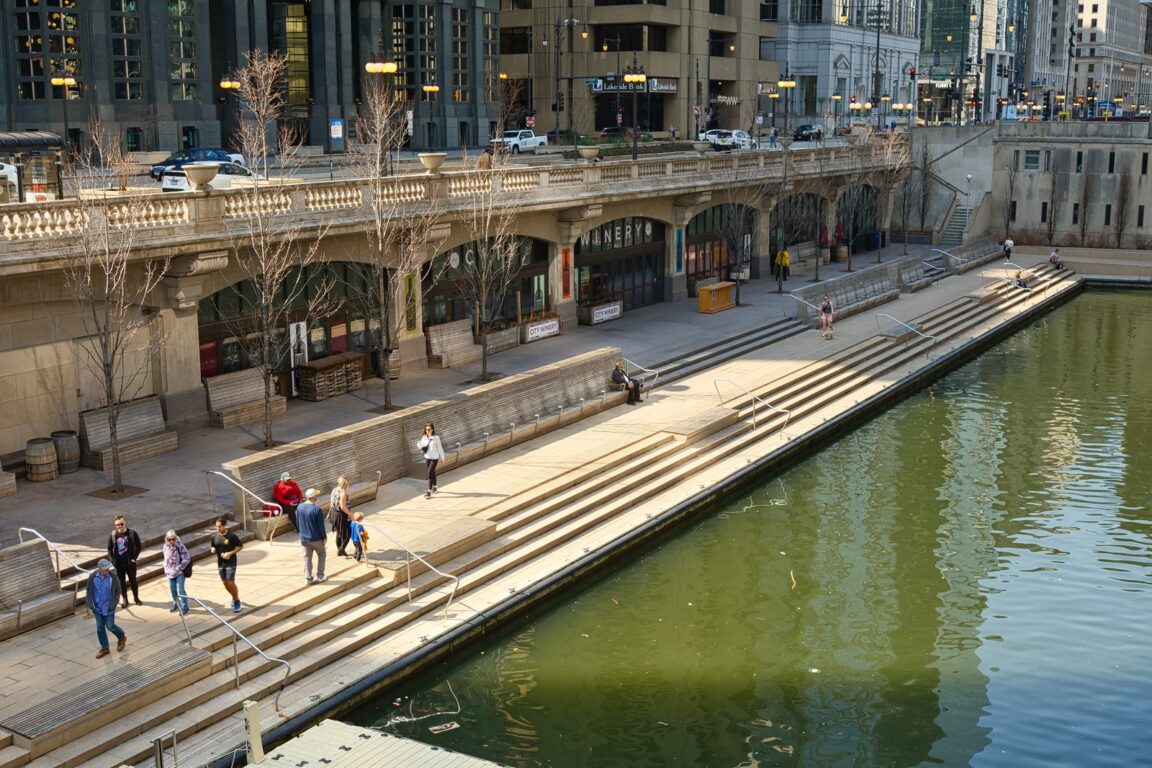
The Art Institute of Chicago, on Michigan Avenue at the park’s southern edge, is the museum to choose when only one fits. General admission for non-Illinois adults is $32, public hours run 11 a.m. to 5 p.m. with Thursdays extended to 8 p.m., the first hour of each day is reserved for members, and the museum is closed on Tuesdays, so a Tuesday Day 1 should swap this afternoon with Day 2. Prioritise the Impressionist galleries, the largest collection of Monet paintings outside Paris among them, Grant Wood’s American Gothic, Hopper’s Nighthawks and the Modern Wing across the Nichols Bridgeway, which itself gives a framed view back to the park. Close the day on the Chicago Riverwalk, the 1.25-mile promenade along the south bank of the river from Lake Michigan to Lake Street, where wine gardens, cafes and kayak launches line the water at street level below the towers the cruise introduced.
Day 2: The Lakefront and the Museum Campus
Morning: Museum Campus by the lake
Day 2 runs south along the water. The Museum Campus, a green peninsula south of the Loop, holds the Field Museum of natural history, the Shedd Aquarium and the Adler Planetarium in one walkable cluster, with the city’s best skyline view from the planetarium’s eastern tip. Choose one institution properly rather than skimming two: the Field for dinosaurs and world cultures, the Shedd for the Abbott Oceanarium and its lakefront setting. The Lakefront Trail, running more than 18 miles along Lake Michigan, links the campus back to the Loop on foot or by Divvy bike share, and on a warm day the beaches at North Avenue and Oak Street, north of downtown, are where Chicago itself spends the afternoon.
Afternoon and evening: a viewpoint and deep dish
For the high view, pick one observatory. Skydeck at Willis Tower, still called Sears Tower by most Chicagoans, offers the Ledge’s glass boxes on the west side of the Loop, while 360 Chicago, high in the former Hancock building on the Magnificent Mile, keeps Willis Tower in the photograph and looks straight down the lake. Book a timed slot for either around sunset. Then give deep dish its proper ceremony. The style was created at Pizzeria Uno in 1943, a casserole of a pizza with the cheese under chunky tomato sauce on a tall, buttery crust, and the names locals argue for, Lou Malnati’s, Pequod’s and Uno and Due themselves, all share one operational rule: the pizza takes about 45 minutes to bake, so order on arrival or ahead, and treat the wait as part of the ritual. One medium comfortably feeds two first-timers who also plan to eat tomorrow.
Day 3: Neighbourhoods, a Hot Dog and the Send-Off
Morning: Lincoln Park and the free zoo
Start Day 3 where Chicagoans live. Lincoln Park, the neighbourhood and the vast park of the same name a few L stops north of the Loop, holds Lincoln Park Zoo, one of the oldest zoos in the United States and still free to enter, the Lincoln Park Conservatory’s glasshouse rooms beside it, and streets of brownstones around Armitage Avenue that show the city’s residential scale. It is the calmest morning of the three days and deliberately so, a counterweight to two days of icons.
Afternoon: choose a neighbourhood lane
Pick one lane for the afternoon rather than grazing three. Pilsen, on the Lower West Side, pairs the National Museum of Mexican Art, free to enter, with some of the finest murals in the country and bakeries along 18th Street. Hyde Park, on the South Side, pairs the University of Chicago’s Gothic campus and the Robie House, Frank Lloyd Wright’s prairie masterpiece, with the Griffin Museum of Science and Industry in its vast 1893 exhibition palace. Wicker Park and Bucktown, northwest on the Blue Line, are the browsing lane: independent shops along Milwaukee Avenue, the elevated 606 trail for a walk, and coffee shops that stretch the afternoon. In season, a Cubs game at Wrigley Field, reached on the Red Line, outranks all three for an evening, because the 1914 ballpark in the middle of Lakeview is a neighbourhood event as much as a sporting one.
Evening: Italian beef, a hot dog and live blues
Close the food triangle before the music. An Italian beef sandwich, thin-sliced roast beef on a sturdy roll, dipped in its own juices and topped with hot giardiniera, is Chicago’s working lunch turned icon, and a Chicago-style hot dog, an all-beef frank in a poppy seed bun dragged through the garden with mustard, relish, onion, tomato, a pickle spear, sport peppers and celery salt, comes with one house rule a first-timer should respect: no ketchup. For the final night, Chicago blues is the correct send-off, with Buddy Guy’s Legends in the South Loop the best-known room for a visitor to walk into, carrying on the electric tradition the city exported to the world. Travelers sequencing this trip against a European counterpart will recognise the same cluster-by-day method in our first time in Paris 4-day itinerary, applied there to arrondissements instead of L lines.
What Should a First-Timer Know Before Going?
Weather is the planning variable. Chicago’s lake wind makes winter genuinely severe and spring unreliable, while late spring through early autumn gives the city its full outdoor life: the cruise in season, the Riverwalk patios open, the beaches staffed and the festival calendar running. Pack layers in every season, because a lakefront afternoon can sit ten degrees below an inland morning. On money, the big downtown sights are kinder than most American cities: the park, the Riverwalk, the lakefront, the zoo and the Cultural Center are all free, and the paid anchors are the cruise, one museum and one observatory. On safety, the itinerary areas are busy and well travelled; the normal big-city rule of awareness after dark on quiet side streets applies, and the L is the default way home.
Frequently Asked Questions
Is three days enough for Chicago?
Yes, for a first visit with the days sequenced by area. Three days covers the Loop and river, the Museum Campus and lakefront, and one or two neighbourhoods properly. A fourth day adds a second museum, a ball game without schedule pressure, or a deeper neighbourhood like Hyde Park.
Which day should the Art Institute fall on?
Any day except Tuesday, when it is closed. Public hours are 11 a.m. to 5 p.m., with Thursday the late night until 8 p.m. and the 10 a.m. hour reserved for members, so a weekday late morning is the calmest entry.
How much does getting around Chicago cost?
On CTA, a single L ride is $2.50, the fare from O’Hare station is $5, a 1-Day unlimited pass is $5 and a 3-Day pass is $15, loaded onto Ventra. For this itinerary the 3-Day pass is the obvious buy, and it also covers the Blue Line ride in from O’Hare.
Does the architecture cruise need advance booking?
Yes. The Chicago Architecture Center cruise runs multiple times daily from March to November and frequently sells out, especially on weekends and for evening departures. Book a specific departure online before the trip, and arrive at the Michigan Avenue Bridge dock early.
Where is the best place to try deep dish first?
Any of the founding names serves a true version: Pizzeria Uno, where the style began in 1943, its sibling Due, Lou Malnati’s for the butter crust locals champion, or Pequod’s in Lincoln Park for a caramelised crust edge. Order on arrival, because the bake takes about 45 minutes.
When is the best time of year for this itinerary?
May to October, when the river cruise is in full season, the Riverwalk and beaches are alive and Millennium Park’s outdoor programming runs. Winter Chicago is atmospheric and cheaper, but the lakefront day and the cruise need rethinking around the cold and the shorter season.