 Maya Chen
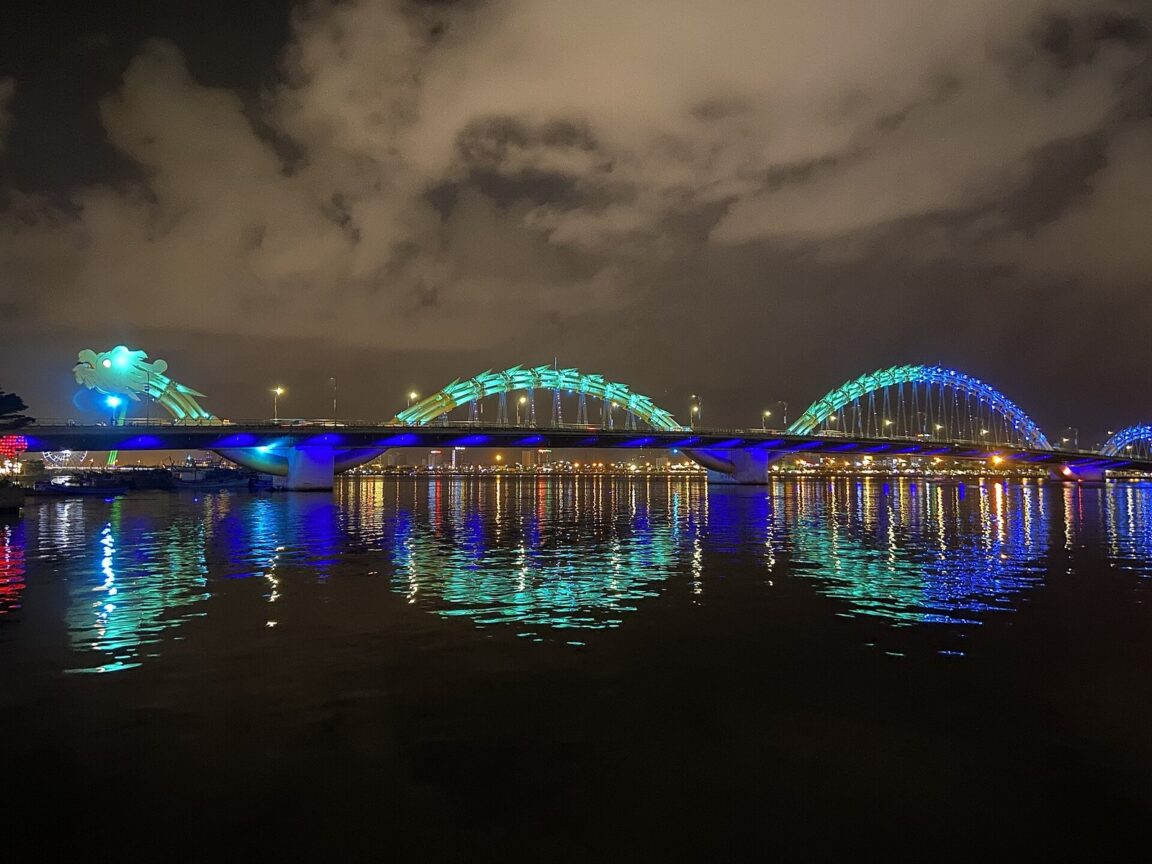
Eat in Da Nang by following the water. Start the morning with mì Quảng or a bowl of bún chả cá, graze the food stalls of Con Market and Han Market, sit down at midday to pork rice paper rolls dipped in mắm nêm, then move to the seafood streets along Mỹ Khê beach as the light fades, and finish on the Han River promenade, where night markets set up below the lit bridges and the Dragon Bridge breathes fire at 9 in the evening on Friday, Saturday and Sunday nights. Da Nang’s essential dishes are mì Quảng, bún chả cá, bánh tráng cuốn thịt heo, bánh xèo with nem lụi, and seafood eaten within sight of the sea that provided it. The city also has a Michelin Guide now, and its value picks map almost exactly onto this circuit: the 2026 selection recognizes 47 Da Nang establishments, and 23 of them hold the Bib Gourmand, the guide’s award for good cooking at fair prices.
Quick Facts: Eating in Da Nang
- Signature dish: Mì Quảng, broad turmeric rice noodles in a small amount of concentrated broth, with herbs, roasted peanuts and a sesame rice cracker
- Breakfast bowl: Bún chả cá, rice noodles in a clear fish broth with springy fish cakes, tomato and pineapple
- Roll it yourself: Bánh tráng cuốn thịt heo, sliced pork, greens and herbs rolled in rice paper and dipped in mắm nêm, a fermented anchovy sauce
- Anchor markets: Con Market, Chợ Cồn, for its food stalls, and Han Market, Chợ Hàn, by the riverfront
- Seafood strip: The beachfront restaurants along Võ Nguyên Giáp street facing Mỹ Khê beach, where the catch is picked live from tanks
- Night anchor: The Dragon Bridge fire and water show at 9pm on Friday, Saturday and Sunday, watched from the Bạch Đằng promenade or the east bank by Sơn Trà Night Market
- Michelin footprint: 47 establishments in the 2026 Guide for Da Nang, including one star, one Green Star, 23 Bib Gourmand and 23 Michelin Selected listings
- Prices: Not quoted for individual places in this guide, because counters set their own and they change. Signature noodle bowls at local shops generally sit in a modest street food range; confirm the price of seafood by weight before it is cooked
What should you eat first in Da Nang?
Mì Quảng is the bowl the city and the surrounding Quảng region are named for in food terms, and it breaks the rules travelers expect from Vietnamese noodle soups. The noodles are broad, flat rice noodles, often tinted yellow with turmeric. They arrive with only a small amount of rich, concentrated broth, enough to coat rather than submerge them, topped with shrimp, pork, chicken or fish, a quail egg in some versions, fresh herbs, roasted peanuts and a crisp sesame rice cracker that you break over the bowl. The effect is closer to a dressed noodle dish than a soup, intensely savory and herbal, and it is eaten from breakfast through lunch rather than as an evening meal.
The Michelin Guide’s Da Nang list gives the dish two useful addresses. Mỳ Quảng Sứa Hồng Vân, on Lê Hồng Phong street in Hải Châu district, holds a Bib Gourmand for a version topped with jellyfish, and it works morning hours only, roughly from 6am to 1pm, so it is a breakfast appointment rather than a lunch fallback. Mì Quảng 1A, a Michelin Selected listing, is the other name most often attached to the dish. The full official list of Da Nang’s recognized restaurants is maintained by the city’s tourism portal in its complete guide to Michelin recognized restaurants in Da Nang, which is the reliable place to check a name’s current status before making a special trip.
Why is bún chả cá the city’s breakfast?
If mì Quảng is the signature, bún chả cá is the habit. Thin rice noodles come in a light, clear broth built on fish bones and brightened with tomato, pineapple and sometimes pumpkin, topped with fish cakes made from mackerel, tuna or featherback fish, fried or steamed until springy. It is gentle where other central Vietnamese dishes are punchy, which is exactly why it anchors the morning: Da Nang eats it for breakfast the way other cities eat their default noodle soup, at small shops that open early and serve the day’s catch in cake form.
Two listings orient a first bowl. Bún Chả Cá 109 holds a Bib Gourmand, and Bún Chả Cá Hờn is a Michelin Selected listing, both of them neighborhood noodle shops in the Hải Châu area rather than destination restaurants. Order the standard bowl first, add chili and herbs at the table to your own tolerance, and treat any second breakfast across town as research rather than excess: the shops differ in broth clarity and cake texture more than the menu descriptions suggest.
How do the pork rolls and mắm nêm work?
Bánh tráng cuốn thịt heo is Da Nang’s build your own centerpiece. A platter arrives with thin slices of boiled pork, chosen for a balance of fat and lean and sometimes described as two skin pork for the way the slices are cut, along with rice paper, a thin sheet of rice noodle, and a pile of greens and herbs: lettuce, mint, perilla, banana flower and cucumber among them. You soften, layer, roll and dip. The dip is the point. Mắm nêm is a fermented anchovy sauce blended with garlic, chili, minced pineapple and lime, and it is salty, aromatic and assertive in a way that divides first timers for about one roll before most of them convert.
Vietnam’s national tourism site includes Phú Hồng, a Bib Gourmand listing long associated with this dish, among its Michelin suggested must try eateries in Da Nang, alongside Mỳ Quảng Sứa Hồng Vân and the duck porridge and fish cake noodle shops of the same list. For travelers who take to mắm nêm, the committed version of the same flavor is bún mắm nêm, a dry noodle bowl dressed directly with the sauce, with pork, herbs, young jackfruit and peanuts. Bà Đông, a Bib Gourmand listing on Lê Duan street, is the name the guide attaches to it. Start with the rolls; graduate only if the sauce wins you over.
What do the markets add?
Con Market, Chợ Cồn, is the grazing ground. It is one of the city’s oldest markets and its food stalls serve the snack layer of Da Nang eating: bánh bèo, small steamed rice cakes topped with shrimp and crispy shallots; bánh đập, a crisp rice cracker folded over a soft rice sheet and broken by hand; avocado ice cream and chè, the sweet dessert soups sold by the glass. Han Market, Chợ Hàn, near the riverfront and the cathedral, leans more toward goods, dried seafood, coffee and packaged specialties, which makes it the provisioning stop for edible souvenirs rather than the main meal.
One Bib Gourmand listing turns the market snacks into a destination of their own. Bánh Bèo Bánh Đập, on Phan Châu Trinh street, joined the Bib Gourmand list in the 2026 selection for exactly the rice cake repertoire the markets serve: bánh bèo, bánh đập and their relatives, made to order at street prices. It is the clearest example on the current list of the guide rewarding a specialist counter rather than a dining room, and it belongs in a Da Nang food day alongside the markets rather than instead of them.
Where are the seafood streets?
Da Nang is a fishing city, and its seafood eating runs along the beach. The strip of restaurants on Võ Nguyên Giáp street facing Mỹ Khê beach, and the streets behind it in the An Thượng area, work on the tank system: shellfish, crabs, prawns and fish are kept live, you choose what looks best, agree how it will be cooked and confirm the price by weight before anything reaches the kitchen. Grilling, steaming with lemongrass, and hotpot are the standard treatments, and the ordering conversation at the tank matters more than any menu.
The Michelin list reaches the seafood streets too. Bé Mặn, in the An Hải area on the Sơn Trà side, is a Michelin Selected seafood restaurant, and Bé Ni 2, a Bib Gourmand on Võ Nguyên Giáp, layers rice dishes by day over shellfish at night. Gỏi cá Nam Ô, the raw fish salad from the fishing village of Nam Ô at the city’s northern edge, is the adventurous order: fresh fish cured and dressed with herbs and a peanut sesame sauce, eaten with rice paper. It rewards travelers who seek it out at a reputable address and is best skipped at anonymous stalls.
What is the Han River night circuit?
Evenings in Da Nang organize themselves along the Han River. The west bank’s Bạch Đằng promenade faces a row of illuminated bridges, of which the two to know are the Han River Bridge, a cable stayed swing bridge, and the Dragon Bridge, a 666 meter steel dragon that changes color through the night. On Friday, Saturday and Sunday nights at 9pm, and on major holidays, the dragon’s head breathes fire for about two minutes and then sprays water for about three, a short show that the bridge operator puts at roughly fifteen minutes in full. It is free, it draws a crowd on both banks, and anyone standing close to the head on the water round will get wet.
Build the evening around that fixed point. Eat an early seafood dinner on the beach strip or a sit down meal in Hải Châu, take a place on the Bạch Đằng promenade or cross to the east bank, where Sơn Trà Night Market sets up near the bridge with grilled snacks, souvenirs and dessert stalls, and let the night market carry the eating after the show: grilled rice paper, skewers, chè and coconut ice cream. Travelers planning a wider Vietnam trip will find the same pattern of one anchor sight plus market grazing in the Always Packed guide to what to eat in Hanoi, where the food day is built around pho, bun cha and egg coffee instead.
How does the Michelin Guide fit a street food city?
The Michelin Guide’s Vietnam selection was announced on 4 June 2026 in Hanoi, the guide’s fourth year in the country, and Da Nang’s 47 recognized establishments show its range. At the top sit two special occasions: La Maison 1888, the city’s one Michelin Star, a French fine dining restaurant in a colonial style villa at the InterContinental Danang Sun Peninsula Resort on the Sơn Trà peninsula, and Nén Danang, which holds a Michelin Green Star for its sustainability led take on Vietnamese ingredients. Between those poles and the noodle counters, Madame Lân, a Michelin Selected restaurant by the river, is the list’s comfortable sit down answer for a full central Vietnamese dinner.
For this guide’s purposes, the Bib Gourmand tier is the working list, because it names the counters and small restaurants where Da Nang actually eats. The three additions in the 2026 selection were Bà Vui, known for chicken sticky rice and chicken noodle soup, Bánh Bèo Bánh Đập for its rice cakes, and Lê Gia Khang, listed for bún bò Huế, the spicy beef noodle soup of Huế served here in its xí quách form with beef bones. Vegetarian travelers are unusually well served: Ngọc Chi and Shamballa, both vegetarian restaurants, hold Bib Gourmand listings. Before any of this eating, sort the paperwork with the Always Packed guide to Vietnam’s 90 day e-visa, which covers who must apply and how the entry process works.
How should you plan a day of eating in Da Nang?
Run the day on the city’s own schedule, which starts early and peaks at the river at night. Take bún chả cá or mì Quảng for breakfast, because the best noodle shops are morning businesses and at least one Bib Gourmand version closes by early afternoon. Spend the late morning grazing Con Market, then sit down to pork rolls and mắm nêm for lunch while the heat builds. Take the afternoon slowly, with coffee, and give the seafood streets the early evening, choosing from the tanks while the day’s catch is at its best. Finish on the Han River: the promenade, the night market, and, on a Friday, Saturday or Sunday, the Dragon Bridge show at 9pm.
Two practical notes govern everything. First, hours compress at the local end of the list: specialist counters open early, sell out and close, so confirm a specific place on the day if it anchors your plan, and treat any printed closing time as approximate. Second, cash still moves faster than cards at counters and market stalls, and seafood should always be priced and agreed at the tank before cooking. This guide quotes no prices for individual places, deliberately: they change too often to print responsibly, and the stalls themselves are the only reliable source on the day.
Frequently Asked Questions About Eating in Da Nang
What food is Da Nang most famous for?
Mì Quảng above all, the turmeric rice noodle dish of the Quảng region, followed by bún chả cá fish cake noodle soup, bánh tráng cuốn thịt heo pork rice paper rolls, bánh xèo with nem lụi, and fresh seafood along Mỹ Khê beach. Rice cakes such as bánh bèo and bánh đập fill the snack layer between meals.
What is mì Quảng?
Mì Quảng is a noodle dish of broad, flat rice noodles, often tinted with turmeric, served with only a small amount of concentrated broth and topped with shrimp, pork, chicken or fish, fresh herbs, roasted peanuts and a broken sesame rice cracker. It is eaten mainly at breakfast and lunch, and Da Nang versions include one topped with jellyfish at a Bib Gourmand listed shop.
When does the Dragon Bridge breathe fire?
The Dragon Bridge fire and water show runs at 9pm on Friday, Saturday and Sunday nights, and on major holidays. Fire comes first, for about two minutes, followed by about three minutes of water, and the full sequence takes roughly fifteen minutes. Arrive early for a place on the Bạch Đằng promenade or the east bank, and expect spray near the dragon’s head during the water round.
Does Da Nang have Michelin restaurants?
Yes. The 2026 Michelin Guide recognizes 47 establishments in Da Nang: one Michelin Star at La Maison 1888, a Green Star at Nén Danang, 23 Bib Gourmand listings and 23 Michelin Selected listings. The Bib Gourmand tier is the most useful for visitors, because it names noodle shops, rice cake counters and small restaurants at street prices.
What is mắm nêm?
Mắm nêm is a fermented anchovy dipping sauce blended with garlic, chili, pineapple and lime. It is the defining flavor of bánh tráng cuốn thịt heo, Da Nang’s pork rice paper rolls, and of bún mắm nêm, a dry noodle bowl dressed with the sauce. It is salty and assertive, and it is worth trying at least once in its home city.
Is Da Nang good for vegetarian travelers?
Yes. Two vegetarian restaurants, Ngọc Chi and Shamballa, hold Bib Gourmand listings in the 2026 guide, and the everyday repertoire adds options of its own: bánh bèo and other rice cakes, market chè desserts, and vegetable and herb heavy rolls and salads across the markets and counters.