 Jordan Ellis
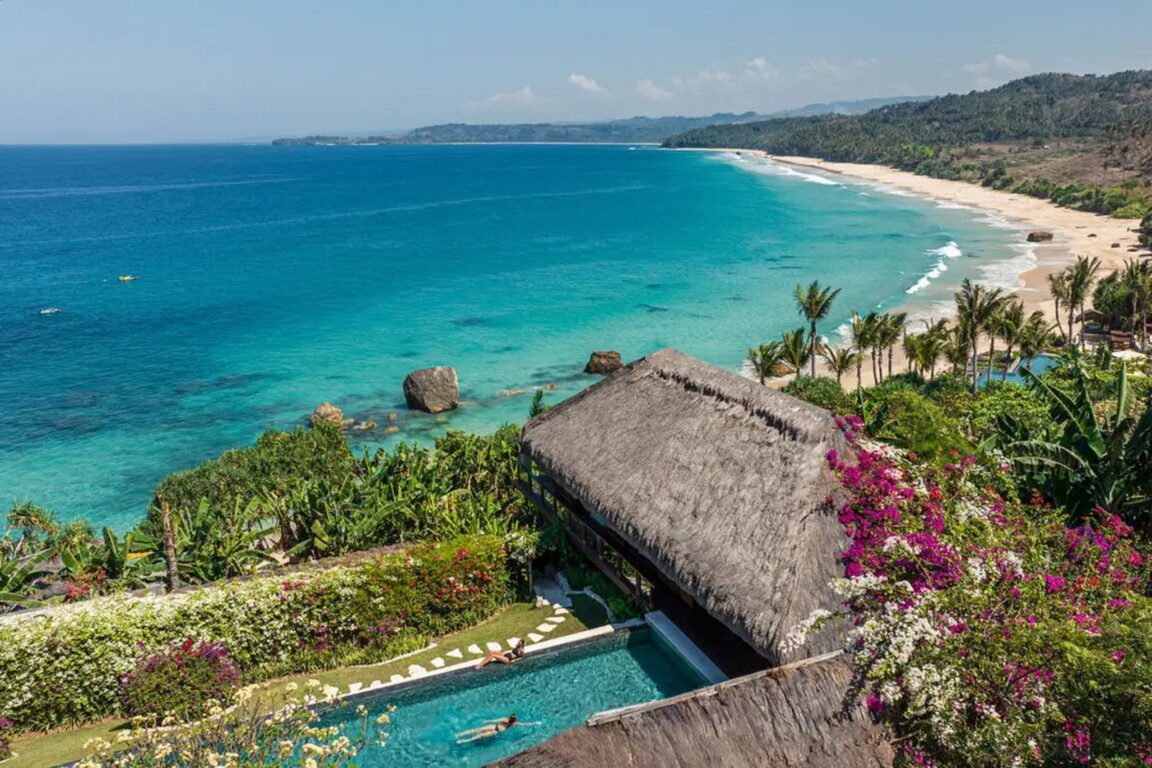
Nihi Sumba is a 31 villa resort on 2.5 kilometres of private beach at Nihiwatu on the west coast of Sumba, an Indonesian island twice the size of Bali with a fraction of its visitors, about an hour’s flight east of Bali. It began in 1988 as a surf camp built around a single left hand reef break, now known worldwide as Occy’s Left, and it was rebuilt after 2012 by entrepreneur Chris Burch and hotelier James McBride into one of the most decorated resorts on earth: the only hotel in Travel and Leisure history to be named number one in the world two years running, holder of Three MICHELIN Keys, and ranked in the World’s 50 Best Hotels. Rates are all inclusive in structure, the surf is capped at 15 registered surfers a day, and the resort’s philanthropic twin, The Sumba Foundation, runs health, water and education projects across the island with 100 percent of guest donations going to the work. It suits surfers, horse people and travellers who want remoteness itself as the luxury. It does not suit anyone who needs a town, a nightlife scene or a short transfer.
Quick Facts
- Location: Nihiwatu Beach, west coast of Sumba, East Nusa Tenggara, Indonesia
- Access: Flight from Bali Ngurah Rai (DPS) to Tambolaka (TMC), three flights daily per the resort, then a resort transfer; roundtrip airport transfer is included in the rate inclusions listed by the resort
- Villas: 31 villas offering 51 rooms with private pools, from one bedroom hideaways to multi bedroom estates and a bamboo treehouse
- The wave: Occy’s Left, a left hand reef break in front of the resort, limited to 15 registered surfers per day, maximum one per room and subject to availability
- Beach: 2.5 kilometres of private beach on Nihiwatu Bay
- Signature experiences: Spa Safari to the Nihioka spa, swimming with horses, horseback riding on the beach, Surfari boat trips, village and Sumba Foundation project tours
- Recognition: Three MICHELIN Keys for a second consecutive year in 2026, per the resort; number 35 in the World’s 50 Best Hotels 2026, per the resort
- Community: The Sumba Foundation, supported by the resort, with complimentary guest tours of its projects
What is Occy’s Left, and how does the surf cap work?
The wave is the founding fact of the place. Surfers Claude and Petra Graves reached Nihiwatu in 1988 chasing a left hander they had seen from the air, and the break out front, later nicknamed for Australian world champion Mark Occhilupo, who rated it among the best waves he had ridden, became the camp, then the resort. Nihi’s own guide is explicit about the modern rules: the wave is limited to 15 registered surfers per day, at most one registered surfer per room, subject to availability, and intending surfers are told to book early to avoid disappointment. The main season runs from May to the end of September, when the resort describes the surf as consistently in the 4 to 6 foot range with days reaching 6 to 9 feet and a maximum around 12 feet at Nihiwatu.
That cap is the honest centre of any Nihi decision. A surfer booking a standard villa in peak season is buying a high probability of uncrowded world class surf, not a guarantee of the wave on demand, and the one per room rule means two surfing partners in one room need to plan around it. Non surfing partners, meanwhile, get the rest of the resort to themselves in the mornings, which regular guests describe as the household bargain that makes the trip work. Travellers whose priority is a rainforest resort with a famous name attached should compare the very different, gentler proposition in our guide to The Datai in Langkawi before paying Nihi money for a beach they could get elsewhere.
What are the villas like?
The resort lists 31 villas offering 51 rooms, each villa a private compound in the Sumbanese idiom: steep thatched roofs modelled on traditional Sumbanese houses, teak and woven textiles inside, and a private pool for every villa. The range runs from one bedroom Marangga villas on the cliff edge above the break, through family estates such as the Marangga Family Estate, to the Mamole Treehouse, a bamboo villa wrapped around a private pool in the forest canopy, and Raja Mandaka, the owner’s residence above the beach. Because the estate is large and the villas are dispersed through jungle and grassland rather than stacked, the lived experience is closer to a private house with a resort’s staff than to a hotel corridor, and buggies and walking paths do the work lifts do elsewhere.
Rates are structured as an inclusive package: the resort’s listed inclusions cover accommodation, meals in its restaurants, many activities and the roundtrip airport transfer, with premium items such as the Spa Safari, private boat charters and specialist experiences charged on top depending on the package booked. Exact inclusions shift by season and offer, so the booking confirmation, not any review, is the document to read closely.
What fills a day for a non surfer?
The signature day is the Spa Safari: a trek or drive through villages and rice terraces to Nihioka, the resort’s cliff top spa enclave, for a day of treatments in open air bales above the ocean, with meals served between sessions. Horses are the second pillar. Sumbanese horses are woven into the island’s Marapu culture and ceremony, and the resort’s equestrian programme runs from beach rides at low tide to its best known ritual, swimming with the horses in the bay. Around those anchors sit snorkelling and paddle boarding at Nihiwatu when conditions allow, fishing and Surfari boat trips to other breaks, waterfall and village excursions, cooking classes, yoga and a padel court the resort bills as the island’s first.
The Sumba Foundation tour, complimentary for guests, is the experience the resort itself pushes hardest, and it changes the register of the trip: clinics, wells, water stations and school programmes across west Sumba, funded by guest donations that the foundation states go 100 percent to projects because Chris Burch covers its administrative costs. The foundation’s own figures, quoted by the resort, credit it with four health clinics, more than 60 wells and 250 water stations supplying clean water to about 25,000 people daily. Whether or not a guest donates, seeing the work explains the resort’s relationship with the island better than any sustainability page can.
Who does it suit best, and what are the honest costs of getting there?
Nihi suits advanced surfers who will organise the trip around the cap and the season, couples and families who want a staffed private villa in genuine wilderness, and repeat Indonesia travellers who have done Bali thoroughly and want the archipelago’s wilder register. It is a poor fit for first time Indonesia visitors on a short trip, because the journey, Bali to Tambolaka and then across west Sumba, consumes the better part of a day each way, and a poor fit for travellers who read remoteness as a lack of things to do in the evening: after dinner, the resort is dark, quiet and early. It is also, plainly, one of the most expensive stays in Indonesia, and its value case rests on the wave cap, the estate’s scale and the foundation model. Travellers who want a single landmark hotel inside a famous landscape, reached more easily, might weigh Hotel das Cataratas at Iguazu Falls as the alternative splurge. Those who go to Sumba should go for a week, not a weekend, and should treat the foundation tour and at least one full day off the beach, in the island’s villages and megalithic culture, as part of the booking rather than an optional extra.
Frequently Asked Questions
How do you get to Nihi Sumba?
Fly from Bali’s Ngurah Rai International Airport to Tambolaka on Sumba, a route the resort lists at three flights daily, then take the resort transfer across west Sumba to Nihiwatu. Roundtrip airport transfer is included in the resort’s listed rate inclusions.
How many surfers can surf Occy’s Left each day?
15 registered surfers per day, according to the resort’s own guide, with a maximum of one registered surfer per room and subject to availability. The main surf season runs from May to the end of September.
How many villas does Nihi Sumba have?
31 villas offering 51 rooms, each with a private pool, ranging from one bedroom villas to multi bedroom family estates, the Mamole Treehouse and the owner’s residence, Raja Mandaka.
What is the Spa Safari?
The resort’s signature wellness day: a journey through the landscape to the Nihioka spa enclave for a day of treatments in open air pavilions above the ocean, with meals included in the experience format.
What does The Sumba Foundation do?
It runs community projects across Sumba in health, clean water, education and nutrition. The resort states that 100 percent of guest donations fund projects directly because the founder covers administrative costs, and guests can tour the projects on a complimentary foundation tour.
Is Nihi Sumba really rated among the world’s best hotels?
Yes, by several systems. The resort records Three MICHELIN Keys for a second consecutive year in 2026 and a number 35 ranking in the World’s 50 Best Hotels 2026, and it remains the only hotel to have topped the Travel and Leisure World’s Best list in two consecutive years.
Details verified against Nihi Sumba’s official website and official guide on 14 November 2026, including villa and room counts, the 15 surfer daily cap, surf season and wave heights, the 2.5 kilometre beach and the foundation figures quoted by the resort. Rates and inclusions vary by season and package; the booking confirmation governs.