 Rafael Santos
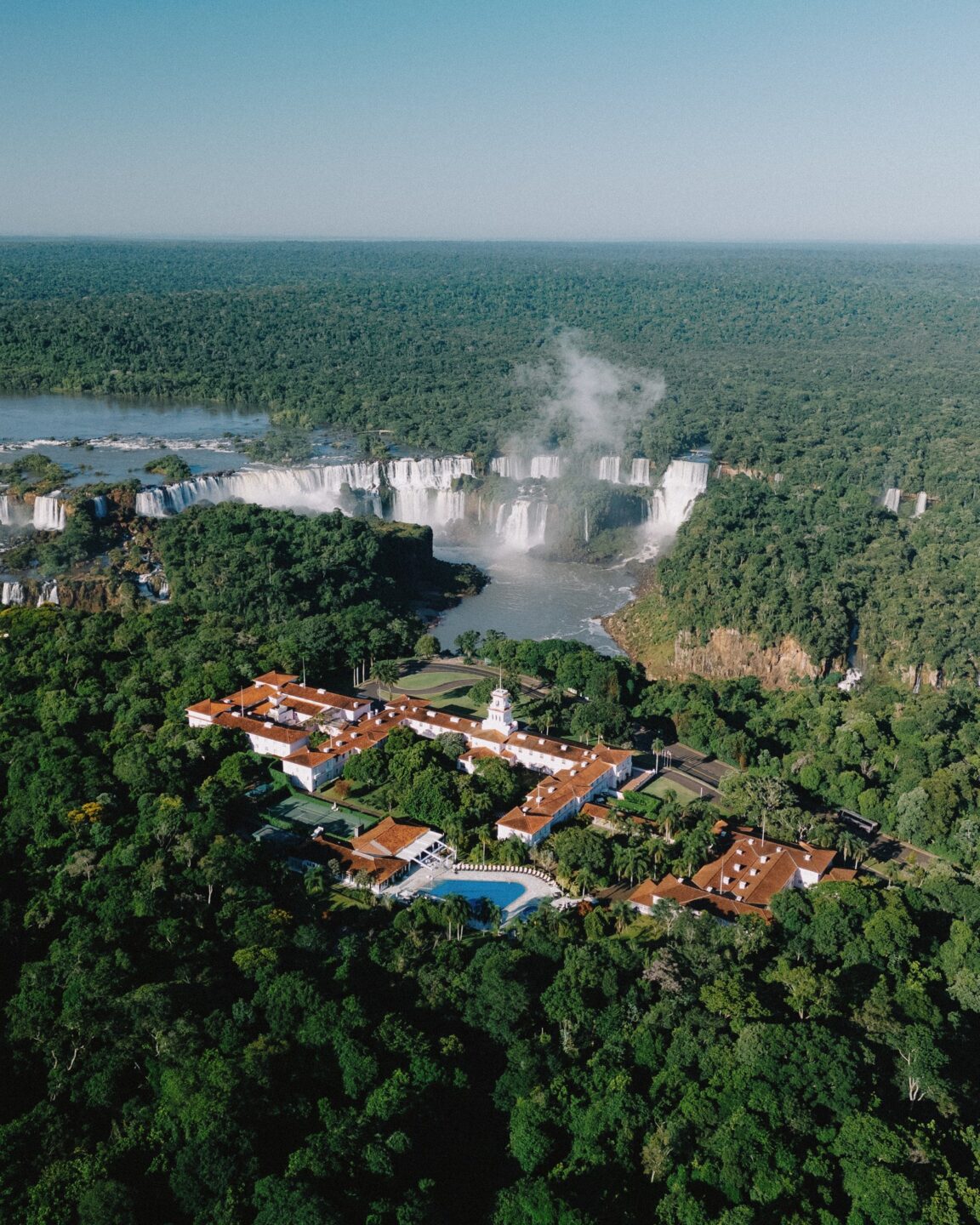
Hotel das Cataratas sells one thing no other address at Iguazu Falls can offer, and it is not thread count. This pastel pink Portuguese colonial style hotel is the only hotel inside Brazil’s Iguacu National Park, a short walk from the falls walkway, and its guests keep access to the falls before the park opens to the public and after it closes. Everything else about the hotel, the 176 rooms and suites, the two restaurants, the pool in tropical gardens, is executed to a high Belmond standard, but the honest reason to pay its premium is dawn and dusk at one of the world’s great waterfalls with almost nobody else there. This guide explains what that access is actually worth, which rooms make sense, and who should save the money and stay in town instead.
Quick Facts
- The location: Inside Iguacu National Park on the Brazilian side of the falls, at Rodovia BR 469, Km 32, Foz do Iguacu. The falls walkway is a short walk from the hotel.
- The access advantage: Hotel guests have exclusive access to the falls before and after the park’s public visiting hours, as confirmed in the hotel’s own FAQ. The park entrance fee is included in the stay, and guests receive a hotel ID card for free entry and exit.
- The rooms: 176 rooms and suites in total, made up of 148 rooms and 28 suites across the main building and the Garden and Forest wings. On the hotel’s own accommodation pages, rooms run 18 to 36 square metres, Junior Suites 32 to 45, Suites 44 to 164 and Signature Suites 70 to 164.
- The dining: Two main restaurants, Y, the fine dining room, and Ipe, the poolside restaurant, plus the Taroba Bar and a pool bar. Both restaurants also take bookings from non residents.
- The logistics: Check in is from 3pm and check out is at 12pm. Foz do Iguacu International Airport is about 15 kilometres away. Private cars cannot enter the park, so self drivers leave their car at the gate parking and use the hotel shuttle, which runs every 20 minutes from early morning to midnight.
- The family kit: A large pool and a children’s pool in the gardens, tennis court, spa and gym, bicycles, and a Kids Club for ages 4 to 10 that the hotel lists as operating daily from 12pm to 8pm.
- The booking route: Direct on belmond.com. Rates are seasonal and the falls side categories sell first, so treat any quoted figure as a live calendar question rather than a fixed price.
What does sleeping inside the park actually change?
How different are the falls before opening?
Completely, and this is the heart of the case for the hotel. The Brazilian side walkway gives the panoramic reading of the falls system, the long curtain of cascades across the Iguazu River with the Devil’s Throat horseshoe at its end, and in public hours it is shared with every day visitor and tour group on the Brazilian side. As a hotel guest you can walk it early, in cool air, with the falls’ mist and sound uninterrupted, and return again in the evening after the day visitors have left the park. The hotel states the arrangement plainly in its own FAQ: because the hotel is inside the park, guests have exclusive access to the falls before or after public visiting hours, for a quieter, less crowded experience. Photographers, birders and anyone who finds crowds genuinely costly will feel the difference in the first ten minutes.
The same logic applies at the end of the day. Sunset light over the falls, an empty walkway and a short stroll back to the hotel for dinner is a sequence no town hotel can replicate, because every other visitor has a transfer, a gate and a closing time between them and the view. Guests planning the Argentine side as well should note the two parks are separate visits with separate entrances, and the hotel concierge arranges the cross border logistics. For a contrasting kind of only one of its kind stay, our guide to Kokomo Private Island in Fiji covers the private island version of the same exclusivity argument.
What does the park fee arrangement save you?
Hassle more than money, though it helps with both. As a hotel guest your park entrance fee is included in your stay and you carry a hotel ID card to enter and exit the park freely, per the hotel’s FAQ. There is no daily ticket queue and no re entry arithmetic. The one exception to remember is the day pass: visitors buying a day pass to use the hotel’s pool and facilities do not get park entry included, and must buy it separately, a distinction that matters if friends staying in town plan to join you at the hotel for lunch.
What are the rooms like, and which should you book?
How do the categories divide?
The hotel is a low, sprawling colonial style complex rather than a tower, and its 148 rooms and 28 suites divide between the main building and the Garden and Forest wings. Standard rooms, at 18 to 36 square metres on the hotel’s figures, are comfortable and traditional in style, dark woods, white linen and garden or forest outlooks, but they are the product of an older building and are not vast. Junior Suites add sitting space at 32 to 45 square metres. The full suites run from 44 square metres up to the largest signature categories at 164 square metres, with the falls view suites at the top of the price ladder for the obvious reason: the view is the hotel’s whole argument, experienced from your own window.
Who should pay for a falls view, and who should not?
Pay for it if this is a once in a decade trip, a honeymoon or a photographer’s visit, because your access already puts you at the falls at the best hours and the view bookends those walks from your room. Skip it if you are travelling with children who will live at the pool, or if you plan to spend your days on the Argentine side and on excursions, because a garden wing room gives you the same access, the same breakfast and the same pool for materially less. The access is attached to being a guest, not to the room category, and that is the single most useful fact in this guide for budget decisions. Families should also ask about connecting options and the Kids Club, listed for ages 4 to 10 with a daily 12pm to 8pm programme of hunts, garden games and storytelling.
What is the food and drink offer?
Dining divides into two registers. Restaurant Y is the hotel’s fine dining room, serving contemporary Brazilian cooking in a formal room and on a terrace, and it is the dinner to dress for. Ipe, beside the pool, handles breakfast and the relaxed end of the day, with buffet and Brazilian staples in a conservatory style space that opens to the gardens. The Taroba Bar covers the classic hotel bar role, caipirinhas included, and there is a pool bar for the afternoon. Both main restaurants accept bookings from non residents, which tells you the hotel functions as the park area’s special occasion address as well as its hotel. Non residents can also buy a day pass for the pool and facilities, listed by the hotel at BRL 700 per person including lunch at Ipe, subject to availability and blackout dates, though as noted it excludes park entry.
What else fills a stay?
The grounds do much of the work between falls walks: a large lagoon style pool and a children’s pool among palms and tropical planting, a tennis court, a gym, bicycles, and a spa drawing on local botanicals and Guarani inspired rituals. The concierge desk is the organising centre for the wider falls programme, Macuco Safari boat trips, the Bird Park near the park entrance, helicopter flights and guided walks, including the hotel’s own morning walk to discover the falls. Wildlife is not a brochure promise here but a function of address: the hotel sits in Atlantic Forest inside a national park, and the gardens attract the birds and butterflies that the forest supports. Travellers who like their nature with altitude rather than water can compare the approach in our guide to the Salkantay Trek in Peru, where lodge to lodge comfort is used to soften a serious landscape in a similar spirit.
Who does Hotel das Cataratas suit best, and who should stay in town?
It suits best the traveller for whom the falls are the trip: photographers chasing empty walkway light, couples marking an occasion, families who want the pool and the falls without daily transfers, and anyone with only one or two nights who cannot afford to lose hours to gates and buses. It suits worst the traveller building a long South America itinerary on a controlled budget, for whom Foz do Iguacu’s town hotels offer perfectly good beds at a fraction of the rate and a short bus ride to the same public hours falls. It also asks something of its guests: evenings are quiet, the park is the entertainment, and the town’s restaurants and bars are a shuttle and a gate away. If your ideal falls trip ends with a lively town night, stay in town. If it ends with the sound of the falls after dark, there is only one address, and this is it.
Frequently Asked Questions
Is Hotel das Cataratas really the only hotel inside the park?
On the Brazilian side, yes. The hotel is the only property located inside Iguacu National Park in Brazil, which is the basis of its guests’ exclusive access to the falls outside public hours. The Argentine side has its own in park hotel, a separate property in a separate park.
Is the park entrance fee included?
For overnight guests, yes. The hotel confirms that the park entrance fee is included in the stay and that guests receive a hotel ID card allowing free entry and exit. Day pass visitors are the exception: their pass does not include park entry, which must be bought separately.
Can you drive to the hotel?
Not in your own car. Conservation rules bar private vehicles from the park. Self drivers leave their car in the parking area near the park entrance and use the hotel shuttle, which runs every 20 minutes from early morning to midnight. Hotel arranged transfers from the airport, about 15 kilometres away, are authorised to enter.
What are check in and check out times?
Check in is from 3pm and check out is at 12pm, per the hotel’s published FAQ. Arrive earlier in the day if you can and use the grounds and an afternoon falls walk rather than waiting on the room, since your park access runs as a guest from arrival.
Is it a good hotel for children?
Yes, by design. There is a children’s pool alongside the main pool, and a Kids Club for ages 4 to 10 listed as running daily from 12pm to 8pm with activities from treasure hunts to puppet shows about the falls legend. The falls walkway itself is manageable for children in short sections, with the mist and noise doing the entertaining.
When is the best time of year to stay?
The hotel’s own guidance is that the falls work year round in a warm tropical climate, with high season from November to February and in July, and quieter shoulder seasons in March to April and September to October. The cooler, less humid low season runs May to August. Higher water usually means more dramatic falls, while lower water reveals more rock and detail.