 River Callahan
The Salkantay Trek is the mountain first alternative to the classic Inca Trail: a route through the Cordillera Vilcabamba in Peru that crosses a 4,638 metre pass beneath the glaciated peak of Salkantay itself, descends from high alpine country through cloud forest to coffee growing valleys, and reaches Machu Picchu in about a week, with the crucial difference that the best known version of it sleeps in lodges, not tents. It needs no trek permit, which makes it bookable when the Inca Trail’s capped permits have sold out, but it is not the easier option. Its highest point beats the Inca Trail’s by more than 400 metres, and the altitude, not the walking, is what most trekkers remember. This explainer walks the lodge to lodge route day by day, then compares it honestly with the classic Inca Trail so you can choose on facts.
Quick Facts
- The mountain: Salkantay, about 6,270 metres, the highest peak in the Cordillera Vilcabamba and a sacred mountain in Inca tradition, second in reverence in the region’s mythology only to Ausangate in some accounts.
- The high point: Salkantay Pass at 4,638 metres, or 15,213 feet, crossed on the third day of the lodge itinerary.
- The classic lodge format: Seven days from Cusco with Mountain Lodges of Peru, sleeping at Salkantay Lodge in Soraypampa at 3,869 metres, then Wayra Lodge at 3,906 metres, Colpa Lodge at 2,870 metres and Lucma Lodge at 2,135 metres, with the final night in Aguas Calientes.
- The permit position: No government trek permit is required for the Salkantay route itself, unlike the classic Inca Trail. You still need a Machu Picchu entry ticket for the final day, and those are capacity controlled and date specific.
- The season: Lodge departures run through the dry leaning months, with established operators running the route from about March to December. The clearest trekking weather is generally May to September.
- The acclimatisation rule: Operators recommend arriving in Cusco at least one to two days before departure. Treat two as the minimum, not the luxury.
- The payoff view: Llactapata Pass, at 2,736 metres on day six, gives a rare south east view across to Machu Picchu the day before you enter it.
What is the Salkantay route, and where does it actually go?
The trek starts west of Cusco in the high valley of Soraypampa, in the shadow of two glaciated giants: Salkantay at the head of the valley and Humantay across it. From there the route climbs over the Salkantay Pass on the mountain’s flank, drops into the cloud forest of the Santa Teresa river system, and follows that drainage down and around to the Inca site of Llactapata, which faces Machu Picchu across a deep valley. A final descent reaches the hydroelectric station area, from where trekkers walk or ride the short rail leg to Aguas Calientes, the town under Machu Picchu. The ecological whiplash is the route’s signature. The established lodge operator describes the trek as crossing multiple distinct eco zones between about 2,000 and 4,600 metres, and that is not marketing. You start among glaciers and finish among coffee plants and orchids, on one continuous path. Travellers building a wider Peru trip around the trek should pair it with the food first days in the capital covered by our Lima food guide and the southern city time in our Arequipa guide, which also helps altitude adaptation if routed before Cusco.
The lodge to lodge route, day by day
Days one and two: Soraypampa and the Humantay Lake acclimatisation
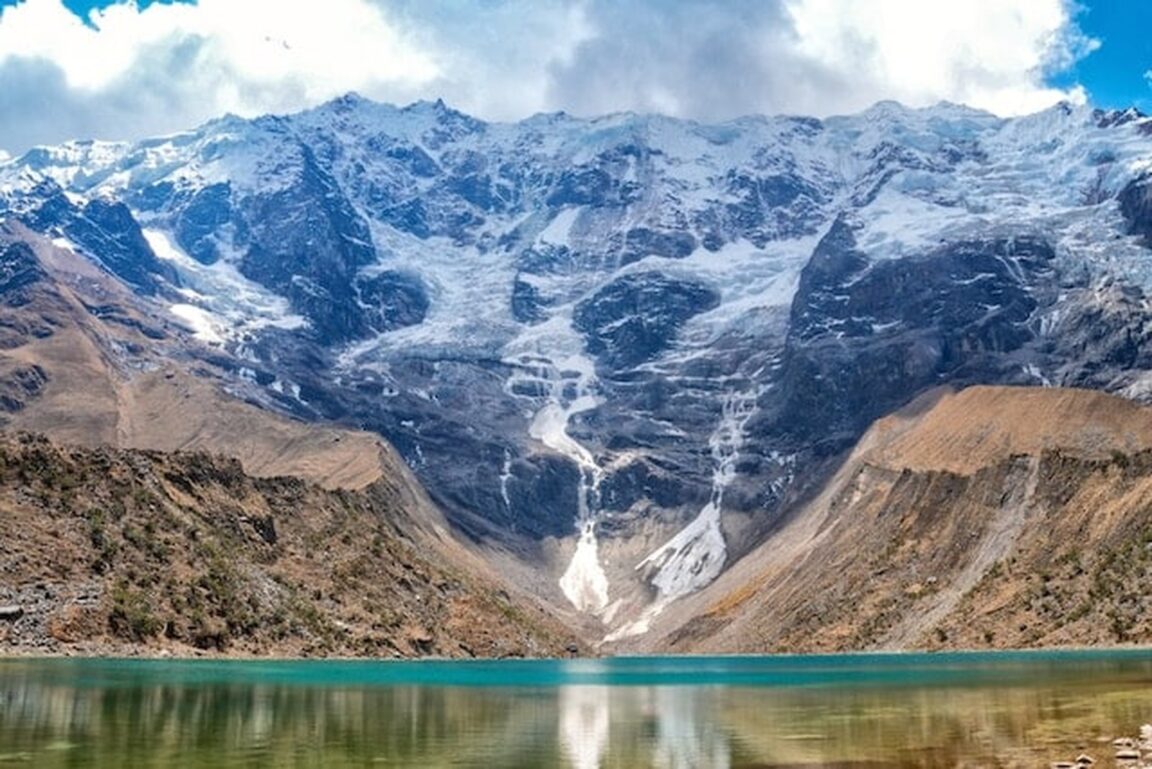
The first day is a drive from Cusco, usually with a stop at the Inca site of Tarawasi and lunch in the mountain town of Mollepata, then a gentle opening walk along the Camino Real to Salkantay Lodge at 3,869 metres in Soraypampa. The lodge is the base camp of the system, the largest of the four, with a dozen rooms. Day two is deliberately unheroic: an acclimatisation hike to Humantay Lake, a turquoise glacial lake at about 4,200 metres beneath the Humantay glacier, then back to the same lodge. This spare day is the smartest thing in the itinerary. You sleep two nights at the same altitude before the pass, your body gets its first serious altitude test at the lake with a lodge bed waiting below, and the views, glacier walls reflected in milky blue water, set the trek’s visual standard early.
Day three: over the Salkantay Pass to Wayra Lodge
This is the trek’s defining day. The trail follows the Rio Blanco valley, rounds Humantay’s shoulder, and climbs a series of steep switchbacks, known locally as the Siete Vueltas, to Salkantay Pass at 4,638 metres, with the glacier and the south face of Salkantay filling the view. It is the highest point of the route and higher than anything on the classic Inca Trail. The descent passes glacial lakes and moraines to Wayra Lodge at 3,906 metres in the high meadow of Wayraccmachay, where the hot shower and the outdoor hot tub stop being amenities and become medical equipment. Walking time runs about six to eight hours, and the honest advice is to walk it slowly, eat and drink more than feels necessary, and let the group’s pace be set by its slowest member, because the pass punishes pride reliably.
Days four and five: down through cloud forest to Colpa and Lucma
Below Wayra the world changes by the hour. The trail descends into high cloud forest, orchids and waterfalls replacing ice, and reaches Colpa Lodge at 2,870 metres, set on an open plateau above the confluence of three rivers, by early afternoon on day four. Day five follows the Santa Teresa river valley through small settlements and farmland, passing coffee, banana and avocado country, to Lucma Lodge at 2,135 metres in Lucmabamba, set among coffee plants. These are the trek’s recovery days, shorter and warmer, and they are where the lodge format shows its second advantage: you arrive early enough, and rested enough, to actually use the afternoons, whether that is a coffee roasting demonstration in Lucmabamba or simply the hammock level recovery that camping itineraries rarely schedule.
Days six and seven: Llactapata, Aguas Calientes and Machu Picchu
Day six climbs from Lucma through coffee country and a section of original Inca trail to Llactapata Pass at 2,736 metres, where Machu Picchu appears across the valley from the south east, an angle almost no other approach route offers. The trail descends past the Llactapata ruins to the valley floor and the hydroelectric area, then continues to Aguas Calientes for the night, in a partner hotel rather than a lodge. Day seven is the citadel itself: an early bus up to Machu Picchu, a guided tour of the sanctuary at 2,450 metres or so, optional permit dependent climbs such as Huayna Picchu booked well ahead, and the train and road return to Cusco by evening. Trekkers feel the week’s altitude work in reverse that day. After six days above 2,000 metres, Machu Picchu itself feels pleasantly low.
Salkantay or the classic Inca Trail: which should you choose?
The permit and booking question
This is the deciding factor for many. The classic Inca Trail is strictly regulated: entry is by government permit only, numbers are capped, permits for the dry season can sell out months ahead, and the trail closes each February for maintenance. If your dates are fixed and the permits are gone, the conversation is over, Salkantay wins by availability. Salkantay requires no trek permit, so it can be booked later and run across a longer season, though lodge places are limited by the lodges’ small room counts, six rooms in each of the three trekker lodges, and Machu Picchu entry tickets still need securing for the final day.
The altitude and difficulty question
Salkantay is the higher and, for most people, the harder walk. Its pass is 4,638 metres against the Inca Trail’s highest point, Dead Woman’s Pass at about 4,215 metres, and Salkantay trekkers sleep their first two nights at 3,869 metres, higher than any campsite on the classic trail. The walking itself is comparable in daily hours, four to eight hours a day, but the altitude load arrives earlier and stays higher longer on Salkantay. Neither route is a beginner trek, and on both, the travellers who struggle are almost always the ones who skimped on Cusco acclimatisation days, not the ones with the oldest boots.
The ruins versus scenery question, and lodge versus camping
Choose the Inca Trail if your dream is archaeological: it strings together ruin after ruin that only trail walkers see, and it enters Machu Picchu through the Sun Gate on foot, which remains the single most theatrical arrival in South American travel. The trade off is camping every night, basic campsite facilities, and a route busy enough that its popularity is a real feature of the experience. Choose Salkantay if your dream is landscape: bigger mountains, a glacier pass, wilder and emptier trails, and a route that feels like a mountain journey that happens to end at Machu Picchu rather than a pilgrimage between ruins. The lodge version adds private rooms with ensuite bathrooms, hot showers, serious food and even hot tubs at altitude, at a price that reflects all of that. Budget camping versions of Salkantay also exist with Cusco operators and cost far less, trading comfort for the same mountains. There is no wrong answer here, only an honest match between what you daydream about and what you book.
Frequently Asked Questions
Do I need a permit for the Salkantay Trek?
No permit is required for the Salkantay route itself, which is its biggest practical advantage over the classic Inca Trail. You do need a valid, date specific Machu Picchu entry ticket for the final day, and optional mountain climbs inside the sanctuary need their own advance permits.
How high is the Salkantay Trek, really?
The pass tops out at 4,638 metres, or 15,213 feet, and the first lodge sits at 3,869 metres. That is higher than the classic Inca Trail at every comparable point, which is why operators build in a Humantay Lake acclimatisation day and recommend one to two days in Cusco before departure.
How long is the lodge to lodge Salkantay Trek?
The established lodge itinerary runs seven days from Cusco back to Cusco: two nights at Salkantay Lodge including the lake hike, one night each at Wayra, Colpa and Lucma lodges, a night in Aguas Calientes, and the Machu Picchu visit on day seven. Shorter camping versions run four to five days with different routing.
When is the best time to trek Salkantay?
Operators run the lodge route from about March to December, and the driest, clearest trekking generally falls from May to September. The wettest months, roughly January and February, are when the route is at its muddiest and pass weather is least reliable.
Is Salkantay harder than the Inca Trail?
For most trekkers, yes, on altitude grounds: a higher pass, higher sleeping altitudes and an earlier altitude load. The Inca Trail counters with relentless stone staircases and its own high pass. Both demand real fitness and proper acclimatisation; neither should be attempted straight off a flight from sea level.
Route altitudes, lodge elevations and itinerary structure checked on 13 November 2026 against Mountain Lodges of Peru’s published Salkantay programme and established operator itineraries. Departure dates, prices and Machu Picchu ticket availability change, so confirm all three when booking.