 Lucas Meyer
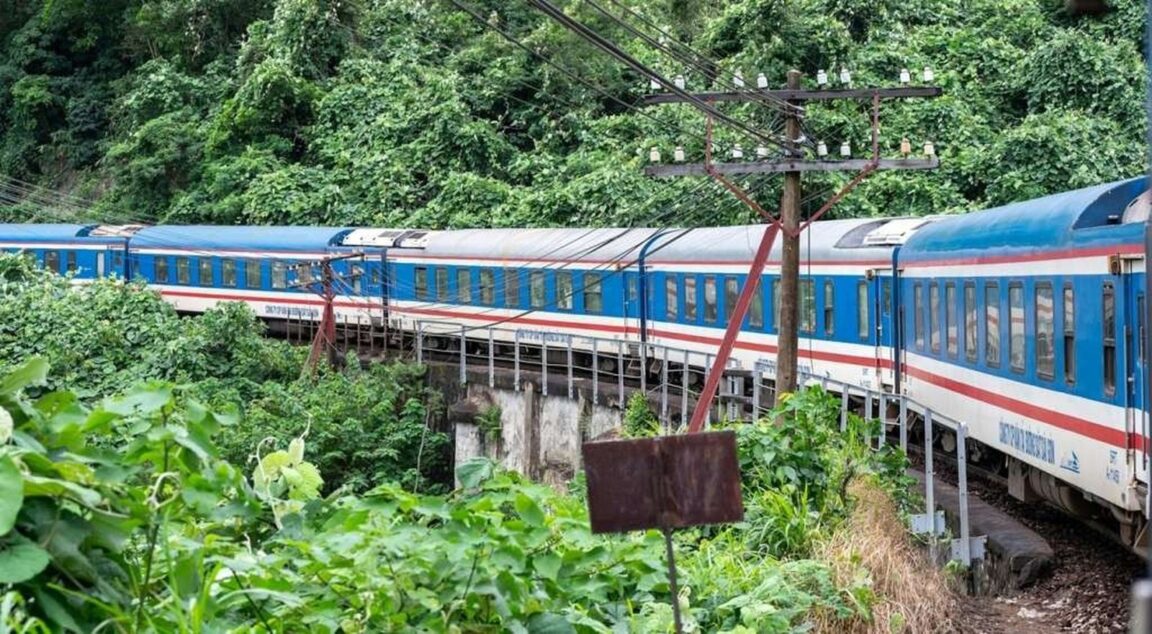
One bag is not just possible for Vietnam by train, it is the correct way to do it. The Reunification Express, the family of SE trains running the 1,726 kilometres between Hanoi and Ho Chi Minh City, loads through narrow doors, stores luggage in your cabin or under your berth, and stops at stations where platforms and stairs reward travellers who can carry everything they own in one trip. Pack one soft sided bag of about 40 litres, a small daypack that doubles as your at seat kit, clothes chosen for a country that runs tropical in the south and properly cool in the northern winter, and a sleeper cabin system built around one rule: everything you need between boarding and morning lives in the daypack, because your main bag will be under a berth, possibly someone else’s, until the train stops.
Quick Facts
- The railway: One main line, 1,726 kilometres from Hanoi to Ho Chi Minh City, served by the SE trains collectively known as the Reunification Express. The fastest through trains take about 33 hours end to end, most travellers ride it in segments.
- The classes: Soft seat, six berth hard sleeper, four berth soft sleeper, and a small number of two berth VIP compartments on some services and private cars.
- The default booking: A lower berth in a four berth soft sleeper for any overnight leg. Lower berths cost a little more and are worth it: you can sit up, watch the country, and slide your bag underneath.
- Guide fares: Published 2026 fare tables for SE1 to SE4 list the full Hanoi to Ho Chi Minh City run at about 1,026,000 dong for a soft seat and up to about 1,758,000 dong for a lower soft sleeper berth. Fares vary by train, date and berth, so treat these as planning figures and confirm when you book.
- Where to book: Vietnam Railways’ official site is dsvn.vn. Your ticket name must match your passport.
- The scenic prize: Hue to Da Nang over the Hai Van Pass, about two and a half to three hours of coastline, best ridden by day in a soft seat.
- The bag: One soft 40 litre carry on size bag plus a packable daypack. No hard shell suitcase, no second checked bag, nothing you cannot carry up station stairs.
How does the train itself dictate the packing list?
Start with the physical realities, because they eliminate half the usual packing debate. Vietnamese long distance trains are mostly single track, the carriages are compact, and the four berth soft sleeper, the cabin most visitors book, holds four adults and everything they brought in a space smaller than a budget hotel room. There is no luggage car culture of checked bags to forget about. Your bag goes under the lower berths or in the limited space by the door, and the corridor outside is narrow enough that a wide hard suitcase becomes a public nuisance every time someone passes. Add the stations: Hanoi and Saigon are manageable, but intermediate stops can mean stairs, underpasses and short platform windows, sometimes two or three minutes to board with everything. The travellers who glide are the ones with one soft bag that compresses into the berth space and a daypack on their front. The system generalises, too. The same one bag discipline powers our guide to one bag travel on European trains, where the platforms are kinder but the cabin maths is identical.
What should the one bag contain for the full north to south run?
Clothing: pack for three climates in one bag
Vietnam is long and thin, and a full run crosses real climate bands. The south is tropical year round. The centre is wettest roughly from September to November, when typhoons and flooding can disrupt the line. The north has a genuine winter from December to February, when Hanoi can sit in the low teens Celsius with a damp chill that surprises everyone who packed for the postcards. The answer is a layering wardrobe, not volume: four to five tops in merino or quick dry synthetics, two pairs of trousers or one trousers and one shorts depending on season, a packable insulated layer for northern nights and over air conditioned carriages, a light rain shell that works in a central Vietnam downpour, sleep clothes that double as your clean train outfit, and underwear and socks for five days with laundry stops planned in Hue, Da Nang or Nha Trang, where same day laundry by the kilo is one of Vietnam’s great travel bargains. Wear your heaviest shoes on the train and pack sandals or light trainers. That is the whole list. The train rewards it because every item earns its place across at least two of the three climate zones.
The sleeper cabin kit: what lives in the daypack
This is the heart of the system. When you board, ideally in the early evening for the classic overnight legs such as Hanoi to Hue at about 12 to 13 hours, your main bag goes under the berth and effectively disappears. The daypack holds: passport and phone, a power bank and charging cable for the shared cabin sockets, a water bottle filled before boarding, snacks and fruit bought at the station, wet wipes and tissues, because train bathrooms reward self sufficiency, a toothbrush kit, earplugs and an eye mask against corridor light and conversation, a light layer for aggressive air conditioning, any medication, and a small padlock or cable lock for peace of mind while you sleep. Add one luxury that weighs nothing: a downloaded film or two and wired earbuds, because onboard wifi is not a thing to plan around, and the dark hours between dinner and sleep are long. With that kit packed, you can board, eat, sleep and wake in Hue without opening the main bag once.
How do the classes change what you should pack?
Soft sleeper, four berth: the default
You get a berth with mattress, pillow and blanket in a lockable cabin shared with up to three strangers. Pack as above, choose the lower berth when booking if you can, and bring your own light sleep sheet if you are particular about bedding, since it weighs almost nothing and ends all doubt. Keep valuables in the daypack, which sleeps at your head or feet, not in the main bag under someone else’s berth.
Hard sleeper, six berth: the budget overnight
Six berths in three tiers, an open style compartment and thinner mattresses. The top berth has minimal headroom and no realistic bag space, so the one bag system matters even more: your soft bag compresses into shared floor space, and your daypack becomes a pillow side locker. Earplugs graduate from nice to essential. It is a sociable, genuinely fun way to travel once, and the fare saving over a soft sleeper buys several excellent meals, but pack light or the geometry defeats you.
Soft seat: for the Hai Van Pass and short hops only
Reclining air conditioned seats are the right tool for day segments under about six hours, above all Hue to Da Nang, where the railway rounds the Hai Van Pass with the sea below and the whole carriage goes quiet at the windows. For that leg your packing job is different: camera accessible, daypack at your feet, main bag in the rack, and a coffee from the trolley in hand. Do not book a seat for an overnight leg to save money. Twelve hours upright converts any saving into a lost day at the other end.
How should you sequence the journey itself?
Ride the line in slices and the packing stays easy, because laundry and rest reset at each stop. The classic rhythm is Hanoi to Hue overnight in a soft sleeper, Hue to Da Nang by day over the pass, a pause in Hoi An, then Da Nang to Nha Trang or straight through to Ho Chi Minh City on a second sleeper night. Book the good trains where you can: SE1 to SE4 carry the best carriages on the route, odd numbered trains run southbound from Hanoi and even numbers northbound from Saigon, and lower berths on popular dates sell out, so book on dsvn.vn as soon as your dates are firm, particularly around Tet and public holidays. Build a buffer into any plan that connects to a flight, since single track running means delays of an hour or two on long legs are unremarkable, and central Vietnam’s autumn floods can suspend services entirely in severe weather. And eat like a local while you plan: our Hanoi food guide is the right pre boarding dinner research for a southbound start.
Frequently Asked Questions
Is one bag really enough for two or three weeks in Vietnam?
Yes, provided you plan laundry stops. Vietnam’s by the kilo wash and fold services are fast and inexpensive in every city on the line, so a five day clothing rotation carries a trip of any length. The constraint is not wardrobe, it is discipline: one pair of shoes worn, one light pair packed, and no just in case items.
Which berth should I book in a four berth soft sleeper?
The lower berth. It costs slightly more in the published fare tables and returns it in headroom, window access, daytime seating and the storage space underneath, which is where your one bag lives.
How much does the full Hanoi to Ho Chi Minh City train cost?
Published 2026 fare tables for the SE1 to SE4 trains list about 1,026,000 dong for a soft seat and about 1,667,000 to 1,758,000 dong for a soft sleeper berth on the full run, depending on berth position. Fares change with demand and season, so confirm the exact figure on dsvn.vn when booking.
Can I store a large suitcase on Vietnamese trains?
There is no separate luggage car service for most passengers. Bags travel with you in the cabin, under berths or by the door, and space is tight in both sleeper classes. A large rigid suitcase is the single most common packing mistake on this route. Go soft, go 40 litres, go one bag.
What is the one thing people forget to pack for the sleeper?
Tissues and wet wipes, followed by earplugs. Add a filled water bottle and station snacks purchased before boarding, and the overnight legs become genuinely comfortable rather than merely survivable.
Route facts, classes and guide fares checked on 13 November 2026 against Vietnam Railways information at dsvn.vn and published 2026 fare tables for the SE trains. Times, fares and carriage types change, so confirm your exact train when you book.