 Lucas Meyer
One bag works for a Greek island ferry trip if it is soft sided, under your own easy carry weight, and packed for three repeating conditions: wind on open ferry decks, heat and cobbles in island lanes, and evenings that cool down faster than the day promised. Build the bag around a single colour story, quick dry layers, shoes you can walk uphill in straight off a gangway, and a small deck kit that stays at the top. Do that, and Athens, Piraeus port and a string of Cyclades islands, Paros, Naxos, Ios, Santorini or wherever your route runs, become a carry your own bag trip with no luggage carousels, no port transfers booked around a suitcase, and no dragging wheels over stone.
Quick Facts for Packing One Bag for Greek Ferries
- Bag: A soft sided carry on backpack or duffel in the 35 to 45 litre range, with a hip belt or comfortable straps for port walks and island stairs.
- Weight target: Keep the loaded bag at a weight you can carry up two flights of stairs and along a quay without stopping. Ferries rarely weigh cabin bags, but your shoulders do the real checking.
- The deck layer: A packable windproof jacket is the single most important item. Aegean wind on an open deck is cold at speed in every month, including summer.
- Shoes: Two pairs maximum for most trips: broken in walking sandals or trainers worn on travel days, plus water friendly sandals or light shoes in the bag.
- The system: Packing cubes or dry bags by function, swim and beach, day clothes, evening layer, laundry, so repacking in a cabin or port takes minutes.
- Documents: Ferry tickets on your phone plus a screenshot offline, passport or ID, and payment cards split between bag and pocket.
- Laundry plan: Quick dry fabrics and a sink wash every few days replace the extra outfits most travellers pack and never wear.
Why does one bag suit ferry travel so well?
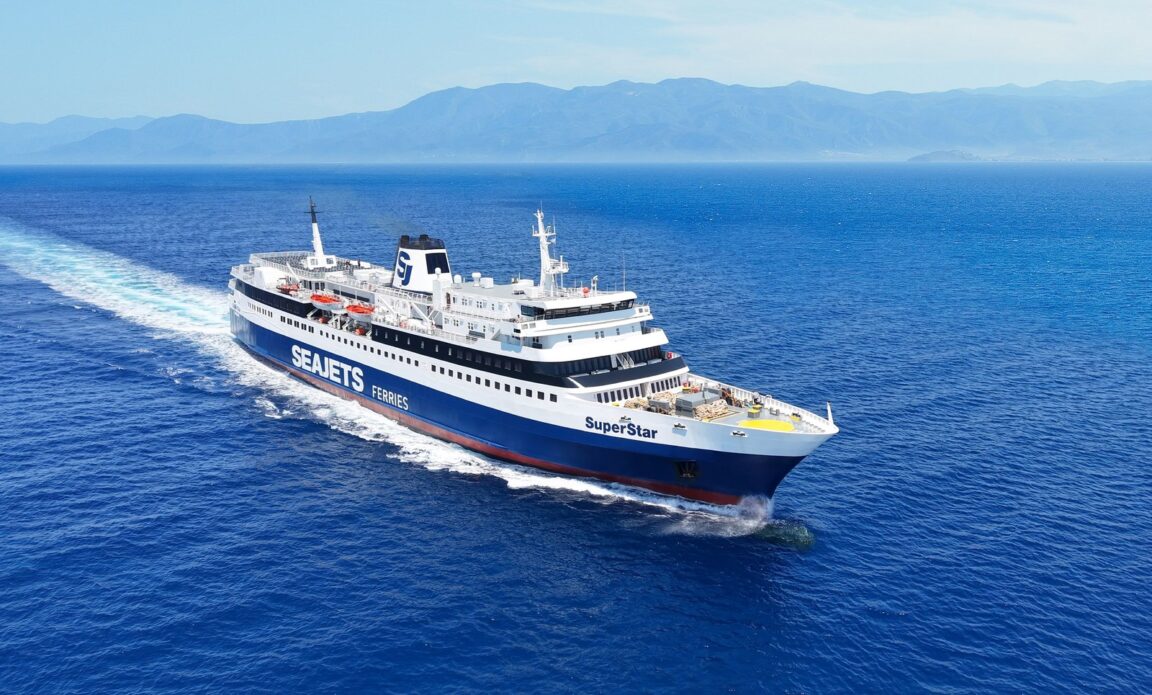
Greek ferries reward travellers who can move. Conventional Blue Star type ships load foot passengers through wide ramps with luggage racks near the vehicle deck entrances, while high speed catamarans run tighter cabins where a compact bag at your feet or in a small rack beats a hard case in the aisle. At the island end, ports such as Athinios on Santorini sit below the town, buses and taxis queue in waves, and the final approach to many rooms is a lane, a slope or a flight of white steps. A bag you carry turns every one of those moments into a walk instead of a logistics problem.
There is also the rhythm of the trip itself. Island hopping means packing and unpacking every two or three nights, and a one bag system with a fixed place for everything makes that a five minute task. Our guide to island hopping the Caribbean by ferry and short flights reaches the same conclusion in a different sea: the bag is the itinerary’s best friend. For the Athens end of this route, our three days in Athens itinerary helps you place the city nights before or after the islands.
What clothes go in the bag, by layer?
Start with the base that repeats: four to five tops in quick dry or light natural fabrics, in colours that all combine, two bottoms such as one pair of light trousers or a skirt and one pair of shorts, and underwear and swimwear for four days, washed as you go. Add one smarter outfit for evening tavernas, because Greek island nights out are casual but not beachwear, and a light shirt or dress that resists creasing earns its space.
Then pack for the deck and the shoulder season. The windproof jacket goes on top. Add a thin warm layer, a fleece or merino mid layer, for spring and autumn crossings and for air conditioned cabins and overnight sailings, where indoor temperatures drop. A large light scarf or sarong does four jobs: blanket on a night ferry, cover up for churches and monasteries, beach towel backup, and shade at a port with no shelter. In high summer the warm layer shrinks but never disappears, because a fast ferry at dawn is still a cold place in shorts.
How do you pack for deck wind, specifically?
Keep a deck kit in the bag’s top pocket or a small pouch you can pull out before boarding: the windproof, sunglasses with a strap or case, sunscreen, a cap that will not blow off or a band to secure it, and a zip bag for tickets and phone against spray on open decks. On conventional ferries the open deck is the joy of the crossing, with island approaches, other ships and long Aegean light. On high speed craft, passengers stay inside while underway, so the deck kit becomes a port kit for the exposed wait on the quay, which in July sun needs water and shade more than warmth.
Motion comfort belongs in the same pouch. The Aegean meltemi wind raises rough seas in summer, most often in July and August, and conventional large ferries handle it more gently than small high speed craft. Ginger, wrist bands or your preferred remedy, packed where you can reach them seated, are worth the few grams. Choose a cabin seat away from the bow if the forecast looks lively.
What about beaches, swimming and walking days?
Two swimsuits so one is always dry, a microfibre towel that packs flat, and a dry bag that doubles as a beach tote cover most island days. Reef safe sunscreen bought before the islands saves port shop prices and limited choice. For walking, the Cyclades reward anyone who leaves the waterfront: Paros and Naxos have waymarked village to village paths, Santorini has its caldera rim walk from Fira toward Oia, and every island has a highest village, a monastery or a Venetian castle above the port. Shoes with grip and a small daypack, ideally the bag’s own detachable top or a packable tote, make those days possible without a second luggage piece.
Electronics stay minimal: phone, one charger with a European two pin plug, a small power bank for long crossing days, and headphones for overnight cabins. Greece uses type C and F sockets. A short cable for the power bank means charging while the bank sits in your bag on deck. Leave the laptop unless the trip is also work; island wifi and long ferry days are the usual reasons people cite, and both survive a tablet or phone better.
How do you organise the bag so ferries stay easy?
Pack in the order the trip uses things. Bottom: evening clothes and the spare shoes. Middle: day clothes cube and wash kit in a leak proof pouch, because a ferry toilet run with a floating bag is no place to excavate. Top: warm layer, deck kit, documents pouch and snacks for the crossing, since ferry cafes vary and an early Piraeus departure leaves before Athens wakes. Keep a plastic or dry bag for damp swimwear on travel days, and a laundry bag that seals, because a small cabin bag plus ripe swim kit is a combination you will meet once and fix forever.
At the port, arrive with time to spare, keep the bag on your back in the boarding surge, and know your gate: Piraeus is a large port with gates spread along the waterfront, and Cyclades ferries commonly leave from the E gates, which your ticket will name. Screenshots of every ticket, saved offline, cover the patchy signal on a crowded quay.
What changes in spring and autumn?
Shoulder season is the finest time for this trip and the easiest to underpack for. Evenings in April, May, October and November call for the warm layer every night, the sea is swimmable later into autumn than most visitors expect, and a light waterproof shell earns its place for the odd wet day in Athens or on deck. Swap one pair of shorts for a second long pair, keep everything else, and the same bag works. Ferries thin out outside summer, so the packing discipline pairs with timetable discipline: check your operator’s sailing days before fixing island order, because not every route runs daily in the quiet months.
Frequently Asked Questions About Packing for Greek Ferries
Is a wheeled suitcase really a problem on Greek ferries?
On the ship, no. The problems are the stone lanes, stairs and steep village streets at each end, plus port pavements. If you do bring wheels, choose a small case you can carry like a bag when the surface defeats it.
How big should a one bag be for two weeks in the Cyclades?
A 35 to 45 litre bag is enough with a laundry rhythm, because the wardrobe is light, repeats easily, and dries overnight in the Aegean air. Size up only if you are carrying formal wear or sports kit.
Do Greek ferries have luggage limits for foot passengers?
Operators set their own terms and cabin bags are rarely an issue, but large checked style luggage goes in the racks on conventional ships rather than at your seat. Travelling with one carry size bag keeps you flexible on both ship types, so check your operator’s current terms when you book.
What should never go in the checked rack?
Passport, tickets, medication, money, phone and anything you need during the crossing. Keep a small valuables pouch on your person from port to port, because racks sit in busy loading areas.
Can you do this trip in winter?
Yes, with the warm and waterproof layers promoted from extras to essentials and a realistic view of reduced timetables. The islands are quiet, the light is superb, and the one bag system matters more, not less, in an Athens downpour.
Last updated November 2026. Ferry arrangements, gates and operator terms change by season, so confirm your sailing and ticket conditions with your operator before you travel.