 Wei Chen
For most Beijing visitors, Mutianyu is the Great Wall section to choose: ride the enclosed cable car to Watchtower 14, walk a restored, forested ridge with watchtowers in both directions, and come down by cable car, on foot, or by chairlift and toboggan from Watchtower 6. It delivers the full wall experience, towers, battlements on both sides and long ridge views, with a fraction of the crowd pressure of Badaling, and it fits into a half day from the capital. The decisions that matter are simple ones: which lift you buy, which direction you walk, and how early you leave Beijing.
Quick Facts About Visiting Mutianyu
- Where: Mutianyu Village, Huairou District, about 70 kilometres northeast of central Beijing.
- Opening hours: From 16 November to 15 March, 08:00 to 17:30. From 16 March to 15 November, 07:30 to 18:00 Monday to Friday and 07:30 to 18:30 at weekends, per the Mutianyu Great Wall official site, checked November 2026.
- Tickets are separate: Wall admission, the shuttle bus from the service area, the cable car and the chairlift and toboggan are sold as separate items, and cable car and toboggan tickets are not interchangeable.
- Cable car: Enclosed cabins to the platform near Watchtower 14, priced on the official shop at 100 yuan one way and 140 yuan return at the time of checking.
- Toboggan: A wheeled slideway descent from the Watchtower 6 area, reached by open chairlift, run by a different operator from the cable car.
- Booking: Admission is real name and tied to the passport you carry on the day. Book through the official site or its official channels before you travel.
- The open section: Watchtowers 1 to 20 are open by day, along a restored stretch of roughly 2,250 metres with 22 watchtowers in total.
Why does Mutianyu suit most trips better than Badaling?
Badaling is the most famous section and the closest to the classic postcard, but it is also the section most tour itineraries use, and its crowds concentrate on a short stretch of wall near its lifts. Mutianyu, first built in the Northern Qi dynasty in the mid sixth century and rebuilt under the Ming from 1368 onward, is one of the best preserved sections of the wall. It served as the northern barrier defending the capital and the imperial tombs, and its restoration kept the features that make the wall interesting rather than merely big.
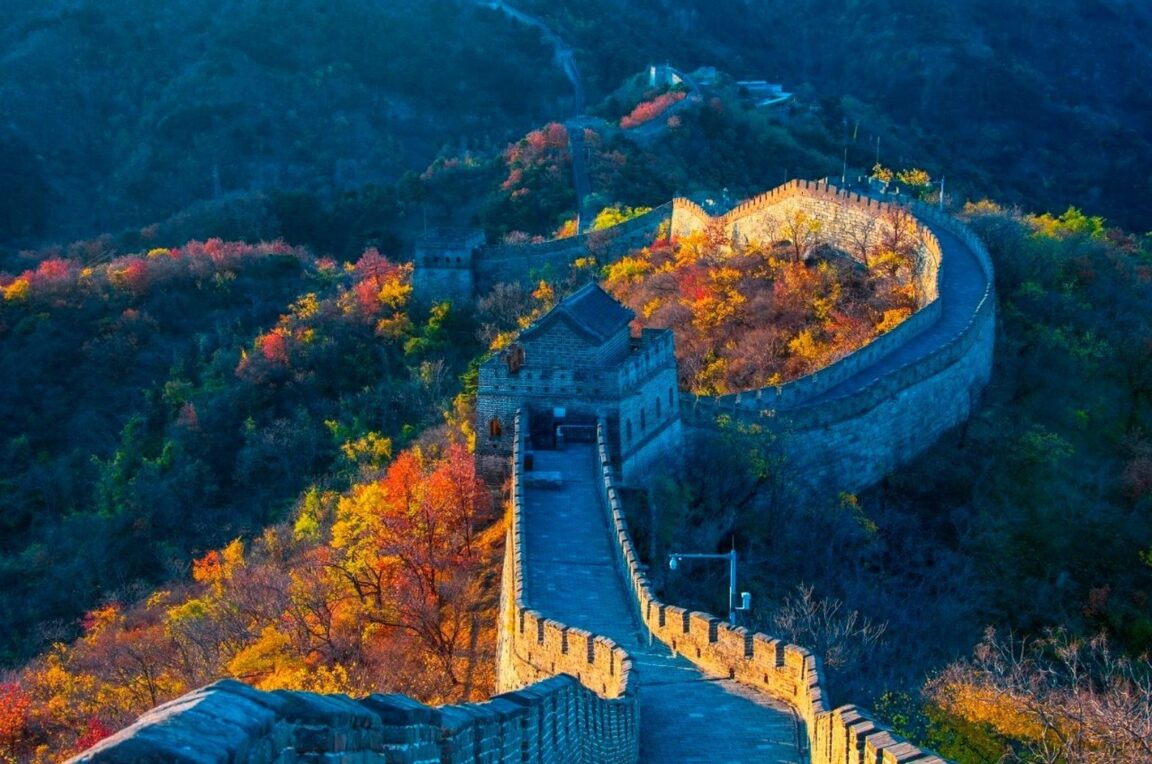
Three things stand out on the ground. The watchtowers are unusually dense, 22 of them along the open stretch, some less than 100 metres apart. The battlements run on both sides of the walkway in places, a rare detail that reflects attack being possible from either direction at this pass. And the setting is green: the ridge runs through dense forest, which turns red and gold in autumn and softens the stonework in a way the bare ridges at other sections do not. For a first wall visit, that combination reads as the complete picture.
Travellers sorting out entry rules for the wider trip should pair this guide with our explainer on China’s visa free entry extension, which separates who gets 30 days from what other travellers must arrange.
How do the cable car, chairlift and toboggan actually fit together?
Think of Mutianyu as two lift systems serving two parts of the ridge, run by different companies. The enclosed cable car, entered through the North Ticket Gate, climbs to the platform near Watchtower 14, in the middle of the finest walking. It is the right choice for mixed energy groups, for anyone who wants a gentle start, and for a simple out and back walk with a return ride down the same way. A return cable car ticket means exactly that: you descend on the cable car.
The second system serves the eastern end. An open chairlift climbs to near Watchtower 6, and from the same area the toboggan, a long metal slideway ridden on a small wheeled sled with a hand brake, runs back down to the base. Riders control their own speed, staff space the sleds, and the service can pause or close in wet weather, when the track is slippery. Because the two systems belong to different operators, a cable car ticket cannot be swapped for the slide, so choose your descent before you buy, not at the top.
A classic one way route uses both: cable car up to Watchtower 14, walk east along the ridge through the tower line, then descend from Watchtower 6 by toboggan, or by chairlift if the slide is closed or unappealing. Walking the other way from 14 heads toward the higher western towers and the steepest climbs, which suits hikers saving the toboggan for another visit.
Which direction should you walk on the wall?
From Watchtower 14, east toward Watchtower 6 is the gentler, more popular walk, broadly downhill in feel with frequent towers and the toboggan finish. Allow around 90 minutes with photo stops. West from 14, the wall climbs toward Watchtower 20 and beyond to the highest accessible points, with steeper stepped sections and fewer people. It is the better walk for anyone who came to hike, and the views back along the ridge are the section’s best.
Mutianyu Pass, at Watchtower 4 in the east, is a named curiosity: three watchtowers combined, one large central tower flanked by two smaller ones. Zhengguantai and the Dajiaolou corner tower are other landmarks the official route material names along the ridge. You do not need a checklist, though. The wall itself, tower after tower over forested folds, is the sight.
How do you get there and how long does the trip take?
Mutianyu sits in Huairou District, and the journey from central Beijing takes roughly 90 minutes by road in normal traffic, longer on holiday weekends. Visitors arrive at the service area, pass through the commercial street, and take the shuttle bus up to the ticket gates, which is why admission, shuttle and lifts are separate purchases. Public bus combinations via Huairou exist and suit budget travellers with time; direct tourist buses and private drivers suit everyone else, especially families aiming for the first entry of the day.
A half day works if you leave Beijing early, spend two to three hours on the wall, and return by mid afternoon. A full day allows the western climb, a slower lunch in the village area, and a second nearby stop in Huairou. Start time is the one variable fully in your control: the first hour after opening is the quietest the ridge ever gets, and by late morning the cable car queues tell the story of everyone who left later. If your wider itinerary crosses East Asia, our first time Tokyo itinerary follows the same early start logic for another dense capital region.
When is the best time to visit Mutianyu?
Late October into November brings the autumn colour the section is photographed for, as the forest around the wall turns. Spring offers fresh green and peach blossom on the lower slopes. Summer is hot on exposed stone, with afternoon storms that can close the toboggan and lifts, so a morning visit matters most then. Winter is cold and quiet, the hours shorten to the 08:00 to 17:30 pattern, and a dusting of snow gives the cleanest tower silhouettes of the year. Weekdays beat weekends in every season, and Chinese public holidays are the dates to avoid entirely if your schedule flexes.
What should you bring and wear?
The wall is a mountain walkway, not a plaza. Wear shoes with tread for steep, uneven steps, carry water even though vendors operate near the gates, and pack a layer for wind on the ridge in spring, autumn and winter. Sun protection matters in summer because shade on the walkway is scarce. Carry your passport, since booking is real name, and keep small payment options ready for the shuttle and lifts if you did not bundle them in advance. Drones are not permitted over the restored section, so leave them in Beijing.
Frequently Asked Questions About Mutianyu
How much time do you need at Mutianyu?
Two to three hours on the wall covers the cable car, the Watchtower 14 to 6 walk and the toboggan descent with photo stops. Add the road journey and the visit is a comfortable half day from Beijing.
Can you ride the cable car up and the toboggan down?
Yes, and it is the most popular one way combination, but you buy the two systems separately because different operators run them. A return cable car ticket cannot be used for the slide.
Is the toboggan safe and who can ride?
Riders sit on a sled with a lever brake and control their own speed, with staff spacing departures. It closes in wet weather, and young children ride with an adult. Anyone uneasy about it can take the chairlift down from the same area instead.
Is Mutianyu better than Badaling for a first visit?
For most travellers, yes. It is comparably restored and historically rich, with denser watchtowers and a forested ridge, and it spreads visitors over a longer open section, so the walking feels calmer.
Do you need to book tickets in advance?
Booking ahead through the official site is strongly advised. Admission is real name, one ticket per passport per day, and the booking window and cut off times are set by the scenic area, with ticket sales stopping an hour before closing.
Last updated November 2026. Hours, lift arrangements and ticket prices checked against the Mutianyu Great Wall official site at the time of writing. Severe weather can close facilities on the day, so check the official notices on the morning of your visit.