 Thandiwe Nkosi
The first fact about Ngorongoro Crater Lodge in November 2026 is that you cannot stay there: andBeyond closed the lodge in January 2025 for an extensive rebuild, and its official lodge page currently points to a reopening in 2027. Anyone selling you a confirmed booking, a current room photo or a 2026 rate for this property is selling the old lodge. That old lodge, 30 stilted suites in three camps on the southwestern crater rim, was for decades the most theatrical address in Tanzanian safari travel, and the rebuild makes this the right moment to explain what it was, what the closure means for a crater trip now, and who should plan around its return. This guide does exactly that, and it labels every pre closure detail as history, not as a promise about the rebuilt lodge.
Quick Facts
- Current status: Closed for an extensive rebuild since January 2025; andBeyond lists reopening in 2027. Check the official lodge page for the live date before planning around it.
- The pre rebuild lodge: 30 suites in three camps, North Camp 12 suites, South Camp 12 and Tree Camp 6, each camp with its own lounge and dining room.
- Setting: The southwestern rim of the Ngorongoro Crater, at roughly 2,200 metres altitude, looking across the crater floor.
- The crater: The world largest intact, unbroken volcanic caldera; a floor of about 260 square kilometres inside the Ngorongoro Conservation Area, a UNESCO World Heritage Site.
- Rates: No current rates exist while the lodge is closed. Pre closure rates were fully inclusive per person per night; do not rely on old figures for a reopened lodge.
- Nearest airstrip: Lake Manyara airstrip, with a road transfer to the rim; Arusha is the regional gateway city.
What the Lodge Was: Maasai Form, Baroque Manners
The Crater Lodge that travellers remember was an extraordinary piece of theatre. Its suites took their exterior language from Maasai mud and stick manyatta homesteads, stilted, banana thatch roofed and deliberately humble from outside, then opened into interiors of chandeliers, gilt mirrors, carved furniture, velvet and roses, a deliberate Versailles meets Maasai collision that no other safari lodge attempted at this scale. Each suite had floor to ceiling glass facing the crater, an en suite bathroom with a chandelier lit bath, a fireplace against the rim altitude cold and a personal butler, whose morning task list famously included running the bath and bringing tea before the dawn game drive.
The three camp structure kept it intimate at size. North and South Camps held 12 suites each; Tree Camp, the smallest with 6 suites, sat slightly apart among acacia trees and was often requested for its quiet. Each camp ran its own dining room and sitting area with its own team, so the lodge never felt like a 30 suite hotel at meals. Two suites at North Camp were interlinked by a closed walkway to form the family suite. All of this describes the lodge as it stood until closure: andBeyond has described the project as a full rebuild rather than a refurbishment, so suite counts, layouts and the famous interiors of the new lodge remain unconfirmed until the company publishes them.
The Setting That Justified Everything
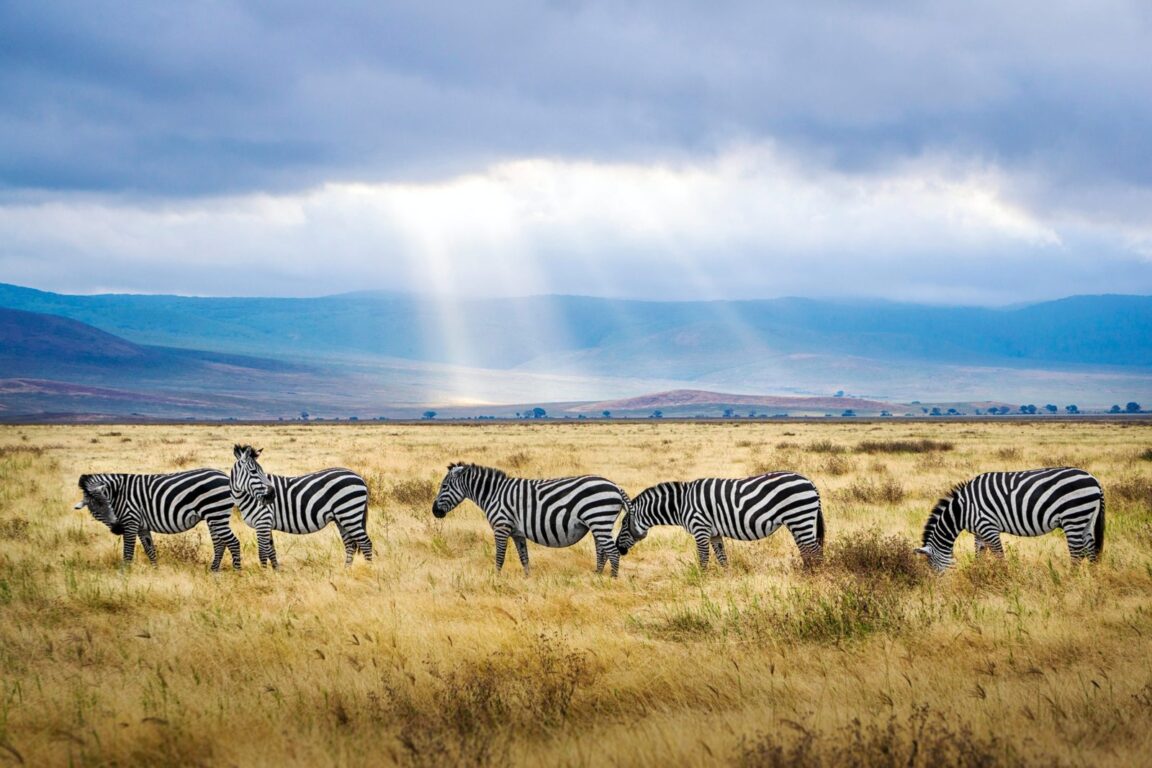
The lodge existed because of one fact of geography. The Ngorongoro Crater is the largest intact and unfilled volcanic caldera on earth, formed when a giant volcano collapsed in on itself roughly two to three million years ago. Its walls drop about 600 metres to a floor of grassland, swamp, forest and a soda lake that together hold one of the densest concentrations of large wildlife in Africa, including lions, elephants, buffalo, hippos and one of the best chances anywhere of seeing a black rhino in a day. The Conservation Area around it, managed by the Ngorongoro Conservation Area Authority, is a multiple use landscape where Maasai pastoralists live alongside wildlife, and it has been a UNESCO World Heritage Site since 1979.
A rim address turned that geography into a routine no lowland camp could copy: wake above the clouds on the rim, descend the steep access road at dawn, spend the prime hours on the floor while day visitors were still driving in from Karatu or the lowlands, and climb back to the rim for lunch or a full afternoon as the light changed over the caldera. Altitude was the price: at around 2,200 metres the rim is cold at night year round, bitter in the June to August winter, and the fireplaces and hot baths were functional necessities before they were romance.
What the Closure Means for a Crater Trip Now
The crater itself is entirely open; only this lodge is closed. Game drives on the floor run as they always have, under Conservation Area rules and fees that apply to every visitor regardless of where they sleep. What changes is where you base. While the rebuild runs, andBeyond directs guests to partner properties in the Ngorongoro area, and the wider market splits into two honest choices: the remaining rim and highlands lodges, which keep the dawn descent advantage at a range of prices, and the town of Karatu, about an hour from the descent road on the outer highlands, which offers better value and a wider choice of small lodges and farm stays at the cost of an earlier start. For a once in a lifetime crater day, proximity still matters; for a longer northern circuit that also covers the Serengeti and Lake Manyara, a Karatu base of two nights is a rational saving.
Travellers building a Tanzania circuit should also note the timing logic the closure creates. A crater day pairs naturally with Lake Manyara and Tarangire before it and the Serengeti after it, and the rim altitude makes it a cool, high start to a safari that later drops to warmer country. Our guides to Giraffe Manor in Nairobi and to Stone Town, Zanzibar cover the two classic bookends, a Kenya start and an island finish, that a Tanzania circuit often joins.
Who the Rebuilt Lodge Will Suit, Judged on the Old One
Until andBeyond publishes the new lodge specification, the fairest guide to who should wait for it is who loved the old one. Crater Lodge suited travellers making the crater the centrepiece of a honeymoon or a milestone trip, who valued the dawn descent routine and a suite worth photographing as much as the wildlife. It suited short crater stays of two nights, where the rim position compresses the experience, and travellers who enjoy formal, staffed, butlered luxury rather than tented understatement. It did not suit travellers who prefer the classic tented camp aesthetic, anyone sensitive to altitude or cold nights, or value seekers: even by luxury safari standards it sat at the very top of the price band, fully inclusive, and the rebuilt lodge should be assumed to do the same until rates prove otherwise.
The practical advice follows. If your trip is in 2026 or early 2027, book an operating rim or Karatu alternative and do not hold an itinerary hostage to a reopening date that has already been described with more than one month attached to it. If your trip is from later 2027 onward and this lodge is its centrepiece, register interest through andBeyond, confirm in writing what is actually bookable, and treat any photograph or floor plan from the old lodge as inspiration only. Rebuilt flagship lodges change; the crater, fortunately, does not.
Frequently Asked Questions
Is Ngorongoro Crater Lodge open?
No. andBeyond closed it in January 2025 for an extensive rebuild and lists reopening in 2027 on the official lodge page. Treat any site taking deposits for current dates, or quoting current rates, with suspicion, and verify status on andbeyond.com before paying anything.
Can I still visit the Ngorongoro Crater while the lodge is closed?
Yes. The crater is open to all visitors under Ngorongoro Conservation Area Authority rules and fees. Only this one lodge is closed. Rim, highlands and Karatu lodges all run crater game drives, with drive time to the descent road the main difference between them.
What was special about the old lodge?
Its 30 stilted suites in three small camps combined Maasai inspired exteriors with opulent, chandelier lit interiors, personal butlers and direct crater views from the southwestern rim at about 2,200 metres. The dawn descent to the crater floor, ahead of day visitors, was the operational advantage behind the romance.
When should I book the reopened lodge?
Only when andBeyond publishes confirmed reopening dates, specifications and rates for the rebuilt lodge. Until then, register interest, keep plans flexible and hold a bookable alternative. Reopening dates for rebuilds of this scale move, and deposits paid against unconfirmed inventory are a risk you do not need to take.
How many nights does a crater stay need?
Two nights is the classic pattern: one full day on the crater floor with a second morning in hand against weather, plus time in the highlands. One night can work inside a longer circuit if you arrive early enough for an afternoon descent, but it leaves no margin.
Status checked 13 November 2026 against andBeyond published lodge information and current operator listings. The rebuilt lodge specification and rates had not been published at the time of writing.