 Lucas Meyer
Pack for Jordan in winter as if you were packing for three different trips in one bag, because you are. Between December and February, Amman is a cool, rainy highland capital, Petra is a cold desert walking site where the wind finds you in the Siq, and a night in Wadi Rum can drop to around freezing under some of the clearest skies of the year. The system that works is a true layering kit: a warm mid layer you can walk in, a proper insulated jacket for desert nights, and a waterproof shell that earns its place in Amman and doubles as wind protection everywhere else. Get those three right and one carry on is enough.
Quick Facts for Packing for Jordan in Winter
- Season covered: December to February, Jordan’s coldest and wettest quarter, with rain concentrated in the north and centre.
- Amman in January: Daytime highs around 12 degrees Celsius, nights around 4 to 5 degrees, and the most rain days of any Jordanian city on most itineraries.
- Petra in January: Daytime highs roughly 13 to 15 degrees, nights falling to around 2 to 4 degrees in Wadi Musa, the town beside the site.
- Wadi Rum in winter: Mild, often sunny days around 15 to 20 degrees, with nights at 0 to 5 degrees and occasional frost. The day to night swing is the whole packing problem.
- The three non negotiables: A waterproof shell, a genuinely warm insulated layer for still desert evenings, and broken in walking shoes with grip for wet stone.
- Bag strategy: One carry on plus a packable daypack. Desert camps and site days reward light, layered luggage over a big case.
Why Jordan in Winter Catches People Out
The mistake is reading “Middle East” and packing for warmth. Jordan’s classic route runs at altitude: Amman sits on highland hills, Petra’s visitor town Wadi Musa sits at around 1,000 metres, and Wadi Rum’s desert floor is high, dry and exposed. Winter is also the rainy season, running roughly November to April and peaking between December and February. Rain falls hardest in Amman and the northern highlands, Petra sees far fewer wet days but real cold, and the southern desert around Wadi Rum and Aqaba stays comparatively dry. Snow is not a planning assumption, but it does occasionally dust Amman and Petra in midwinter, which tells you the honest temperature range to pack for.
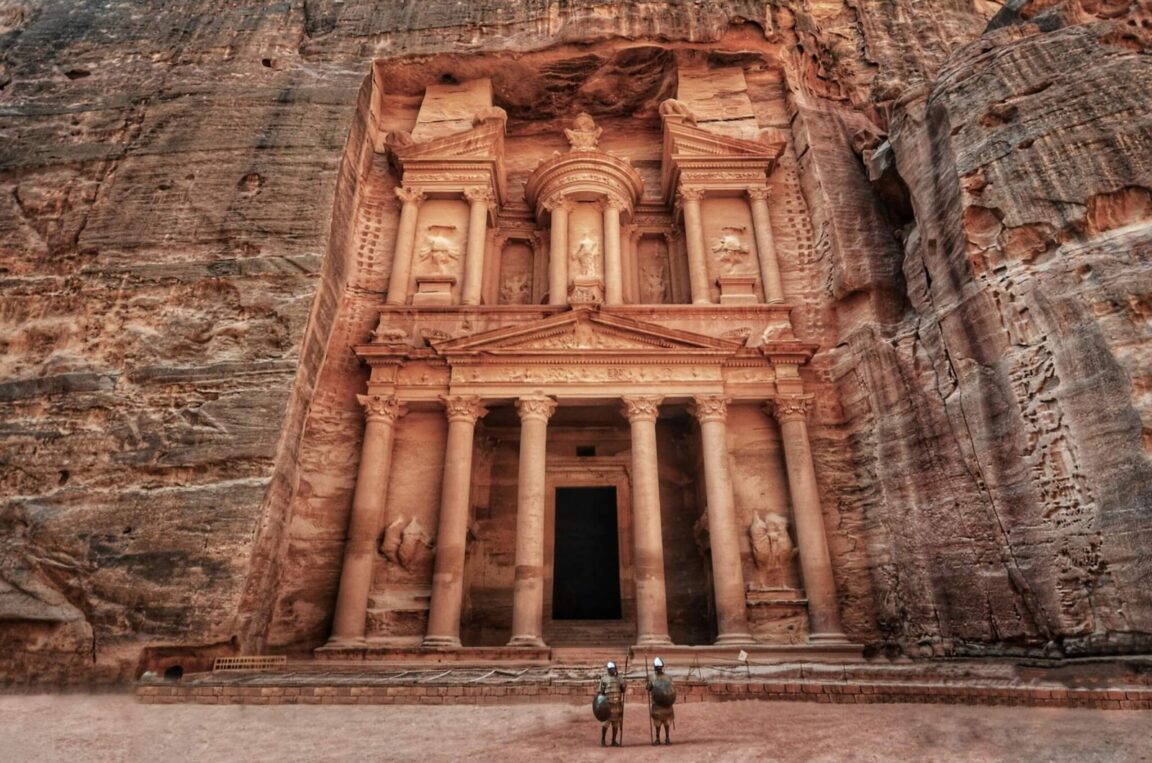
Our route guide to visiting Petra, Jordan: the Siq, the Treasury and how much time wonder takes covers the site itself. This piece is about the bag that makes that day, and the desert night after it, comfortable.
The Layering System, Layer by Layer
Base layers you can repeat
Pack three to four tops in merino or a merino blend. They handle the full winter range: warm enough under a jacket in a dawn Siq, comfortable alone at a sunny Wadi Rum lunch stop, and slow to pick up odour on a trip where laundry stops are scarce. Add one set of thermal leggings or long underwear. You will wear them under trousers on the coldest Petra morning and, just as importantly, to sleep in at a desert camp, where heating varies by camp and the cold arrives the moment the sun drops.
The mid layer that does the walking
One fleece or light insulated mid layer is the workhorse of the trip. Petra is a walking day of 10 kilometres or more if you add the Monastery climb, and you will start cold, warm up on the steps, cool down in shaded canyon sections and chill again at viewpoints. A mid layer you can vent or remove and tie off beats a single heavy coat for exactly this pattern. Choose one with pockets you can use with gloves half on.
The insulated jacket for still evenings
Desert cold is a standing still problem. Jeep tours end at sunset viewpoints, camps serve dinner outdoors or in communal tents, and stargazing is the main evening event in Wadi Rum. A packable down or synthetic insulated jacket, worn over the mid layer, is what makes those hours enjoyable rather than endured. If your jacket only works while you are moving, it is the wrong jacket for this trip.
The shell for Amman’s rain
Bring a real waterproof jacket, not a water resistant fashion layer. Amman rain in January is steady rather than theatrical, and the city’s hills mean you are walking in it between the Citadel, the Roman Theatre and dinner. The same shell blocks the wind that makes Petra’s exposed Monastery plateau feel several degrees colder than the town reading. A compact travel umbrella is a useful second, but it does not replace the shell on site days.
Legs, Feet and the Wet Stone Problem
Two pairs of trousers are enough: one sturdy walking pair and one smarter pair for Amman evenings, where restaurants dress casually but not in hiking gear. Avoid jeans as your only option. They are heavy when wet, slow to dry in unheated rooms and miserable on a cold desert morning. For feet, the priority is grip. Petra’s Siq floor, theatre steps and Monastery trail are stone, and stone after rain is slick. Broken in walking shoes or light hikers with a lugged sole, plus merino socks, cover the whole route. Sandals have no role in a winter bag except as camp slippers, and even those can be skipped.
Small Items That Earn Their Space
A warm hat and gloves look excessive on a Middle East packing list and are the two items winter travellers most wish they had packed, usually at a Wadi Rum sunset. Add a buff or scarf, which covers desert wind, dust on jeep legs and modest dress situations in one item. A headtorch matters for camps, where paths between tents are unlit, and for pre dawn starts. Pack a small dry bag for phone and documents on rainy Amman days, a power bank because cold drains batteries on long site days, and any medication in hand luggage, as with any trip where checked bags and desert transfers mix.
On dress codes, winter layering makes Jordan easy. Shoulders and knees covered is the respectful default for religious sites and smaller towns, and your cold weather kit does this automatically. At Petra and Wadi Rum, practical outdoor clothing is the norm for everyone. This is one winter advantage nobody mentions: the climate packs the modest wardrobe for you.
How This Compares With Other Winter Desert Trips
If you have packed for Egypt in winter, you already own most of this bag. Our system for what to pack for Egypt in winter uses the same three layer logic for Cairo mornings and desert nights, and Jordan simply turns every dial a little colder and wetter. The Jordan specific upgrades are the waterproof shell, upgraded from optional to essential, and sleep thermals for desert camps. Travellers combining both countries in one trip can pack the Jordan version and be covered for both. And if your Jordan route ends with a float rather than a frost, our guide to the Dead Sea, Jordan side explains the warmest stop on the itinerary, the one place in a winter trip where the light layer finally wins.
Frequently Asked Questions
How cold does Jordan actually get in winter?
Colder than most visitors expect. January is the coldest month: Amman averages roughly 12 degrees by day and 4 to 5 degrees at night, Petra is a few degrees milder by day but drops to around 2 to 4 degrees at night, and Wadi Rum nights sit between 0 and 5 degrees, occasionally below freezing.
Does it rain in Petra in winter?
Sometimes, but cold is the bigger issue. Petra has only a handful of genuinely rainy days in a typical winter, while Amman and the northern highlands get most of the country’s rain. Pack the waterproof for Amman and for wind protection at Petra, and check the forecast for flash flood closures in canyon areas after heavy rain.
What shoes are best for Petra in winter?
Broken in walking shoes or light hiking shoes with strong grip. You will walk on sand, gravel and a lot of stone, and wet stone steps on the Monastery trail are slippery. Boots are optional; ankle support matters less than sole grip and a fit you have already tested on a long day.
Can you do Jordan in winter with carry on only?
Yes, and it suits the route. The layering system in this guide, two trousers, three to four merino tops, an insulated jacket that compresses and a shell, fits a standard carry on with a daypack. Desert camps and frequent hotel changes reward travelling light.
What do you wear for a night in Wadi Rum?
Everything you packed, in sequence: thermals as a base, mid layer, insulated jacket, hat and gloves. Camps provide heavy blankets, but heating and insulation vary widely between camps, so pack as if you will be outdoors until bedtime, because for dinner and stargazing, you will be.
Is winter a good time to visit Jordan?
For walkers, yes. Petra without summer heat and with far thinner crowds is a trade most travellers happily make for colder mornings, and Wadi Rum’s clear winter skies are prime stargazing conditions. The cost is shorter days and the need to pack properly, which is what this list is for.