 Rafael Santos
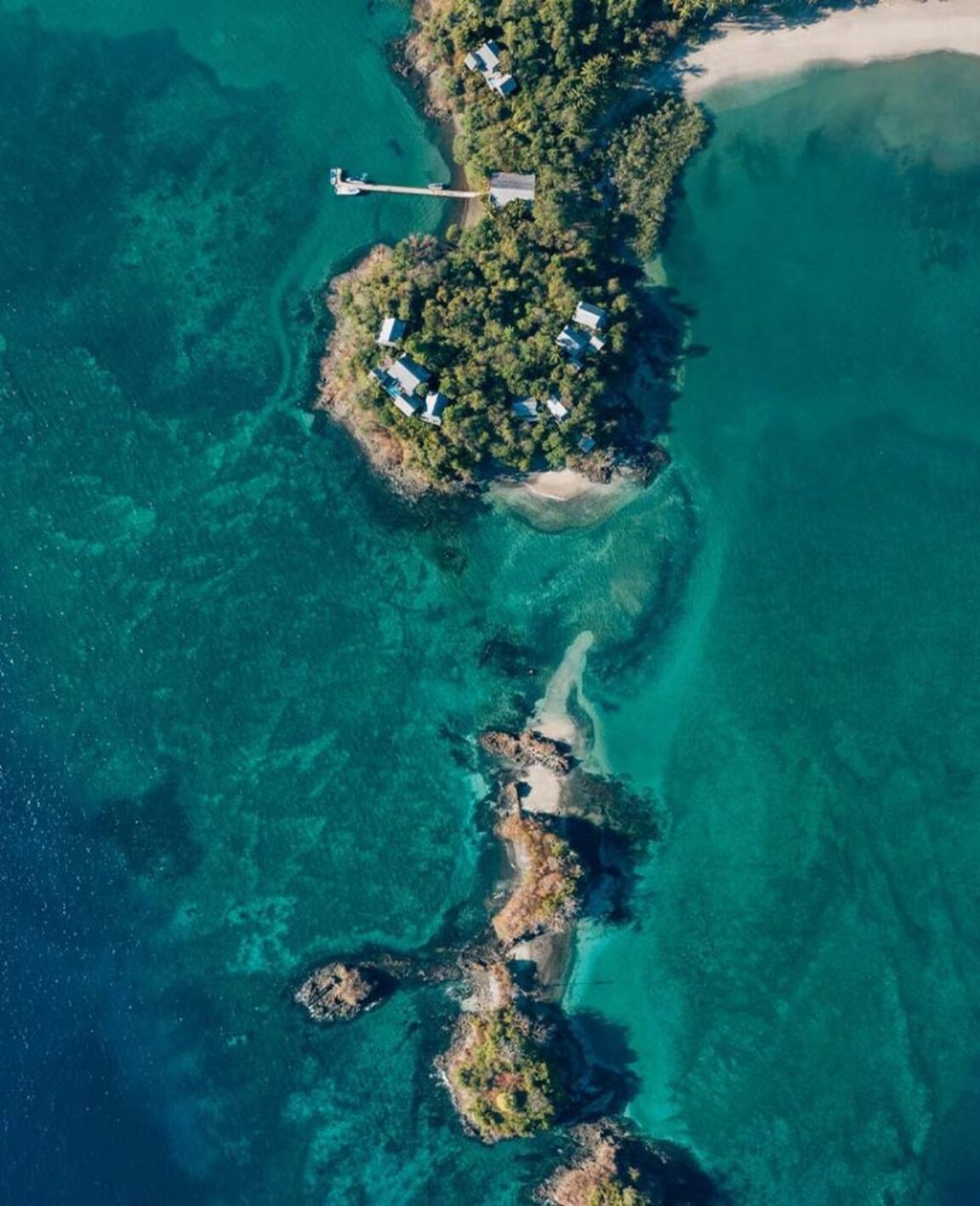
Islas Secas is a resort with the shape of a conservation project: seven casitas and residences for a maximum of about 24 guests, spread across one island in a protected 14 island archipelago in Panama’s Gulf of Chiriqui, powered entirely by solar energy, an hour or so by boat from Coiba National Park. The judgement for travellers is simple. If the idea of a private island where the activities are snorkelling over one of the largest coral reef systems in the Eastern Tropical Pacific, diving, sportfishing and watching humpback whales in season sounds like the holiday itself, Islas Secas has almost no rival in Panama. If you want a beach club scene, look elsewhere; there are not enough guests here to make one.
Quick Facts
Location: A 14 island private archipelago, about 20 miles off Panama’s Pacific coast in the Gulf of Chiriqui
Capacity: Seven casitas and residences, up to 24 guests
Power and water: 100 percent solar generated energy; 100 percent of wastewater reused for irrigation; 100 percent of food waste composted, per the resort
Wildlife: About 750 species of fish, more than 100 bird species and 128 plant species recorded in the archipelago, per the resort
Neighbour: Coiba National Park, a UNESCO World Heritage Site, just over an hour away by boat
Getting there: Scheduled Twin Otter flights from Panama City direct to the resort’s airstrip, several times a week depending on season
Rates checked: November 21, 2026, on islassecas.com; the Tented Casitas were listed from $3,500 per night in the April 29 to September 27 and November 18 to December 18, 2026 windows, rising in peak season, with a 3 night minimum in most windows
What are the casitas actually like?
The accommodation divides into three families. The three Tented Casitas are the romantic entry point: one bedroom pavilions high in the hills whose walls roll up to open the room to a broad terrace, with a daybed, an outdoor soaking tub and the main pool by the Terraza a short stroll away. They suit adventurous couples comfortable with an incline walk to a secluded outpost, which is the resort’s own honest framing.
The four Casitas proper have a grown up treehouse feel, built in traditional Panamanian style with high ceilings, big windows and louvered shutters. Casita Mirador is the one bedroom hideaway, with terrace, plunge pool and gardens. Casita Tres Palmas and Casita Sombras are two bedroom family layouts, each joining two casitas around a shared terrace and plunge pool; Sombras adds steps down to a private beach. Casita Grande scales to four bedrooms for a full family or group takeover of one address.
Above all of it sits Casa Cavada, the resort’s showpiece residence: an 8,300 square foot, four bedroom, six bathroom indoor outdoor house under a vast undulating roof on eucalyptus pillars, with sitting room, kitchen, dining room, gym, bar and a semi Olympic infinity pool. It is priced and booked as a private residence, not a room, and for a multigenerational group it changes the maths of the whole resort.
What does the rate include, and what does it not?
Islas Secas sells an unusually complete rate. Per the resort’s own inclusions list, it covers cooked to order breakfast, lunch and dinner including beach picnics; snorkelling trips within the archipelago; a diving program from a three hour Discover Scuba experience for the uncertified to around 20 dive sites for certified divers; watersports including nature cruises, wakeboarding, e-foiling, paddleboarding, kayaking and sailing; guided nature hikes and birdwatching; one half day fishing trip within the archipelago per stay; and one 60 minute spa treatment per adult guest. High speed wifi and laundry are included too.
The exclusions matter for budgeting: government taxes (10 percent on lodging, 7 percent on other purchases), the scheduled flights between Panama City and the resort, gratuities, and excursions beyond the archipelago, which means Coiba National Park trips and deep sea fishing are priced separately. Build those into the comparison before judging the nightly number against a conventional resort.
How do the seasons set the calendar?
The Gulf of Chiriqui runs on wildlife seasons. Humpback whales migrate through these waters in the northern summer and early autumn, roughly July to October, when whale watching joins the daily program and the sea is at its most alive. The dry season, roughly December to April, brings the clearest skies, the calmest crossings and the peak rates, including the festive window with a 7 night minimum. Sportfishing follows its own logic, with the famous Hannibal Bank and the Coiba area drawing serious anglers for marlin, tuna and wahoo across much of the year, peaking with the seasonal runs the resort’s captains plan around. Divers and snorkellers get warm water year round, with visibility varying by season and plankton. The practical advice is to pick the wildlife first and the dates second: a whale season stay and a dry season stay are different holidays at the same address.
What is the Coiba day trip worth?
Coiba National Park protects the largest island in Central America and one of Panama’s finest coral reefs, and it sits just over an hour by boat from Islas Secas. A day there adds primary rainforest, deserted beaches and reef snorkelling of a wilder character than the home archipelago, plus the strange history of Coiba’s former penal colony. It costs extra, it takes a full day, and for most guests it is the single best excursion on the menu. Book it early in the stay so weather can move it if needed, the same rule as any signature boat day.
How do you get there, honestly?
The resort’s own Twin Otter is the intended route: guests arriving in Panama City are met and escorted through immigration and customs to the domestic departure, then flown direct to the island airstrip. Scheduled transfers run three to four times a week depending on season, priced per person per way on a sliding scale by group size, and private charters can be arranged outside the schedule. The alternative, a drive west and a boat from the mainland coast, is long enough that almost nobody chooses it. Plan the Panama City night accordingly: an arrival too late for the scheduled flight means a city night at the front of the trip, which is no hardship, but it should be a choice, not a surprise.
Who should book Islas Secas?
Book it for divers, anglers, whale watchers and families who want a private island that teaches children to care about an ecosystem by putting them inside it, with the Islas Secas Foundation’s conservation work as the backdrop. The sustainability claims here are operational, solar power, water reuse, composting, a funded foundation, rather than decorative, and the resort publishes them in detail on its own site. Skip it for nightlife, shopping, restaurant variety or a short stay: with flight schedules and minimum stays, three nights is the floor and four or five is the rhythm. For a contrasting private wilderness stay in the same series, see Shinta Mani Wild in Cambodia and the lakeside formality of Blanket Bay in New Zealand.
Frequently Asked Questions
How many guests does Islas Secas hold?
Up to 24 guests across seven casitas and residences on one island of the 14 island archipelago, per the resort.
Is Islas Secas really solar powered?
The resort states that 100 percent of its energy is solar generated, 100 percent of wastewater is reused for irrigation and 100 percent of food waste is composted.
When can you see whales at Islas Secas?
Humpback whales pass through the Gulf of Chiriqui in the northern summer into early autumn, roughly July to October. The resort runs whale focused excursions in season.
What is not included in the rate?
Taxes, the Panama City flights, gratuities, and excursions beyond the archipelago such as Coiba National Park and deep sea fishing, per the resort’s inclusions list checked November 21, 2026.
How do you reach Islas Secas?
By the resort’s scheduled Twin Otter flights from Panama City direct to the island, several times a week depending on season, with meet and assist on arrival in Panama City.
Sources checked November 21, 2026: Islas Secas official site and factsheet (islassecas.com), including accommodation, rates windows for the Tented Casitas, inclusions and exclusions, and sustainability figures.
Featured image: Aerial view of an Islas Secas island, its casitas in the forest above a sand cove in the Gulf of Chiriqui, Panama. Photo: Islas Secas, via the resort’s own official website (islassecas.com), used with credit. Native 800 x 984, upscaled to exactly 1600 wide.