 Thandiwe Nkosi
Singita Sabora is nine tented suites on an open plain inside 350,000 acres of protected Grumeti wilderness, and its proposition is privacy at a price that needs no dressing up: from 2,210 US dollars per adult per night in the off-peak season to 3,220 dollars at peak, before the flights that get you to its airstrip. What that money buys is a front-row position on the western corridor of the Serengeti migration, a suite that functions like a small private camp of its own, with its own pantry, dining space, fitness area and meditation deck, and game viewing that starts from your outdoor sala, overlooking one of the camp’s two waterholes, before a vehicle even starts. Sabora suits travellers who want the migration without the convoy and canvas without hardship. This guide itemises the proposition from Singita’s own published camp and rate information, checked on November 24, 2026, including the costs that sit on top of the headline rate.
Quick Facts
- The camp: Singita Sabora Tented Camp, in the Singita Grumeti reserve, 350,000 acres of protected wilderness adjoining the Serengeti in northern Tanzania, managed in partnership with the Grumeti Fund.
- The suites: nine self-contained tented suites, each with a private pantry, dining and fitness areas, a meditation deck, and an outdoor sala with daybeds overlooking one of Sabora’s two waterholes.
- Published rates, per adult per night sharing: peak season, 16 May to 30 September and 15 December to 5 January, 3,220 US dollars. Shoulder season, 1 to 31 October, 2,795 dollars. Off-peak, 6 January to 15 May and 1 November to 14 December, 2,210 dollars. Child rates are half the adult rate in each season.
- Check-in and check-out: check-in 13:00, check-out 11:00. The camp is open year round.
- Access: guests fly to the Sasakwa airstrip serving the Grumeti lodges, and return road transfers from the designated airstrip are part of the Singita arrangement. The flights themselves are an additional cost, priced by route and carrier when you book.
- On top of the rate: wildlife, park and concession fees, levies, wellness treatments and travel to and from the reserve sit outside the nightly rate. Confirm the current fee schedule with Singita before paying, because fees change by authority notice.
What is a Sabora suite actually like?
Singita describes the current camp as a leading-edge expression of life under canvas that is light, modern and elegant, built from pared-back interpretations of traditional safari style and the work of local artisans, which is the honest modern translation of the 1920s explorer styling Sabora is known for. The romance is in the references; the comfort is contemporary. Each of the nine suites is self-contained to a degree most tented camps do not attempt: a private pantry and a lifestyle unit stocked for in-suite dining, a private fitness area, a meditation deck for outdoor yoga or stillness, and an outdoor sala with secluded daybeds positioned for uninterrupted game viewing over a waterhole. A shared Guest Deli, stocked with baskets and fridges of gourmet items, lets guests assemble picnics and treats for their own decks and corners of the camp.
The layout of the camp itself is loosely circular, running from the entrance through shared spaces to a firepit, and wildlife roams freely through it, grazing the same paths guests walk. That openness is the product and the caveat in one: animals are not a scheduled activity at Sabora, they are the ambient condition, and the wide windows of a tented suite draw the eye to the plains from the bed itself. Travellers weighing East African splurges against other once-a-decade stays, such as the hillside luxury in our Auberge du Soleil assessment, should note the difference in kind: at Sabora the room rate is inseparable from the reserve, the guiding and the migration geography that surround the canvas.
When does the migration pass Sabora?
Sabora’s position is its timing. The camp faces the plains of the Grumeti, on the western corridor route the great wildebeest herds follow as the migration moves north through the Serengeti ecosystem, typically bringing the main herds through the Grumeti in late May, June and into July, with resident game, predators and plains herds present across the year. Singita’s own rate calendar prices the proposition accordingly: its peak season runs from 16 May to 30 September, spanning the corridor passage and the dry season that follows, with a second peak over the festive period from 15 December to 5 January. October is priced as shoulder, and the long off-peak from January to mid-May and again in November and early December is when the plains are greenest, the camp quietest and the rate at its floor of 2,210 dollars per adult per night.
No operator can promise a crossing on a given date, and Sabora does not need one to justify itself outside the migration weeks: the Grumeti Fund’s conservation work since 2003 has rebuilt buffalo, wildebeest and elephant populations across the reserve, and reintroduced Eastern black rhino in 2019, in what Singita describes as the largest single relocation of its kind. The private-reserve setting also means game drives are not shared with the vehicle fleets of the public park, which is a material part of what the rate buys in peak weeks.
What does the full bill look like?
Build it in three layers. First, the nightly rate itself, per adult sharing: 3,220 dollars at peak, 2,795 in October’s shoulder, 2,210 off-peak, with children at half rate, and rates quoted in US dollars, inclusive of tax, and subject to change on authority notice. The rate carries the substance of the stay: accommodation, meals and beverages, game drives and the return transfer from the designated airstrip. Second, the access layer: Sabora is reached by air to the Sasakwa airstrip, and those scheduled or charter flights are not in the nightly rate. Their cost depends on whether you route through Arusha or connect from another camp, and it is quoted at booking; treat any itinerary that does not itemise it as unfinished. Third, the authority layer: wildlife, park and concession fees, a carbon levy and Tanzania’s Tourism Development Levy are charged on top of the accommodation rate, alongside personal items such as wellness treatments and boutique purchases. Ask Singita’s journey designers for the current per-night fee total in writing before you confirm, because these charges are set by authorities and move independently of the lodge rate.
Judged against the other great splurges in this series, from Phang Nga Bay villas in our Six Senses Yao Noi guide to Sabora itself, the pattern is the same: the headline rate is real, but the honest price is the rate plus access plus fees, and Sabora’s version of that sum buys nine suites, a private reserve and the western corridor. For a couple in migration season, that is a deliberate, eyes-open purchase. Booked for the privacy and the plains rather than for a guaranteed river crossing, it is very hard to call it anything but what it is: one of the finest tented addresses in Africa.
Frequently Asked Questions
How many suites does Singita Sabora have?
Nine. Each is a self-contained tented suite with its own pantry, dining and fitness areas, a meditation deck and an outdoor sala with daybeds overlooking one of the camp’s two waterholes.
What does Singita Sabora cost per night?
Singita’s published rates per adult per night sharing are 3,220 US dollars in peak season (16 May to 30 September, and 15 December to 5 January), 2,795 dollars in the October shoulder season, and 2,210 dollars off-peak (6 January to 15 May, and 1 November to 14 December). Children are charged at half the adult rate. Wildlife and park fees, levies and flights to the airstrip are additional.
When is the best time to see the migration at Sabora?
The herds typically move through the Grumeti’s western corridor in late May, June and into July, which is why Singita prices mid-May to September as peak. Resident wildlife is present year round, and the off-peak green season offers the lowest rates and the quietest camp.
How do you get to Singita Sabora?
By air to the Sasakwa airstrip serving Singita Grumeti, followed by a road transfer to camp that forms part of the arrangement. The flights themselves are an extra cost, priced by route and carrier at the time of booking.
What is included in the Sabora rate?
Accommodation, meals and beverages, twice-daily game drives, laundry and return transfers from the designated airstrip are the core of the Singita arrangement. Park and wildlife fees, levies, wellness treatments, boutique purchases and your travel to the reserve are charged separately.
Is Singita Sabora open all year?
Yes. Singita lists the camp as open year round, with check-in at 13:00 and check-out at 11:00.
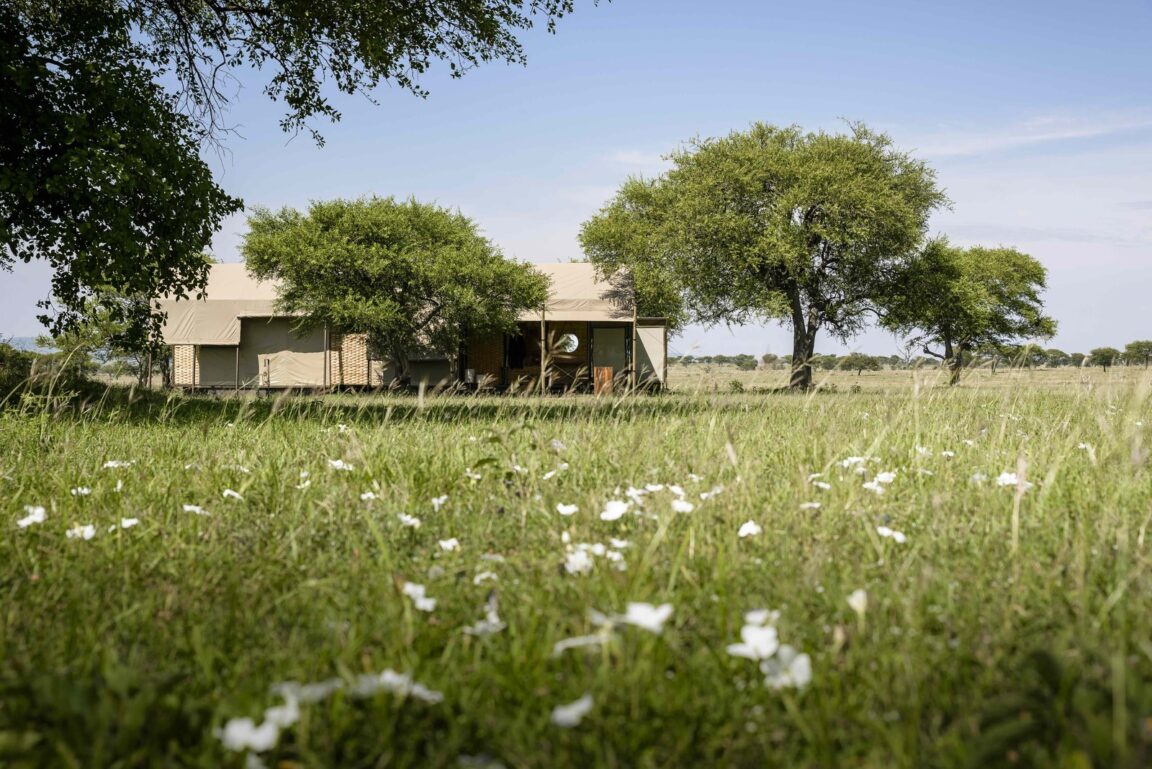
Image: A Singita Sabora tented suite standing on the open Serengeti plains among acacia trees, seen across wildflower grassland. Photo: Adriaan Louw, via singita.com, Singita’s official website, used with credit.