 Kwame Mensah
Two days in Accra is enough to cover the city properly if you sequence it by geography: spend day one on the independence and heritage circuit in the historic centre, moving between the Kwame Nkrumah Memorial Park, Black Star Square, Jamestown and Makola Market, then spend day two in Osu and at Labadi Beach, with an honest optional early start to Cape Coast Castle if heritage matters more to you than a slow second day. Accra rewards that order. The memorial sites sit close together, Jamestown works best with a local guide in the morning light, Makola is at its most navigable before midday heat builds, and Osu, with its Oxford Street strip of cafes, bars and shops, is the natural place to end both evenings.
What are the quick facts for 2 days in Accra?
- Best base: Osu or Ridge for first-timers, close to restaurants and a short ride from the historic centre.
- Day 1 focus: Kwame Nkrumah Memorial Park, Black Star Square, Jamestown, Makola Market.
- Day 2 focus: Osu and Oxford Street, Labadi Beach, with an optional Cape Coast day trip.
- Key heritage site: Cape Coast Castle, about 150 kilometres west of Accra, open daily 9:00am to 4:30pm according to the Ghana Museums and Monuments Board.
- Getting around: Ride-hailing apps and hired drivers for set routes; allow generous time for Accra traffic.
- Guides: Book a local guide for Jamestown and Makola rather than wandering either alone.
How should you spend day 1 in Accra?
Start at the Kwame Nkrumah Memorial Park, on the site of the old polo grounds where Nkrumah declared Ghanaian independence in 1957. The park holds his mausoleum and a museum covering his life and the Pan-African movement he helped lead, and it reopened in July 2023 after a major renovation, so the grounds and museum presentation are in far better shape than older guidebooks describe. Give it a full hour. The story told here is the frame for everything else on the heritage circuit: Ghana was the first sub-Saharan African colony to win independence, and Nkrumah is the central figure in that story. Going here first means Black Star Square and Jamestown read as chapters of the same history rather than disconnected photo stops.
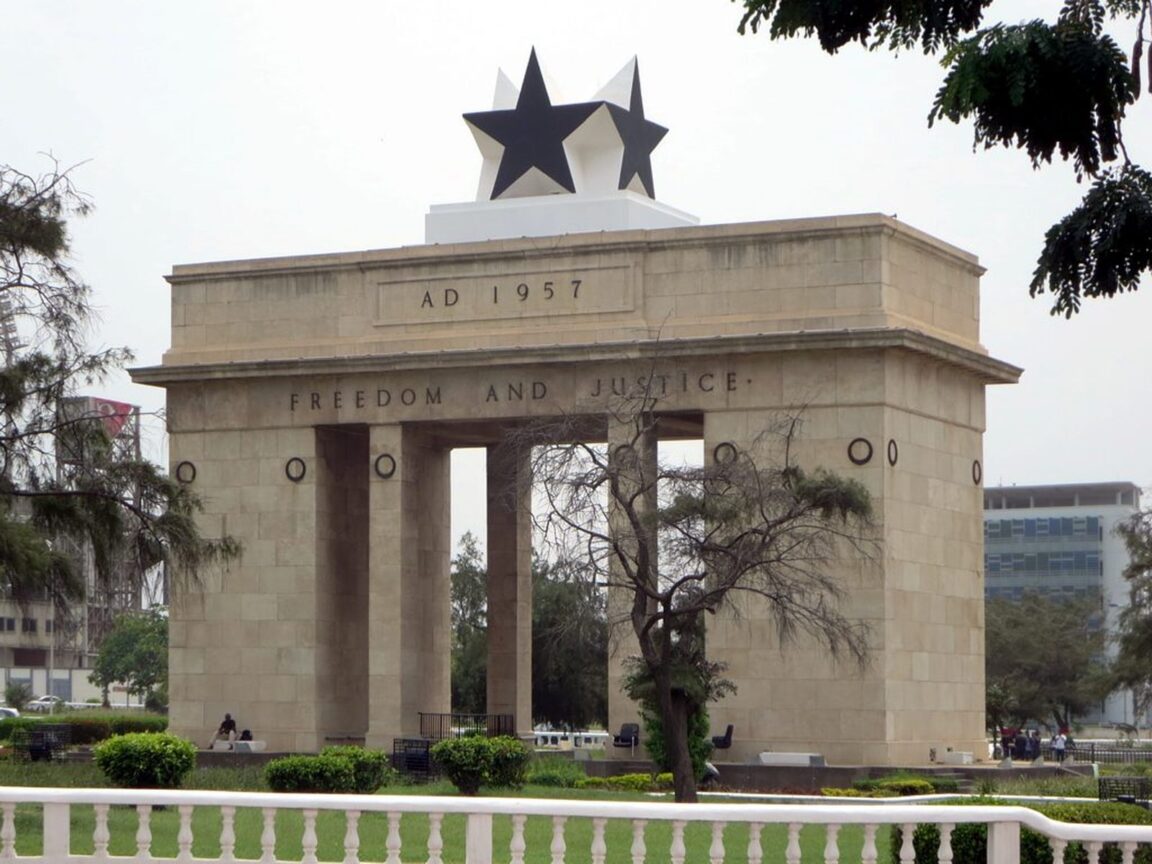
From the memorial park, Black Star Square, also called Independence Square, is a short hop east along the seafront. It is one of the largest parade grounds in Africa, built under Nkrumah and completed around independence-era celebrations, framed by the Independence Arch and the Black Star Gate, whose five-pointed black star gives the square its popular name. There is little shade and, outside national events such as Independence Day on 6 March, little activity, so treat it as a 20 to 30 minute stop: walk the square, read the monuments properly, take the photograph with the gate, and move on before the heat does its work. Its value is symbolic scale rather than things to do, and viewed straight after the memorial park it lands as intended.
Why is Jamestown the essential Accra neighbourhood?
Jamestown, in the southwest of the old city, is one of Accra’s oldest districts, a Ga fishing community that grew up around James Fort, built by the British as a trading post in the 1670s. Its landmark is the Jamestown Lighthouse, a roughly 28 metre stone tower painted in red and white horizontal bands, built in the early 1930s to replace an 1871 original. When access is arranged locally, climbing the tower gives the clearest view in the city over the fishing harbour, where brightly painted canoes line the shore and crews mend nets and land the catch. Go with a local guide. Jamestown is a working community, not an open-air museum, and a guide makes the visit welcome, explains the boxing gyms and mural art the district is known for, and keeps the walk respectful around the harbour. Allow 90 minutes to two hours, ideally in the morning.
Finish day one at Makola Market, Accra’s biggest market, which has traded since 1924 and sprawls across several blocks of the central business district. Makola sells almost everything, but for a visitor the draw is the cloth trade: stalls stacked with wax-print fabrics, kente and everyday goods, plus food sections that show how the city actually eats. It is dense, loud and hot, and that is the point. Keep your phone and wallet secure, carry small notes, agree prices before goods are wrapped, and go in the late morning when the market is fully alive but the worst afternoon heat has not yet settled. If the scale overwhelms, the nearby Centre for National Culture, by the memorial park, concentrates Ghanaian carving, textiles, beads and drums into one browsable craft market where bargaining is expected and the pace is calmer.
How should you spend day 2 in Accra?
Day two belongs to Osu, the district most visitors end up liking best. Its main strip, Oxford Street, runs with cafes, restaurants, bars, pharmacies, supermarkets and souvenir shops, and the side streets off it hold much of Accra’s nightlife. Spend the morning slowly here: coffee, a proper Ghanaian lunch, and time in the independent shops and galleries that sit a street or two back from the main drag. Osu is also the practical base for a short stay, since it concentrates the services a two-day visitor needs in walkable form, and it is the easiest place in the city to find international food when you want a break from the heritage circuit’s intensity.
Eat deliberately on day two. Ghanaian food is a highlight of any Accra trip and Osu and the centre both serve it well: jollof rice, waakye sold with its full set of accompaniments, grilled tilapia with banku and pepper sauce, groundnut stew, and kelewele, the spiced fried plantain sold as a snack and side. Order at a busy local spot, ask what is freshest, and treat lunch rather than a rushed street snack as the main food event of the day, since sit-down cooking is where these dishes show their range.
Is Labadi Beach worth an afternoon?
Yes, with the right expectations. Labadi Beach, formally La Pleasure Beach, is Accra’s most popular public beach, east of the centre past Osu, and on weekends it fills with families, music, horse rides and food and drink stalls. It is a social beach rather than a swimming idyll: go for the atmosphere, a cold drink and people-watching in the late afternoon, pay the entry fee at the gate, keep valuables minimal and supervised, and be cautious about swimming, since currents along this coast are strong and conditions vary. On a two-day trip it earns its place as the decompression slot after two dense days of history and markets, and sunset is its best hour.
Should you add Cape Coast Castle as a day trip?
Honestly framed: Cape Coast is a long day, and you should only add it if you understand what it costs the rest of the itinerary. Cape Coast Castle stands about 150 kilometres west of Accra, roughly three to four hours each way by road depending on traffic, which means a pre-dawn or 6am departure, a guided castle tour of around 45 minutes plus museum time, lunch in Cape Coast, and a return to Accra by early evening at best. The Ghana Museums and Monuments Board lists the castle museum as open daily from 9:00am to 4:30pm, with entrance fees reviewed in July 2023 at GH¢80 for non-Ghanaian adults and GH¢20 for Ghanaian adults, so confirm current fees before travelling. The castle, inscribed by UNESCO as part of Ghana’s forts and castles World Heritage listing, was one of the largest slave-trading posts on the West African coast, and its dungeons and Door of No Return make it one of the most significant heritage sites in Africa for visitors tracing the transatlantic slave trade.
The verdict: if this is a heritage trip, take the day trip and drop Labadi Beach and the slow Osu morning without regret, because Cape Coast is the single most important historical excursion in Ghana. If your two days are a general city break, keep Cape Coast for a return trip with a night in Cape Coast or Elmina, where the castles, Kakum National Park’s canopy walkway and the coast can be done without six to eight hours of road in a single day. What you should not do is try to bolt Cape Coast onto a full Accra day. Something will be rushed, and it will usually be the site that deserved the most time. Travellers planning a similar short heritage-focused city break may also want our 2 days in Marrakech itinerary and our 2 days in Cape Town itinerary, which use the same one-anchor-per-day structure.
What should you know before you go to Accra?
Plan around traffic first. Accra journeys routinely take twice the time the map suggests, so cluster sights geographically, as this itinerary does, and avoid crossing the city at peak hours. Carry cedis in small notes for markets, taxis where apps are not used, and beach and site entry, even though cards work in Osu’s larger businesses. Dress for heat and humidity year round, carry water, and use sun protection at Black Star Square and the beach, where shade is scarce. For Jamestown and Makola, a local guide is the single best purchase of the trip: both places open up with one and can feel closed or chaotic without. Finally, check entry requirements well before travel through official Ghanaian channels and the Visit Ghana tourism portal, since visa rules for Ghana have been changing and your nationality determines what you need.
Frequently asked questions about Accra
Is 2 days enough for Accra?
Yes for the city’s core: the independence sites, Jamestown, Makola Market, Osu and Labadi Beach fit comfortably into two well ordered days. What two days cannot include without strain is Cape Coast at a reflective pace, so treat it as an either-or choice rather than an add-on.
What is the best area to stay in Accra for a first visit?
Osu and Ridge are the most practical bases for first-timers. Osu concentrates restaurants, cafes and nightlife around Oxford Street, while Ridge is quieter and close to the memorial park and government district. Both keep the heritage circuit within a short drive.
Can you climb the Jamestown Lighthouse?
Climbing is commonly arranged locally through Jamestown guides, who handle access and lead the wider neighbourhood walk. Ask your guide to include the tower when you book, arrive in the morning for clearer views, and expect a fee. Access arrangements are local and informal, so confirm on the day.
How long does the Cape Coast day trip actually take?
Plan on three to four hours of driving each way between Accra and Cape Coast, about 150 kilometres on the N1 highway, plus 90 minutes at the castle for the guided tour and museum. Leave Accra by about 6am to tour in the morning and return in daylight.
Is Makola Market safe for visitors?
Makola is busy rather than dangerous for most visitors, but it is crowded pickpocketing territory. Go in daylight, keep your phone and wallet secured and out of sight, carry small notes, and consider a local guide for a first visit. Agree prices before purchases are wrapped.
When is the best time to visit Accra?
The drier months from around November to March are the most comfortable for sightseeing, with lower humidity and less rain to disrupt market and beach time. Accra is warm year round, so whenever you come, schedule exposed sites like Black Star Square for morning or late afternoon.