 Hana Kim
Three days in Busan is enough to understand why South Korea’s second city feels so different from Seoul. Split your time by coast: spend one day in the old port city around Gamcheon Culture Village, Jagalchi Market and Nampo-dong, one day on the east coast at Haeundae Beach and the seaside Haedong Yonggungsa Temple, and one slower day mixing Gwangalli Beach, a museum or market and a neighbourhood you have not seen yet. Arrive by KTX from Seoul in about two and a half hours, stay in Seomyeon for transport or Haeundae for the sea, and use the metro and buses rather than trying to drive. That structure, old city first, east coast second, flexible third day, is the most reliable first timer plan for Busan.
Quick Facts
- Where: Busan, on South Korea’s southeast coast, the country’s second largest city and largest port
- Getting there: KTX high speed trains from Seoul Station to Busan Station take about 2 hours 15 minutes to 2 hours 30 minutes on the fastest services, longer on stopping services
- Best bases: Seomyeon for transport and value, Haeundae for beach stays, Nampo-dong for the old city and markets
- Must see: Gamcheon Culture Village, Jagalchi Market, Haeundae Beach, Haedong Yonggungsa Temple and Gwangalli Beach
- Getting around: Busan Metro lines 1 and 2 cover most sights, with local buses for Gamcheon and the temple; a rechargeable transport card simplifies fares
- Time needed: Three full days, not counting travel, with an early start for the temple and Gamcheon
- Official planning sources: Visit Busan and Visit Korea
- Entry note: Check current arrival requirements before travel, including the guidance in our South Korea e-Arrival Card guide linked below
- Prices checked: November 2026. Train fares, attraction hours and bus routes change, so confirm on official operator sites before travel
How Do You Get From Seoul to Busan by KTX?
The KTX is the easiest way to reach Busan from Seoul for almost every visitor. Trains run frequently through the day from Seoul Station, with some services from other Seoul area stations, to Busan Station in the old part of the city. The fastest trains take a little over two hours and fifteen minutes, most useful services cluster around two and a half hours, and the journey is comfortable, city centre to city centre, with none of the airport time that makes flying less competitive than it first looks. Book through Korail’s official site or app, especially for Friday departures, Sunday returns, public holidays and summer weekends, when popular times sell out. Tickets are normally released about a month ahead.
Before you travel, sort your entry paperwork using our South Korea e-Arrival Card guide. Busan Station sits on Metro Line 1, a direct ride to Seomyeon, while Haeundae is roughly three quarters of an hour away by metro, worth knowing before you choose where to stay.
Where Should You Stay in Busan?
Choose your base by the trip you want, because Busan is a spread out city and cross town journeys take real time. Seomyeon, the downtown junction of Metro Lines 1 and 2, is the most practical all round base: it has the widest range of hotels at mid range prices, department stores, restaurants and nightlife, and it puts both the old city and Haeundae within a single metro ride. First timers who want efficiency over scenery should stay here.
Haeundae is the beach base, with morning walks on the sand, sea views and easy access to the east coast sights, at the cost of a longer ride to Gamcheon and Jagalchi. It suits summer and family trips. Nampo-dong, near Jagalchi, is the characterful third option: markets, street food and the strongest sense of old Busan. Whichever base you choose, stay within a short walk of a metro station.
Day 1: Gamcheon, Jagalchi and the Old City
What Is Gamcheon Culture Village, and When Should You Go?
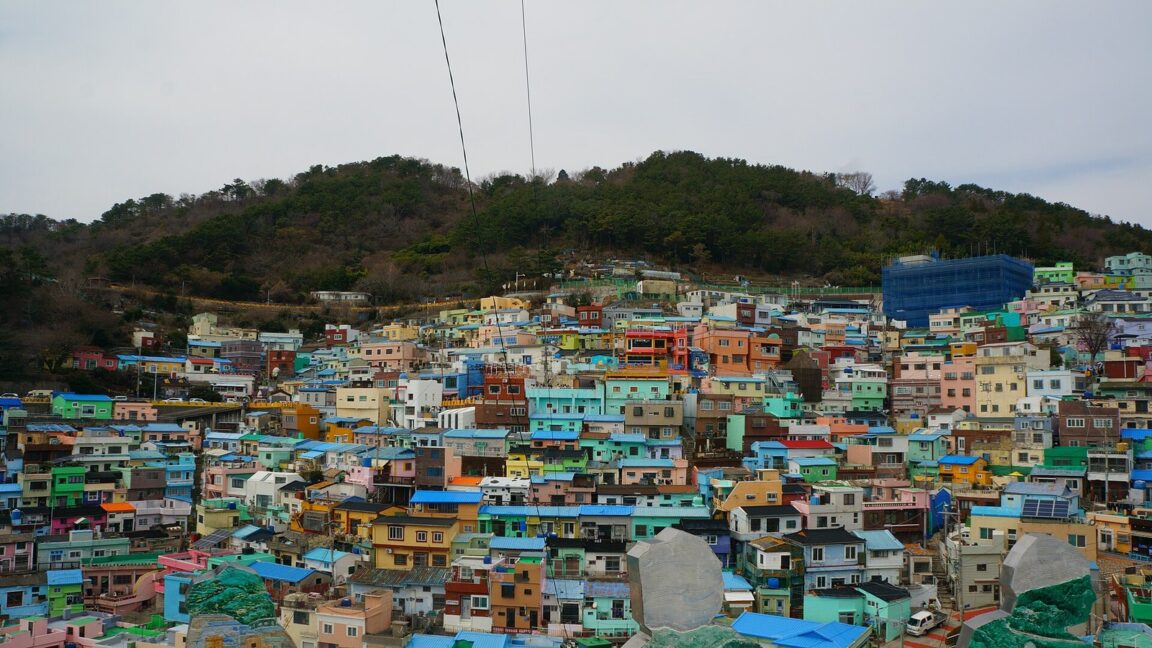
Start early at Gamcheon Culture Village, the hillside neighbourhood of brightly painted houses, murals, small galleries and steep lanes that has become Busan’s most photographed place. Its history matters: the settlement grew in the 1950s as refugees from the Korean War built homes on this hillside, and its colourful present as an art village, developed from a public art project that began in 2009, sits on top of a still lived in residential area. Go in the morning, ideally soon after the village’s visitor facilities open, for softer light, cooler climbing and lanes that are not yet full. The nearest metro station is Toseong on Line 1, from where a short local bus or taxi ride climbs the hill to the village entrance; walking up from the station is possible but steep.
Inside the village, follow the main lanes first for the classic views across the rooftops to the sea, then explore the side alleys, art installations and small museums at a slower pace. A stamp map, available locally for a small charge, gives children and completists a satisfying route. Above all, remember that people live here: keep voices down, do not enter private homes or photograph residents without permission, and stay on public lanes. Allow two to three hours, including the journey, and wear shoes suited to steep, sometimes uneven streets.
What Should You Eat at Jagalchi Market?
Come down from Gamcheon to Jagalchi Market, beside the harbour in Nampo-dong, for lunch. Jagalchi is Korea’s best known seafood market, a multi storey indoor market alongside outdoor stalls where vendors, many of them the famous Jagalchi women sellers, display live and dried seafood from the waters around Korea. The classic first timer experience is to choose seafood on the ground floor and have it prepared in one of the restaurants in the building, or to sit down at a stall or restaurant and order grilled fish, seafood pancakes, raw fish or a spicy seafood stew. Agree prices clearly before food is prepared, especially for live seafood sold by weight, and treat the market as a working place of business as well as a sight: ask before photographing stalls and vendors at close range.
Spend the afternoon wandering the old city. BIFF Square, named for the Busan International Film Festival, is lined with stalls selling ssiat hotteok, the seed filled sweet pancakes that are a Busan speciality. Nearby Gukje Market sells almost everything and rewards an unstructured hour. Finish with dinner in Nampo-dong or a metro ride to Gwangalli for the illuminated Gwangan Bridge after dark. For another Asian city where markets structure the day, compare our first time Bangkok itinerary.
Day 2: Haedong Yonggungsa and Haeundae
Why Is Haedong Yonggungsa Temple So Unusual?
Make your earliest start of the trip for Haedong Yonggungsa, the Buddhist temple built on rocky cliffs above the sea in Gijang, northeast of Haeundae. Most Korean temples sit in mountains; this one stands at the water’s edge, with halls, pagodas and statues arranged over the rocks and waves breaking below. According to Visit Korea, the temple was first built in 1376 by the Buddhist teacher Naong during the Goryeo dynasty, destroyed during the Japanese invasions of the 1590s, and rebuilt in the early 1930s. Entry is listed as free by Visit Korea, which makes an early, unhurried visit one of the best value experiences in Busan.
Arrive as early as you comfortably can. The temple is popular, tour groups build through the morning, and the coastal light is best early. Descend the stone steps to the main halls slowly, taking in the sea views, the statues and the small shrines set into the rock. Dress and behave as you would at any active place of worship, with covered shoulders, quiet voices and no photography where signs prohibit it. Getting there takes planning because no metro station is at the door: from Haeundae, buses and taxis cover the journey along the coast, and the official Visit Busan information for the temple lists current bus options. Build the return journey into your timing so the trip feels calm rather than rushed.
How Should You Spend the Afternoon in Haeundae?
Return to Haeundae for lunch and a beach afternoon with no agenda beyond the coast. Haeundae Beach, served directly by Haeundae Station on Metro Line 2, is Busan’s most famous stretch of sand, backed by high rise hotels and a promenade that runs toward Dongbaekseom, the pine covered headland at its western end. Walk the headland path for views back across the bay, visit the Nurimaru APEC House on Dongbaekseom if it is open, and then return to the beach for swimming in season, when lifeguards and designated areas operate, or for a long walk out of season.
Day 3: Gwangalli, Museums and a Neighbourhood of Your Choice
Keep day three deliberately open. Start with a slow morning at Gwangalli Beach, with a wide view across the bay to the Gwangan Bridge and a long strip of cafes where a window seat is the morning’s whole plan. Swim in season or simply walk, then choose one deeper experience for the middle of the day: the Busan Museum, the United Nations Memorial Cemetery, a cooking class, or the cafes of Jeonpo behind Seomyeon.
How Do You Get Around Busan Without Wasting Time?
The metro is the backbone. Line 1 runs from Busan Station through Nampo, Jagalchi and Seomyeon; Line 2 runs from Seomyeon east through Gwangalli and Centum City to Haeundae. Together they cover most of this itinerary, with buses filling two gaps: Gamcheon, by local bus or taxi from Toseong Station, and Haedong Yonggungsa, by bus or taxi from Haeundae. Use a rechargeable transport card and allow realistic cross town times: Gamcheon to Haeundae crosses almost the whole city, which is why this itinerary groups sights by area. Taxis are plentiful and useful for the temple and late evenings, and Korean map apps such as Naver Map and KakaoMap give the most reliable local routing.
When Is the Best Time to Visit Busan?
Late spring and autumn are the most comfortable seasons, with mild temperatures and clearer skies. Summer brings the full beach season and the warmest swimming water, along with humidity, rain at times and peak crowds at Haeundae. Winter is cold and windy on the coast but brings clear views and quiet temples. The Busan International Film Festival, usually held in autumn, and the Gwangalli fireworks festival most affect hotel availability, so book early if your trip coincides with either. Pack layers for sea wind and comfortable shoes for Gamcheon’s hills and temple steps in any season.
Frequently Asked Questions
How many days do you need in Busan?
Three full days is the right minimum for a first visit. It allows one day for Gamcheon, Jagalchi and the old city, one for Haedong Yonggungsa and Haeundae, and one flexible day for Gwangalli and a museum, market or neighbourhood in depth. Two days is workable if you combine sights tightly, but it loses the slower day that makes Busan distinctive.
Is Busan better in Seomyeon or Haeundae for a first stay?
Seomyeon is better for transport, value and all round convenience, with both main metro lines and the widest mid range hotel choice. Haeundae is better if waking by the beach matters most and your trip centres on the east coast. Both work; the mistake is staying far from a metro station in either area.
How do you get to Gamcheon Culture Village?
Take Metro Line 1 to Toseong Station, then a short local bus or taxi up the hill to the village entrance. Go in the morning for quieter lanes and better light, allow two to three hours, wear shoes for steep streets and remember that Gamcheon is a residential neighbourhood as well as an art village.
How do you get to Haedong Yonggungsa Temple?
The temple stands on the coast in Gijang, northeast of Haeundae, with no metro station at the door. Buses and taxis from Haeundae are the usual approach; check Visit Busan for current bus routes before you go. Arrive early for the best light and the smallest crowds, and note that Visit Korea lists entry as free.
Can you visit Busan as a day trip from Seoul?
Technically yes, with the fastest KTX trains taking a little over two hours each way, but it makes for a very long day and forces you to choose between the old city and the east coast. Busan deserves at least two nights. If a day trip is all you have, pick one side of the city, Gamcheon and Jagalchi or Haeundae and the temple, and do it well.
What should you eat in Busan?
Prioritise seafood at Jagalchi, ssiat hotteok from street stalls around BIFF Square, milmyeon, the cold wheat noodles associated with Busan, dwaeji gukbap, the city’s pork soup, and fish cake, which Busan is famous for. Menus, prices and opening hours vary by business, so confirm details locally.
Sources: Visit Busan, Visit Korea (Korea Tourism Organization) and Korail. Train times, fares, hours and bus routes were checked in November 2026 and should be reconfirmed before travel. Last updated November 2026.