 River Callahan
Three days in Melbourne works best as three different cities in one: Day 1 in the central laneways and arcades, Day 2 along the Yarra River and into the gardens and gallery quarter south of it, and Day 3 given over to the Great Ocean Road decision. That last day is the one most visitors get wrong. The road to the Twelve Apostles is a long coastal drive, not a quick detour, and this itinerary sets out the real distances so you can choose between a very long day tour, a self drive with an overnight stop, or skipping the coast entirely and spending Day 3 in Melbourne itself. All three are defensible. Pretending the Apostles are near town is not.
Quick Facts
- Structure: Day 1, central business district laneways, arcades and Federation Square. Day 2, Yarra River, Royal Botanic Gardens, National Gallery of Victoria and Southbank. Day 3, the Great Ocean Road decision, or a Melbourne day in Fitzroy and Carlton
- Where to stay: The central business district or Southbank for a first visit, for tram access in every direction and walking access to Days 1 and 2
- Getting around: Trams are the default in the centre, with a free tram zone covering much of the central district. Confirm the current zone map and fares on the Public Transport Victoria site before you travel
- Great Ocean Road distance: The road runs about 243 kilometres from Torquay to Allansford near Warrnambool. The Twelve Apostles are roughly 275 kilometres from central Melbourne by the coastal route, about four hours of driving before stops
- The honest Day 3 rule: A return day trip to the Twelve Apostles is a 12 hour or longer day. If that sounds like a punishment rather than a highlight, take the Melbourne alternative in this guide and do the coast properly on a longer trip
- Weather reality: Melbourne weather changes quickly in every season. Pack layers for all three days and treat coastal wind on Day 3 as a certainty, not a risk
- Last updated: November 2026. Distances checked against Victorian road and regional tourism sources at writing
How should the three days be divided?
Melbourne rewards clustering even more than most cities, because its best experiences sit in layers. The centre is a grid of grand Victorian streets cut through by narrow laneways and arcades, and almost everything in Day 1 is within a short walk or a free central tram ride. Day 2 crosses the Yarra, the river that divides the commercial centre from the cultural and garden quarter, and it works because the gallery, the gardens and the riverbank promenades form one continuous walk. Day 3 is the rupture, and it is deliberate: either you leave the city entirely for one of the great coastal roads of the world, or you use the day for the inner neighbourhoods that give Melbourne its reputation among Australians themselves.
Plan Melbourne as a walking city, at street level, and it opens up. Plan it as a checklist of sights and it can feel oddly elusive. Travelers pairing this trip with Sydney should see the first time Sydney itinerary for the harbour city’s very different logic.
Day 1: What makes the laneways more than a photo stop?
Start at Federation Square and Flinders Street
Begin where Melbourne begins, at the corner of Flinders Street and Swanston Street, with Flinders Street Station on one side and Federation Square on the other. The station, with its domed entrance and row of clocks, is the city meeting point, and the square opposite is the civic living room. From here, cross into the laneway network rather than walking the main streets. Degraves Street and Centre Place, just off Flinders Lane, are the classic first laneways: narrow, cafe lined and busy from early morning, when the coffee culture that Melbourne exports to the world is doing its everyday work for office workers rather than visitors.
Hosier Lane and the street art question
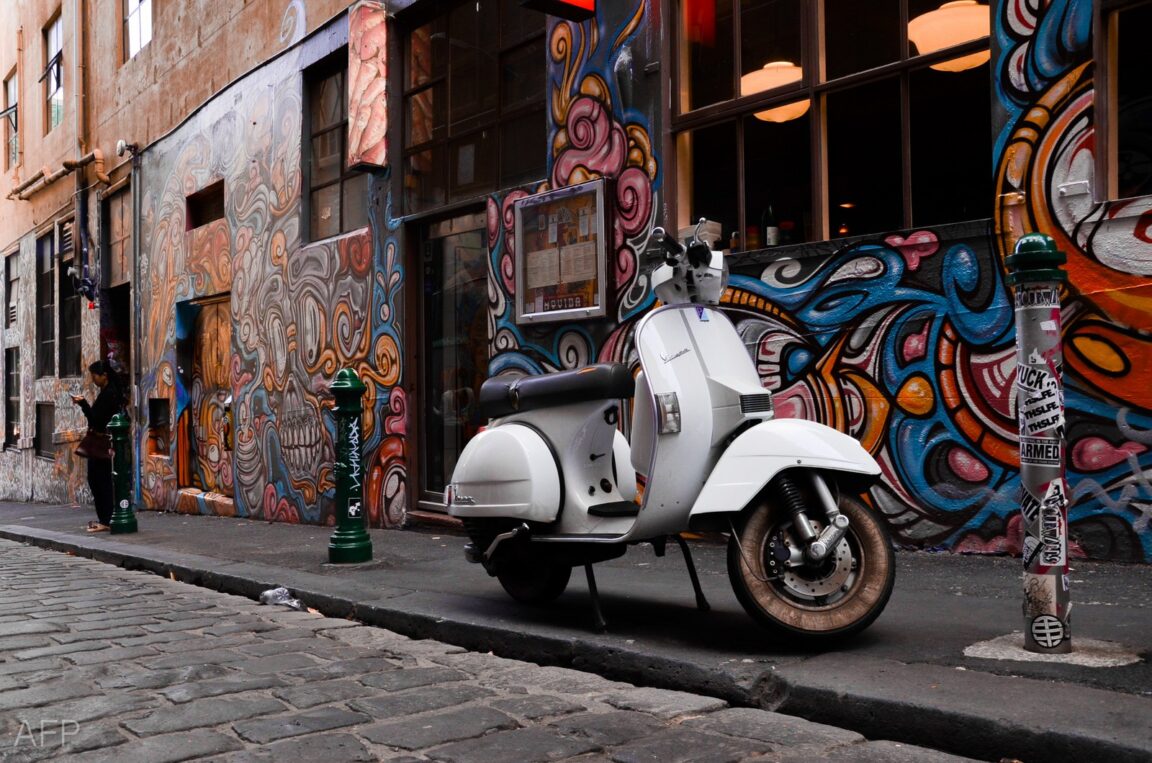
Hosier Lane, opposite Federation Square, is the best known of the street art laneways, a bluestone lane where the walls are repainted constantly. Treat it as an outdoor gallery that changes between visits rather than a fixed attraction, go early in the day before it fills, and then keep walking. The point of Day 1 is the network, not one lane: AC/DC Lane, Duckboard Place and the quieter lanes off Flinders Lane show the range from large murals to small bars and workshops tucked into Victorian era service alleys behind the grand frontages of the Hoddle Grid, the 1837 street plan that still shapes the centre.
The arcades and the afternoon
Melbourne’s other hidden layer is its nineteenth century shopping arcades. The Block Arcade, off Collins Street, with its mosaic floors and glass canopy, and the Royal Arcade on Bourke Street, the oldest surviving arcade in Australia, are working retail streets as much as heritage sites. Link them into an afternoon with the State Library Victoria on Swanston Street, whose domed La Trobe Reading Room is one of the great free interiors in the country, and Chinatown along Little Bourke Street. Finish Day 1 back near the river, because Day 2 starts on its other bank.
Day 2: How do the Yarra and the gardens fit into one walk?
Cross the river properly
The Yarra River, known as Birrarung in the language of the Wurundjeri Woi-wurrung people, the Traditional Owners of the Melbourne area, is not a scenic extra in this city. It is the reason the city is where it is, and Day 2 is built along it. Walk from Princes Bridge down the Southbank promenade in the morning, when the river is calm and the centre’s towers reflect in it, then continue east as the bank turns green. The promenade gives you the city’s postcard view in reverse: instead of looking at the river from the centre, you look back at the centre across the water.
The gallery and gardens quarter
On St Kilda Road, a short walk from the river, the National Gallery of Victoria houses the Australian and international collections in two buildings, the NGV International on St Kilda Road and the Ian Potter Centre in Federation Square, which you passed on Day 1. Give the St Kilda Road building a focused two hours rather than a dutiful full day. Behind it, the Royal Botanic Gardens Melbourne spread along the river’s southern bank: lawns, lakes and one of the finest collections of mature trees in any city garden, with the Shrine of Remembrance on its edge, its terrace giving one of the best straight line views back down St Kilda Road to the city. This whole quarter is walkable as one unhurried arc, river to gallery to gardens to shrine, and it is the calmest half day in the itinerary.
The evening: Southbank, or north to Fitzroy
Melbourne’s most loved evening neighbourhoods are north of the centre. Fitzroy, a short tram ride up Brunswick Street, is the city’s original bohemian quarter of pubs, small restaurants and vintage shops. Carlton, beside the university, is the historic heart of Italian Melbourne along Lygon Street. Either makes a better Day 2 evening than staying in the centre, and both preview the Day 3 alternative below.
Day 3: The Great Ocean Road decision, with real numbers
What the drive actually involves
Here is the decision stated plainly. The Great Ocean Road runs for about 243 kilometres along the Victorian coast from Torquay to Allansford. Torquay is roughly 100 kilometres from central Melbourne. The Twelve Apostles, the limestone stacks in Port Campbell National Park that almost every visitor is picturing, are roughly 275 kilometres from the city by the coastal road, about four hours of driving in one direction before a single stop. A return day trip therefore means around 500 to 600 kilometres and 12 hours or more door to door. The coastal road itself is winding, largely one lane in each direction, and shared with tour coaches, cyclists and, at dusk, wildlife.
Option one: the day tour, eyes open
A guided day tour is the right choice if you have exactly one day, no wish to drive on the left on a winding coast road, and the stamina for a very long day. Tours typically leave the city early, run the coast through Lorne and Apollo Bay, reach the Apostles and Loch Ard Gorge, and return inland on the Princes Highway, which is faster than retracing the coast. Some reverse itineraries drive inland first and reach the Apostles before the coastal crowds. What a day tour cannot give you is time: stops are timed, sunset at the Apostles is a seasonal gamble, and the Otway rainforest and the coastal towns become glimpses. Book it as a highlights reel, not as seeing the road properly.
Option two: self drive with a night on the coast
If you can steal a night from elsewhere in your trip, this is the version locals would choose. Drive out on Day 3, stop in Torquay and Lorne, walk in the cool temperate rainforest of Great Otway National Park, and sleep in Apollo Bay or Port Campbell. The Apostles at opening time the next morning, before the day tours arrive, are a different experience from the Apostles at midday, and the drive back inland is unhurried. This turns Day 3 from an endurance test into the best day of the trip, at the cost of one night in Melbourne.
Option three: skip the coast, take Melbourne
The third option is not a failure. Spend Day 3 in Fitzroy and Collingwood in the morning, the Queen Victoria Market if it is a market day, check its site for current trading days, then Carlton and the Melbourne Museum in the afternoon. Melbourne’s claim to be Australia’s cultural capital rests on exactly these neighbourhoods, and many visitors who rush to the coast on Day 3 leave saying they never quite got the city. If your wider trip already includes great coastal scenery elsewhere, this is the smart call. A three day structure like this, one landmark day and two city days in honest proportion, is the same logic used in the three day Lisbon itinerary, where the Sintra day trip is treated as a decision, not an obligation.
Where should you stay for this itinerary?
Stay in the central business district or in Southbank. The centre puts Days 1 and 2 entirely on foot and every tram line within reach, and Southbank trades a slightly longer walk to the laneways for river views and immediate access to the gallery quarter. Fitzroy and Carlton are wonderful to visit and easy by tram, but basing there adds friction to two of your three days. Save the neighbourhood base for a return trip.
What are the classic Melbourne mistakes?
The first is underestimating the Great Ocean Road distances, covered above. The second is dressing for the forecast’s best hour rather than its worst: Melbourne can deliver warm sun and a cold southerly change in one afternoon, and layers plus a windproof outer are the local uniform in every season. The third is skipping the centre’s working life, the morning coffee lanes, the arcades at opening time and the market in full swing, in favour of only the branded sights. Melbourne’s sights are good. Its everyday texture is better, and it is free.
Frequently asked questions
Is the Great Ocean Road worth it as a day trip from Melbourne?
It is worth it only with clear expectations: around 12 hours door to door, timed stops and most of the day in transit. As an overnight self drive it is unambiguously worth it. If a 12 hour day would spoil the rest of a short trip, take the Melbourne alternative day and do the coast on a longer visit.
How many days do you need in Melbourne itself?
Two full days cover the centre, the laneways and arcades, the river, the gallery and gardens quarter and one or two inner neighbourhoods properly. A third city day, if you skip the coast, adds Fitzroy, Carlton and the market at a relaxed pace.
What is the best area to stay in Melbourne for first timers?
The central business district or Southbank. Both put this itinerary’s first two days on foot, sit inside or beside the central tram network and connect easily to the airport routes and regional trains.
When is the best time to visit Melbourne?
Autumn and spring offer the mildest walking weather and thinner crowds. Summer brings the Australian Open tennis in January and long evenings but also heat spikes. Winter is cold by Australian standards and suits the gallery, arcades and football season. Check event dates on official calendars before fixing a trip.
Do you need a car in Melbourne?
No, for the city itself. Trams, trains and walking cover the first two days and the alternative third day. A car is needed only for the self drive Great Ocean Road version, and a guided tour removes even that need.
Image: Hosier Lane, Melbourne, the best known of the central street art laneways. Prices, trading days and transport zones change: confirm current details on official operator and venue sites before you travel.