 Rafael Santos
Two days in Cartagena are enough to do the city properly if they are sequenced by the heat: explore the walled city early on day one, take the great fortress of San Felipe de Barajas in the late afternoon, spend the evening in Getsemani around Plaza de la Trinidad, then use day two for the quieter San Diego quarter, the museums and churches inside the walls, and a sunset walk along the ramparts. Stay inside the walls or in Getsemani, start early both days, and surrender the midday hours to shade, lunch, and air conditioning.
Quick Facts: Cartagena in 2 Days at a Glance
- Where: Cartagena de Indias, on Colombia Caribbean coast, in the Bolivar Department.
- Known for: The walled old town and the fortress system inscribed by UNESCO in 1984 as the Port, Fortresses and Group of Monuments, Cartagena.
- The walls: Roughly 11 kilometres of colonial fortifications built from the late 16th century onward to defend the port.
- Bases: Inside the walled city for atmosphere, or Getsemani, just outside the walls, for a livelier and often better-value stay.
- Climate rule: Hot and humid year-round. Sightsee early and late, rest at midday.
- Itinerary shape: Day 1, walled city, fortress, Getsemani night. Day 2, San Diego, museums, ramparts sunset, with an optional island or bay alternative described below.
- Last checked: November 11, 2026.
How Is Cartagena Laid Out?
Cartagena divides into experiences more than districts. The walled city, the Centro Historico, holds the colonial core: two quarters inside the walls, El Centro around the cathedral and the grandest houses, and San Diego to the northeast, historically home to merchants and artisans and noticeably calmer. Just outside the main gate, across a short walk, lies Getsemani, the former working-class and artisan district that is now the city evening and street art quarter, centered on Plaza de la Trinidad. Beyond these, the modern city spreads to Bocagrande high-rises and the bay, and the fortress of San Felipe de Barajas rises on its hill between the old town and the mainland.
UNESCO inscribed the port, fortresses, and monuments of Cartagena in 1984, describing the city as having the most extensive and complete system of military fortifications in South America, built to protect one of Spain most important Caribbean ports and its trade. That history explains the shape of a visit: the walls are not scenery around the attraction, they are the attraction, and the itinerary below treats them that way. Travelers who plan trips around compact historic centers will find the same structure as the plan in our 3 days in Lisbon itinerary: a walkable core, strong morning and evening hours, and a protected midday.
Day 1 Morning: The Walled City Before the Heat
Enter through the Clock Tower gate
Start at the Puerta del Reloj, the clock tower gate that is the main entrance to the walled city and its most recognizable landmark. Arriving early, ideally soon after breakfast, buys the old town in its best state: swept streets, soft light on the balconies, delivery carts instead of crowds. From the gate, the Portal de los Dulces arcade lines one side of the first plaza, with sweet sellers under the arches, and the streets of El Centro open ahead.
The essential El Centro loop
Walk a loose loop rather than a checklist. Pass Plaza de Bolivar, shaded and bench-filled, with the Palace of the Inquisition on its western side: its museum presents the colonial tribunal history in a beautiful house with a difficult past, and it sets up the city layered story better than any single sight. Continue to Cartagena Cathedral, the Catedral de Santa Catalina de Alejandria, whose tower anchors postcard views down the surrounding streets. Then drift: the pleasure of El Centro is in the side streets, the bougainvillea over balconies, the fruit sellers with their bright palenquera dress who are an icon of the city, and doorways opening onto courtyards. Keep the walking slow and the water intake high.
San Pedro Claver and the museum hour
Before midday, aim for the church and cloister of San Pedro Claver, dedicated to the 17th century priest who ministered to enslaved Africans arriving through the port and who is buried here. The cloister museum and garden give the visit its human counterweight to the military architecture, and they provide shade and quiet at the right hour. From there it is a short walk to the Naval Museum of the Caribbean for visitors who want the maritime and fortress story told in models and maps, or straight to lunch and rest for everyone else.
Day 1 Midday: Lunch, Rest, and the Heat Rule
Cartagena midday heat is not a detail, it is the organizing fact of the itinerary. Plan a long lunch in an air-conditioned dining room in El Centro or San Diego: Caribbean Colombian cooking here means coconut rice, fried fish, patacones, ceviche in the local style, and posta negra cartagenera, the slow-cooked beef in a dark, sweet sauce that is the city signature dish. Then rest properly, at the hotel, in the pool if there is one, out of the sun until the light softens. Travelers who push through midday on foot arrive at the fortress, the best late-afternoon sight, already depleted. The siesta is not lost time here. It is what makes the evening good.
Day 1 Late Afternoon: Castillo San Felipe de Barajas
Why the fortress earns the late slot
The Castillo San Felipe de Barajas is the largest Spanish fortress in the Americas open to visitors in this form, begun in the 16th century and greatly expanded during the 17th and 18th centuries on the hill of San Lazaro outside the walls. Its massive sloped walls, batteries, and tunnel system were engineered so the whole could be defended and, if necessary, demolished section by section. Late afternoon is the right time for three reasons: the stone has begun to cool, the light across the bay and back to the old town is at its best, and the visit flows naturally into the evening in Getsemani, which lies a short walk away.
Walking the fortress well
Allow around ninety minutes. Climb steadily to the upper batteries for the panorama: Bocagrande towers across the water, the walled city below, and the hill position that explains the fortress existence. Descend into a section of the tunnels to feel the engineering from inside, noting how sound carries along them, a deliberate acoustic feature. The monument to the Blas de Lezo statue at the base commemorates the Spanish commander associated with the famous 1741 defense against a British fleet, an episode still central to the city telling of itself. Bring water: shade is scarce on the ramparts, even late in the day.
Day 1 Night: Getsemani and Plaza de la Trinidad
As the heat breaks, walk into Getsemani. The district announces itself through its murals: whole walls of street art along its narrow streets, much of it telling Afro-Caribbean and neighborhood stories, and through Calle de la Sierpe and the lanes around the parish church of the Santisima Trinidad. The Plaza de la Trinidad is the living room of the district: food carts and small bars around the edges, music, dominoes, families, travelers, and no program at all beyond being there. Eat from the carts or at one of the small restaurants on the surrounding streets, try arepa de huevo, the egg-stuffed corn cake that is a Caribbean coast specialty, and let the night stay unstructured. Getsemani after dark is the half of Cartagena that walled-city-only visitors miss, and it is why this itinerary puts a night, not an hour, here. Return routes to the walled city are short and well walked, through the Centenario park side and the clock tower gate.
Day 2 Morning: San Diego, the Calmer Quarter
Start day two in San Diego, the northeastern quarter inside the walls. It holds the Plaza de San Diego, the fine arts school in the former San Diego convent complex, and Las Bovedas at the walls corner: a row of vaulted arches built in the late colonial period as storage and barracks, now filled with craft shops, which are best browsed early before groups arrive. The streets here are quieter and more residential in feel, with smaller houses and local life alongside the boutiques, and a morning here balances day one grandeur. Coffee on the plaza, a slow pass through the vaults, and a look into the smaller churches complete a morning that costs little energy.
Day 2 Midday and Afternoon: Choose Your Second Act
Option A: Museums, gold, and the walls from inside
Stay in the old town for the Museo del Oro Zenu, the small gold museum near Plaza de Bolivar presenting the metalwork of the Zenu people of the Caribbean lowlands, an excellent short visit, and for a second pass at anything missed on day one at a rested pace. This option suits travelers leaving on day three who want the city itself to be the whole trip.
Option B: The bay and the Rosario Islands question
The Islas del Rosario, the coral archipelago offshore, are Cartagena famous beach escape, reached by boat from the city marina, and day trips are heavily sold. With only two days, the honest advice is conditional: take the boat day only if beach time outranks the fortress or Getsemani, by swapping it for day two morning, not by compressing everything else. Boats, island beach clubs, and conditions vary, so book through a reputable operator, confirm what is included, and check the sea state on the day. Travelers with a third day should give the islands that day whole.
Day 2 Evening: Sunset on the Walls
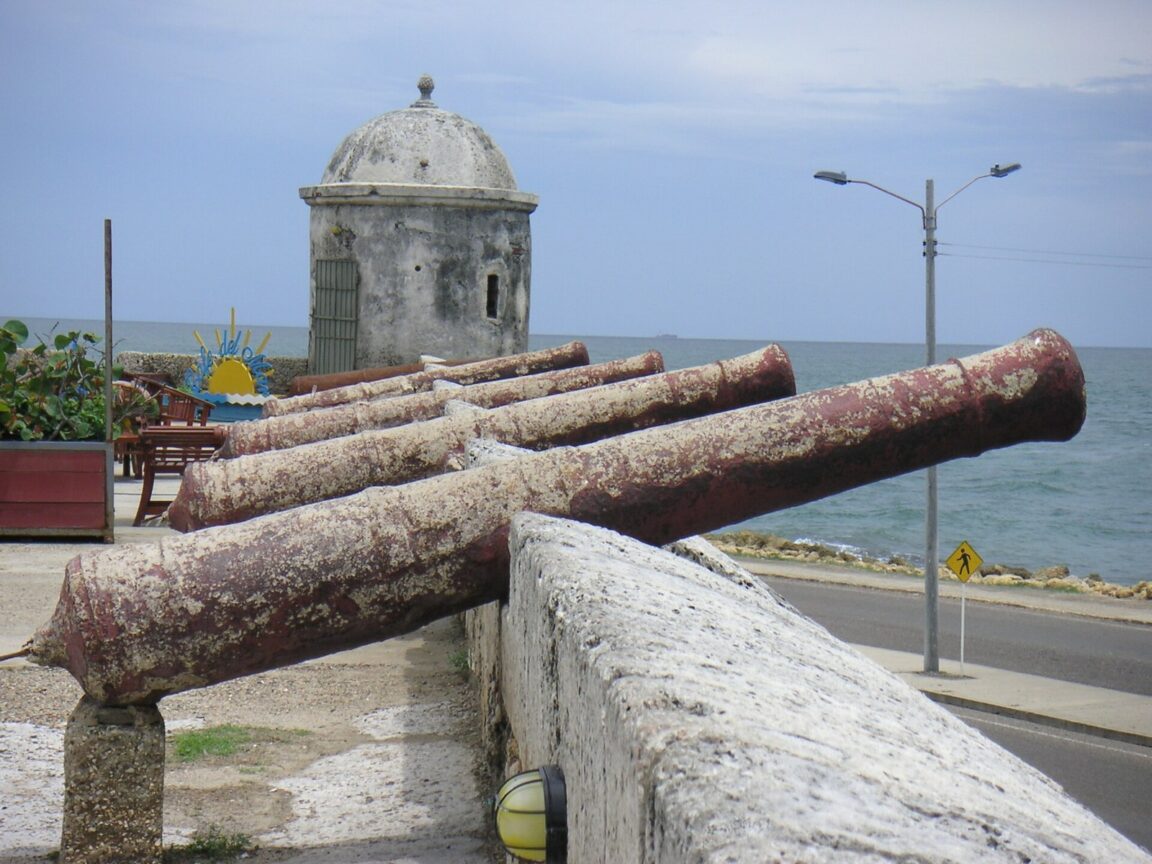
Finish where the city began, on the walls themselves. The western ramparts facing the Caribbean, around the Baluarte de Santo Domingo, are the classic sunset position: a broad walkway, the sea in front, and the old town towers behind. Arrive before sunset and watch the light leave the water. Dinner afterward in San Diego or back in Getsemani closes the loop. Two days done this way cover the fortress, both walled quarters, the evening district, and the walls at their best hour.
Where to Stay for a 2-Day Visit
Inside the walls suits first timers who want to walk out of the door into the postcard, with boutique hotels in converted colonial houses around El Centro and San Diego, many built around courtyards with small pools that the midday plan makes genuinely useful. Getsemani suits travelers who prefer a neighborhood feel, street life at the door, and often lower prices, a five to ten minute walk from the clock tower gate. Bocagrande, the modern beach strip, is the weakest base for this itinerary despite its big hotels and sea views, because every sight in the plan requires a taxi ride from there. Whichever base is chosen, confirm air conditioning and a pool or shaded courtyard: in Cartagena those are itinerary infrastructure, not luxuries.
Practical Notes: Getting Around, Safety, and Money
The walled city and Getsemani are walked, not driven. Taxis link the fortress and the airport, and fares should be agreed before the ride where no meter is used. Standard city care applies: modest display of valuables, awareness around unofficial tour offers, and firm, polite refusals where needed. Carry small cash notes for carts and tips, and hydrate constantly. More first-timer structure of this kind appears in our first time in Paris itinerary, a different climate with the same early start logic.
Frequently Asked Questions
Are two days enough for Cartagena?
Yes, for the historic city itself. Two well-sequenced days cover the walled quarters of El Centro and San Diego, the San Felipe fortress, a Getsemani night, and a sunset on the walls. A third day is the point at which a Rosario Islands boat trip fits comfortably.
Where is the best area to stay for two days?
Inside the walled city for atmosphere and walk-everywhere convenience, or Getsemani for a livelier, often better-value base a short walk from the clock tower gate. Both beat Bocagrande for a sightseeing-focused two days.
When should the San Felipe fortress be visited?
Late afternoon. The stone is cooler, the views over the bay and old town are in their best light, and the visit leads naturally into an evening in nearby Getsemani.
What is Getsemani, and is it worth an evening?
Getsemani is the historic district just outside the walls, known for street art, small restaurants, and Plaza de la Trinidad, its social heart. An evening there is essential: it is the living, local counterpoint to the monumental walled city.
Should a Rosario Islands trip be included in two days?
Only by substitution, not addition. The islands need most of a day, so include them in a two-day visit only if beach time matters more than one of the city elements. Otherwise give them a third day.
How should the midday heat be handled?
By planning around it: early starts, a long lunch, and a genuine rest indoors or by a pool until mid afternoon. Cartagena sightseeing is best in the early morning and from late afternoon onward.