 Omar Haddad
Essaouira is the Moroccan Atlantic port to choose after Marrakech when the goal is a slower pace: a planned, whitewashed medina on the UNESCO World Heritage List, a working fishing harbor, persistent trade winds that fill the bay with kitesurfers, and a deep association with Gnawa music, all about three hours by road from Marrakech. Go for two or three nights, walk the ramparts at sunset, eat at the port, and let the wind set the timetable.
Quick Facts: Essaouira at a Glance
- Where: On Morocco Atlantic coast, west of Marrakech, in the Marrakech-Safi region.
- Known for: The fortified medina of Essaouira, formerly Mogador, inscribed by UNESCO in 2001, its fishing port and Skala ramparts, wind sports, and Gnawa music.
- Character: A planned 18th century port town with straight main streets, unlike the maze-like medinas of Fes or Marrakech.
- How long: Two or three nights, as a second base after Marrakech or a standalone coastal stay.
- Wind note: The alizee trade winds are strongest in summer, which is prime kitesurf season and breezy beach weather rather than calm swimming weather.
- Last checked: November 11, 2026.
How Does Essaouira Differ From Marrakech?
Marrakech is intensity: heat, negotiation, traffic, and a medina that rewards getting lost. Essaouira runs on a different operating system. The medina here was planned in the late 18th century, when Sultan Mohammed ben Abdallah developed Mogador as a port and trading post, and it shows in the geometry. Two main streets cross at right angles, the walls run straight to the sea, and a visitor can learn the layout in an afternoon. That order, combined with sea air and a working harbor that still smells of fish and tar, produces the calm that travelers describe: shopping without the hard sell, cafes where lingering is normal, and evenings that end with a rampart walk rather than a negotiation.
The comparison is useful for trip design rather than competition. Many itineraries pair the two: the imperial city first, then the coast to recover, shop for woodwork and textiles at a gentler tempo, and eat seafood daily. Travelers who liked the walled-town rhythm described in our Kotor travel guide will recognize the pattern: fortifications built for defense now framing the best sunset walk in town.
What Is There to See Inside the Medina?
The medina of Essaouira, formerly Mogador, was designated a UNESCO World Heritage Site in 2001 as an exceptional example of a late 18th century fortified port town, built to North African and European principles of the period. Inside the walls, the visit assembles itself from a few strong elements rather than a long checklist.
The Skala de la Ville and the ramparts
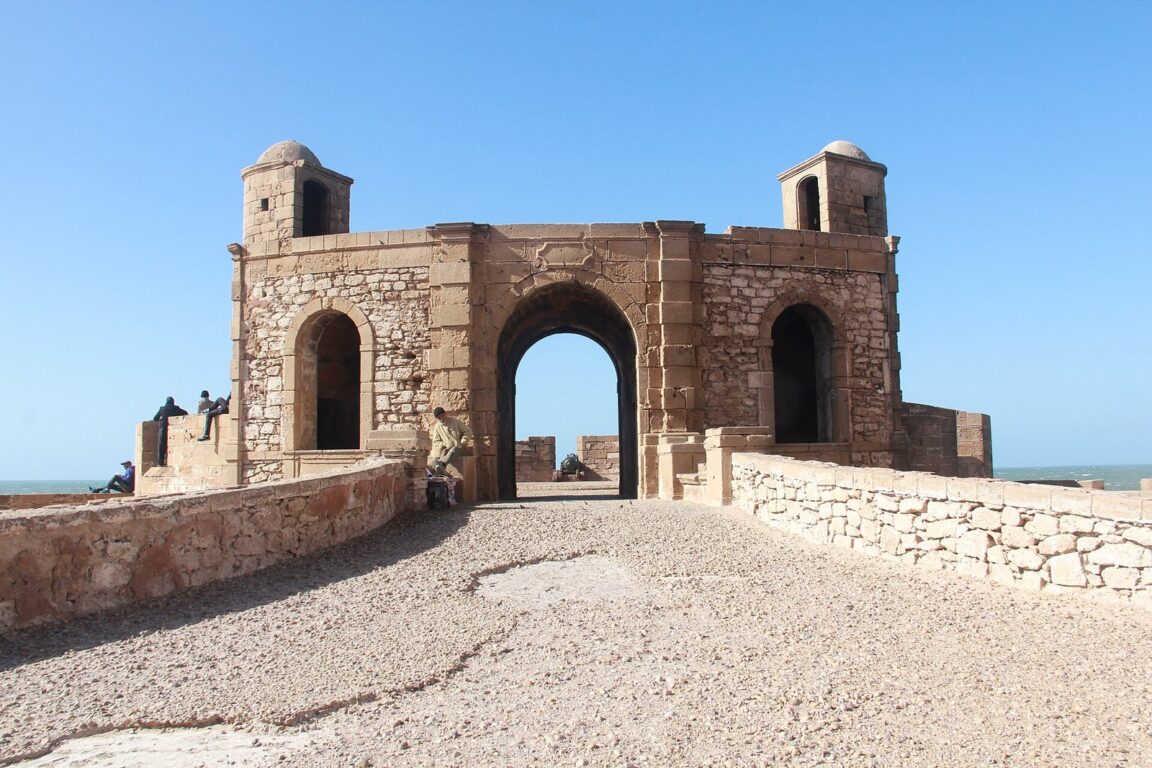
The northern ramparts, the Skala de la Ville, form a broad artillery platform above the sea, lined with historic cannons and looking along the coast to the offshore island of Mogador. It is the town sunset institution: arrive before golden hour, walk the length of the wall, and watch the light go down over the Atlantic. The wood workshops tucked in the arches below the ramparts are known for thuya wood boxes and inlay work, a craft associated with the region.
The port and the Skala du Port
The harbor is a working fishing port, not a marina dressed for visitors. Blue wooden boats fill the basin, catches are unloaded and sold at the quay, and grill stalls near the port cook the day fish for lunch. The Skala du Port, the fortified sea gate and bastion at the harbor entrance, gives the elevated view back across the boats to the medina walls. Photographers should come in the morning, when the port works at full tempo and the light is on the boats.
Streets, souks, and galleries
Shopping divides by street: jewelry and metalwork in the traditional souks, thuya wood near the ramparts, textiles and clothing along the main avenues, and a notable scatter of art galleries reflecting the town longstanding draw for painters and musicians. Prices are generally calmer to negotiate than in Marrakech, though negotiation remains part of the culture and should be done with good humor. The Mellah, the historic Jewish quarter, and the town synagogues and cemeteries record Essaouira significant Jewish heritage, when the port community included a large Jewish merchant population central to its trade.
What Is Gnawa Music, and Where Does It Fit In?
Gnawa music is a Moroccan spiritual and musical tradition carried by the Gnawa people, descendants of West Africans brought north across the Sahara, built around the deep, looping bass of the guembri lute, iron castanets called qraqeb, and call-and-response chanting in night-long ceremonies known as lilas. UNESCO inscribed Gnawa culture on its Representative List of the Intangible Cultural Heritage of Humanity in 2019. Essaouira is one of its capitals: the town hosts the Gnaoua World Music Festival, founded in the late 1990s and held in summer in most years, which brings Gnawa masters onto stages alongside jazz, blues, and world music acts and draws the largest crowds of the Essaouira year.
Outside festival dates, the music is present at human scale: in small performances, in instrument workshops, and in the town general openness to musicians. Travelers interested in the tradition should ask locally about current performances rather than expecting a fixed nightly program, and should treat any invitation into a ceremonial context with the respect due to a spiritual practice, not a concert. The honest summary is that Gnawa heritage is a reason the town feels different, even for visitors who never attend a formal performance.
How Do the Wind and the Beach Actually Work?
Essaouira nickname, the Wind City of Africa, is earned. The alizee trade winds blow reliably, strongest in the summer months, and they shape the beach experience completely. The long, broad bay south of the medina is a kitesurfing and windsurfing center, with schools offering lessons and rental gear, and a shoreline made for walking, horse riding, and camel rides at the southern end. Swimming, by contrast, is bracing Atlantic swimming in wind and chop: refreshing, and popular, but not the flat, warm water of a resort lagoon. Beach days here are active days, and the medina cafes exist partly as the windbreak alternative.
The wind also moderates temperature, which matters for summer planning. While Marrakech swelters inland, Essaouira stays comparatively cool and can feel genuinely chilly after sunset in any season. Pack a warm layer for evenings on the ramparts even in July: this is the single most practical packing note for the town, and the one most often learned the hard way.
What Should Visitors Eat in Essaouira?
Seafood is the headline: grilled sardines, sole, sea bream, and shellfish at the port grills, where the transaction is pleasingly direct: choose the fish, agree the price, and eat it minutes later with bread and salad. Beyond the port, the medina holds small restaurants serving Moroccan staples, tagines, and pastilla, bakeries for breakfast, and cafes built for long, cheap, mint-tea afternoons. Travelers sourcing restaurant ideas from the Michelin Guide listings for Morocco, as our program does for food coverage, should still verify opening details on arrival: Essaouira dining scene is small, seasonal, and prone to change. Our Matera guide makes the same point in another old town: in small historic centers, the best meal plan is a short list plus local advice on the day.
How Long to Stay, and How to Get There?
Two nights is the sweet spot for most itineraries: a full day for medina, port, and ramparts, a second for the beach, a surf lesson, or a half-day excursion, and two evenings of seafood and music. Three nights suit travelers using Essaouira as their main Moroccan base at a slow tempo. The town is reached from Marrakech by a road journey of roughly three hours, with intercity buses and shared or private transfers the standard options, and it has a small airport with limited routes, so most visitors arrive overland. Day trips from Marrakech exist, but they invert the town virtues: six hours of driving to sample the place whose whole point is slowness. Sleep there instead, and let Marrakech be the day trip if one is needed.
Frequently Asked Questions
Is Essaouira worth visiting after Marrakech?
Yes, precisely because it contrasts with Marrakech: a planned, walkable medina, sea air, a working port, calmer shopping, and cooler temperatures. Most travelers pair two or three nights in Essaouira with their Marrakech stay.
When is Essaouira windiest?
The trade winds are strongest in summer, which is peak season for kitesurfing and windsurfing. The same wind keeps the town cool compared with inland Morocco, so warm layers are useful for evenings in every season.
What is the medina of Essaouira known for?
The medina, formerly Mogador, is a UNESCO World Heritage Site inscribed in 2001 as a late 18th century fortified port town. Its straight planned streets, ramparts, cannons, and sea gates distinguish it from older, maze-like Moroccan medinas.
What is Gnawa music?
Gnawa music is a Moroccan spiritual tradition built on the guembri bass lute, iron qraqeb castanets, and chanting, inscribed by UNESCO as Intangible Cultural Heritage in 2019. Essaouira is a center of the tradition and hosts the Gnaoua World Music Festival in summer in most years.
Can visitors swim at Essaouira beach?
Yes, but expect Atlantic conditions: wind, waves, and cool water. The bay is better known for kitesurfing, windsurfing, walking, and riding than for calm swimming.