 Sofia Rossi
Ghent is the Flemish city travelers choose when they want medieval Belgium, canals, a castle, a world famous altarpiece and a living local city, without organizing the whole visit around tour group crowds. Its old town is compact and walkable, built around the Graslei and Korenlei quays on the River Leie, the Belfry, Saint Bavo’s Cathedral and the Gravensteen, the Castle of the Counts built in 1180. It works as a base in its own right, with Ghent University and a large student population keeping cafes, bars and cultural venues busy well beyond the day trip hours, and it is at its best in spring and autumn and during the long summer evenings.
Quick Facts
- Where: East Flanders, Belgium, at the meeting of the Leie and Scheldt rivers, between Brussels and Bruges by rail
- Language: Dutch (Flemish). English is widely spoken in the center and in tourism and hospitality
- Signature landmark: Gravensteen, the Castle of the Counts, Sint-Veerleplein 11, built in 1180 for Philip of Alsace, Count of Flanders
- Gravensteen hours: Open daily 10 am to 6 pm, last admission 4.40 pm, closed 24, 25 and 31 December and 1 January, according to the City of Ghent’s Historic Houses service
- Gravensteen admission: 15 euros for a standard adult ticket at the time of checking the official Historic Houses information, with the audio guide included
- Art highlight: The Ghent Altarpiece, the Adoration of the Mystic Lamb by Hubert and Jan van Eyck, in Saint Bavo’s Cathedral
- Historic core: Graslei and Korenlei quays, Korenmarkt, Saint Michael’s Bridge, the Belfry and Saint Nicholas’ Church, all within a short walk
- Best rhythm: Stay overnight. The center is quietest and most beautiful early in the morning and after day visitors leave
Why go to Ghent instead of, or as well as, Bruges?
The honest answer starts with what the two cities are. Bruges is a beautifully preserved museum city whose economy and daily life are heavily shaped by visitors. Ghent is a working city of roughly a quarter of a million people, with a university, a port, and neighborhoods where the bakery queue, the tram and the student bicycle stream matter more than any tour. Its medieval core is not a reconstruction or a stage set: the guild houses on the Graslei, the great churches and the castle all grew out of the cloth trade wealth that once made Ghent one of the largest cities in northern Europe. Travelers who liked the lived in, harbor city feeling described in this guide to Kotor in Montenegro will recognize the appeal: serious history, worn by a real place, rather than polished for a single industry.
None of that makes Ghent empty, and travelers should not arrive expecting a secret. The central quays are busy on sunny weekends, the Altarpiece draws art lovers from everywhere, and summer brings festivals. The difference is proportion and spread. Ghent’s crowds concentrate in a few central streets and disperse into a much larger, lived in city: the Patershol restaurant quarter behind the castle, the arts venues around the Vooruit, the museums in the Citadelpark area, and long local shopping and cafe streets where visitors are simply part of the mix. Staying overnight changes the equation further, because the illuminated center after dark is one of the city’s great pleasures, and it belongs largely to the people who are sleeping there.
How does the old town actually work on foot?
Ghent’s center is best understood as a small cluster, not a list. Saint Michael’s Bridge is the orientation point: from it, the postcard view lines up the Graslei guild houses, Saint Nicholas’ Church, the Belfry and Saint Bavo’s Cathedral in a single sweep, with the Leie running below. Cross to the Graslei and Korenlei to walk the water level, then climb two minutes to the Korenmarkt, the central square that works as the city’s tram and meeting hub. The Belfry, the cloth hall and Saint Bavo’s stand just beyond it. The Gravensteen closes the loop to the north, about a ten minute walk from the cathedral, with the Patershol quarter’s small streets and restaurants tucked between the castle and the river.
That compactness has a practical consequence: almost nobody needs a transport strategy inside the old town, and a car is an active disadvantage. Much of the center is a low traffic, largely pedestrianized zone, and Ghent operates a well known low emission and circulation plan that makes driving in from outside more complicated than visitors expect. Arrive by train at Gent-Sint-Pieters, take the tram toward the center, and walk from there. Cyclists should know this is a serious bicycle city with serious bicycle traffic: look both ways on cycle paths with the same care as at a road crossing, and do not wander into them while photographing the quays.
What should a first visit prioritize?
Why is the Gravensteen unmissable?
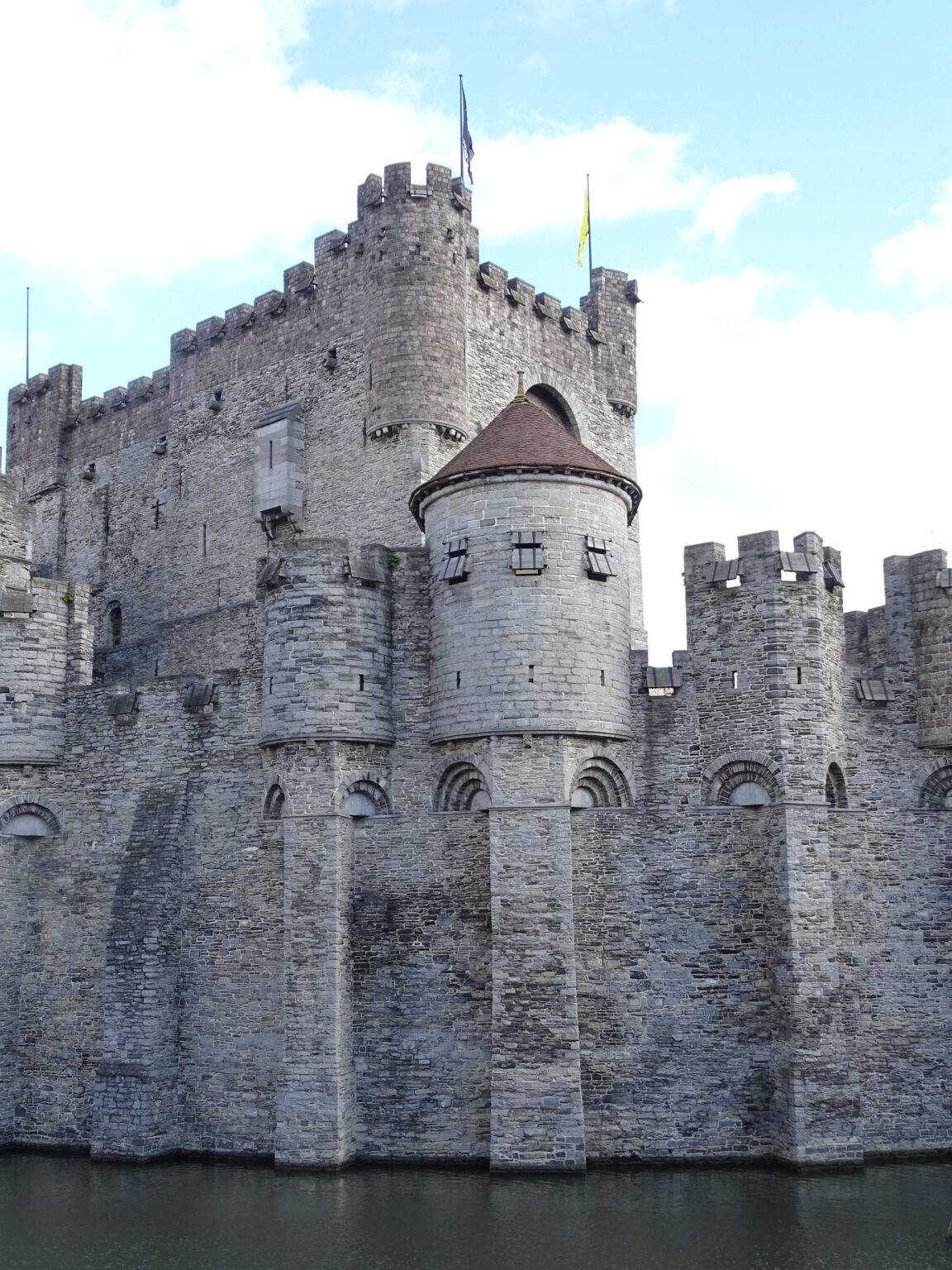
Castles are not supposed to sit in the middle of a city center, surrounded by tram lines and cafes, and that incongruity is the Gravensteen’s power. Built in 1180 by Philip of Alsace, it served as the residence of the Counts of Flanders until 1353, then passed through lives as a court, a prison, a mint and even a cotton mill before restoration in the late nineteenth and early twentieth centuries returned it to its fortress form. Today the City of Ghent runs it as a museum. The visit follows the walls, gatehouse, keep and battlements, with wide views back over the old town from the top, and the audio guide is included in the ticket. The official Historic Houses service lists opening daily from 10 am to 6 pm with last admission at 4.40 pm, and advises booking ahead for guaranteed entry at busy times. Allow at least an hour, longer for anyone who reads everything, and expect stairs: a medieval fortress was not designed for step free access, so travelers with mobility limits should check the official accessibility information before booking.
What makes the Ghent Altarpiece worth planning around?
In Saint Bavo’s Cathedral hangs the work that art historians routinely place among the most important paintings in the world: the Ghent Altarpiece, completed in 1432 and associated with Hubert and Jan van Eyck. Its central panel, the Adoration of the Mystic Lamb, gives the work its common name, the Mystic Lamb. The altarpiece has survived fires, iconoclasm, theft and wartime looting, and it has been the subject of a long, careful restoration program in recent years, with panels at times displayed differently or away for conservation. That is the practical point: check the cathedral and Visit Gent information close to the visit for how the altarpiece can be seen on the day, rather than relying on an older guide. Go early in the day, give it unhurried time, and treat the rest of the cathedral, including its crypt and other works, as part of the same visit rather than a backdrop.
Which streets and quarters give Ghent its character?
After the two headline sights, Ghent rewards wandering with a loose structure. The Patershol, the old leather workers’ quarter of small lanes beside the castle, is now the city’s densest restaurant district and its prettiest evening walk. The Graslei at dusk, when the guild house facades light up and students sit along the quay, is the city’s living room. Prinsenhof, the quieter district northwest of the center where the counts’ later court stood, shows the residential Ghent of canals and gardens. Further south, the museum quarter around Citadelpark pairs the Museum of Fine Arts (MSK), with Flemish art across centuries, and S.M.A.K., the city’s contemporary art museum, facing each other across the park. Travelers building a slower European city break in the style of a three day Lisbon itinerary will find the same principle works here: one major sight in the morning, one quarter explored properly in the afternoon, and no attempt to collect everything.
When is the best time to go to Ghent?
Late spring and early autumn offer the easiest combination of long days, open terraces and manageable visitor numbers. Summer brings the fullest cultural calendar, above all the Gentse Feesten, the city’s huge July festival period, when Ghent becomes a stage for music, theatre and street performance and hotel rooms become scarce and expensive: wonderful if the festival is the point of the trip, a poor choice for a quiet first visit. Winter is colder and darker but atmospheric, with the center’s lighting plan making the canals and facades a deliberate evening spectacle, and the castle and museums are at their calmest. Rain is a year round possibility in Flanders, so the city is best planned with indoor anchors, the castle, the cathedral, the museums and the design and city museums, ready to swap with outdoor wandering as the weather moves.
One daily timing rule beats any seasonal advice: start early. The center before about 10 am belongs to deliveries, school runs and coffee drinkers, the light on the Leie is at its best, and both the Gravensteen and the cathedral are calmer. Return to the quays at dusk rather than trying to see everything in the middle of the day, when day trip groups are at their densest.
What should travelers eat and drink in Ghent?
Ghent cooks with Flemish confidence and a notably progressive streak: the city is famous in Belgium for promoting a weekly vegetarian day, and its restaurant scene ranges from traditional estaminets to ambitious modern kitchens. The dishes to look for are waterzooi, the creamy chicken or fish stew associated with Ghent, stoofvlees, beef braised in dark beer and served with fries, and the full Belgian repertoire of waffles, chocolate and beer in a city that takes all three seriously. Two small local signatures make good edible souvenirs and talking points: cuberdons, the purple, cone shaped raspberry sweets nicknamed Ghent noses, sold from stalls in the center and best eaten fresh because they harden within days, and Tierenteyn mustard, the sharp local mustard made in the city since the nineteenth century and sold from its historic shop near the center. For a sit down meal, the Patershol is the default choice; for a market and local shopping atmosphere, the squares around Saint James’ Church and the Friday market area pull the city back into view.
How many days does Ghent need, and how does it fit a Belgium trip?
A determined day trip can cover the castle, the cathedral and the quays, and many travelers do exactly that from Brussels or Bruges. Two nights is the better answer. It allows one full old town day, a museum and neighborhood day, two evenings in the illuminated center, and a morning departure without rushing. Within a wider Belgium itinerary, Ghent pairs naturally with Bruges (close, and very different in feel), Brussels (the capital’s museums and institutions), and Antwerp (fashion, Rubens and a major port city energy). Trains between these cities are frequent, which makes a single Flemish base with day trips a realistic alternative to changing hotels every night. Choose the base by temperament: Bruges for storybook preservation, Ghent for a living city with the same depth of history.
Frequently Asked Questions
Is Ghent less crowded than Bruges?
Generally, yes, in feel and in spread, because Ghent is a larger working and university city and its visitors disperse beyond a small central core. Its headline sights are still busy at peak times, so early starts and overnight stays make the biggest difference.
How long does the Gravensteen take to visit?
Allow at least an hour, and up to ninety minutes for a thorough visit with the audio guide. It opens daily from 10 am to 6 pm with last admission at 4.40 pm, and booking ahead is advised at busy times.
Can Ghent be done as a day trip?
Yes, by train from Brussels, Bruges or Antwerp, and the historic core is compact enough for a satisfying day. Staying overnight is recommended for the evening atmosphere and calmer early mornings.
Where is the best area to stay in Ghent?
In or near the historic center, within walking distance of the Korenmarkt and the Graslei, for a first visit. The area near Gent-Sint-Pieters station suits early departures but requires a tram or a longer walk into the old town.
What language is spoken in Ghent?
Dutch is the local language in Flanders. English is widely understood in the center, and menus and museum information are commonly available in English.
Practical closing notes for a first Ghent trip
Book Gravensteen tickets ahead for weekends and holidays, check how the Ghent Altarpiece is being displayed close to the visit date, and leave the car out of the plan entirely: train, tram and feet cover this city better. Stay at least one night if the itinerary allows it, spend one evening simply walking the lit canals between Saint Michael’s Bridge and the Patershol, and let one half day run without a sight list at all. Ghent’s reward is not a checklist completed. It is the sense, rare among famous medieval cities, of a place that was never only about its visitors, and is happy to share itself anyway.